Moisture Removal with Precision
About this water damage restoration project
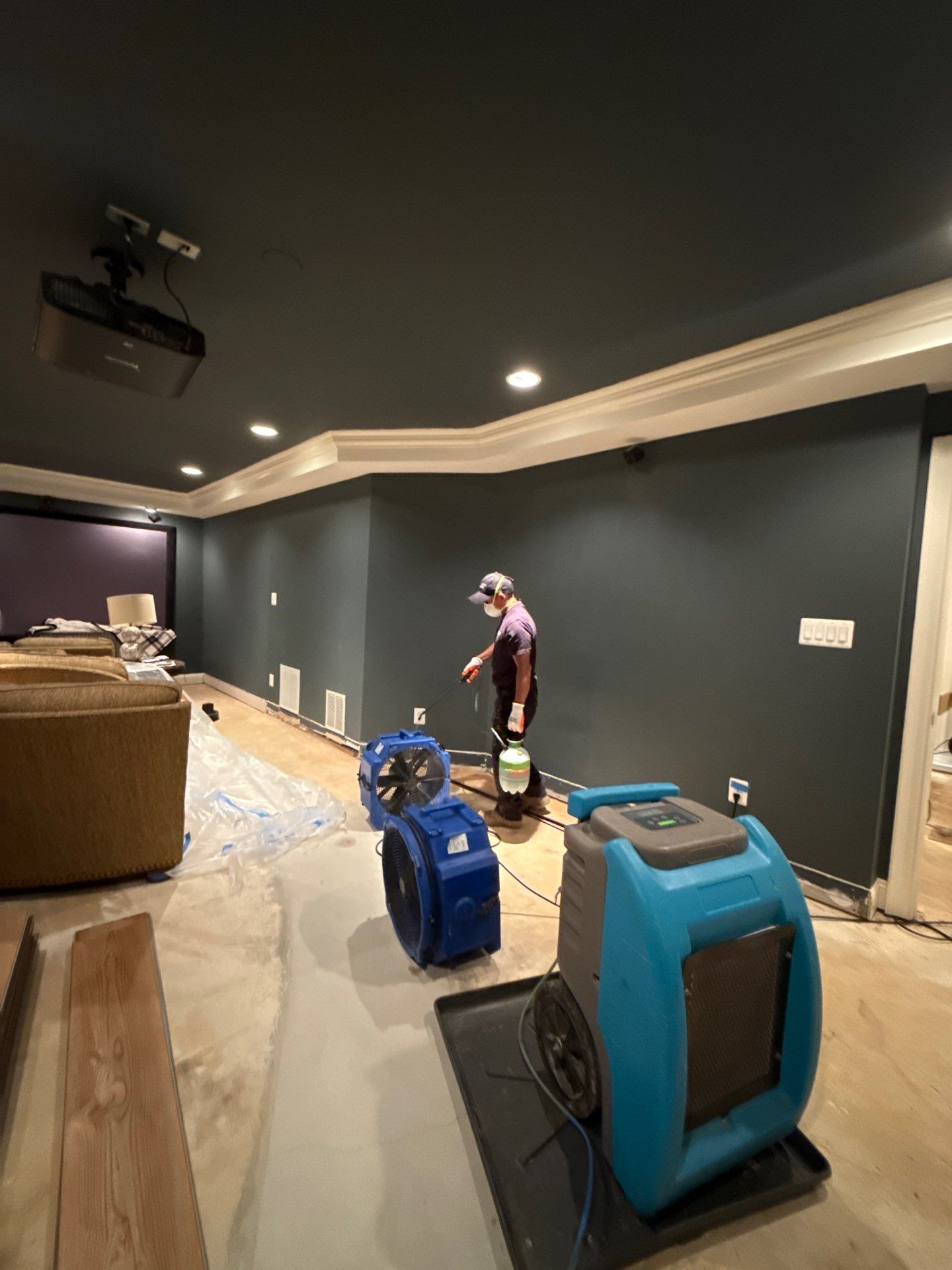
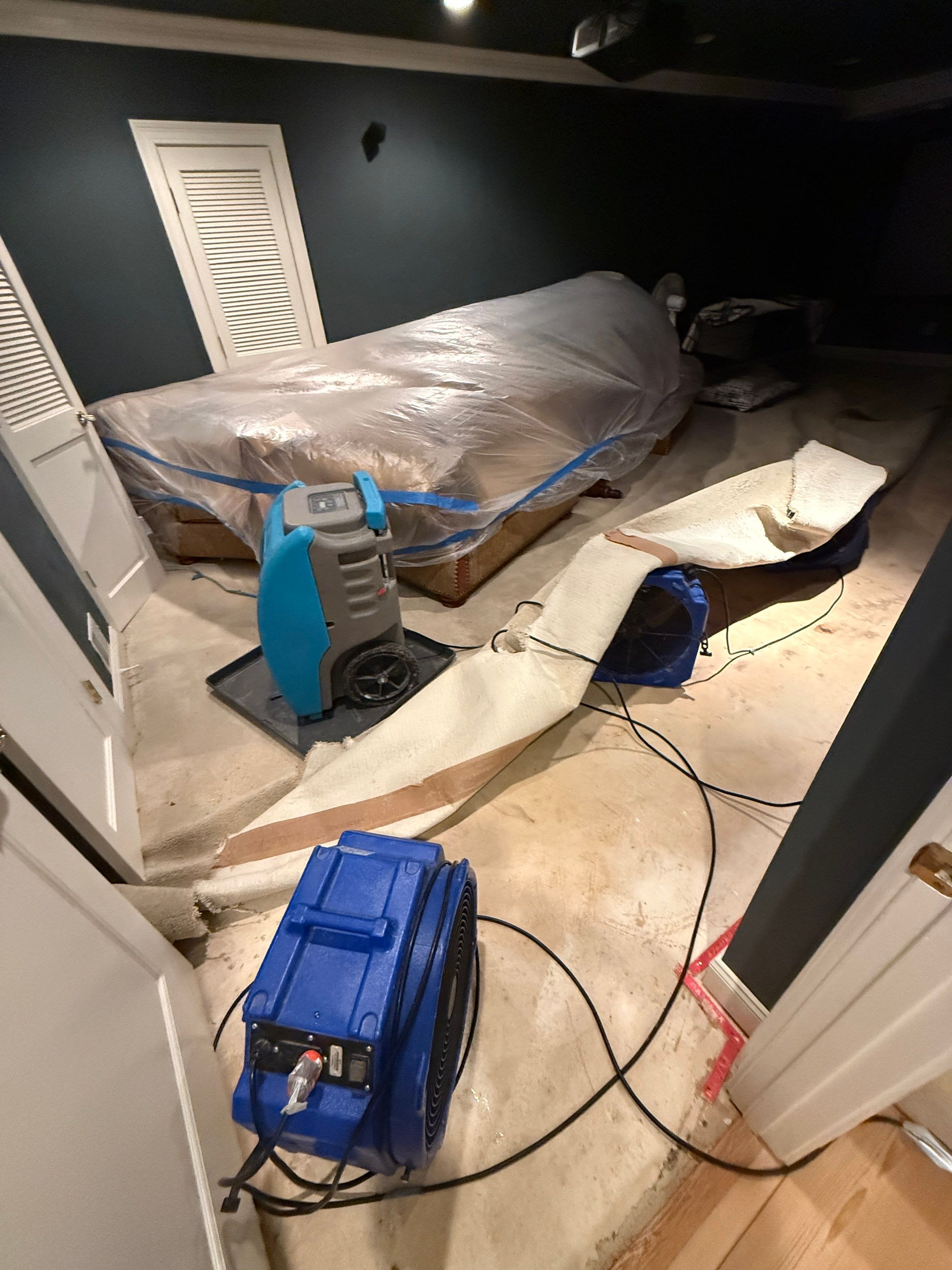
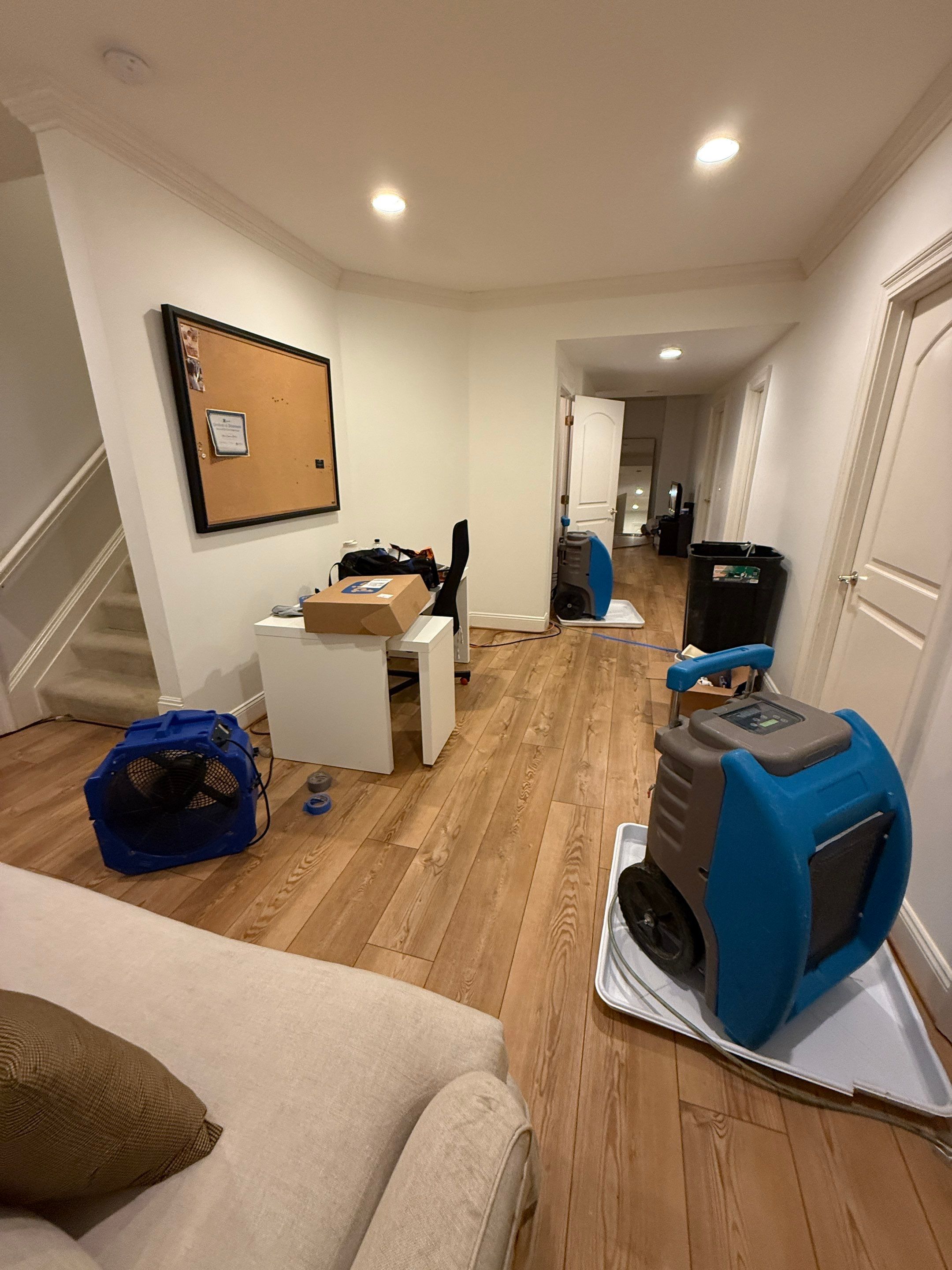
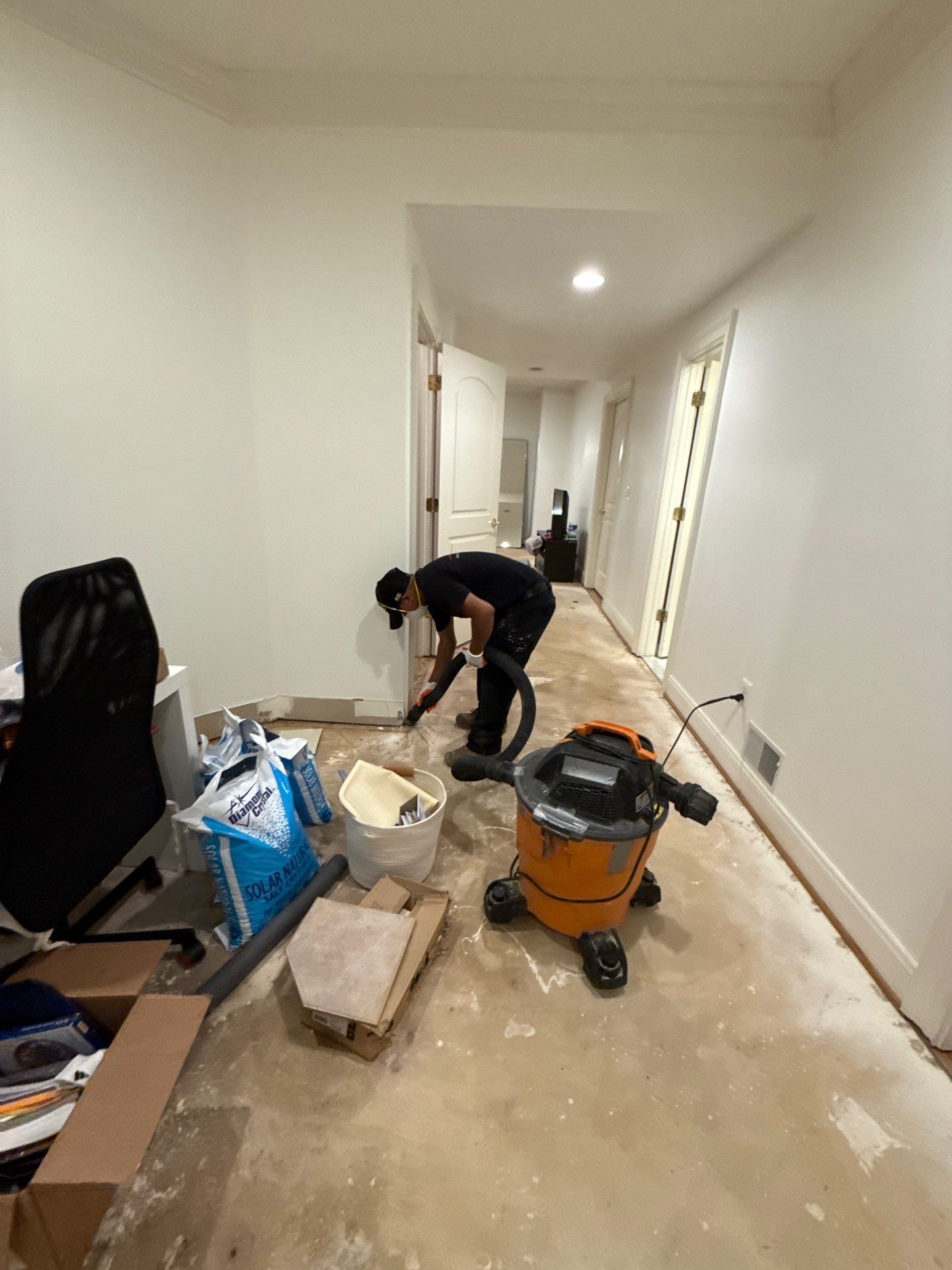
Following water intrusion that progressed to mold contamination, we mobilized to a Great Falls residence where heavy regional rain events and the area's larger-lot, septic-reliant properties in Fairfax County can create drainage challenges that catch homeowners off guard. The scope required protecting belongings first—plastic sheeting went over furniture and valuables before we pulled saturated carpet and ran truck-mount extractors to remove standing water from the subfloor.
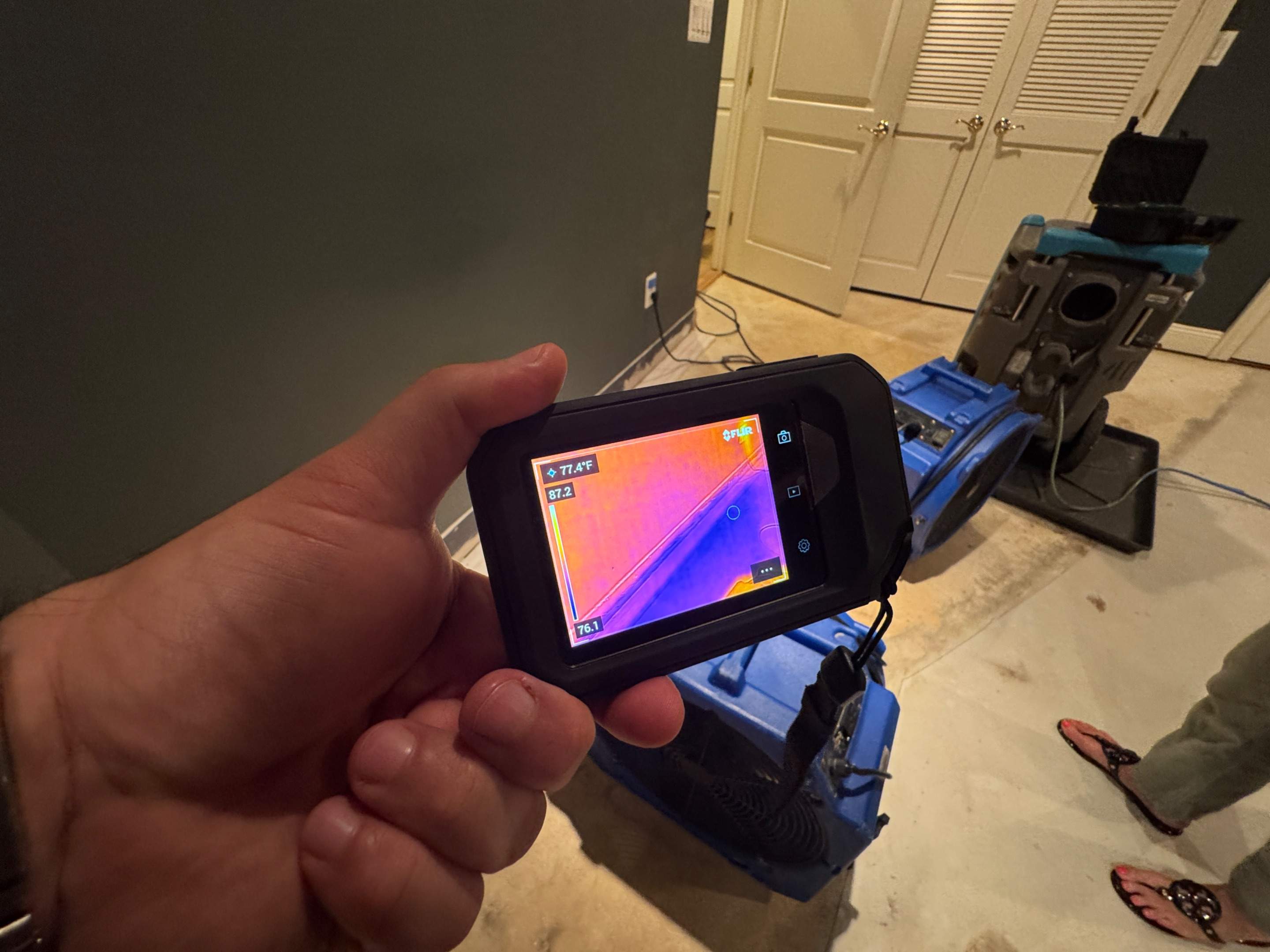
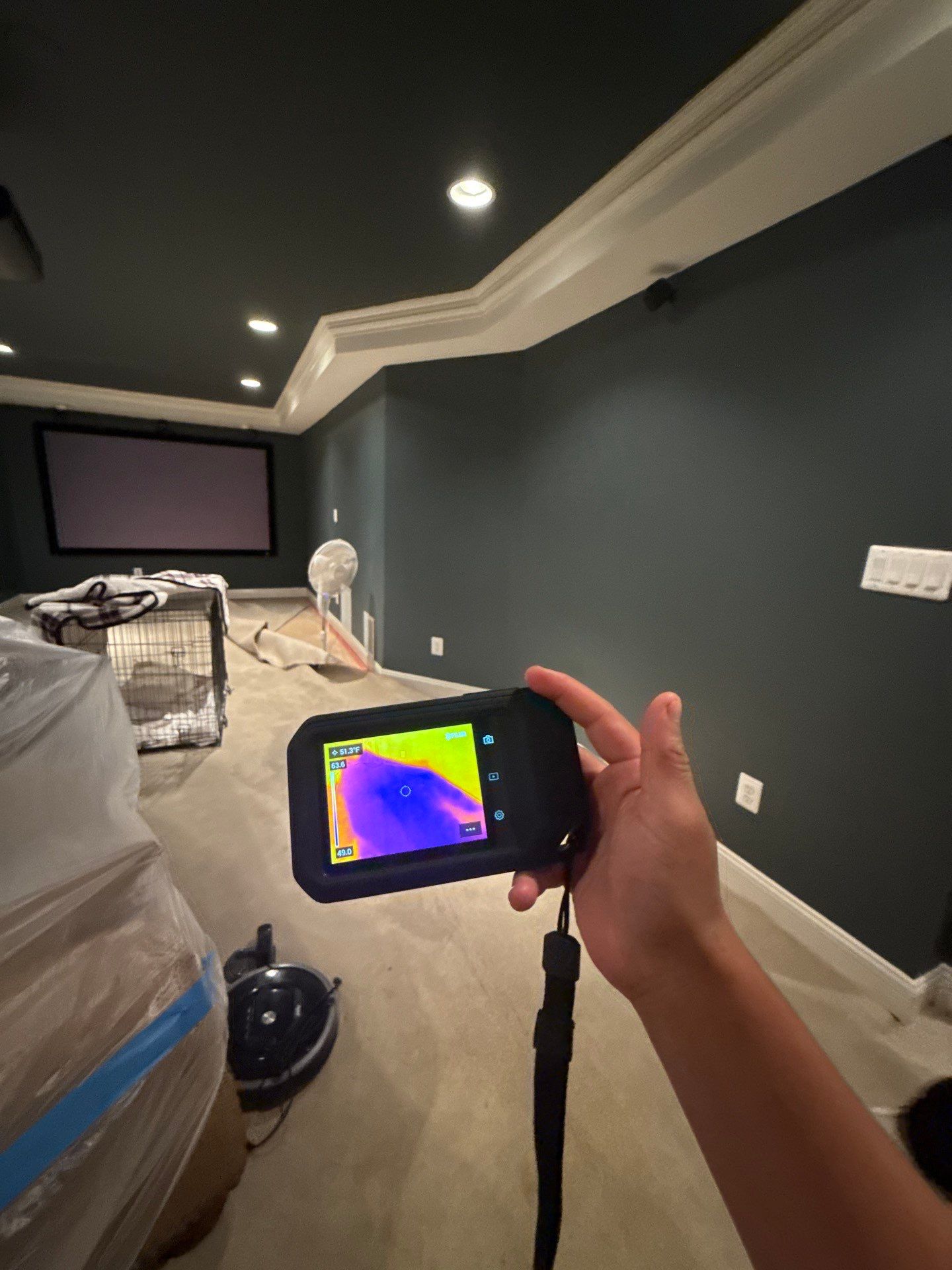
Thermal imaging mapped residual moisture in wall cavities and along baseboards, guiding placement of commercial dehumidifiers and air movers to bring structural materials back to dry standard. We applied antimicrobial treatment to all affected surfaces, following IICRC S520 protocols to address the mold growth that had already begun in the damp environment. Where drywall had wicked moisture beyond salvage, we removed and replaced those sections rather than attempt a cosmetic patch over compromised material.
The homeowner noted in their review how quickly the visible water disappeared and how methodically we tracked the hidden moisture—thermal scanning turns an invisible problem into measurable data points, which is the difference between drying a space and actually restoring it. The job closed with all readings at or below baseline and the structure ready for finish work.
Frequently asked questions
Why does mold often follow water intrusion in Great Falls homes, and how quickly can it develop?
In Fairfax County's humid Mid-Atlantic climate, mold spores can colonize wet building materials within 24 to 48 hours of water intrusion—especially when homes sit on larger lots with well and septic systems where moisture events may go unnoticed longer. Restoration Doctor's water damage restoration in Great Falls includes thermal-imaging moisture inspection and structural drying to arrest that window, followed by sanitization to prevent mold establishment. When extraction and drying begin promptly, as they did in this case, the risk drops significantly.
What does standing-water extraction involve during a water damage restoration job in Great Falls?
Standing-water extraction uses truck-mounted or portable vacuums to remove pooled water from affected floors and carpets before structural drying can begin. In this Great Falls restoration, Restoration Doctor removed soaked carpet, extracted standing water with powerful vacuums, and positioned air movers and dehumidifiers to bring moisture levels down across the structure. Thermal imaging then tracked progress in walls and subfloors to confirm the space had dried to standard.
How does thermal imaging help during water damage restoration in Fairfax County homes?
Thermal-imaging cameras detect temperature differentials that reveal trapped moisture behind walls, under flooring, and in ceiling cavities—critical in larger-lot Great Falls homes where hidden pockets can linger undetected. Restoration Doctor used thermal imaging throughout this job to map wet areas, guide drying equipment placement, and verify that moisture levels had returned to normal before reconstruction. It's a non-invasive diagnostic that prevents callback mold issues and unnecessary demolition.
Will my belongings be protected during water damage restoration work in my Great Falls home?
Yes—contents protection is standard practice. In this Great Falls water intrusion case, Restoration Doctor covered the homeowner's belongings with plastic sheeting before beginning extraction, drying, and wall replacement to shield them from airborne moisture, dust, and sanitizing agents. Affected items are inventoried, relocated to dry zones when necessary, and returned once the space is fully restored.
When is wall replacement necessary after water damage, and how is it coordinated with drying?
Wall replacement becomes necessary when drywall has wicked water above the lower third, delaminated, or remained wet long enough to support microbial growth. In this Great Falls job, Restoration Doctor completed structural drying and sanitization first, then replaced damaged wall sections to match the existing finish—ensuring the framing had reached equilibrium moisture content before closing it back in. That sequencing, guided by moisture readings, prevents trapped dampness and future mold.
Explore more restoration work
All projects in Great Falls · Water Damage Restoration in Great Falls
Water, fire, or mold damage in Great Falls?
Restoration Doctor responds 24/7 across Great Falls and Northern Virginia. Free assessment and transparent, insurance-friendly estimates — no obligation.
See our Water Damage Restoration services at restorationdoctors.com →