Flood Remediation with Carpet Drying and Sanitization
About this mold remediation project
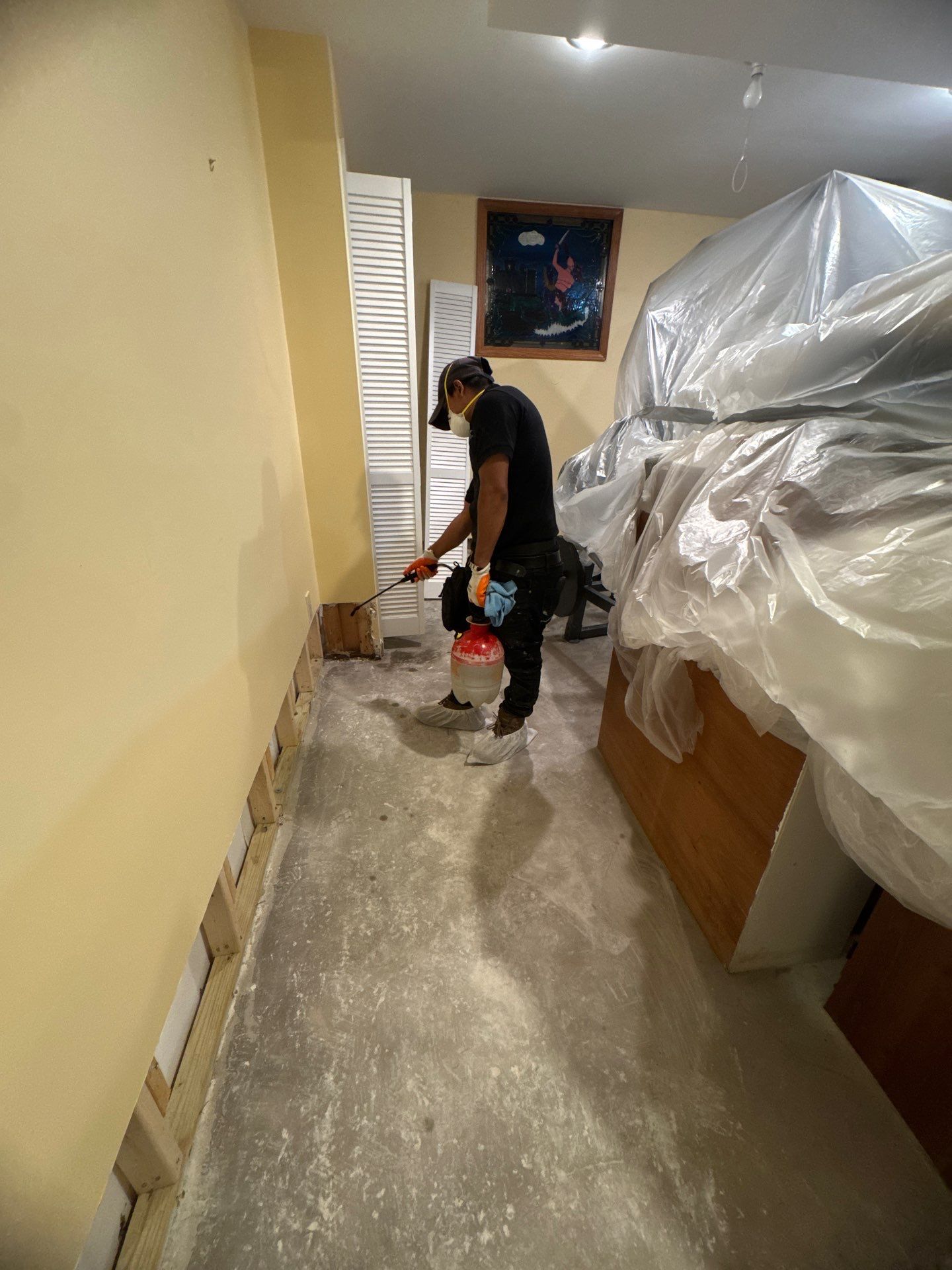
When flooding struck this Great Falls residence—one of the larger-lot properties in Fairfax County where heavy regional rain events can overwhelm drainage around rural-feeling homes—mold growth followed the water intrusion, requiring immediate remediation. The homeowner called us to address both the visible damage and the hidden contamination.
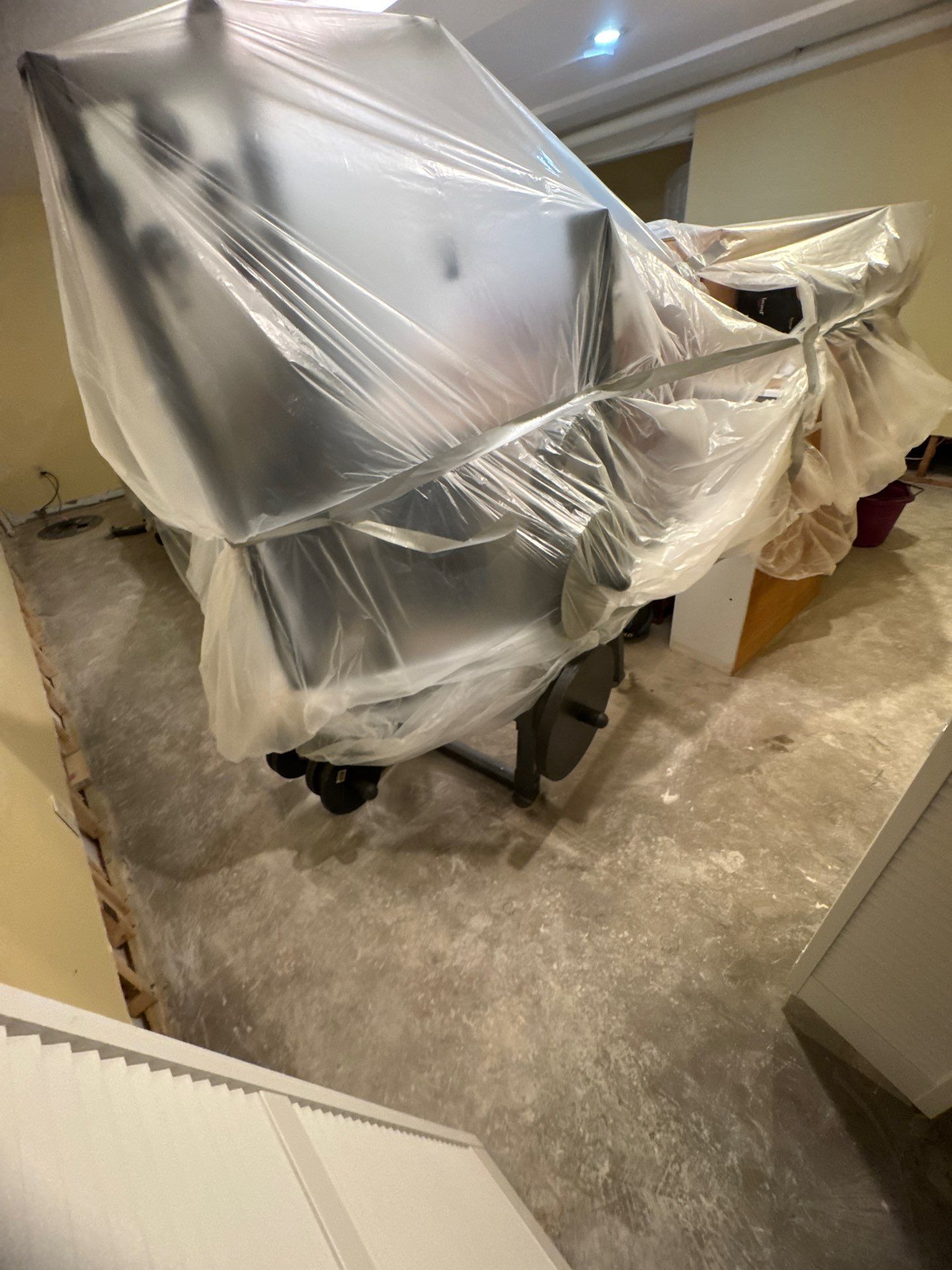
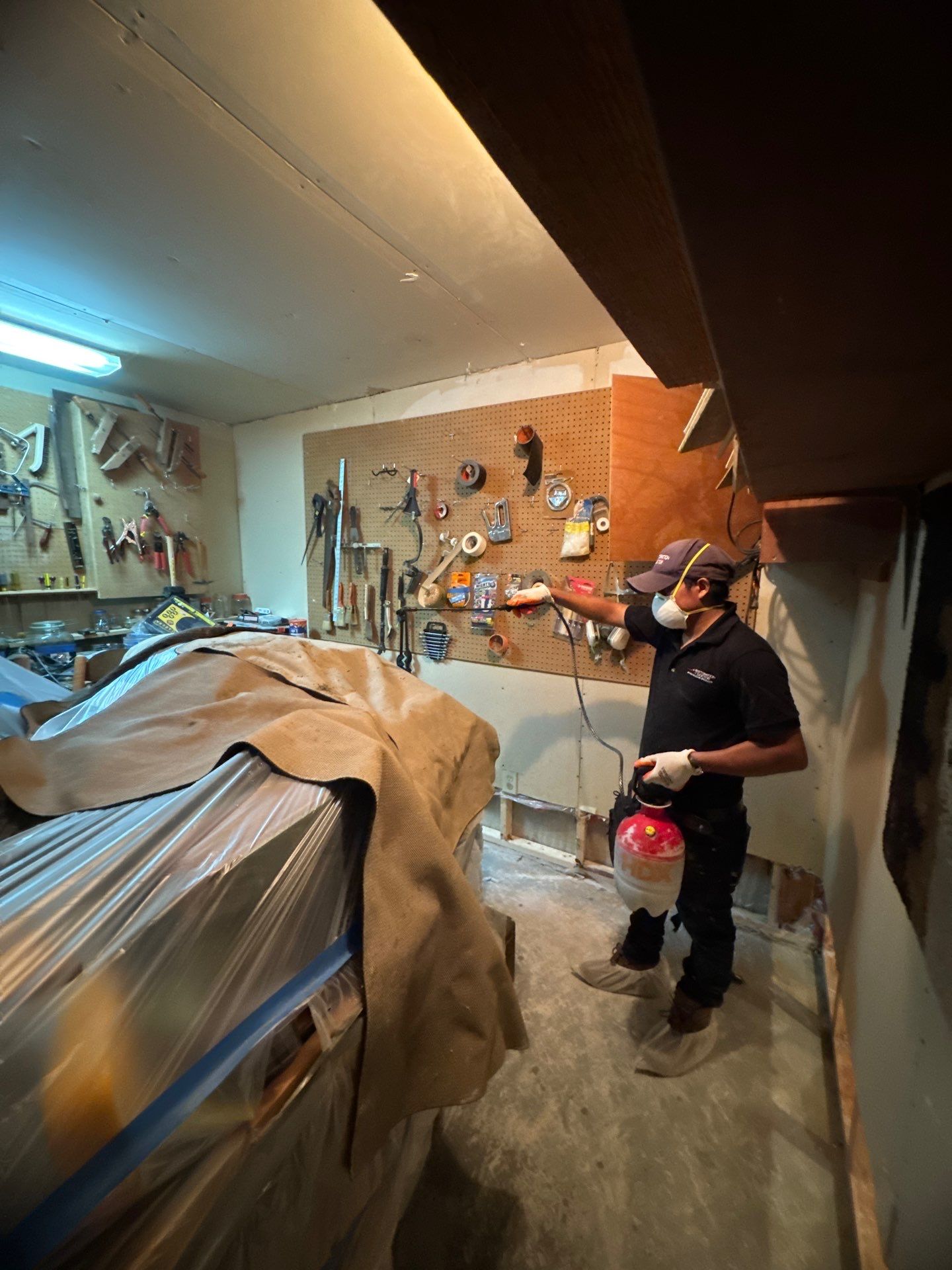
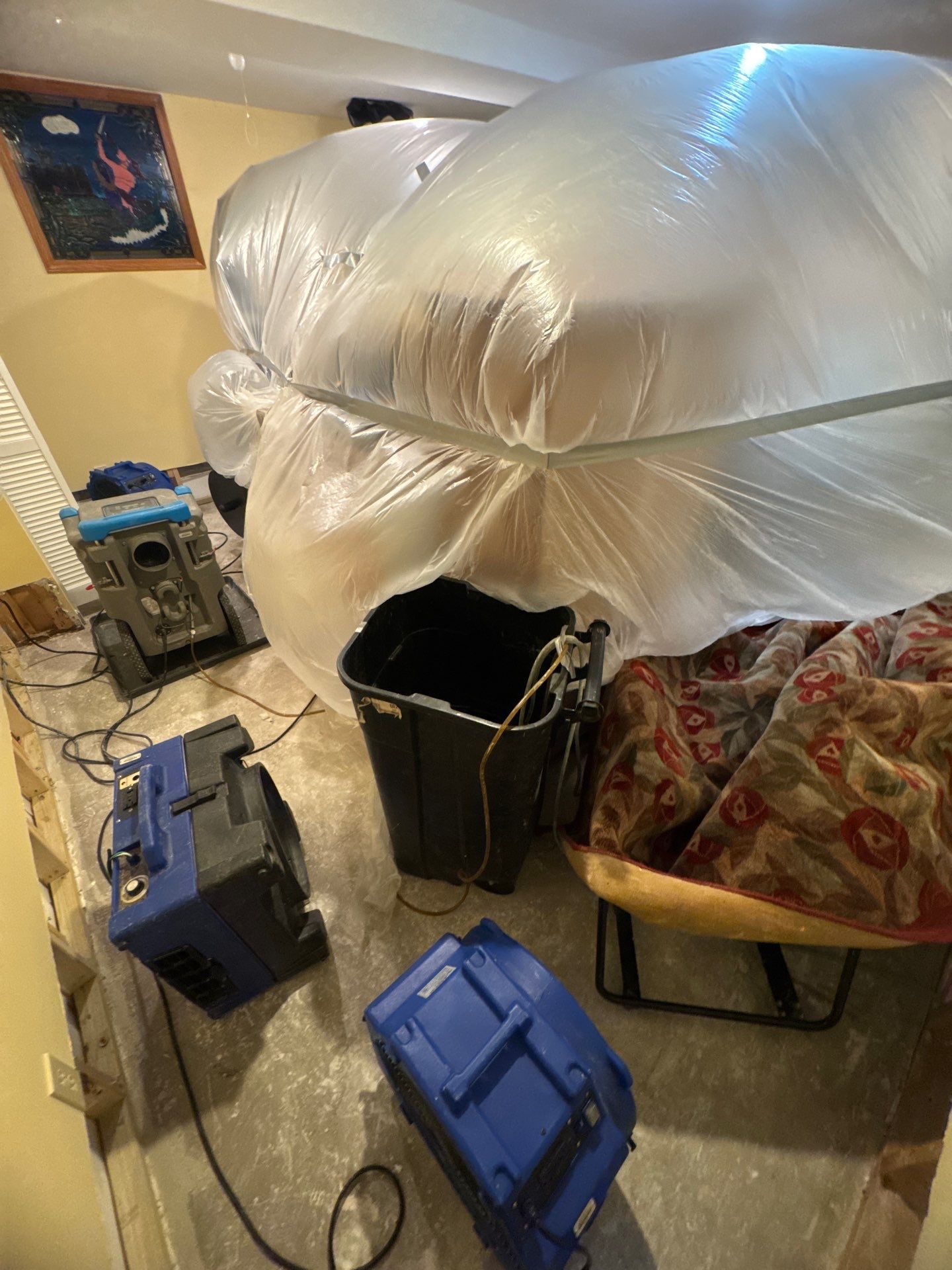
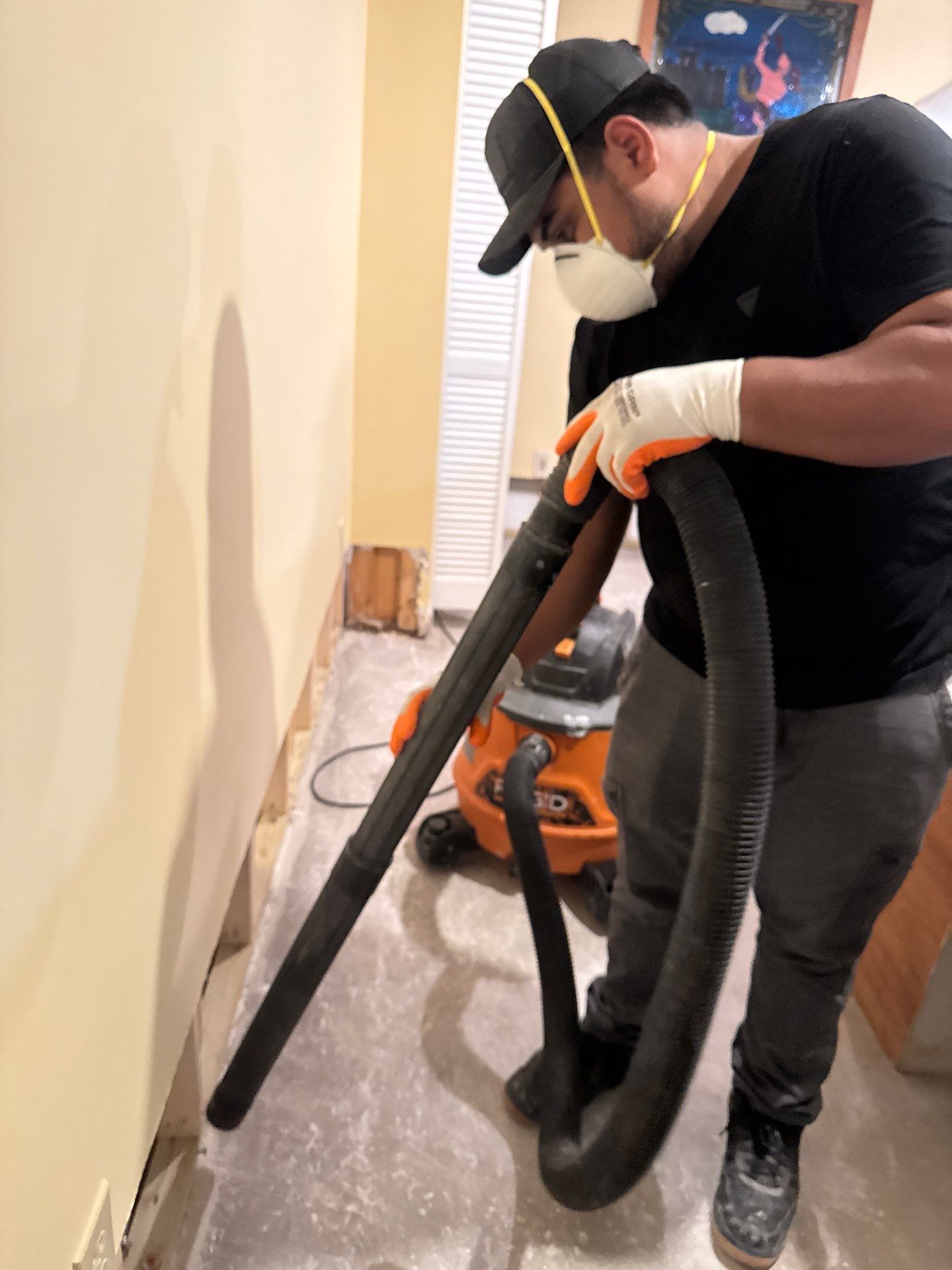
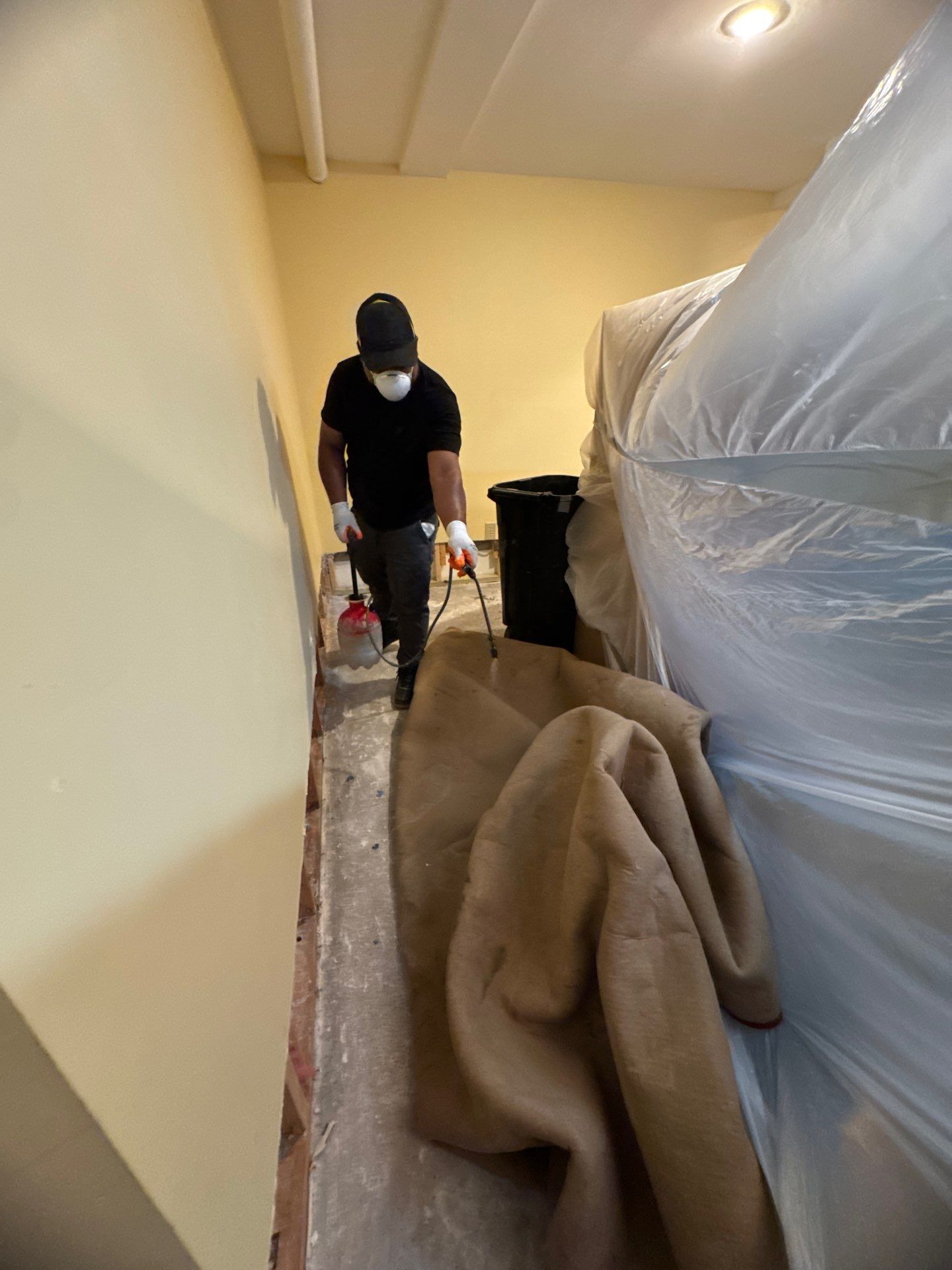
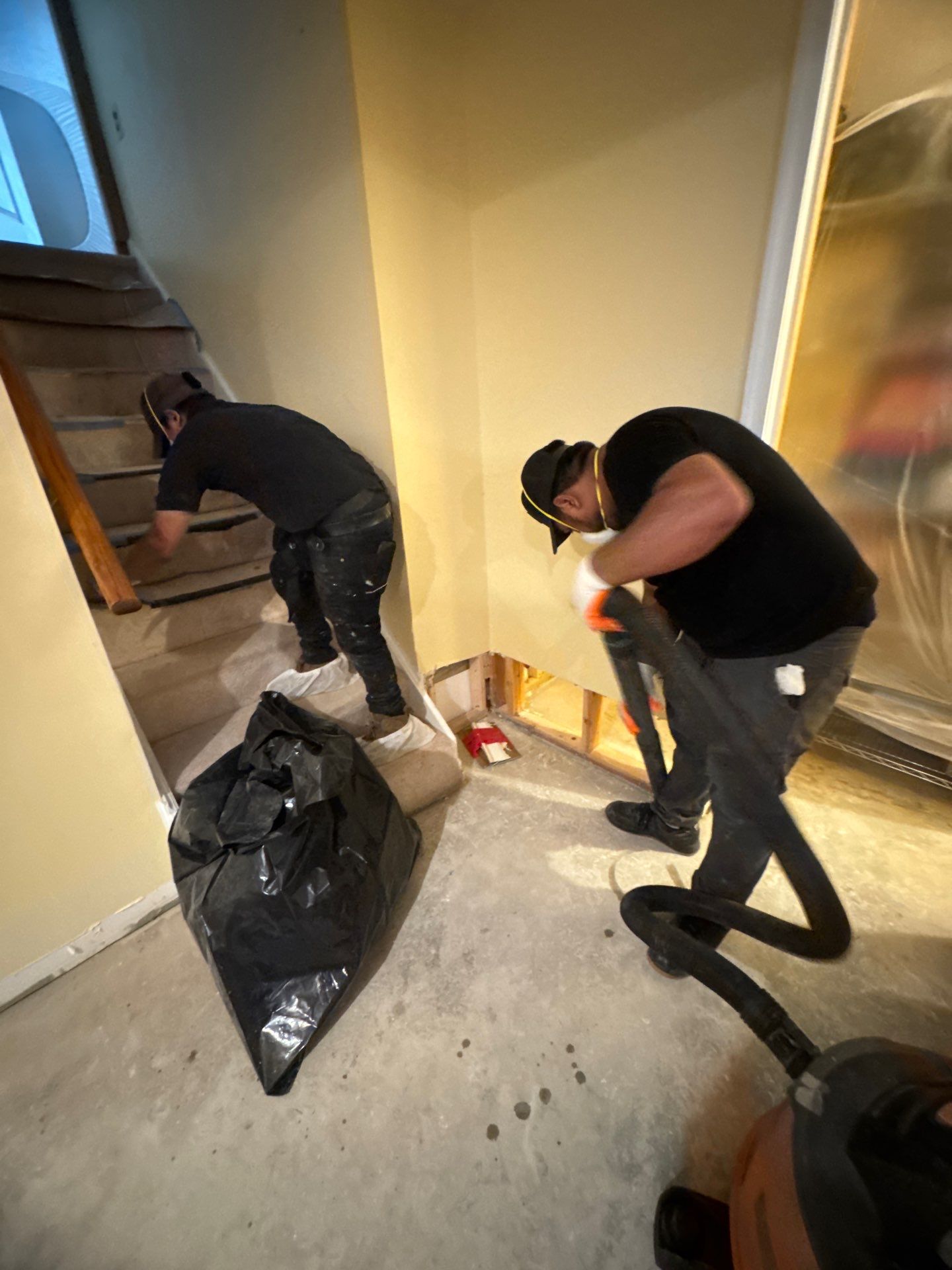
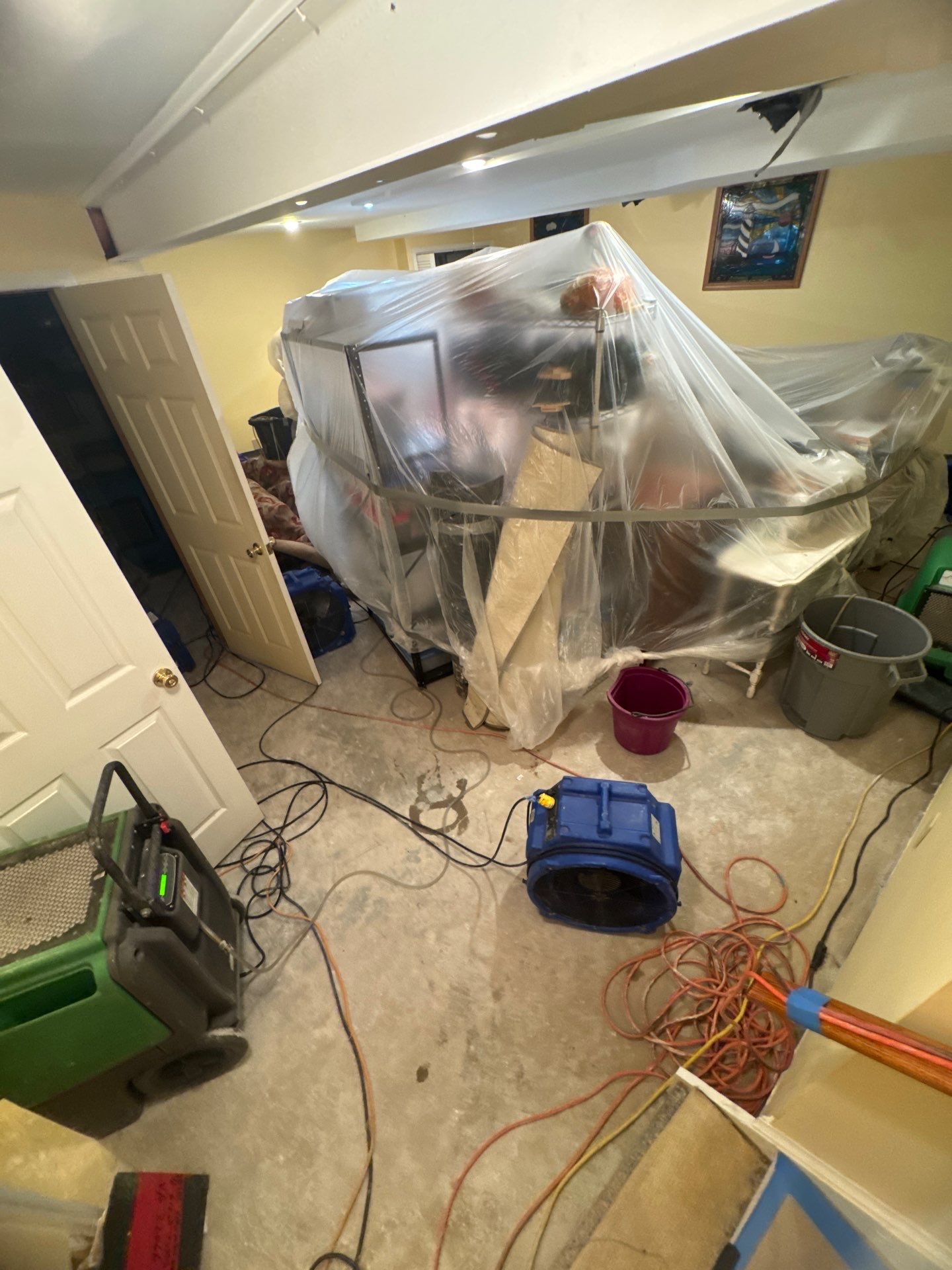
We began by protecting appliances with plastic sheeting to isolate unaffected areas, then turned to the flooded carpet, which had absorbed standing water and become a growth substrate. Our team deployed extraction and drying equipment to pull moisture from the carpet pad and subflooring, monitoring progress until readings confirmed the material could be salvaged rather than removed. Following IICRC S520 protocols for mold remediation, we sanitized the affected carpet and surrounding surfaces with antimicrobial treatment, then vacuumed thoroughly to remove particulates and ensure the space returned to a clean baseline.
The combination of controlled drying, targeted sanitation, and protective containment allowed the homeowner to retain the existing flooring—a measured outcome in a loss where standing water had been present long enough to trigger secondary growth. The customer's review reflected satisfaction with both the technical work and the care taken to protect their home during the process.
Frequently asked questions
Why is mold remediation especially important in Great Falls homes after water intrusion?
Homes in Great Falls and broader Fairfax County often sit on larger, more rural lots with well and septic systems, and the region's heavy rain events can introduce standing water into basements and crawlspaces. When water intrusion occurs, humid Mid-Atlantic conditions allow mold to take hold quickly on organic materials like carpet, drywall, and subflooring. Restoration Doctor's mold remediation process addresses both the visible growth and the moisture source, ensuring the structure is dried to industry standards and sanitized to prevent recurrence.
What does the mold remediation process involve after a flood in my home?
For this Great Falls property, Restoration Doctor began with standing-water extraction using commercial-grade equipment, then deployed structural drying systems to bring moisture levels down throughout affected areas. The team removed and remediated compromised flooring and carpet, sanitized all surfaces to eliminate mold spores, and maintained containment protocols to protect unaffected rooms. Throughout the work, HEPA vacuuming kept airborne particulate under control, and appliances were covered with plastic sheeting to prevent cross-contamination.
How long does it take to dry a home after water intrusion and mold growth?
Drying timelines depend on the extent of water penetration, the materials affected, and ambient humidity, but Restoration Doctor uses continuous moisture monitoring to track progress rather than relying on fixed schedules. In Fairfax County's climate, where summer humidity can slow evaporation, industrial dehumidifiers and air movers are positioned strategically to accelerate the process. For the Great Falls job described, structural drying and mold remediation were completed in stages, with each phase verified before moving to sanitizing and final clearance.
Can carpet be saved after mold remediation, or does it always need replacement?
Carpet salvageability depends on the duration of water exposure, the type of contamination, and whether the backing or pad has begun to delaminate or harbor growth. In this Great Falls case, Restoration Doctor thoroughly dried and sanitized the carpet after extraction, using HEPA vacuuming and antimicrobial treatment to restore it to a safe, usable condition. When replacement is necessary, the team removes affected material as part of the remediation scope and prepares the subfloor for new installation.
What steps does Restoration Doctor take to prevent mold from returning after remediation?
Effective mold prevention starts with eliminating the moisture source—whether that's repairing a plumbing leak, improving drainage around the foundation, or addressing humidity in a crawlspace. After remediation in Great Falls, Restoration Doctor ensures all structural materials are dried to target moisture content, applies EPA-registered antimicrobial treatments where appropriate, and advises homeowners on ventilation and dehumidification strategies suited to Fairfax County's seasonal climate. Proper drying and source correction are the only reliable defenses against recurrence.
Explore more restoration work
All projects in Great Falls · Mold Remediation in Great Falls
Water, fire, or mold damage in Great Falls?
Restoration Doctor responds 24/7 across Great Falls and Northern Virginia. Free assessment and transparent, insurance-friendly estimates — no obligation.
See our Mold Remediation services at restorationdoctors.com →