Comprehensive Water Damage Restoration and Repair
About this water damage restoration project
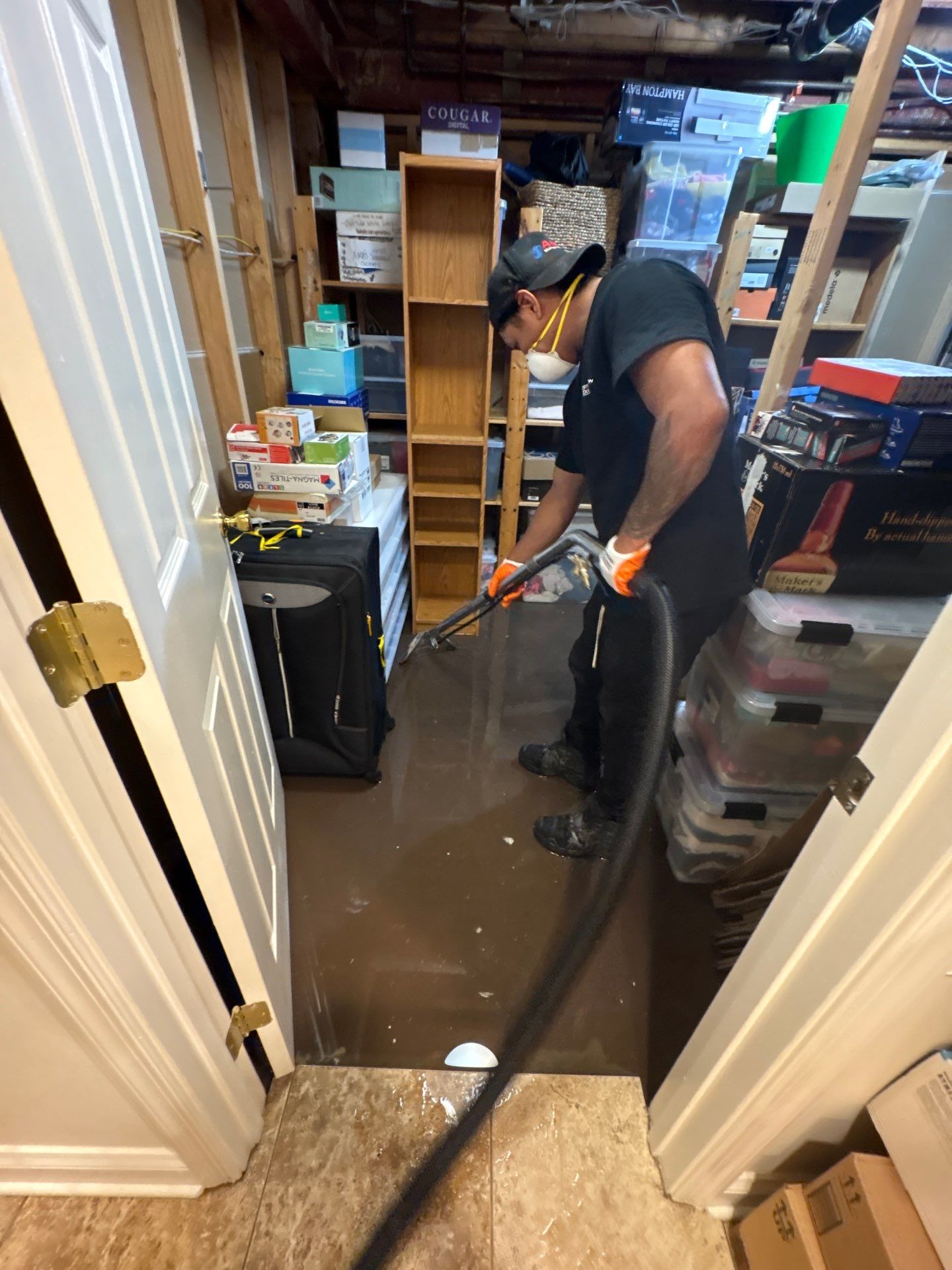
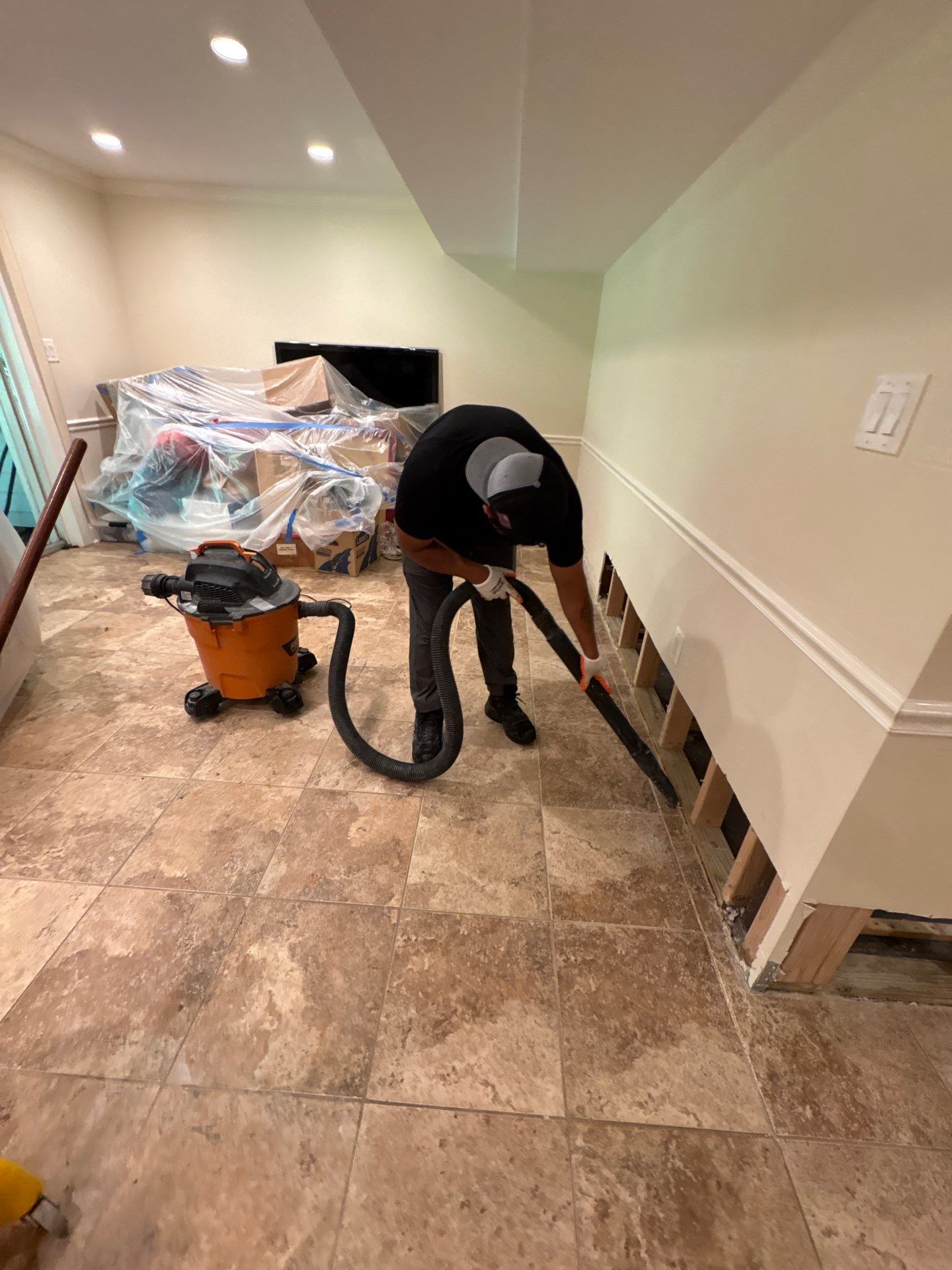
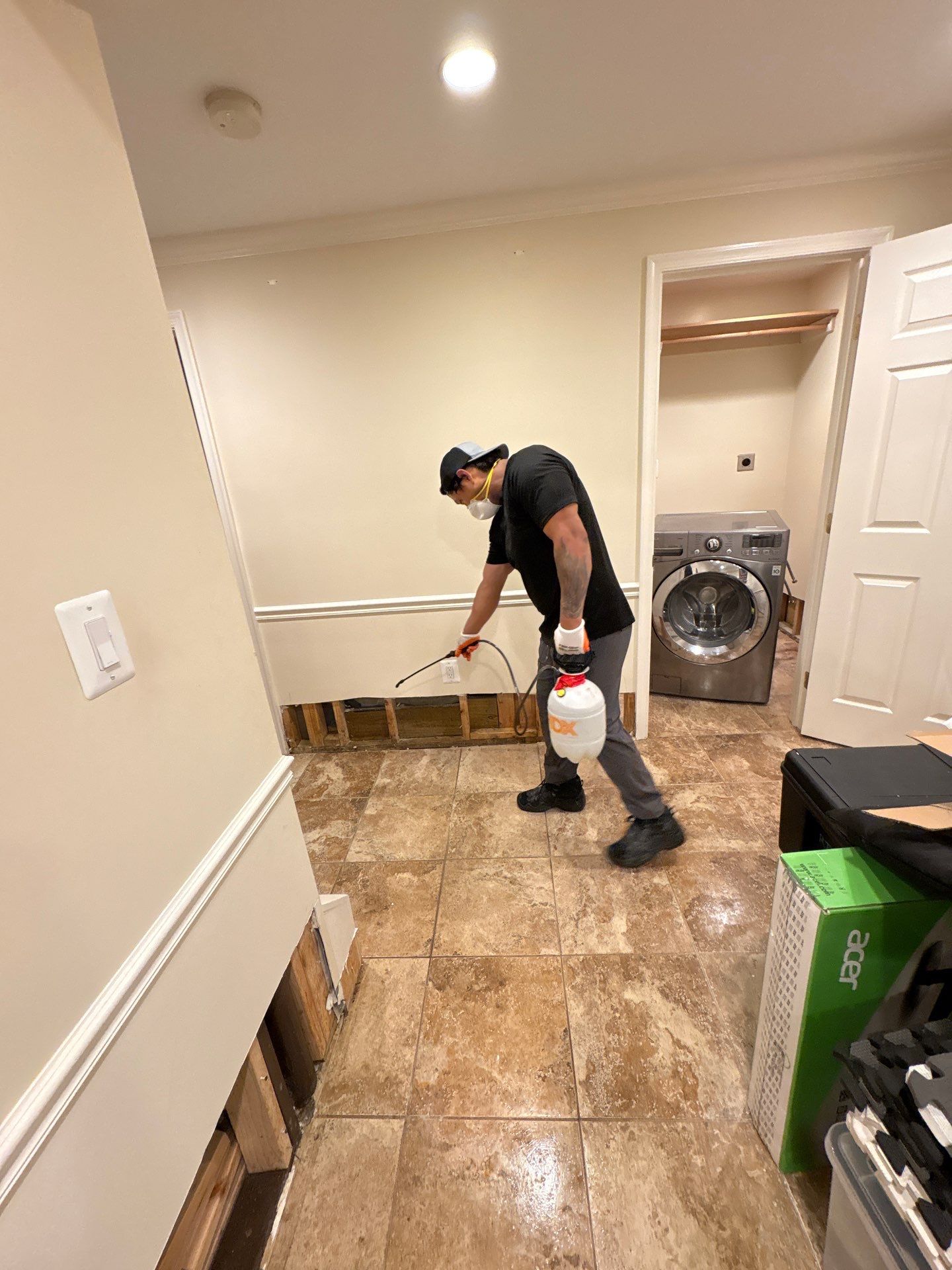
Water intrusion had left portions of this Great Falls home vulnerable to secondary mold growth — a common sequence in Fairfax County's larger-lot properties, where heavy regional rain events and the area's humid summers create conditions that accelerate microbial activity if moisture is not addressed quickly. The homeowner contacted us after discovering the extent of the damage, and we began by protecting unaffected belongings with plastic sheeting to contain the work area.
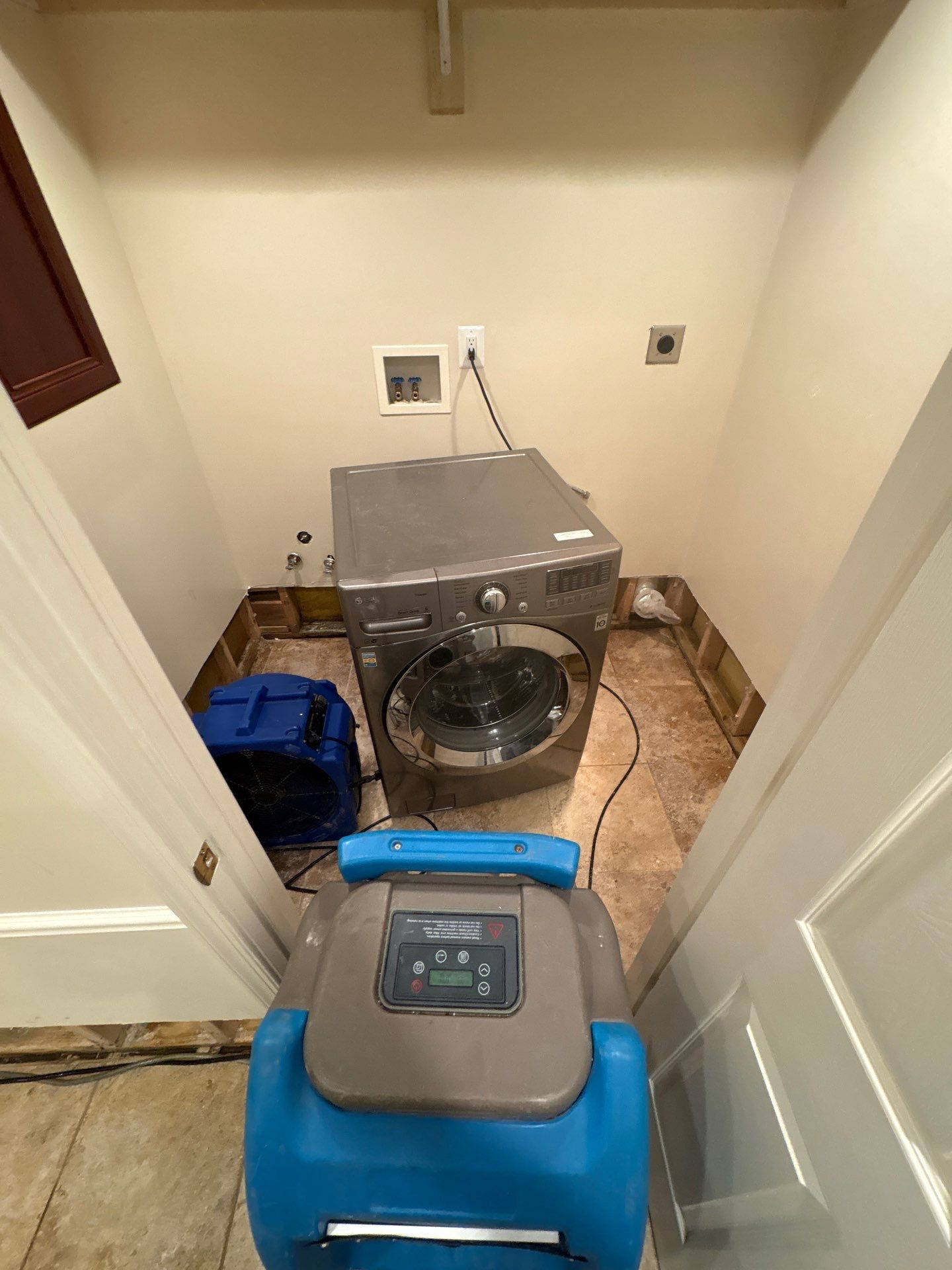
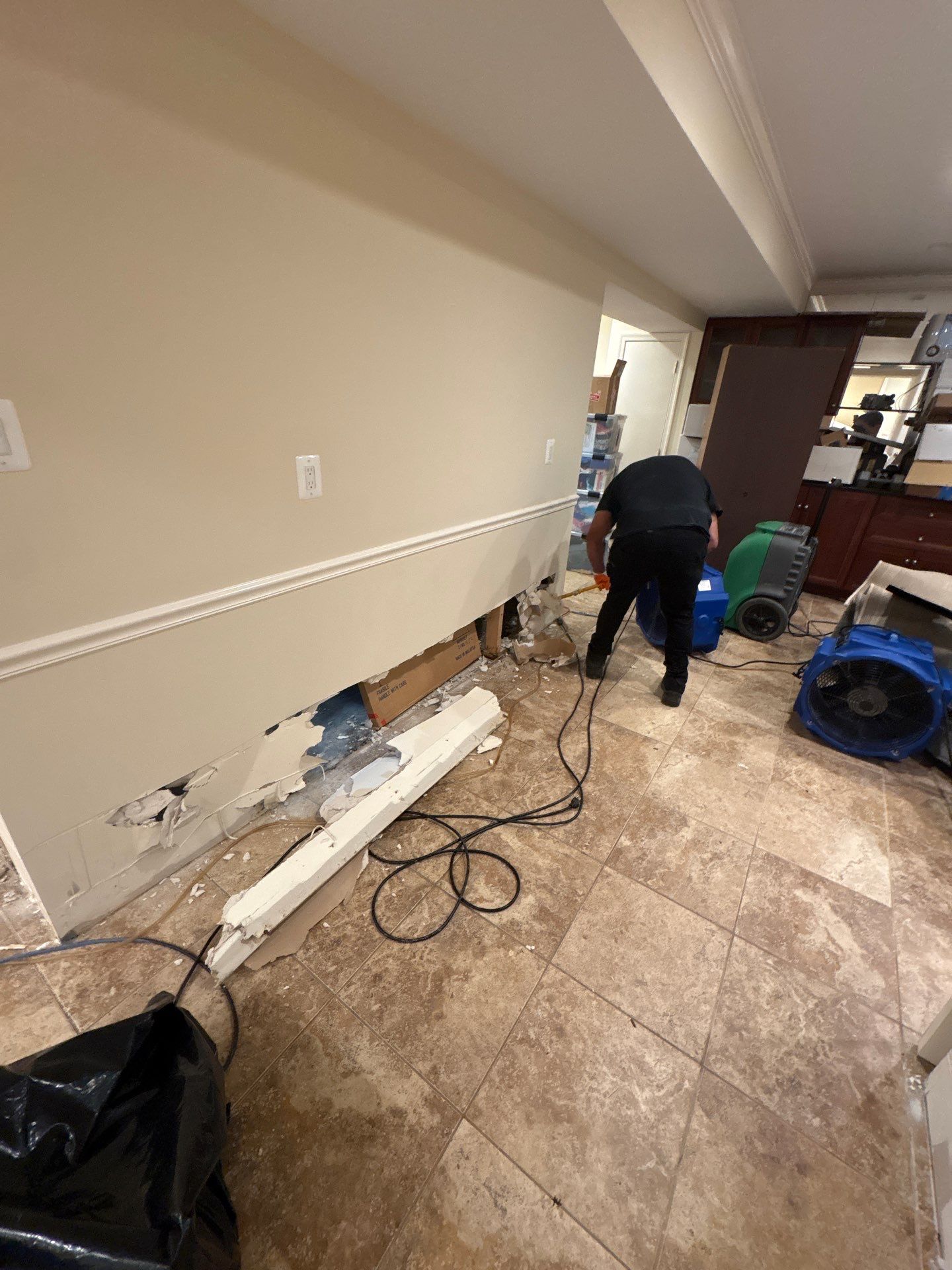
Our crew used commercial vacuums to extract standing water from the affected rooms, then removed and replaced sections of wall where saturation had compromised structural integrity. Drying equipment was deployed to pull residual moisture from framing and subfloor materials, following IICRC S500 protocols for controlled evaporation. We sanitized all exposed surfaces to eliminate mold spores and prevent regrowth, then replaced the baseboards that had been damaged during the water event.
The homeowner noted in their review how thoroughly the team worked to restore both the visible surfaces and the underlying structure. By addressing moisture at every layer — extraction, material removal, controlled drying, and antimicrobial treatment — we returned the affected areas to a dry, safe baseline and closed the window for further mold development.
Frequently asked questions
Why is mold remediation often necessary after water damage in Great Falls homes?
In Fairfax County's humid Mid-Atlantic climate, mold can begin colonizing wet building materials within 24 to 48 hours of water intrusion, especially in homes with limited air circulation. Restoration Doctor's mold remediation process in Great Falls includes structural drying, antimicrobial sanitizing, and removal of compromised materials like baseboards to eliminate active growth and prevent recurrence. This combined approach addresses both the water source and the biological contamination that follows.
What does standing-water extraction involve during a water damage restoration project?
Standing-water extraction uses industrial wet vacuums and pumps to remove pooled water from floors and subfloors before structural drying can begin. For this Great Falls restoration, Restoration Doctor deployed extraction equipment immediately after protecting belongings with plastic sheeting, allowing drying equipment to work efficiently once the bulk water was cleared. Removing standing water quickly reduces secondary damage to framing, flooring, and wall cavities.
Do homes on well and septic systems in Great Falls face different water damage risks?
Larger-lot homes in Great Falls on private well and septic systems can experience water intrusion from septic field saturation during heavy regional rain events, as well as from frozen supply lines during winter freeze-thaw cycles. Restoration Doctor's water damage restoration services in Fairfax County address these rural-property challenges with targeted extraction, structural drying, and moisture mapping to prevent hidden damage in crawlspaces and basements. Understanding the property's infrastructure helps tailor the drying strategy to the actual water source.
When is baseboard replacement necessary after water damage?
Baseboards absorb water rapidly from flooring and lower wall cavities, often swelling, warping, or harboring mold growth that sanitizing alone cannot resolve. In this Great Falls project, Restoration Doctor replaced compromised baseboards after structural drying and sanitizing were complete, ensuring no hidden moisture or contamination remained behind the trim. Replacement is standard when the material has delaminated or shows visible mold colonization.
How does sanitizing prevent mold after water extraction and drying?
Sanitizing applies EPA-registered antimicrobial agents to surfaces that contacted contaminated water or developed early mold growth, disrupting spore viability and biofilm formation. For the Great Falls restoration, Restoration Doctor sanitized affected spaces after drying equipment brought moisture levels down to standard, creating an inhospitable environment for regrowth. This step is part of the IICRC S520 mold remediation standard when biological contamination is present alongside water damage.
Explore more restoration work
All projects in Great Falls · Water Damage Restoration in Great Falls
Water, fire, or mold damage in Great Falls?
Restoration Doctor responds 24/7 across Great Falls and Northern Virginia. Free assessment and transparent, insurance-friendly estimates — no obligation.
See our Water Damage Restoration services at restorationdoctors.com →