Taking care of a bathroom leakage
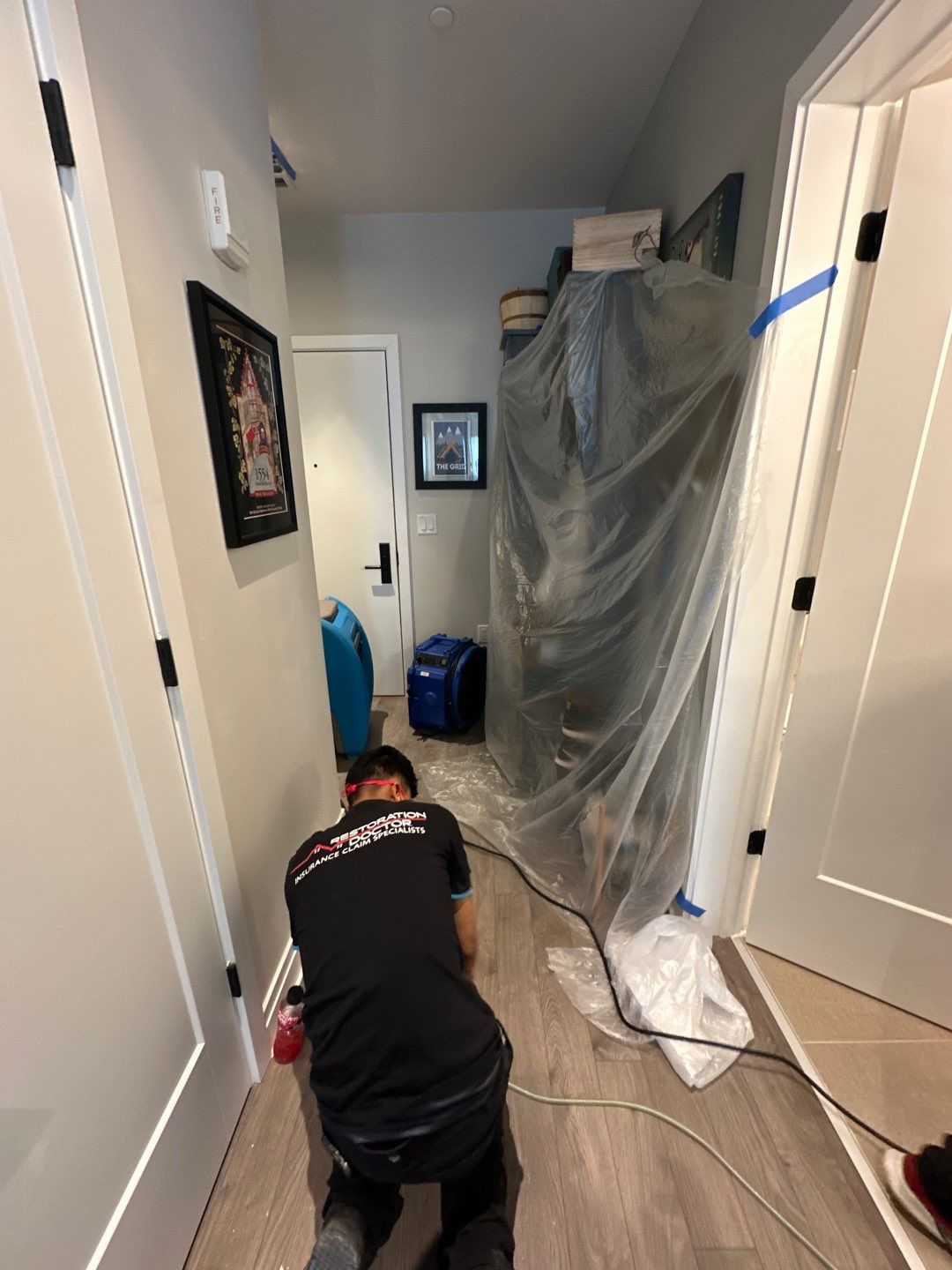
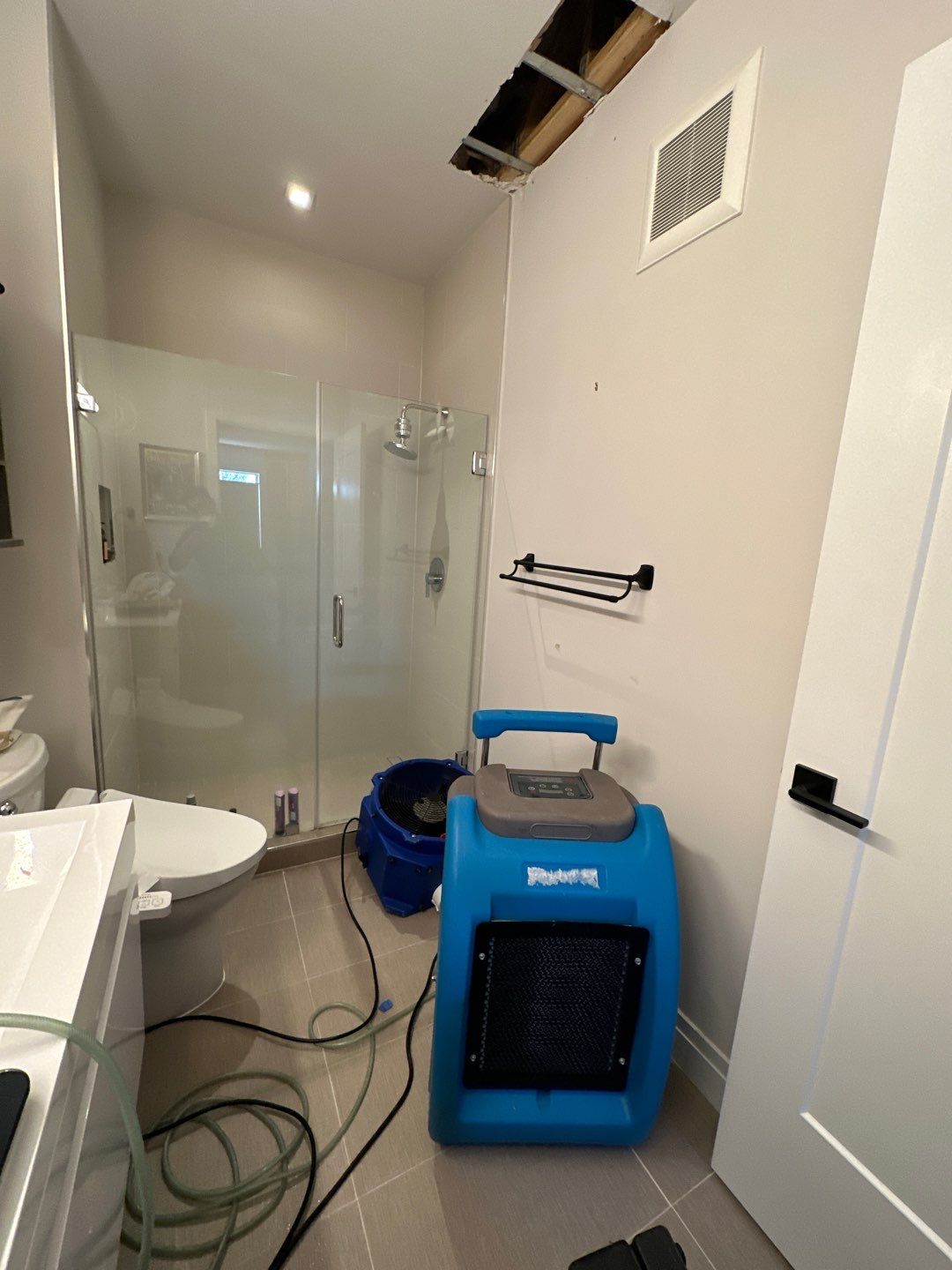
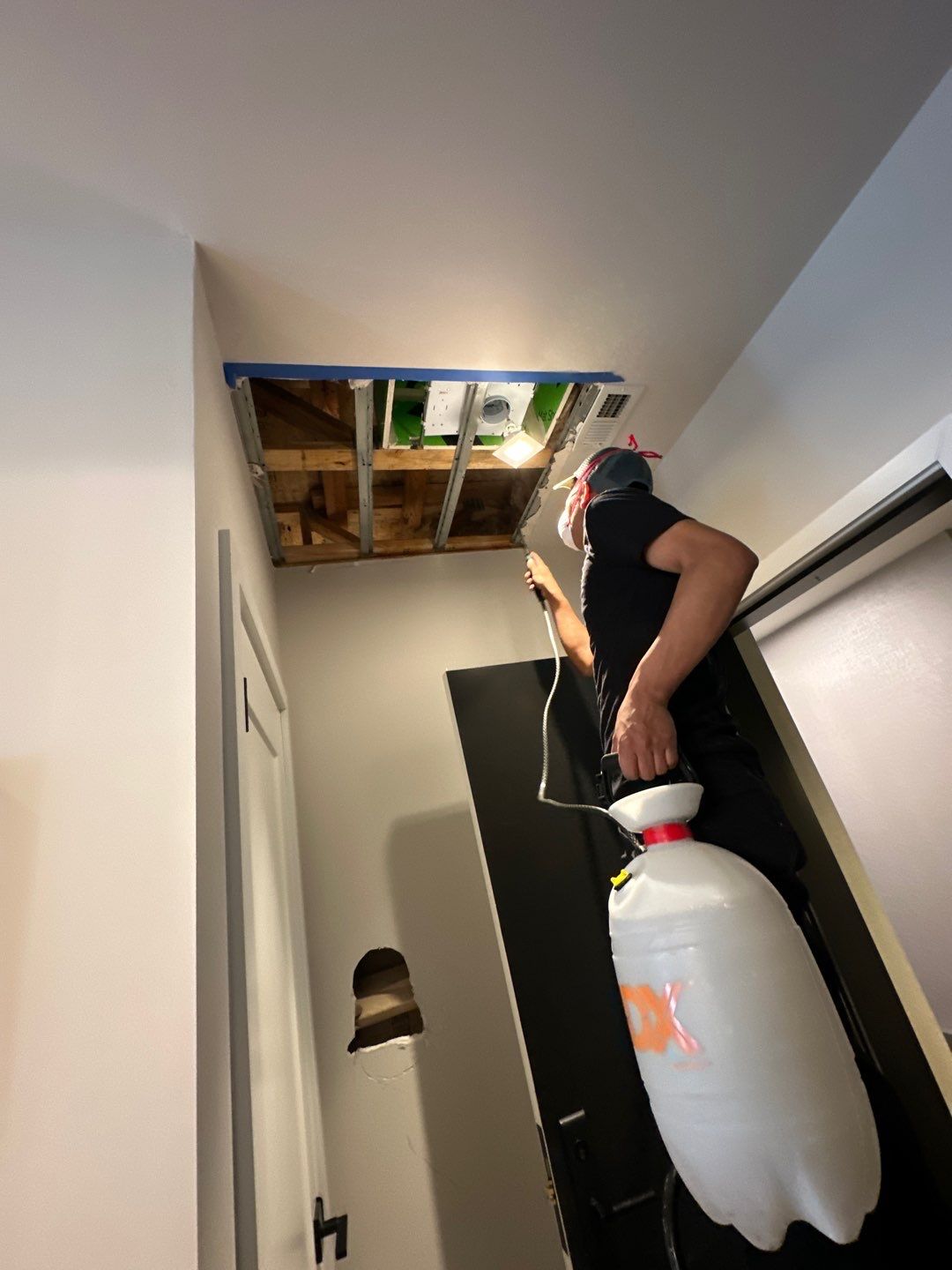
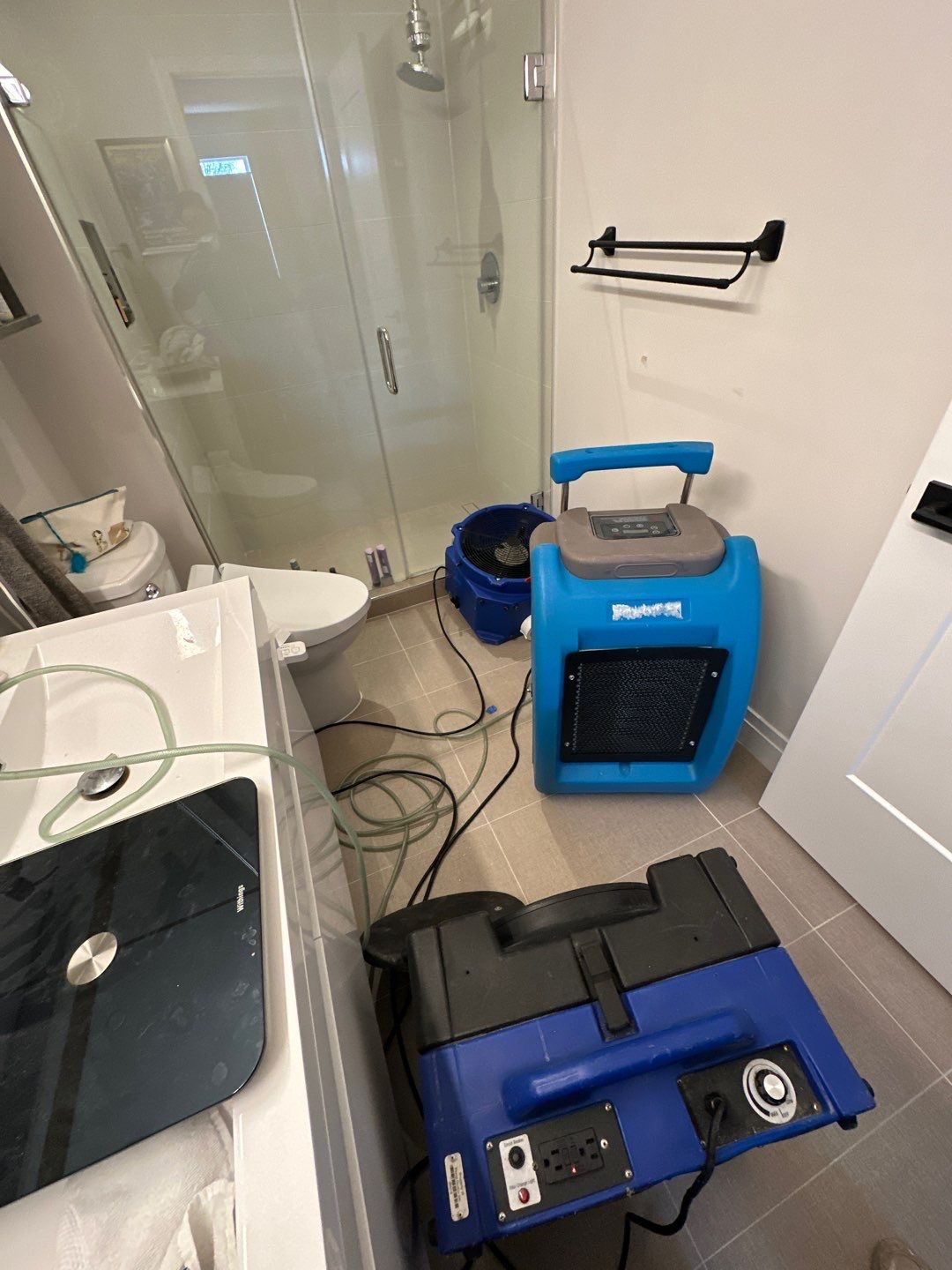
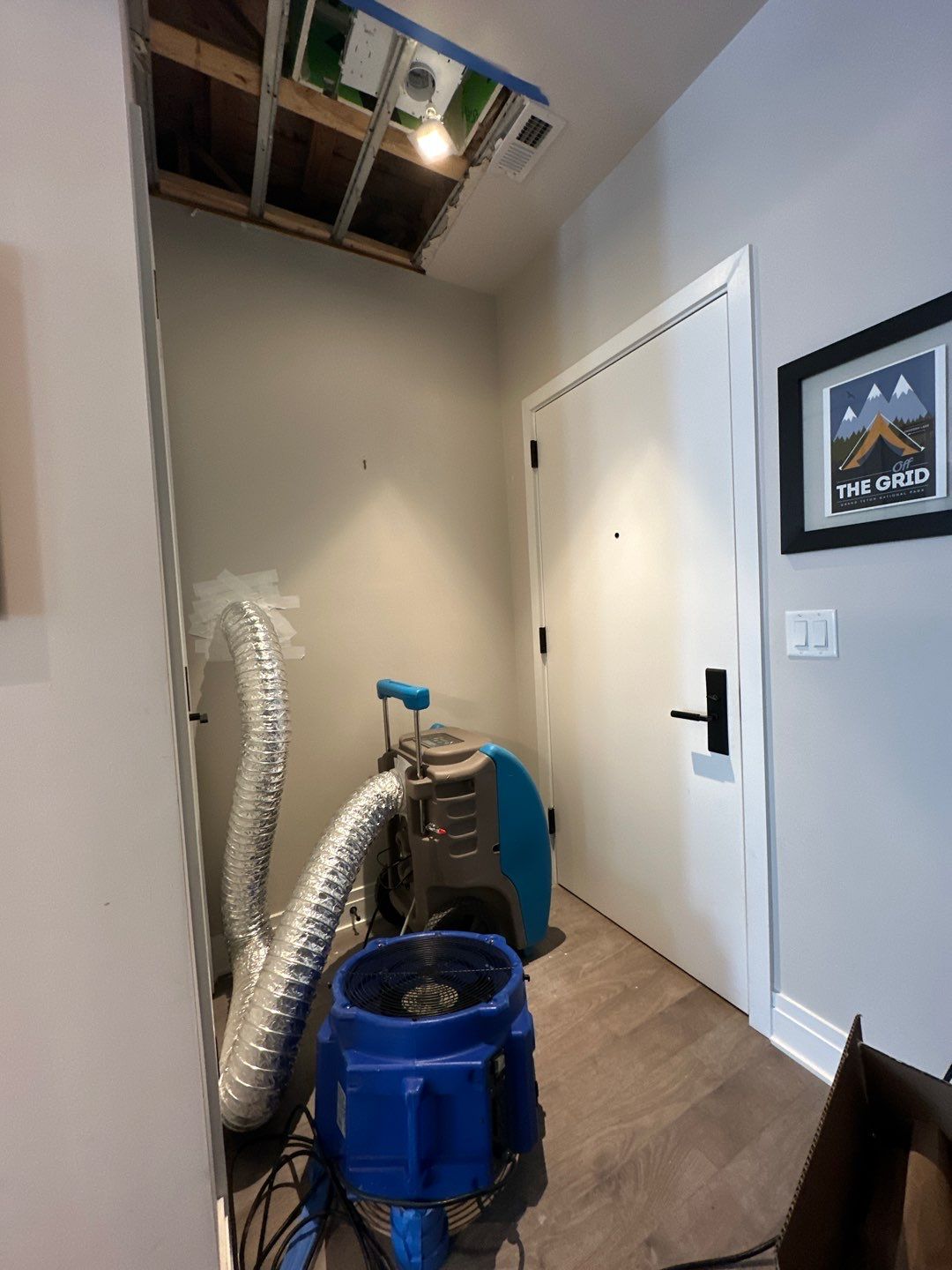
About this water damage restoration project
A bathroom leak had created hidden moisture that allowed mold to take hold, requiring both remediation and thorough structural drying. In Washington's dense urban core—where historic rowhouses and rehabilitated buildings often conceal aging plumbing behind original finishes—water intrusion can progress unnoticed until secondary damage appears.
We began with advanced thermal imaging and moisture meters to map the full extent of water migration behind walls and beneath flooring. This diagnostic phase identified pockets of saturation that visual inspection alone would have missed. Industrial-grade extractors removed all standing water, followed by the placement of high-capacity air movers and dehumidifiers to restore affected materials to dry standard. The work followed IICRC S520 protocols for mold remediation, ensuring that both the visible growth and the underlying moisture problem were addressed together.
Continuous monitoring throughout the drying cycle confirmed that humidity levels and material moisture content were trending toward equilibrium, preventing rebound or secondary mold colonization. The homeowner's review reflected relief that the problem had been traced to its source and resolved without unnecessary demolition. Five project photos document the progression from initial assessment through equipment deployment to final verification, showing a methodical approach that prioritized both immediate remediation and long-term stability.
Frequently asked questions
How does thermal imaging help find hidden water damage after a water intrusion in Washington, DC homes?
Restoration Doctor uses thermal imaging cameras to detect temperature differentials that reveal moisture trapped behind walls, under flooring, and in ceiling cavities—common in the region's established single-family homes where older framing and insulation can hide saturated materials. This non-invasive technology maps the full extent of water migration before extraction and drying begin, ensuring no pockets of moisture are left to fuel mold growth later. For this Washington job involving both standing water and subsequent mold, thermal inspection pinpointed hidden saturation that moisture meters alone might have missed.
Why did mold develop after the water intrusion, and how was it addressed?
Mold colonized because the initial water intrusion created sustained moisture in building materials—a risk amplified by the Mid-Atlantic's humid summers, which slow natural evaporation and keep relative humidity elevated indoors. Restoration Doctor's scope included structural drying with industrial dehumidifiers and air movers to eliminate the moisture source, followed by mold remediation to remove contaminated materials and treat affected surfaces. Continuous monitoring ensured drying reached the thresholds necessary to prevent recurrence, addressing both the water damage and the mold it had already triggered.
What does the structural drying process involve for a water loss like this one?
Structural drying for this Washington job began with standing-water extraction using high-capacity extractors, then progressed to controlled evaporation with strategically placed air movers and commercial dehumidifiers running continuously. Restoration Doctor monitored moisture levels in framing, subfloors, and wall cavities daily until readings confirmed materials had returned to dry standard—critical in preventing secondary damage or mold reactivation. The process typically takes several days depending on the materials affected and ambient humidity, which Mid-Atlantic summers can prolong.
Can water damage and mold remediation happen at the same time?
Restoration Doctor sequences the work so that water extraction and structural drying come first, stabilizing the environment and halting mold's moisture supply, before mold remediation proceeds in earnest. Attempting remediation while materials remain wet is ineffective because active moisture will simply allow new growth. For this job, dehumidification and drying created the stable, low-humidity conditions necessary for safe mold removal and surface treatment, ensuring the remediation would hold once complete.
How quickly should I call for water damage restoration after discovering standing water?
Restoration Doctor recommends contacting a restoration professional immediately upon discovering standing water, as delays allow moisture to migrate deeper into building assemblies and create conditions for microbial growth—exactly what occurred in this Washington case, where initial water intrusion progressed to mold before remediation began. Prompt extraction, moisture mapping, and controlled drying minimize both structural damage and the likelihood of secondary contamination, particularly in the region's humid climate where evaporation alone cannot keep pace with saturation.
Explore more restoration work
All projects in Washington · Water Damage Restoration in Washington
Water, fire, or mold damage in Washington?
Restoration Doctor responds 24/7 across Washington and Northern Virginia. Free assessment and transparent, insurance-friendly estimates — no obligation.
See our Water Damage Restoration services at restorationdoctors.com →