Small Flooding In closet
About this water damage restoration project
A small closet flood in a Washington, DC rowhouse demonstrated how quickly the District's humid Mid-Atlantic climate can accelerate secondary damage when water sits unaddressed—even in a confined space. The homeowner discovered standing water that had already begun promoting mold growth, making prompt containment and removal the first priority.
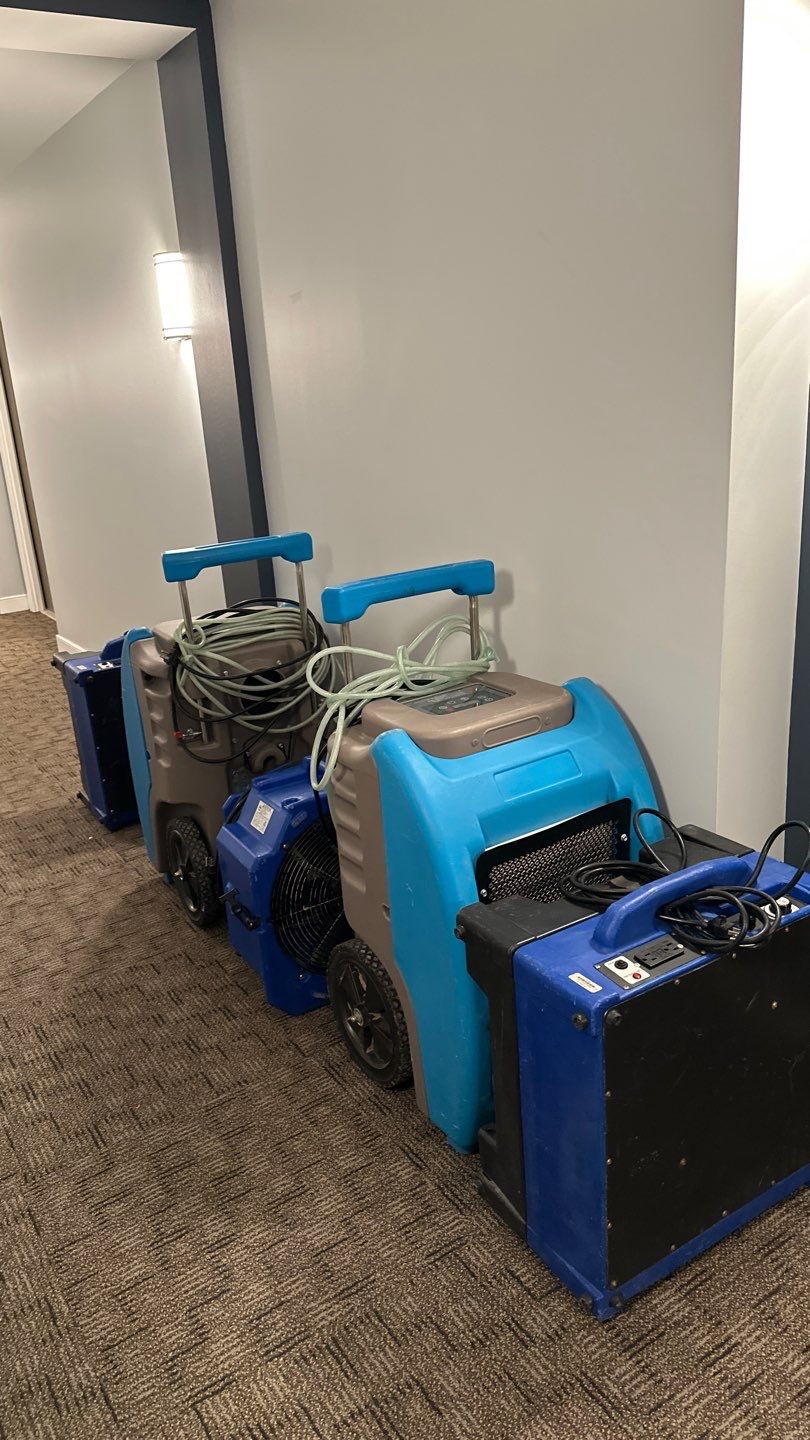
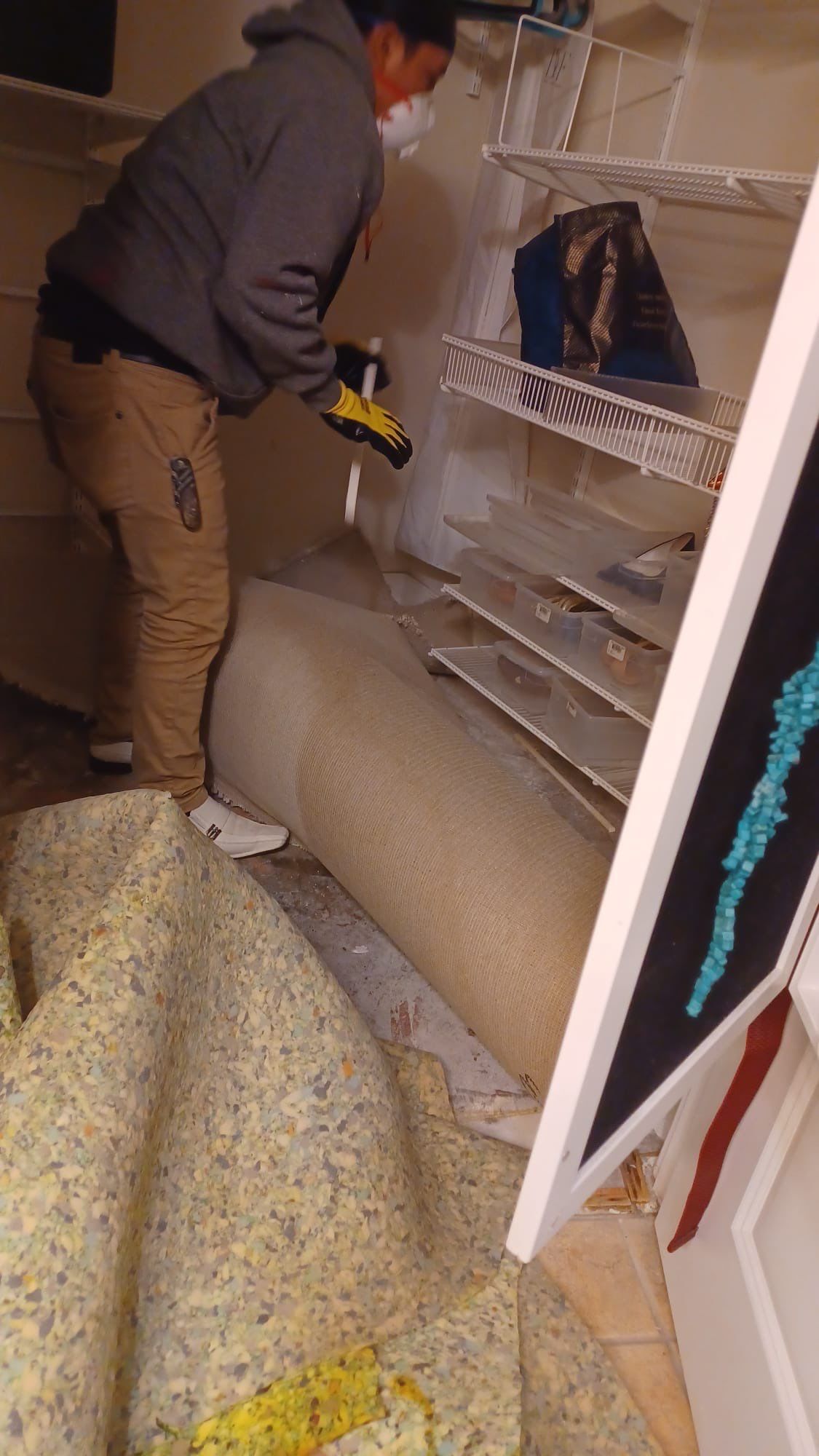
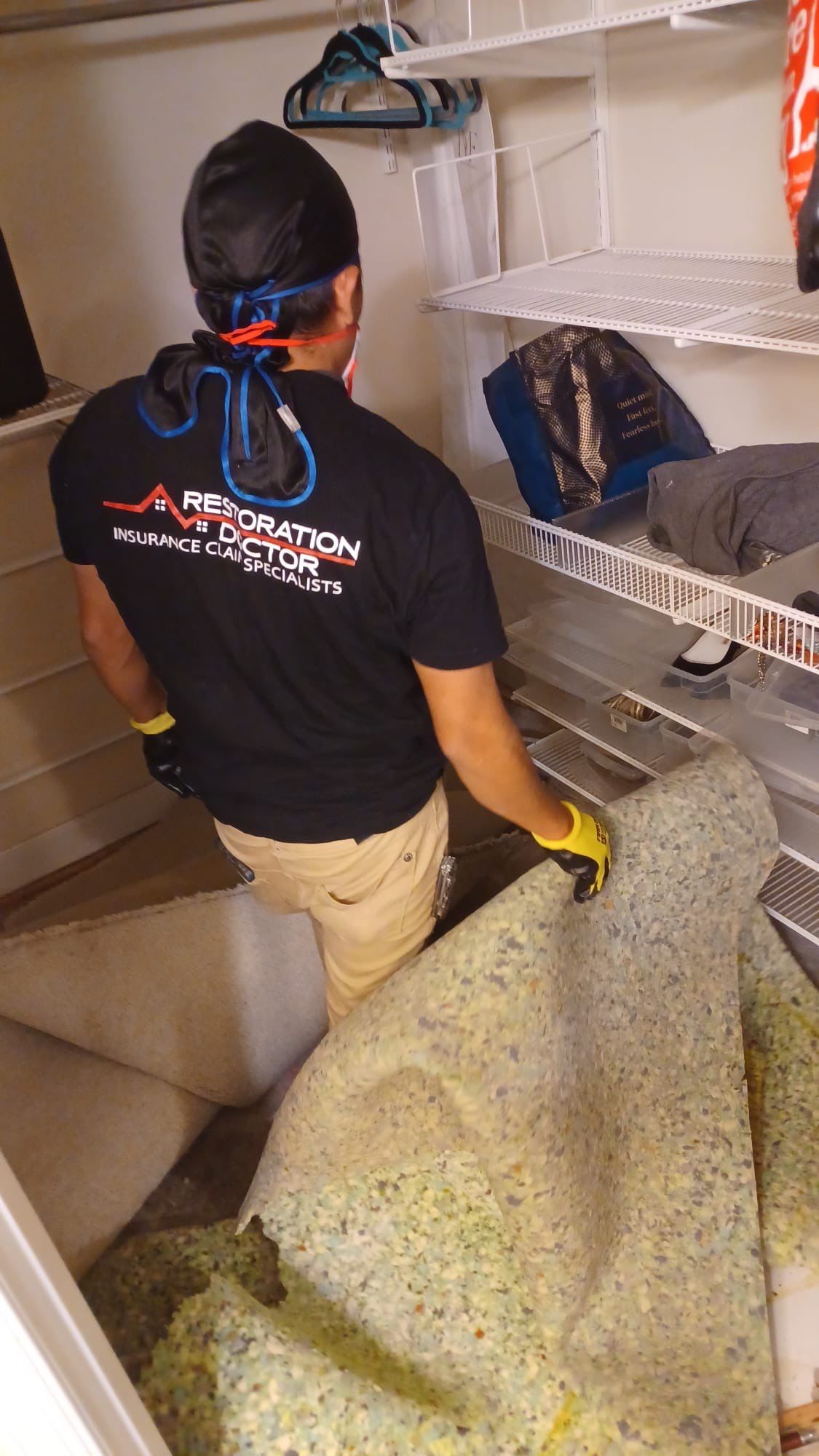
We pulled the saturated carpet and padding immediately to halt further moisture migration, then removed the affected drywall and underlying insulation where wicking had occurred. Baseboards were detached to expose the wall cavity and ensure no hidden moisture remained trapped behind finished surfaces. With the envelope opened, we positioned industrial-grade dehumidifiers and air movers to drive the space to dry standard, following IICRC S500 protocols for structural drying.
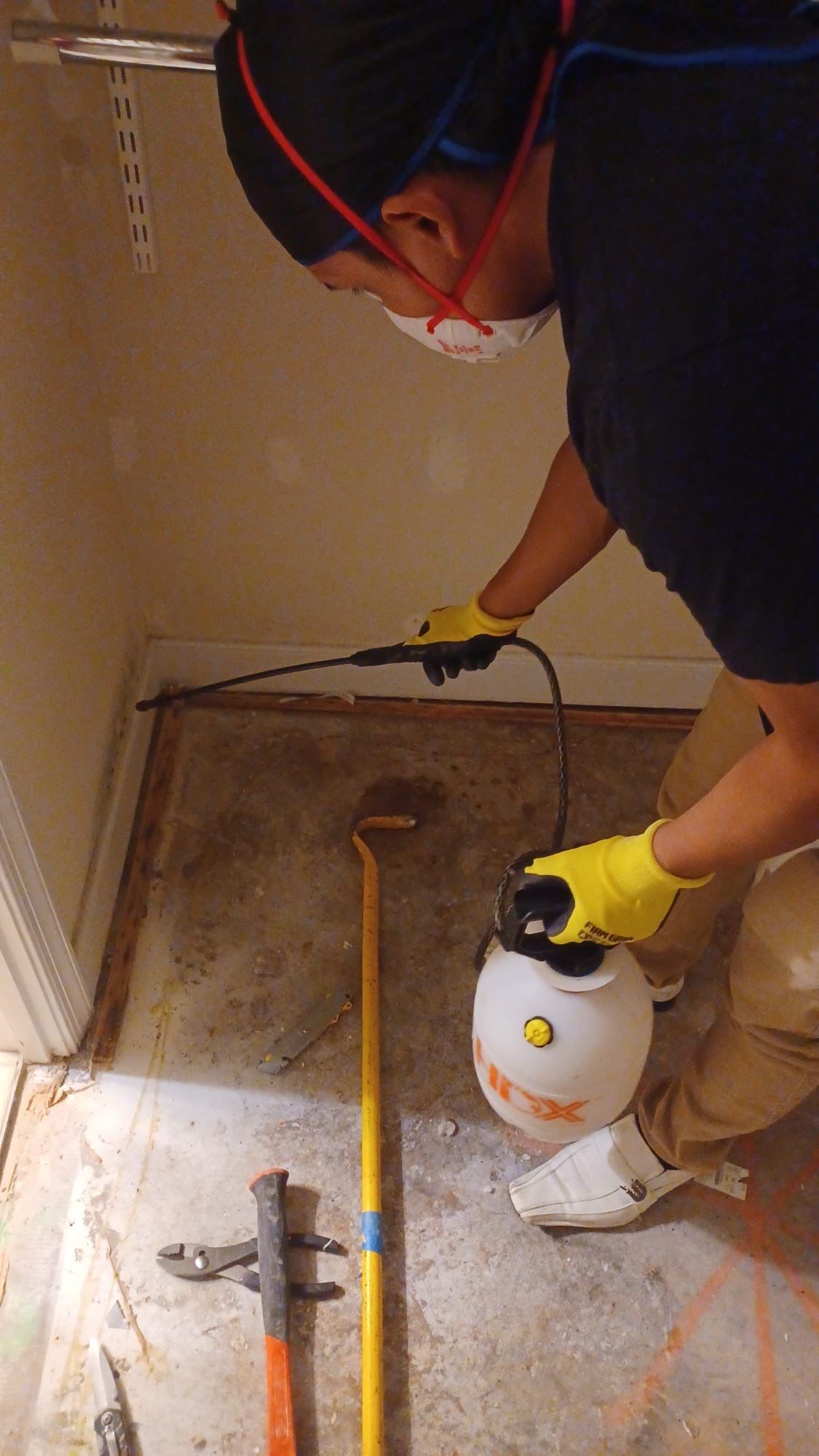
Once psychrometric readings confirmed the closet had returned to equilibrium, we sanitized all exposed surfaces to address the mold that had begun during the water-intrusion window. The homeowner noted in their review that the team worked efficiently and left the space ready for reconstruction. The closet was returned to service dry, clean, and safe—a small loss contained before it could spread into adjacent living areas.
Frequently asked questions
Why was carpet and padding removal necessary after the closet flood in this Washington, D.C. home?
Restoration Doctor removed the water-damaged carpet and padding immediately because porous materials like carpet backing and foam padding absorb standing water quickly and cannot be effectively dried in place without releasing trapped moisture that feeds mold colonization. In the dense, humid conditions common to D.C.'s Mid-Atlantic summers, saturated carpet creates an ideal environment for microbial growth within 24 to 48 hours. Prompt extraction of these materials, followed by structural drying of the subfloor and wall cavities, was essential to prevent secondary damage and ensure the closet remained safe for use.
What does baseboard removal accomplish during water damage restoration in a closet?
Detaching baseboards allows Restoration Doctor's technicians to access the wall cavity behind the drywall and verify that moisture has not wicked upward into the framing or insulation. In older D.C. rowhouses and rehabilitated urban buildings, wall assemblies often lack vapor barriers, so water from a closet flood can migrate laterally along the base plate. Removing baseboards also promotes airflow at the floor-to-wall junction, accelerating evaporation and ensuring complete structural drying before reinstallation.
How does dehumidification prevent mold growth after drywall and insulation are removed?
Industrial-grade dehumidifiers extract moisture from the air and building materials simultaneously, lowering relative humidity to levels that inhibit mold spore germination—typically below 60 percent. After Restoration Doctor removed the affected drywall and insulation from this Washington closet, dehumidifiers worked in tandem with air movers to dry the exposed framing and subfloor to standard moisture content. This controlled environment prevented the hot, humid D.C. summer air from reintroducing moisture and ensured the sanitized space remained dry and ready for reconstruction.
Does homeowners insurance typically cover mold remediation that follows a sudden water intrusion like a closet flood?
Coverage depends on the cause of the water intrusion and the policy's specific mold exclusions, but many homeowners policies in Washington, D.C. will cover mold remediation if it results directly from a covered peril such as a burst pipe or appliance failure, provided the homeowner mitigates promptly. Restoration Doctor documents the timeline and scope of water damage restoration—including carpet removal, structural drying, and sanitizing—to support insurance claims. Policyholders should review their declarations page and contact their carrier immediately after a loss to confirm eligibility and any sub-limits on mold coverage.
Explore more restoration work
All projects in Washington · Water Damage Restoration in Washington
Water, fire, or mold damage in Washington?
Restoration Doctor responds 24/7 across Washington and Northern Virginia. Free assessment and transparent, insurance-friendly estimates — no obligation.
See our Water Damage Restoration services at restorationdoctors.com →