Improper Installation of Solar Panels Leading to Basement Leaks
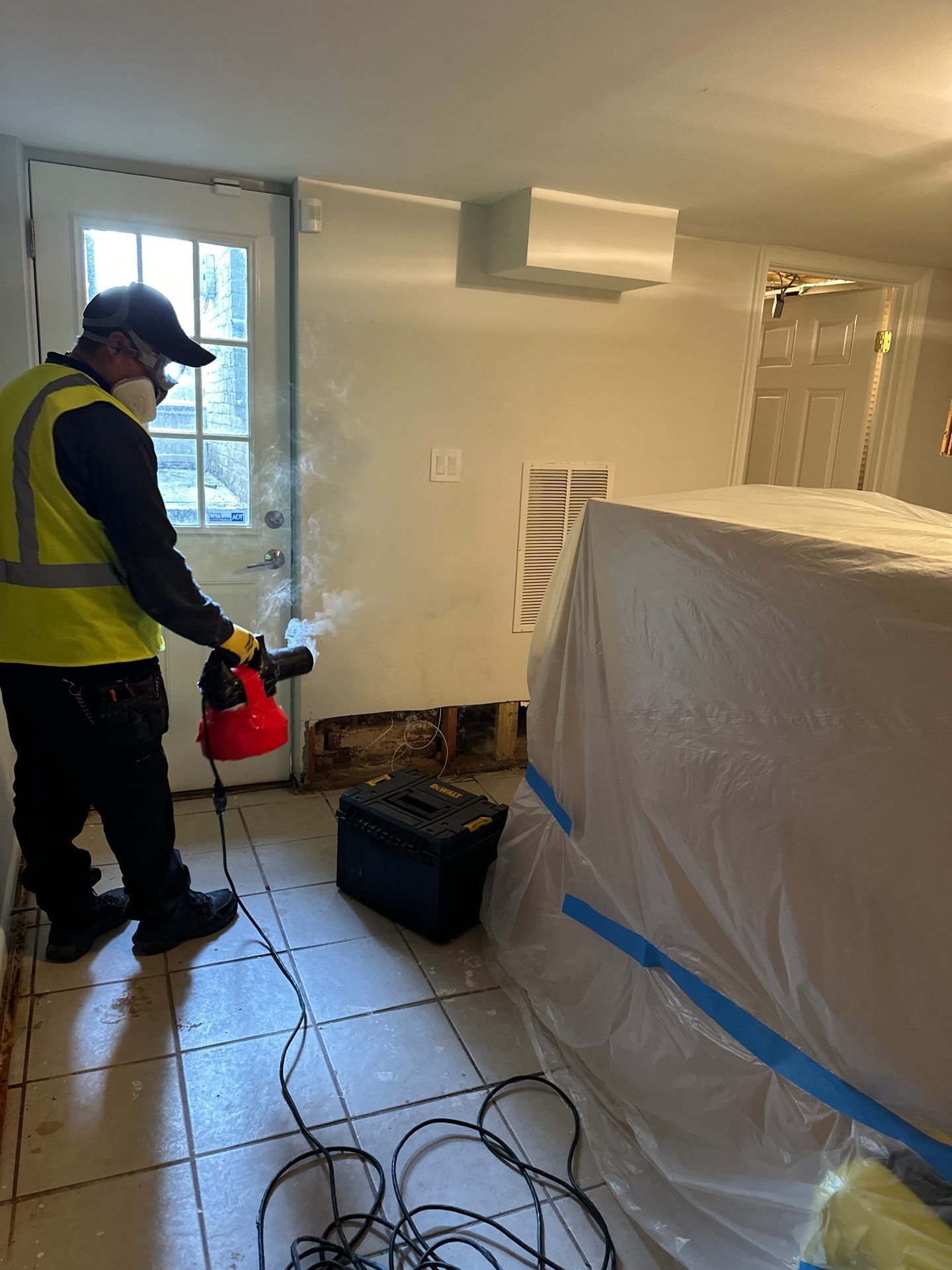
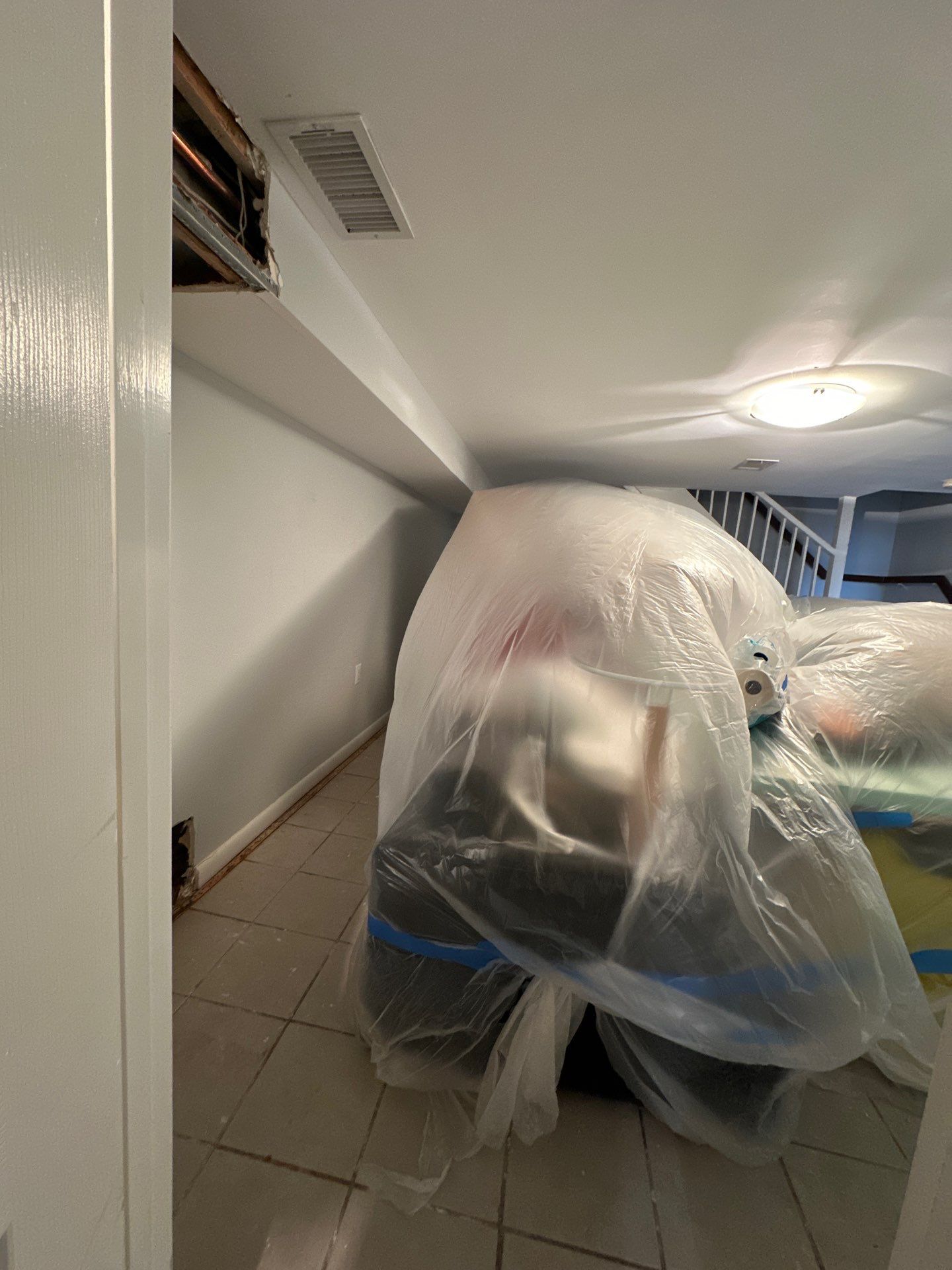
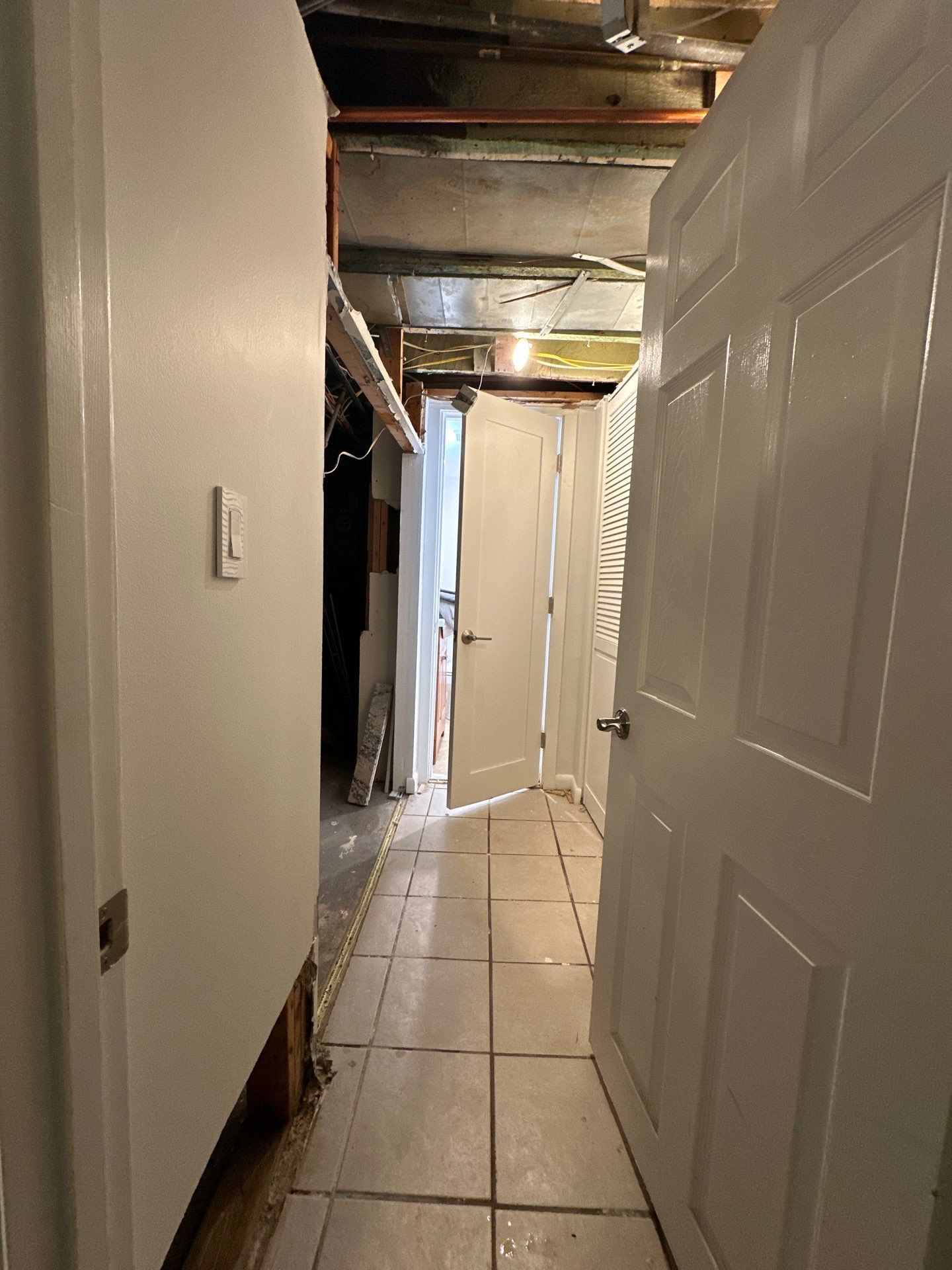
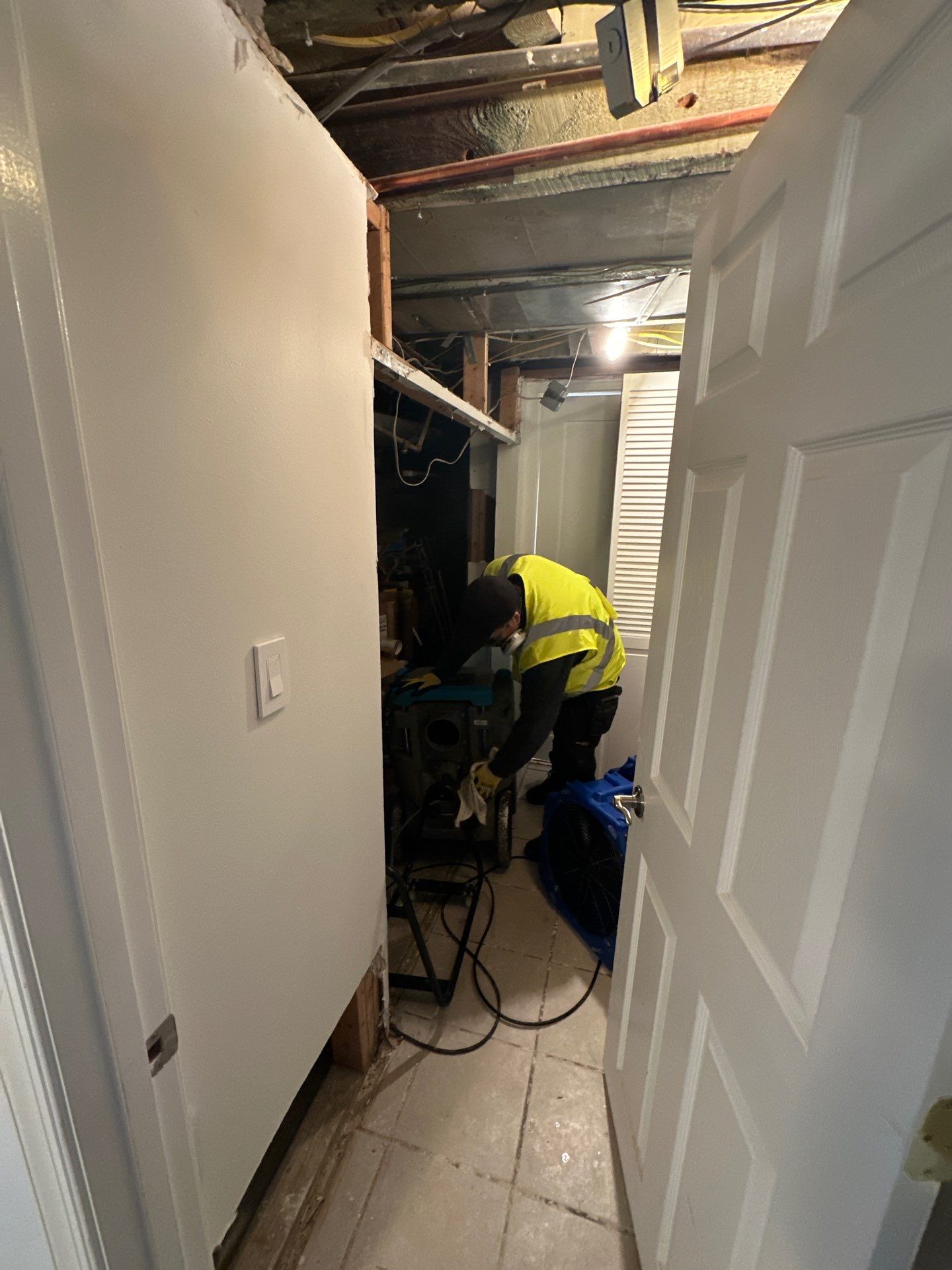
About this mold remediation project
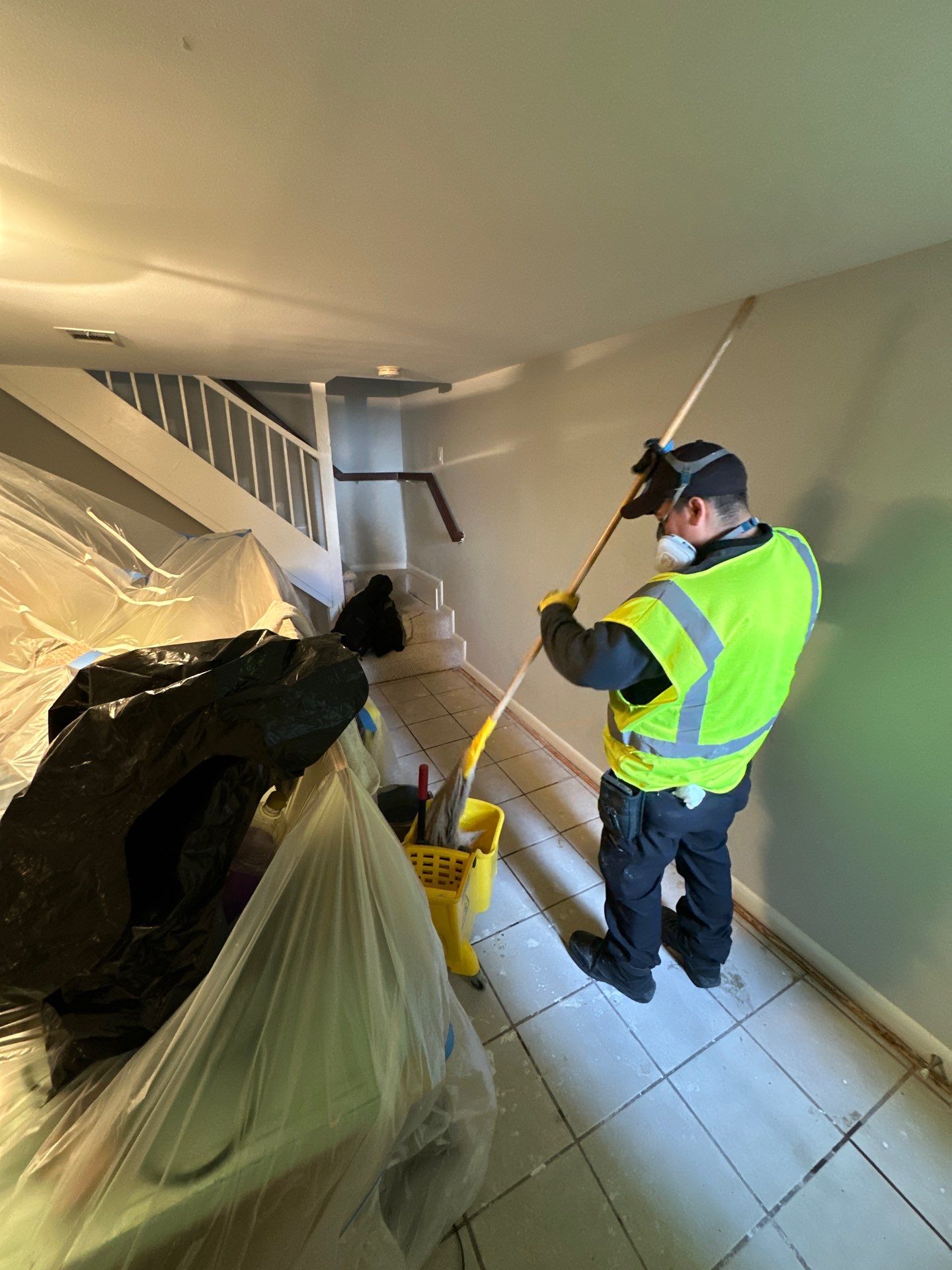
Solar panel installation gone wrong turned a Washington rowhouse basement into a water intrusion site requiring full mold remediation. In the District's dense historic housing stock, where aging urban infrastructure already challenges drainage systems, rooftop modifications that breach the building envelope can quickly cascade into interior water damage—particularly in below-grade spaces with limited natural ventilation.
The work began with locating and sealing the compromised roof penetrations where improperly flashed panel mounts had allowed repeated water entry. Once the envelope was secure, we extracted standing water from the basement floor and set up commercial dehumidifiers to pull residual moisture from the concrete slab and lower wall cavities. Moisture mapping confirmed elevated readings in framing and stored materials, several of which required disposal.
With the space dried to baseline, we assessed structural surfaces for microbial colonization. Affected drywall sections and compromised framing were removed, and all remaining surfaces received antimicrobial treatment per IICRC S520 protocol to arrest further growth. Replacement materials were installed, the basement returned to its pre-loss layout, and the homeowners reported full confidence in the completed work—a sentiment reflected in their review of the project.
Reviews from Restoration Doctor customers
Due to the heavy rain recently my basement had flooded and these guys came in almost immediately after I had called!! They worked quickly and got it done then left. I would say 100% professional and reliable.
Frequently asked questions
How does solar panel installation cause water intrusion in Washington, DC rowhouses and urban buildings?
Improperly flashed or sealed roof penetrations during solar panel installation can create pathways for water to enter, especially during the heavy summer rainstorms common to the Mid-Atlantic. In Washington's dense housing stock—including historic rowhouses with shared parapet walls—water that breaches the roof envelope often travels through wall cavities before appearing in basements or lower floors. Restoration Doctor addressed this by identifying and sealing the entry points at the roof level before extracting standing water and drying the affected basement structure.
What does standing-water extraction and structural drying involve after basement flooding in Washington, DC?
Restoration Doctor deployed truck-mounted extractors to remove standing water from the basement, then placed commercial dehumidifiers and air movers to pull residual moisture from concrete floors, drywall, and framing. In Washington's humid summer climate, structural drying requires controlled airflow and continuous moisture monitoring to bring materials back to equilibrium before mold can colonize. The process continued until all affected surfaces met dry-standard thresholds, ensuring the space was safe for reconstruction.
Why is antimicrobial treatment necessary after water damage in a DC basement?
Once standing water is removed and materials are dried, surfaces that were submerged or saturated still carry organic residue and microbial contamination that can support mold growth if left untreated. Restoration Doctor applied EPA-registered antimicrobial agents to all affected basement surfaces—walls, floors, and remaining structural elements—to eliminate existing spores and inhibit future colonization. This step is especially critical in Washington's humid conditions, where below-grade spaces remain at elevated risk even after drying.
How long does mold remediation typically take in Washington, DC after water intrusion?
The timeline depends on the extent of water migration and the materials affected, but a basement loss like this—requiring extraction, drying, material removal, and antimicrobial treatment—typically spans several days to a week. Restoration Doctor's work in Washington prioritizes thorough moisture mapping and controlled drying over speed, ensuring that hidden moisture in masonry or wood framing doesn't trigger secondary mold growth after the visible work is complete.
Will my homeowners insurance cover water damage from improperly installed solar panels in DC?
Coverage depends on your policy's exclusions and whether the installation contractor carried liability insurance, but many homeowners policies do cover sudden water intrusion from faulty workmanship if the loss is reported promptly. Restoration Doctor works directly with insurance adjusters in the Washington area to document the source of loss, the scope of damage, and the necessary remediation steps, helping homeowners navigate the claims process and secure appropriate compensation for both emergency mitigation and permanent repairs.
Explore more restoration work
All projects in Washington · Mold Remediation in Washington
Water, fire, or mold damage in Washington?
Restoration Doctor responds 24/7 across Washington and Northern Virginia. Free assessment and transparent, insurance-friendly estimates — no obligation.
See our Mold Remediation services at restorationdoctors.com →