Water Damage Restoration Progress
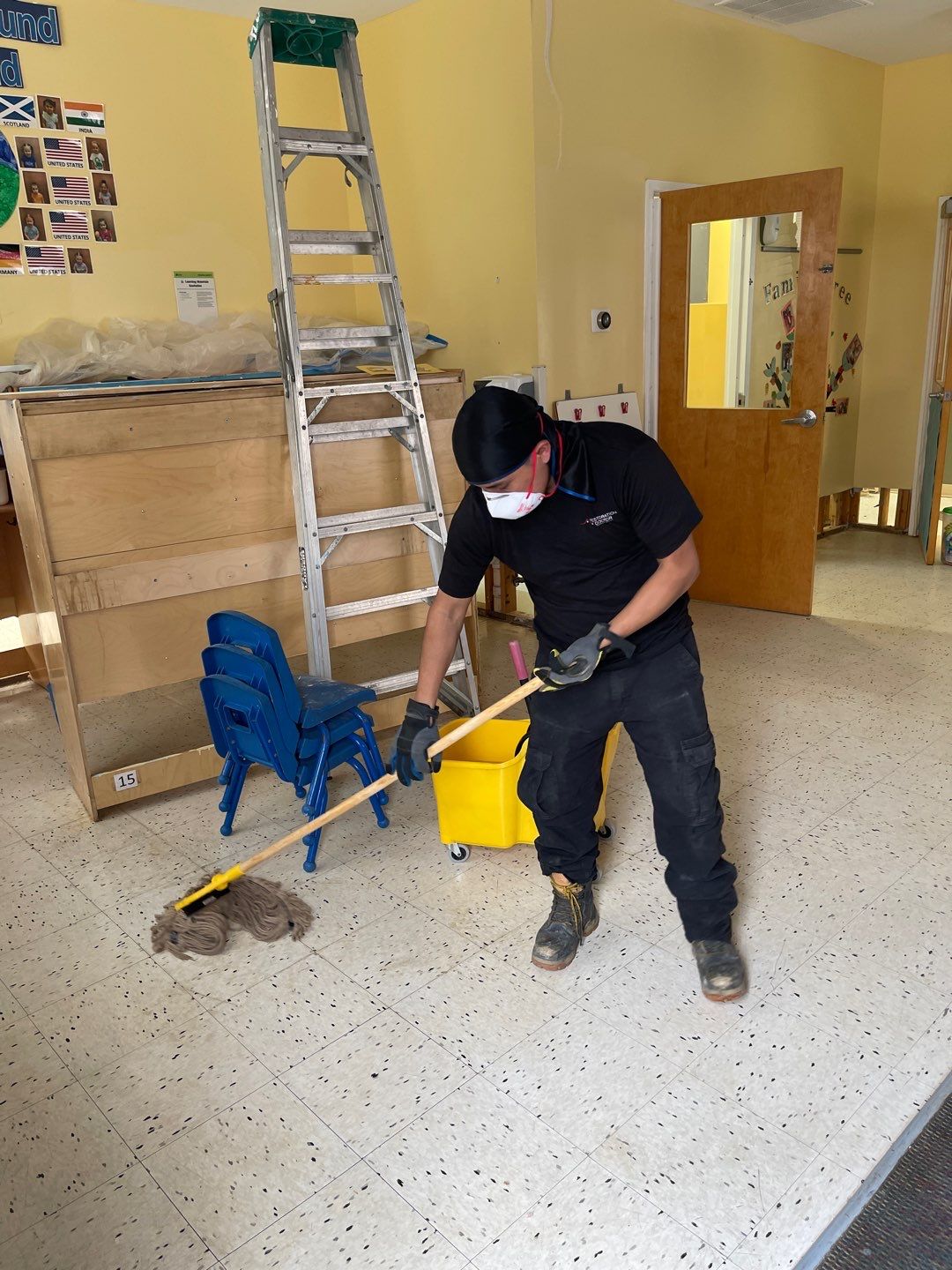
About this water damage restoration project
Mold growth in classroom and office spaces threatened the learning environment at this Leesburg property following an unresolved water intrusion. In Loudoun County's humid Mid-Atlantic climate—where hot summers accelerate microbial amplification in buildings with lingering moisture—secondary damage from water events demands swift containment and remediation to protect indoor air quality.
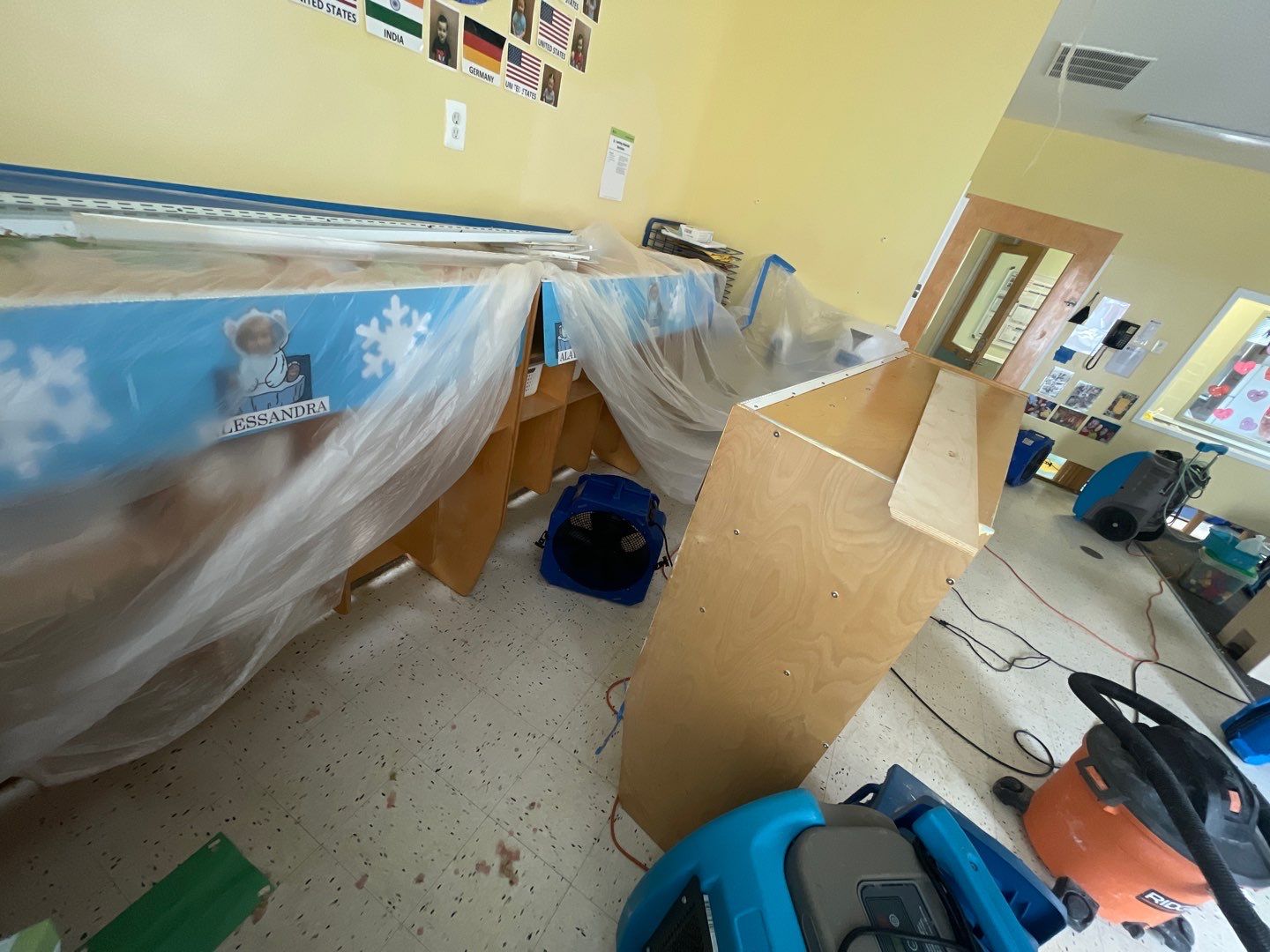
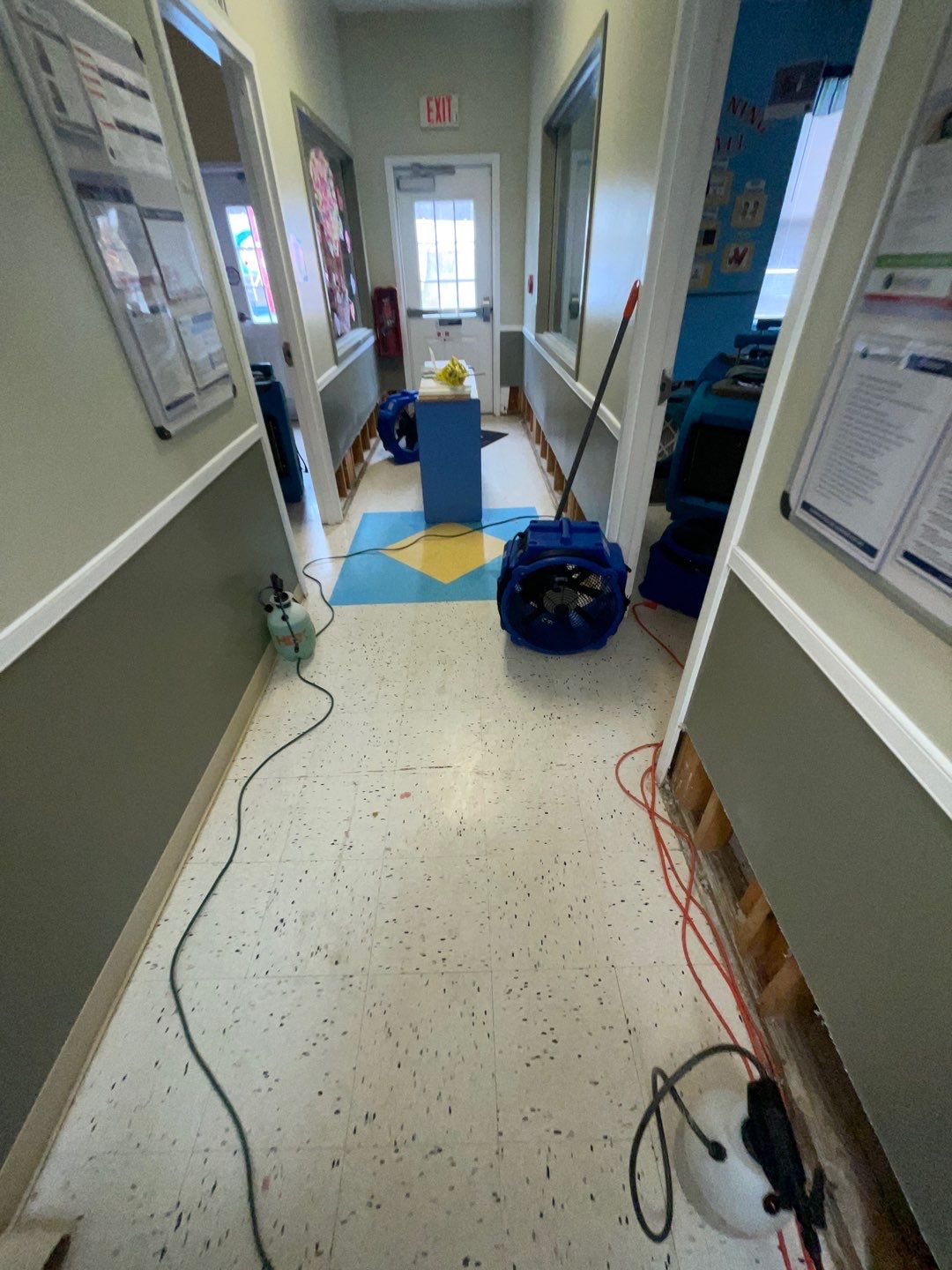
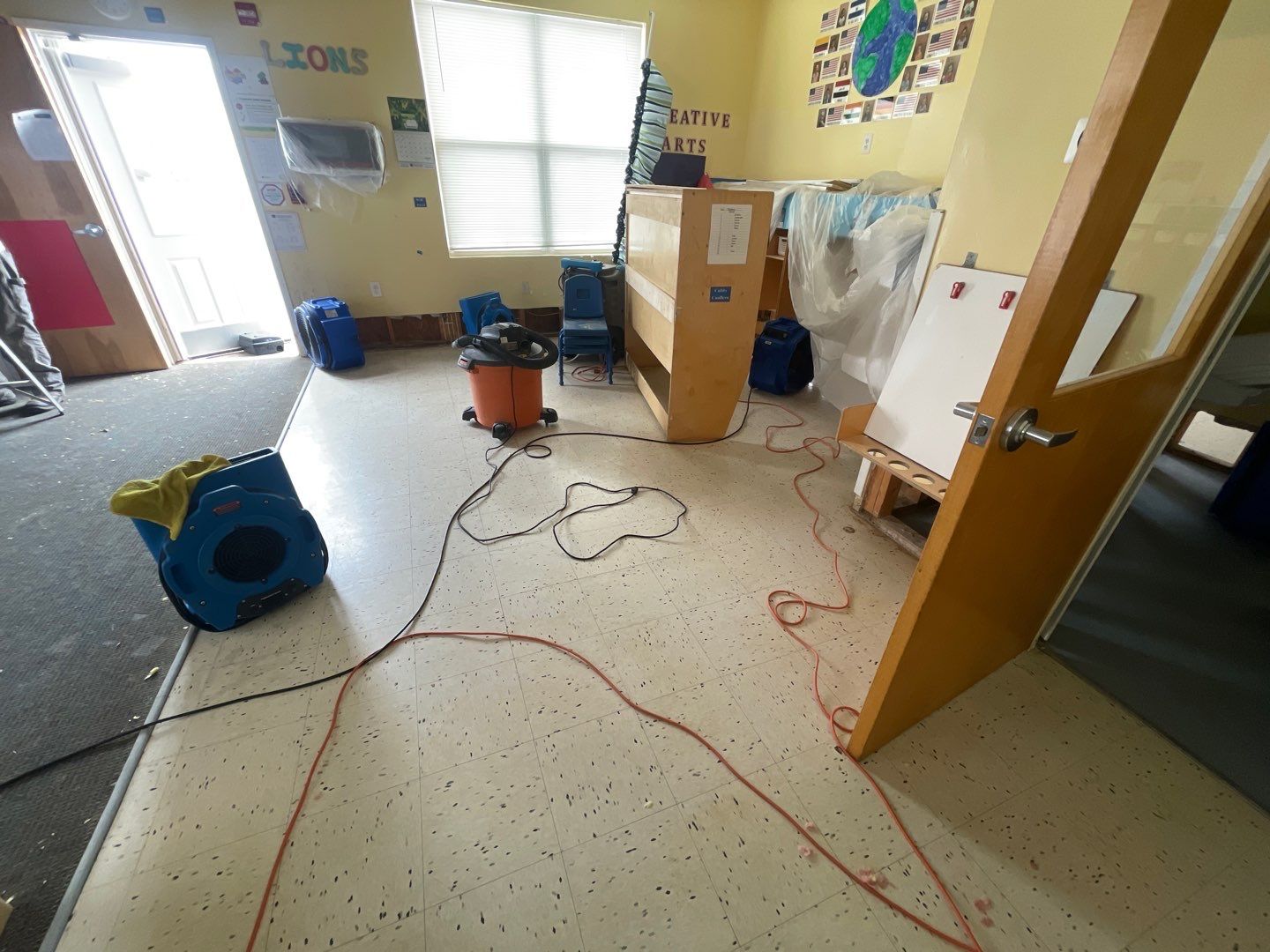
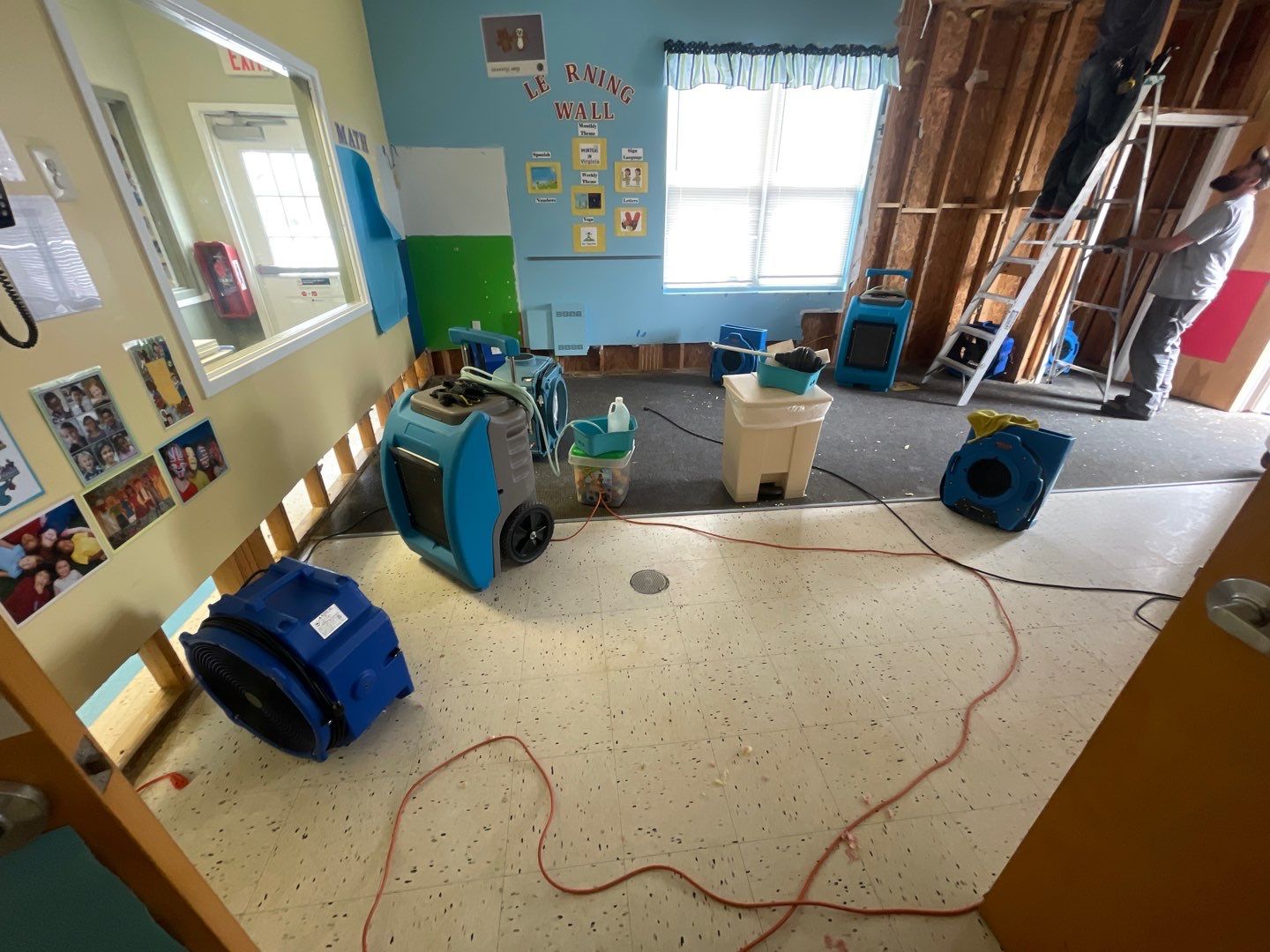
Our technicians removed compromised drywall to expose the full extent of affected framing and sheathing, then sanitized all exposed surfaces according to IICRC S520 mold remediation protocols. High-powered dehumidifiers and air movers were positioned throughout the classrooms and office areas to drive moisture from structural cavities while we monitored hidden zones for residual dampness. Protective sheeting covered furniture and equipment to prevent cross-contamination during the demolition and drying phases, maintaining a controlled workspace in an occupied educational facility.
The property owner noted in their review that the team's attention to dust control and scheduling around school operations minimized disruption. Continuous moisture mapping confirmed drying progress before we cleared the space for reconstruction, ensuring no hidden pockets remained that could support future growth.
Frequently asked questions
Why does mold remediation in Leesburg classrooms require both dehumidification and structural drying?
In Loudoun County's hot, humid Mid-Atlantic summers, mold thrives when moisture lingers in porous materials like drywall and framing. Restoration Doctor uses high-powered dehumidifiers and air movers together to pull moisture from both the air and structural cavities, preventing colonization in hidden spaces behind walls. For this Leesburg school project, we removed compromised drywall and monitored concealed areas to ensure thorough drying before sanitizing exposed surfaces.
What does sanitizing mean during water damage restoration after mold is found?
Sanitizing involves applying antimicrobial agents to cleaned surfaces to inhibit remaining spore activity and prepare the area for safe reoccupancy. After Restoration Doctor removed water-damaged materials in this Leesburg facility, we treated exposed framing and subfloors with EPA-registered products, following the scope outlined in the IICRC S520 mold standard. This step is critical in educational spaces where air quality directly affects occupant health.
How long does a mold remediation project typically take in a Leesburg school building?
Timeline depends on the extent of water intrusion, affected square footage, and drying conditions—humidity and airflow in Loudoun County's summer climate can extend drying phases if not aggressively managed. For this classroom and office restoration, Restoration Doctor staged dehumidifiers and air movers continuously while monitoring moisture levels daily, with most projects of similar scope completing structural drying within several days to a week. Final clearance and reconstruction follow once readings meet safe thresholds.
Why did you cover furniture with protective sheeting during the mold remediation in Leesburg?
Removing drywall and disturbing mold-affected materials generates dust and airborne particulate that can settle on furnishings and equipment. Restoration Doctor draped protective sheeting over desks, filing cabinets, and classroom furniture in this Leesburg project to contain debris and simplify post-remediation cleanup. This containment practice also prevents cross-contamination, ensuring that once the affected structure is sanitized, unaffected items remain clean and safe for immediate use.
Explore more restoration work
All projects in Leesburg · Water Damage Restoration in Leesburg
Water, fire, or mold damage in Leesburg?
Restoration Doctor responds 24/7 across Leesburg and Northern Virginia. Free assessment and transparent, insurance-friendly estimates — no obligation.
See our Water Damage Restoration services at restorationdoctors.com →