Water Damage Restoration Leesburg VA
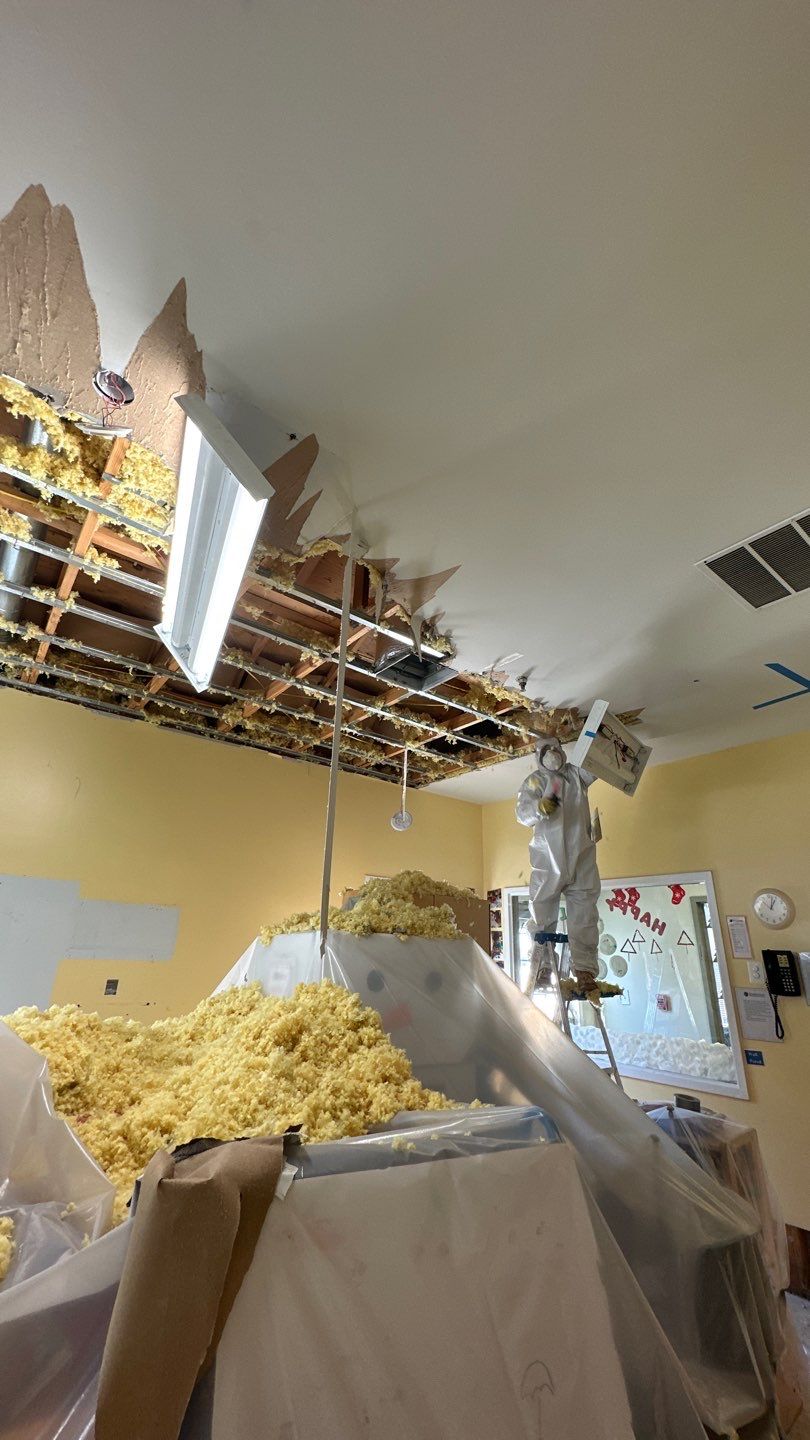
About this water damage restoration project
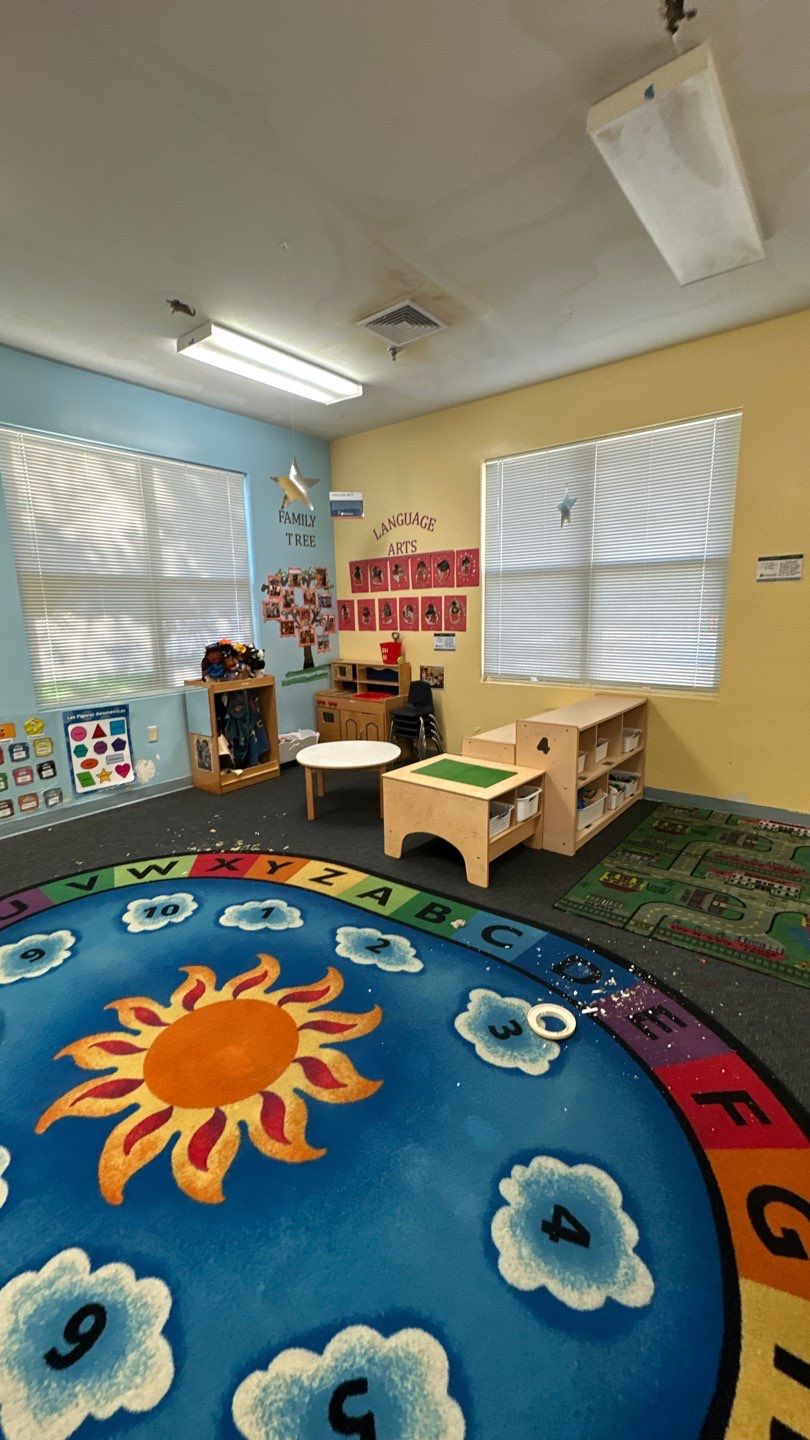
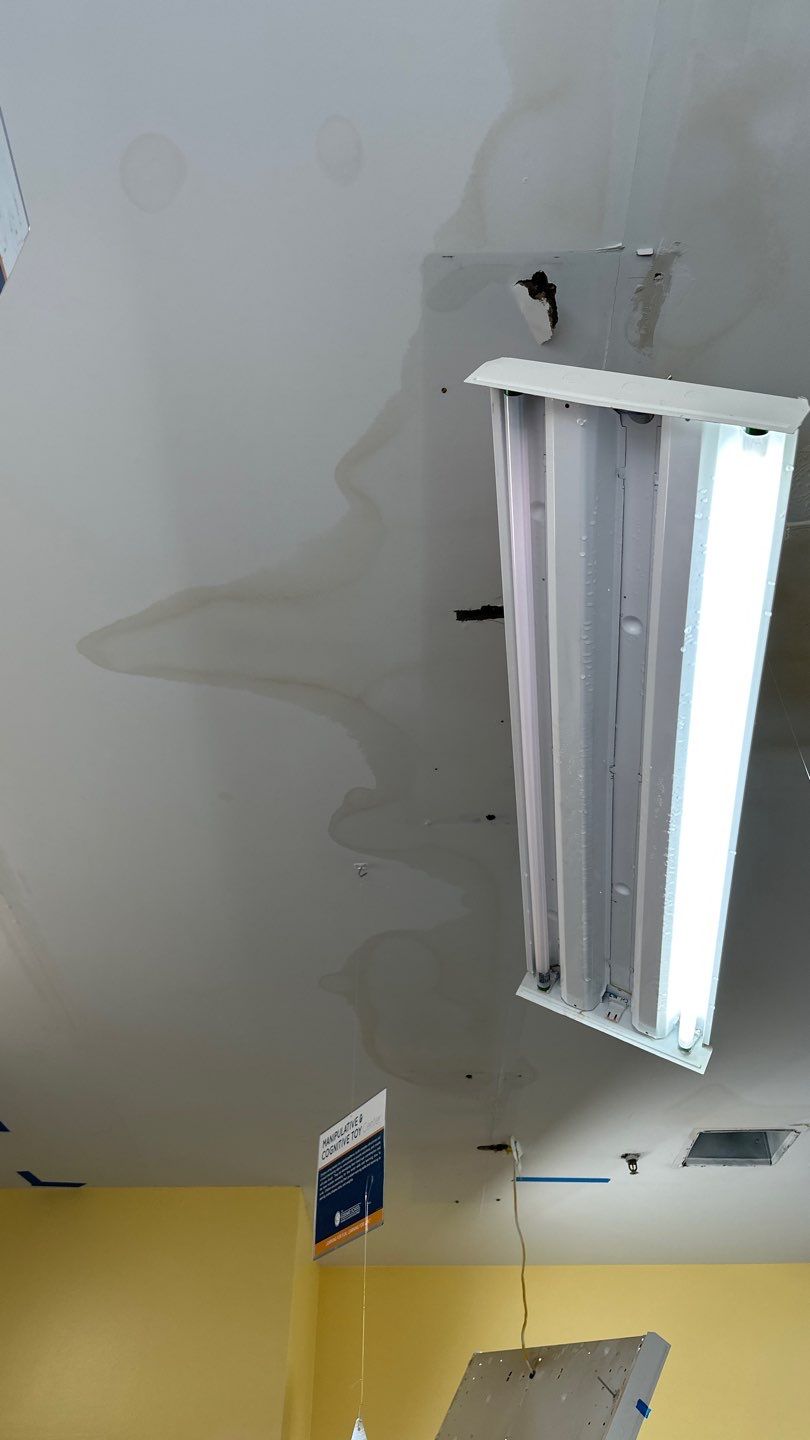
Water intrusion had compromised a classroom's ceiling and carpeted flooring, creating conditions where mold began to establish itself. In Leesburg, situated in Loudoun County where hot, humid Mid-Atlantic summers accelerate microbial growth once moisture enters a building, this kind of progression demands immediate intervention to protect indoor air quality—especially in an educational space.
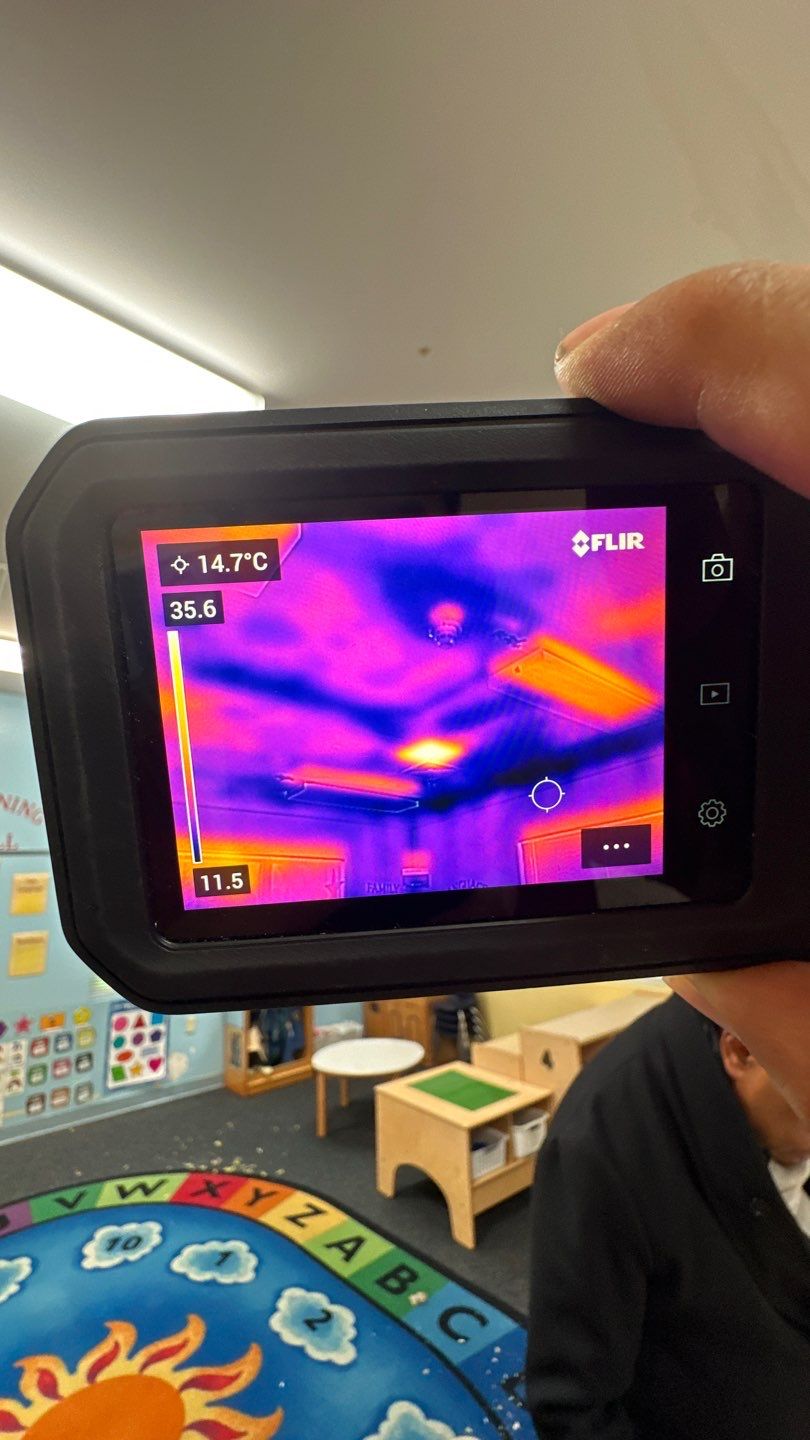
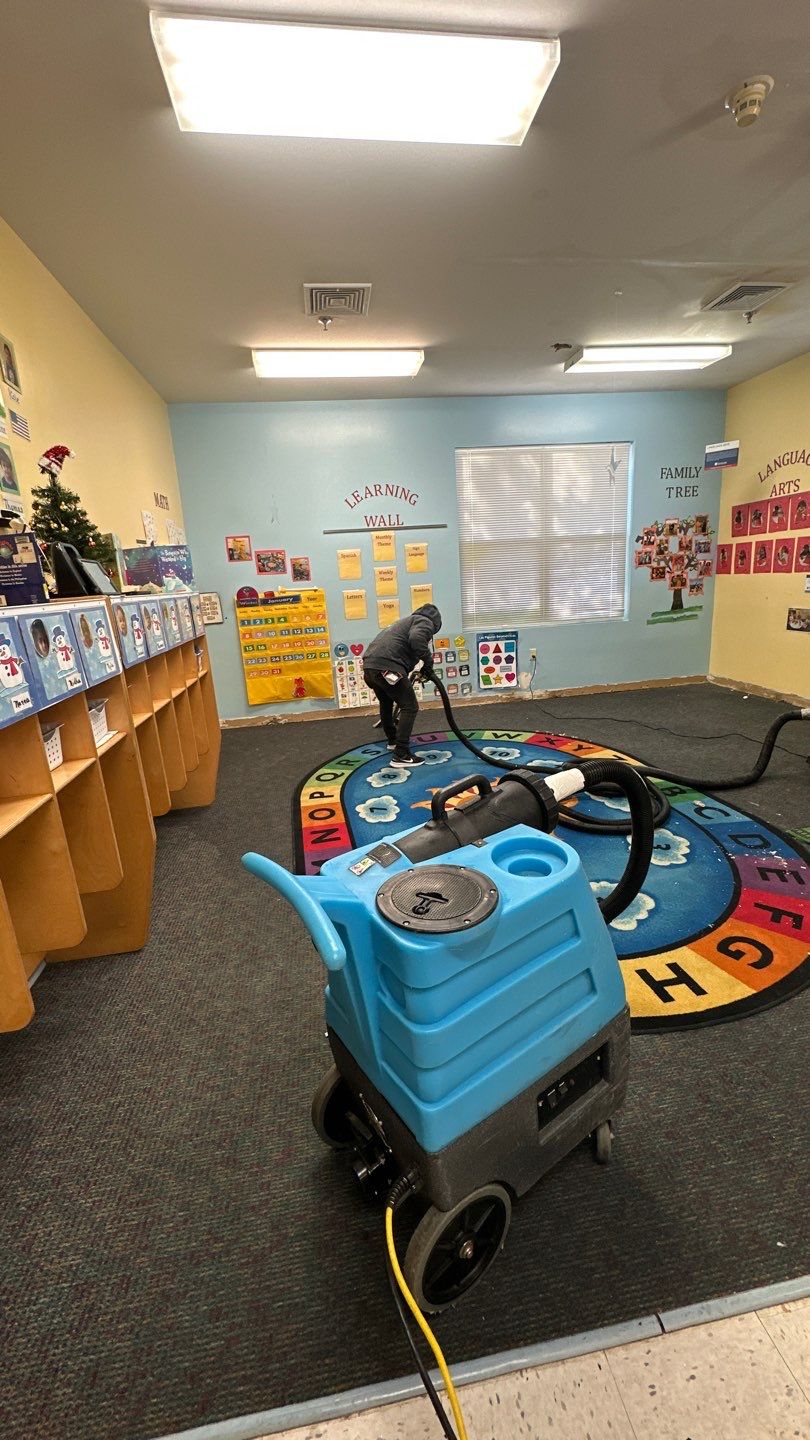
Our technicians extracted standing water from the affected areas, then deployed thermal imaging to map moisture that had migrated into hidden cavities behind wall surfaces and above ceiling planes. This non-invasive scanning revealed the full extent of saturation, allowing us to position drying fans and commercial dehumidifiers precisely where they would pull moisture from structural materials most efficiently, following IICRC S500 protocols for controlled evaporation rates.
Once moisture readings confirmed the space had returned to dry-standard conditions, we documented the substrate integrity and prepared a scope for any ceiling or flooring repairs the intrusion had made necessary. The classroom was cleared of both standing water and the elevated humidity that feeds mold colonization, restoring a safe, dry environment suited to daily student use.
Frequently asked questions
How does thermal imaging help find hidden moisture after water damage in a Leesburg classroom?
Restoration Doctor uses thermal-imaging cameras during water damage restoration in Leesburg to locate moisture trapped behind walls, above ceilings, and under flooring that visual inspection alone would miss. In this classroom job, thermal imaging revealed the full extent of water migration beyond the visible ceiling stain and wet carpet, guiding targeted drying equipment placement. This technology prevents incomplete drying that could lead to mold growth in Loudoun County's humid summers.
Why is dehumidification critical for drying a water-damaged classroom in Leesburg, VA?
Restoration Doctor deployed commercial dehumidifiers alongside air movers in this Leesburg classroom because removing airborne moisture is as important as evaporating it from surfaces. Loudoun County's hot, humid Mid-Atlantic climate means ambient moisture can slow structural drying and create conditions for mold colonization if humidity isn't actively controlled. Dehumidification accelerates the process and ensures materials dry to industry standards before repairs begin.
Can standing water in a carpeted classroom cause mold if not extracted quickly?
Yes — standing water saturates carpet padding and subfloor materials, creating an ideal environment for mold if not extracted within the first 24 to 48 hours. Restoration Doctor's rapid extraction and drying response in this Leesburg classroom prevented mold from establishing, particularly important given the region's summer humidity. The combination of water removal, thermal moisture mapping, and controlled drying addressed both visible and hidden moisture.
What does ceiling repair after water damage typically involve in Loudoun County schools?
After structural drying confirmed moisture levels returned to normal, Restoration Doctor's scope for this Leesburg classroom included repairing water-damaged ceiling materials. Depending on the extent of staining and structural compromise, repairs range from targeted patching and repainting to replacing drywall sections. The goal is to restore the ceiling to its pre-loss condition while ensuring no residual moisture remains that could compromise indoor air quality or structural integrity.
Explore more restoration work
All projects in Leesburg · Water Damage Restoration in Leesburg
Water, fire, or mold damage in Leesburg?
Restoration Doctor responds 24/7 across Leesburg and Northern Virginia. Free assessment and transparent, insurance-friendly estimates — no obligation.
See our Water Damage Restoration services at restorationdoctors.com →