Water Damage Restoration
About this water damage restoration project
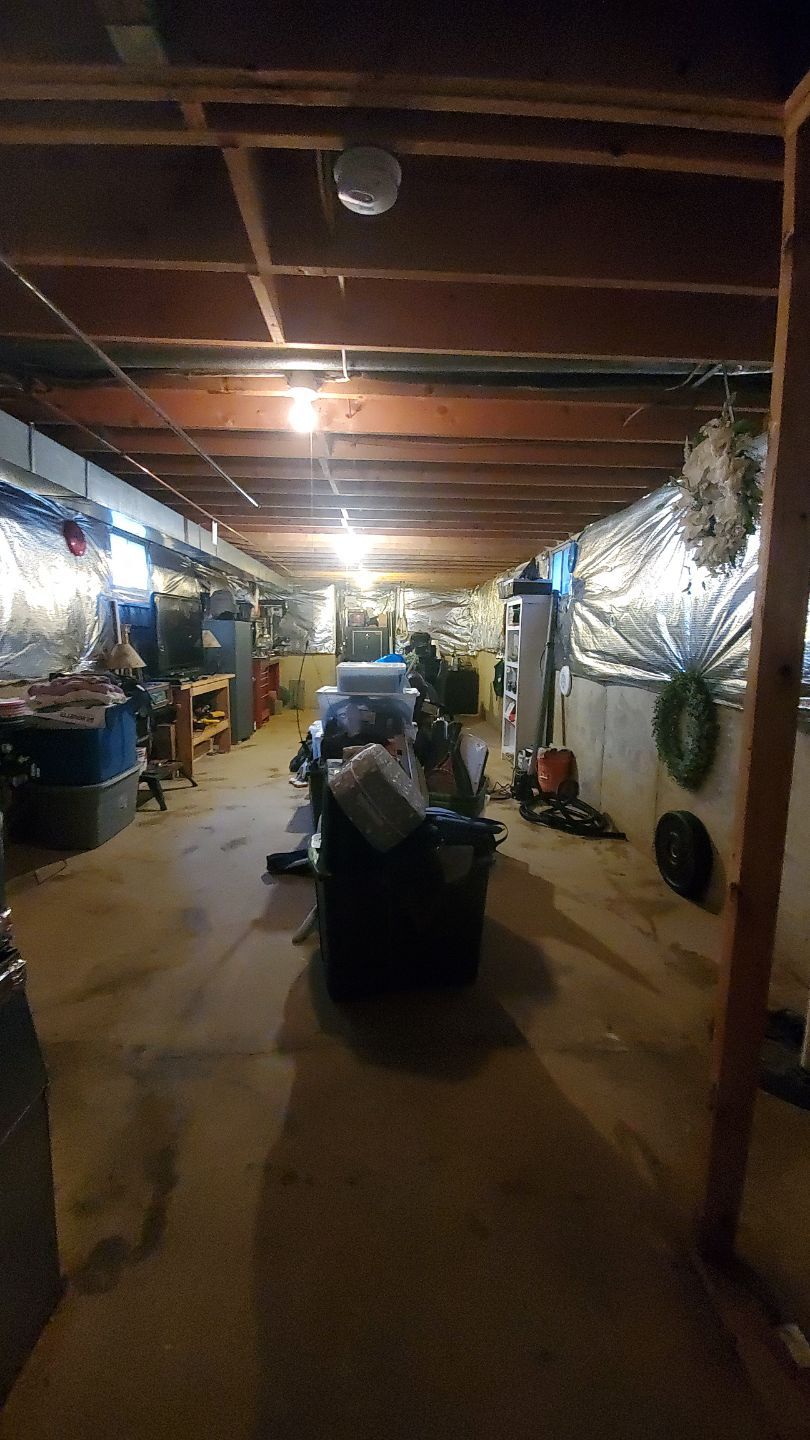
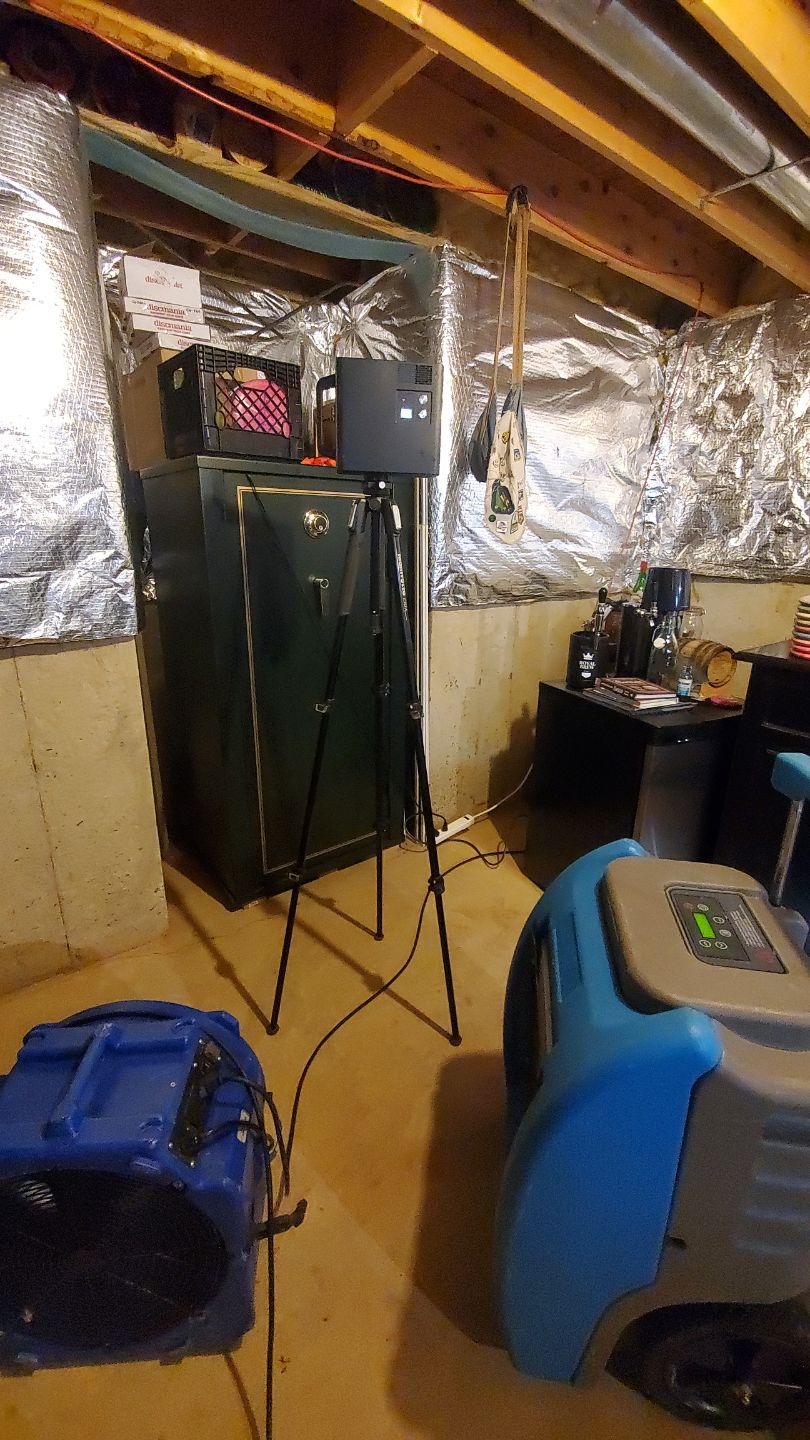
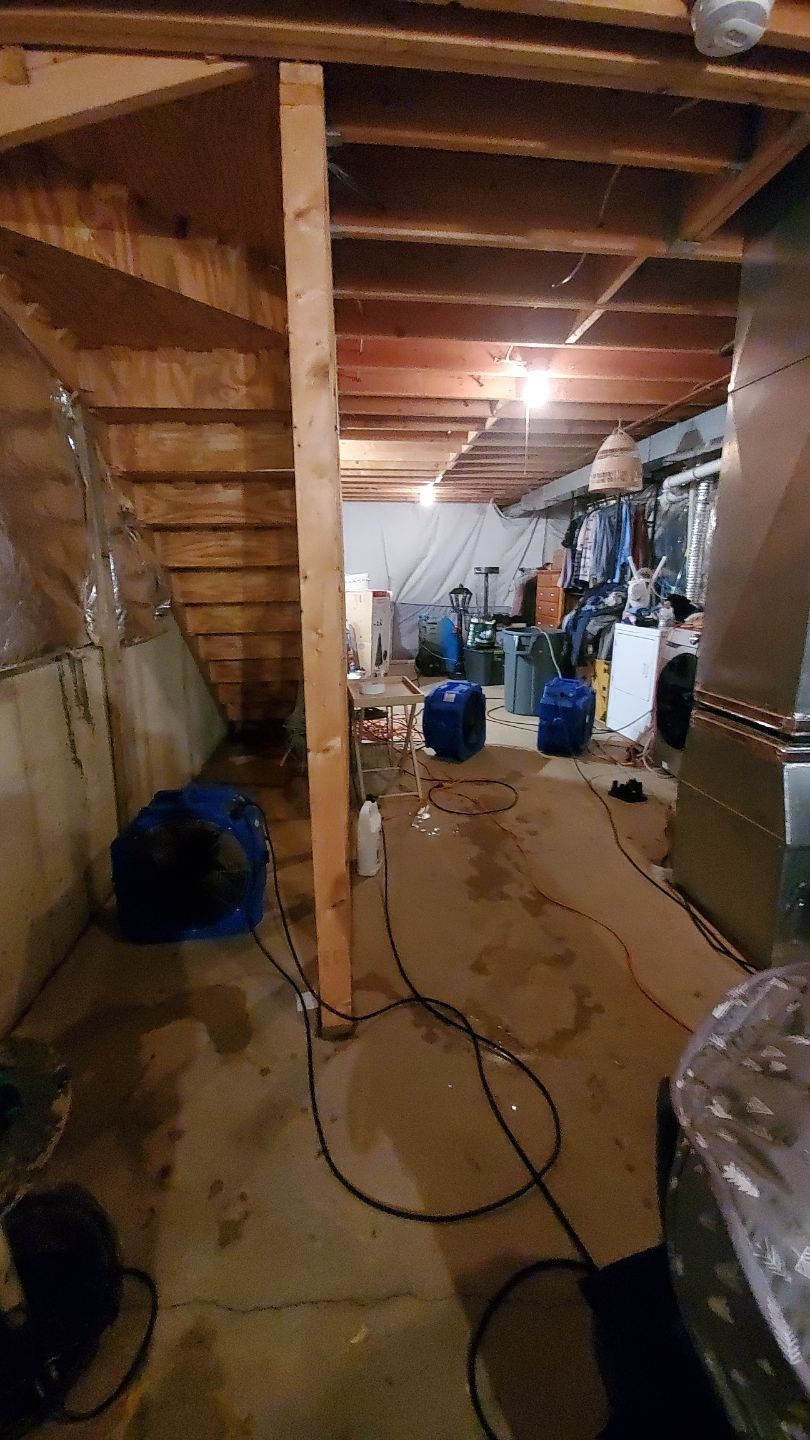
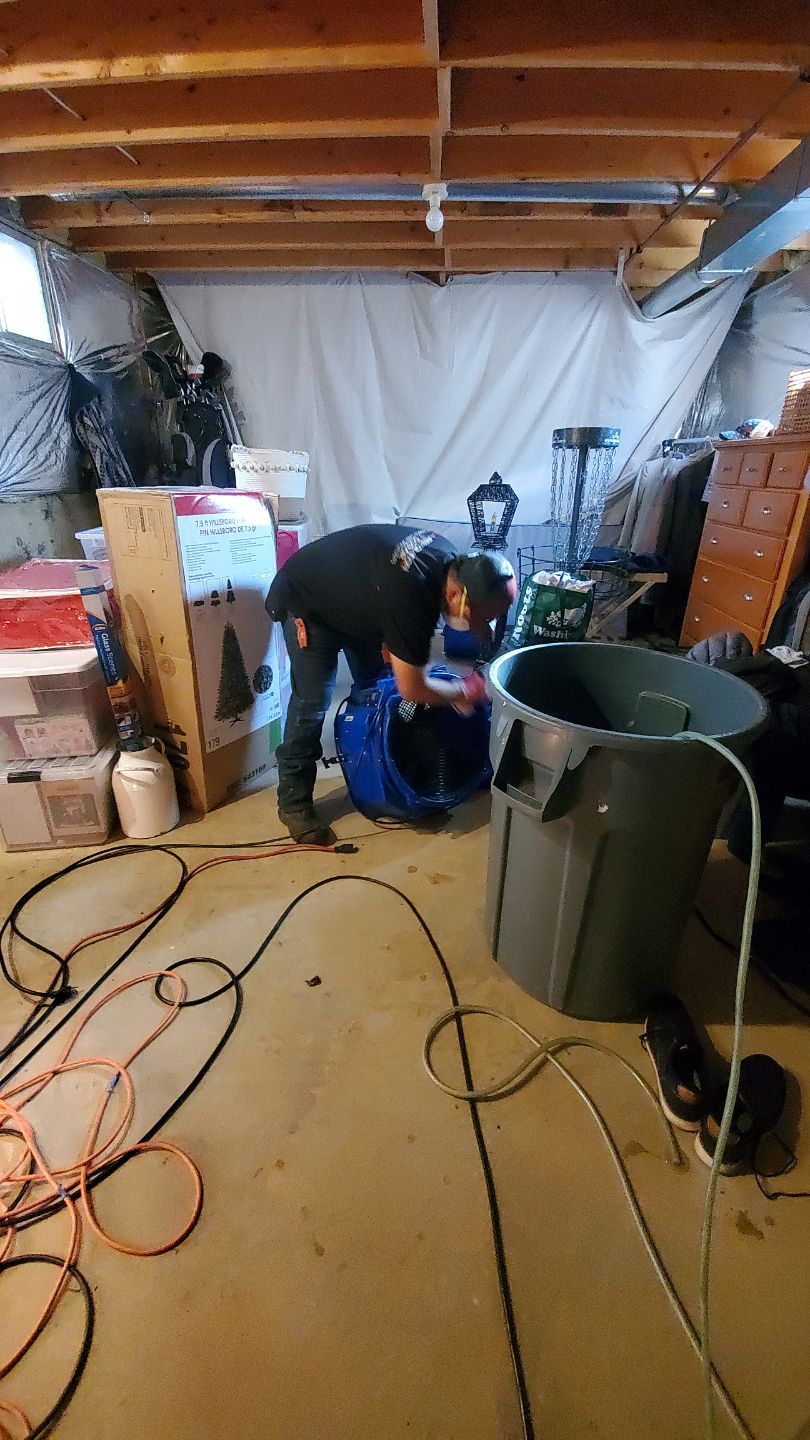
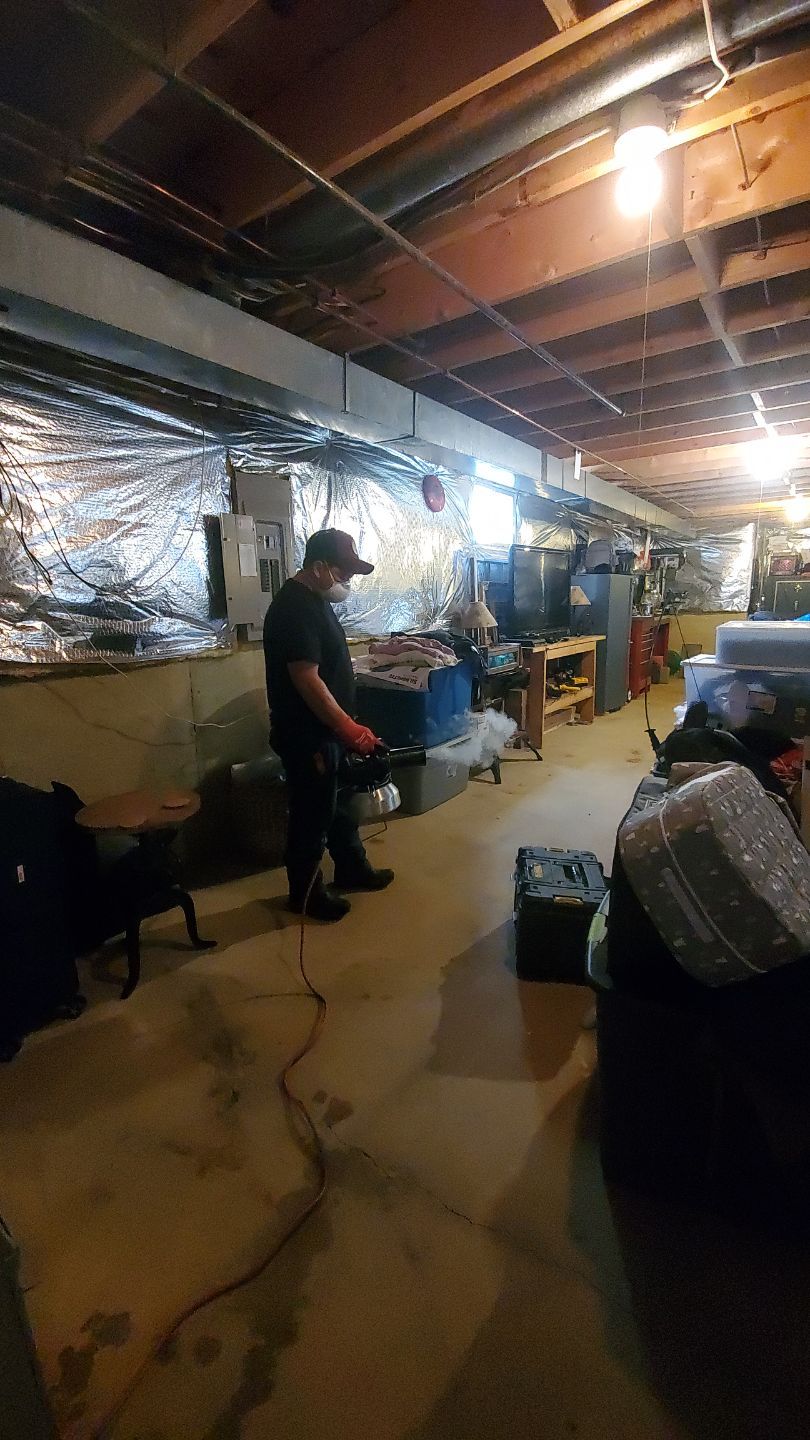
A significant water intrusion in this Leesburg basement set the stage for mold development, a common outcome in Loudoun County's hot, humid Mid-Atlantic climate when moisture goes unaddressed in the older housing stock and newer subdivisions alike. Our crew responded with a targeted drying strategy: multiple air movers and dehumidifiers positioned to remove standing water and pull moisture from structural cavities, while moisture meters tracked progress in real time. As readings dropped, we removed water-damaged insulation and drywall, exposing the framing beneath to accelerate evaporation and allow visual inspection for mold colonization.
Throughout the process, we monitored air quality and applied antimicrobial treatment where early growth had begun, following IICRC S520 protocols for containment and remediation. The homeowner's review reflected confidence in the systematic approach—moving from extraction through drying to material removal and treatment, each phase documented and measured. With the basement dried to standard and treated surfaces prepared, the space was ready for reconstruction, restored to a safe baseline before finish work resumed.
Frequently asked questions
Why does basement water intrusion in Leesburg often lead to mold problems?
Loudoun County's hot, humid Mid-Atlantic summers create ideal conditions for mold colonization when moisture lingers in below-grade spaces. Restoration Doctor addresses this by pairing structural drying with continuous moisture monitoring and air quality testing, treating affected areas promptly to prevent spore amplification before remediation begins.
What does the dehumidification process involve after a basement flood in Leesburg, VA?
Restoration Doctor deploys commercial dehumidifiers alongside air movers to lower humidity and accelerate evaporation from structural materials like drywall and insulation. Moisture meters track progress across affected surfaces, ensuring conditions reach the dry standard necessary to halt mold development and prepare the space for safe reconstruction.
How do you determine which materials need removal during mold remediation in a Loudoun County basement?
Water-damaged porous materials—insulation, drywall, and compromised framing—are evaluated for saturation depth and visible contamination. Restoration Doctor removes materials that cannot be effectively dried or cleaned, then treats remaining surfaces with antimicrobial solutions, following containment protocols to prevent cross-contamination during the remediation phase.
Does homeowners insurance in Leesburg typically cover water intrusion and subsequent mold remediation?
Coverage depends on the intrusion's cause—sudden pipe failures are often covered, while long-term seepage or maintenance-related issues may not be. Restoration Doctor documents the loss thoroughly with moisture readings and photographic evidence to support your claim, working directly with adjusters familiar with Loudoun County properties to streamline the process.
What air quality testing happens during a basement water-damage job in Leesburg?
Restoration Doctor conducts baseline and post-remediation air sampling to measure airborne spore concentrations and verify that the environment meets safe occupancy thresholds. Testing informs containment strategy and confirms that dehumidification and material removal have resolved the moisture and microbial risk before reconstruction begins.
Explore more restoration work
All projects in Leesburg · Water Damage Restoration in Leesburg
Water, fire, or mold damage in Leesburg?
Restoration Doctor responds 24/7 across Leesburg and Northern Virginia. Free assessment and transparent, insurance-friendly estimates — no obligation.
See our Water Damage Restoration services at restorationdoctors.com →