Water damage restoration
About this water damage restoration project
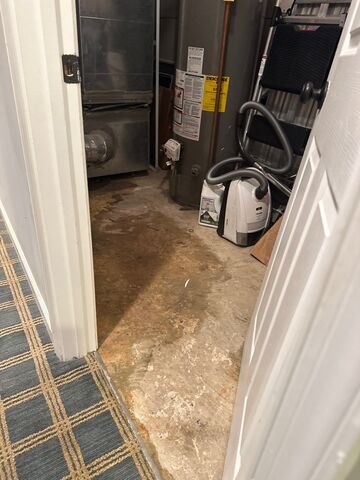
A leak near the water heater flooded the basement utility room, triggering both immediate water removal and a careful search for hidden moisture that older Montgomery County homes often trap beneath finished surfaces. In Kensington's established neighborhoods—where mid-century construction and aging plumbing make water heater failures a recurring risk—standing water rarely announces the full extent of damage on its own.
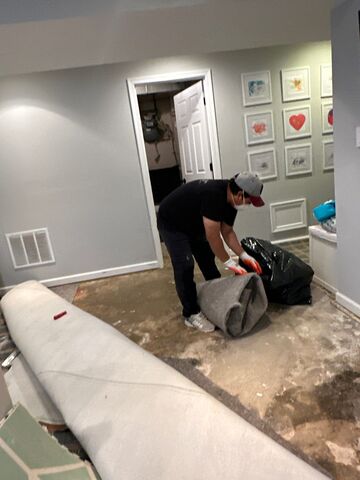
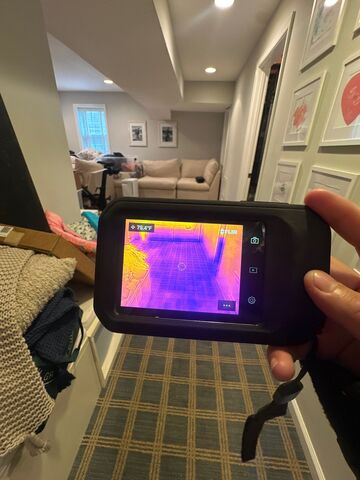
Thermal imaging revealed moisture beneath the carpet, a finding that dictated the next step: removing the carpet entirely to prevent mold colonization in the pad and subfloor. With the affected materials pulled, we deployed dehumidifiers and air movers to dry the concrete slab and framing, following IICRC S500 protocols for structural drying. The equipment ran until moisture readings normalized, ensuring no reservoir remained for secondary microbial growth.
The homeowner noted in their review that the team worked efficiently and kept them informed throughout the process, restoring the basement to a safe, dry condition.
Reviews from Restoration Doctor customers
Highly recommend restoration doctor! Best water damage restoration service in the dmv area! Awesome customer service and very professional!
Frequently asked questions
Why is thermal imaging used during water damage restoration in Kensington basements?
Restoration Doctor uses thermal imaging to detect hidden moisture that has migrated beneath flooring, behind walls, or into structural cavities—critical in older Montgomery County homes where water can travel along original framing and subfloor. In this Kensington basement, thermal scanning revealed trapped moisture under carpet near the water heater that visual inspection alone would have missed. Identifying these hidden pockets early prevents secondary damage and ensures complete drying to industry standards.
How does standing water from a water heater leak lead to mold growth in Montgomery County homes?
Standing water in a basement utility room creates sustained moisture contact with porous materials like carpet padding, drywall, and wood framing—conditions that support mold colonization within days, especially in the humid Mid-Atlantic climate. Restoration Doctor's immediate extraction and dehumidification in this Kensington home removed the water source and brought relative humidity down quickly, interrupting the conditions mold requires. Removing compromised carpet and applying structural drying equipment prevented the progression from water intrusion to a full mold remediation scenario.
What does carpet remediation involve after basement water damage in Kensington?
Carpet remediation after water intrusion typically means removing and disposing of water-saturated carpet and padding that cannot be salvaged, as occurred in this Kensington basement near the water heater. Restoration Doctor lifts affected flooring to expose the subfloor for inspection and drying, then deploys dehumidifiers and air movers to bring moisture levels back to baseline before any replacement flooring is installed. In Montgomery County's older housing stock, subfloor drying is essential to prevent rot and microbial growth in the original wood structure.
How long does structural drying take after water extraction in a Kensington basement?
Drying time depends on the extent of saturation, airflow, and the materials affected—concrete and wood subfloors in older Montgomery County basements often require several days of continuous dehumidification to reach the dry standard. In this Kensington job, Restoration Doctor monitored moisture readings daily after extraction and carpet removal, adjusting equipment placement until structural components returned to pre-loss levels. Rushing the process or removing equipment too early risks trapped moisture and secondary issues like mold or warping.
Does homeowners insurance typically cover water heater leaks and resulting water damage in Maryland?
Coverage depends on whether the leak resulted from a sudden, accidental failure or from long-term neglect or wear—most Maryland homeowners policies cover the former but exclude gradual seepage. Restoration Doctor works directly with insurance adjusters serving Kensington and Montgomery County to document the loss, provide moisture maps and thermal images, and ensure the claim reflects the scope of emergency extraction, drying, and remediation performed. Policyholders should review their specific coverage limits and deductibles with their carrier early in the process.
Explore more restoration work
All projects in Kensington · Water Damage Restoration in Kensington
Water, fire, or mold damage in Kensington?
Restoration Doctor responds 24/7 across Kensington and Northern Virginia. Free assessment and transparent, insurance-friendly estimates — no obligation.
See our Water Damage Restoration services at restorationdoctors.com →