Water Damage Restoration
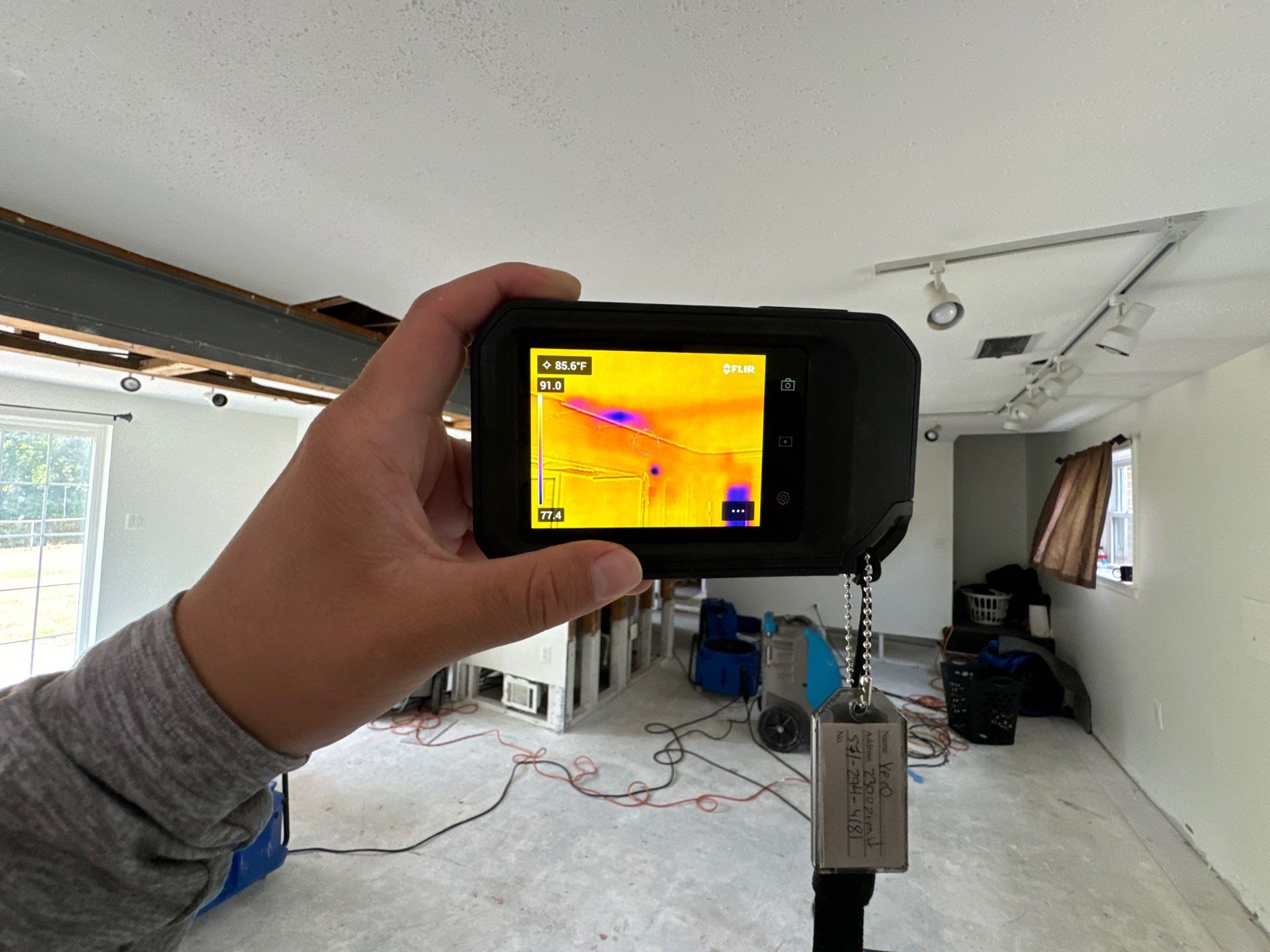
About this water damage restoration project
A bedroom in a Loudoun County home showed visible mold following water intrusion—a pattern familiar in Sterling's established subdivisions, where the region's humid Mid-Atlantic summers accelerate secondary microbial growth if moisture goes unchecked. The homeowner called us immediately, and we moved to dry the affected space before conditions worsened.
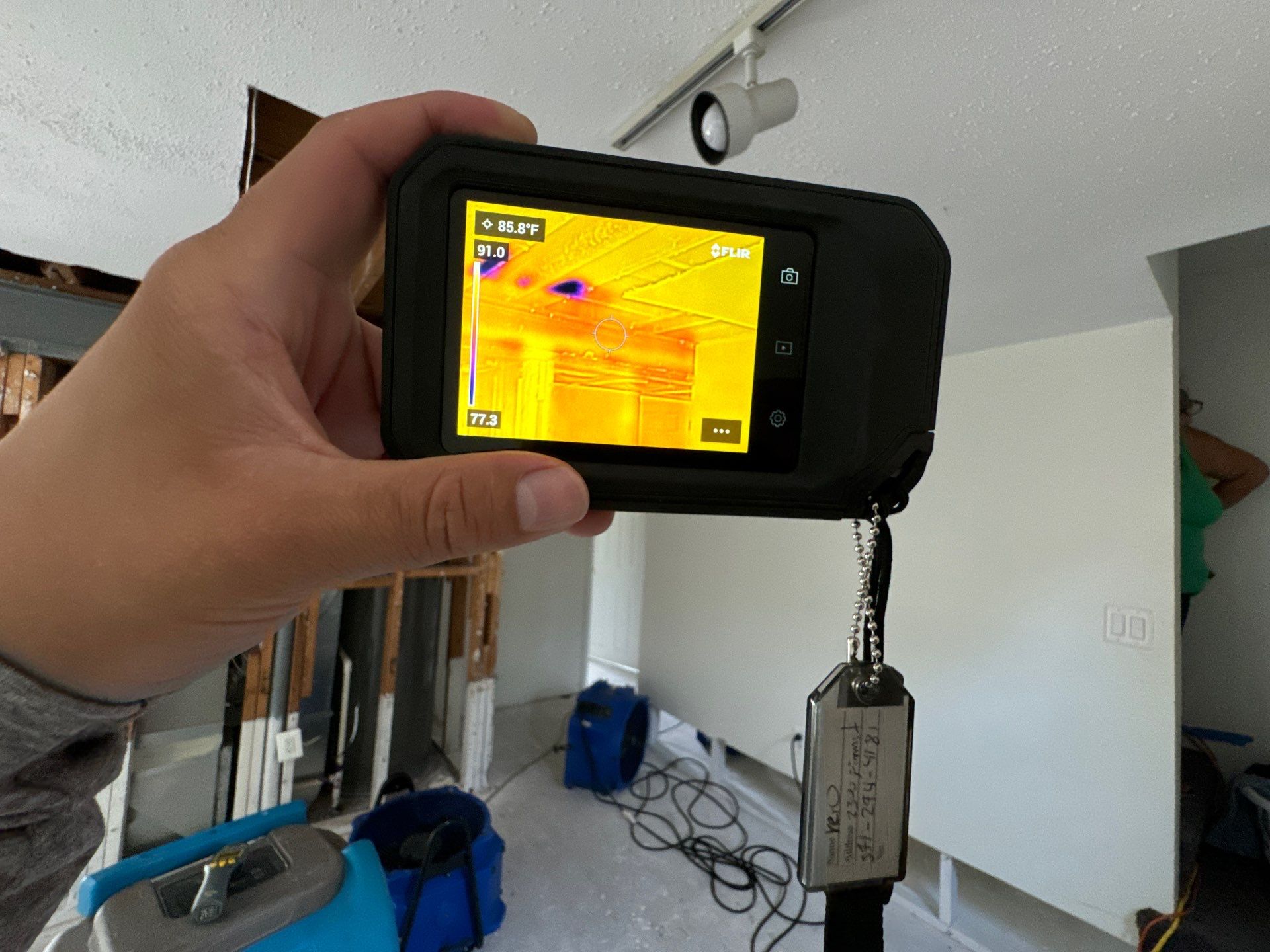
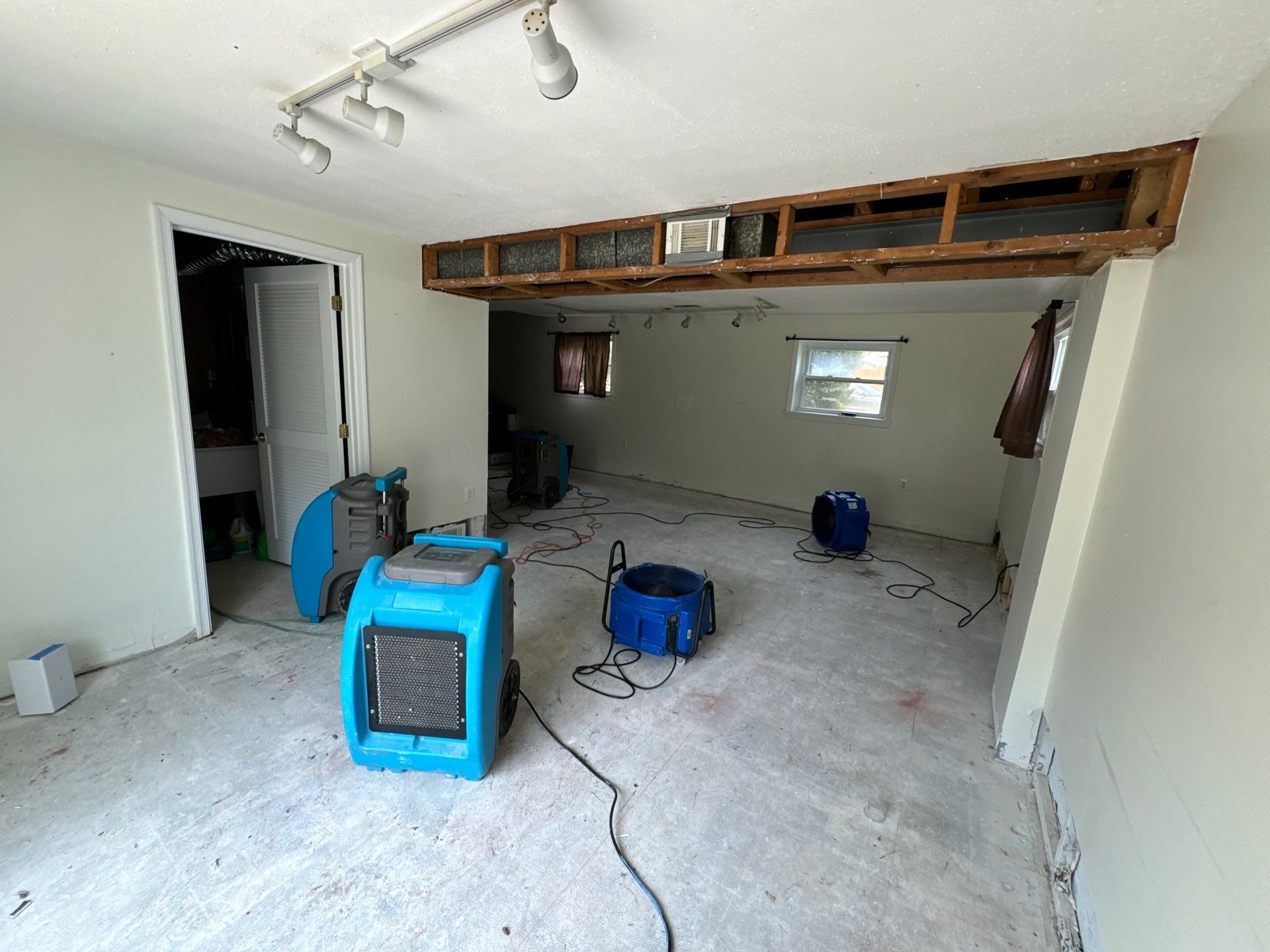
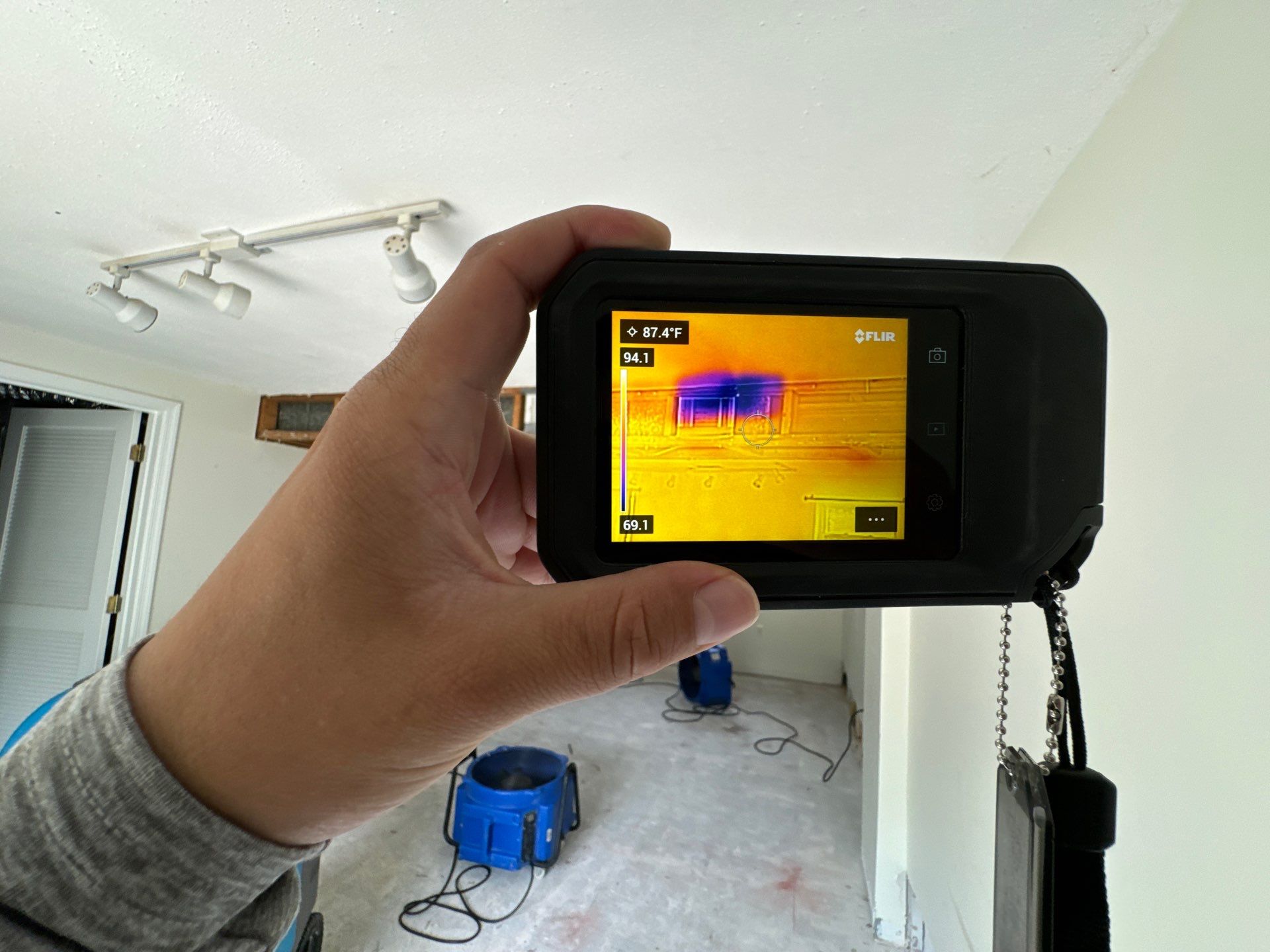
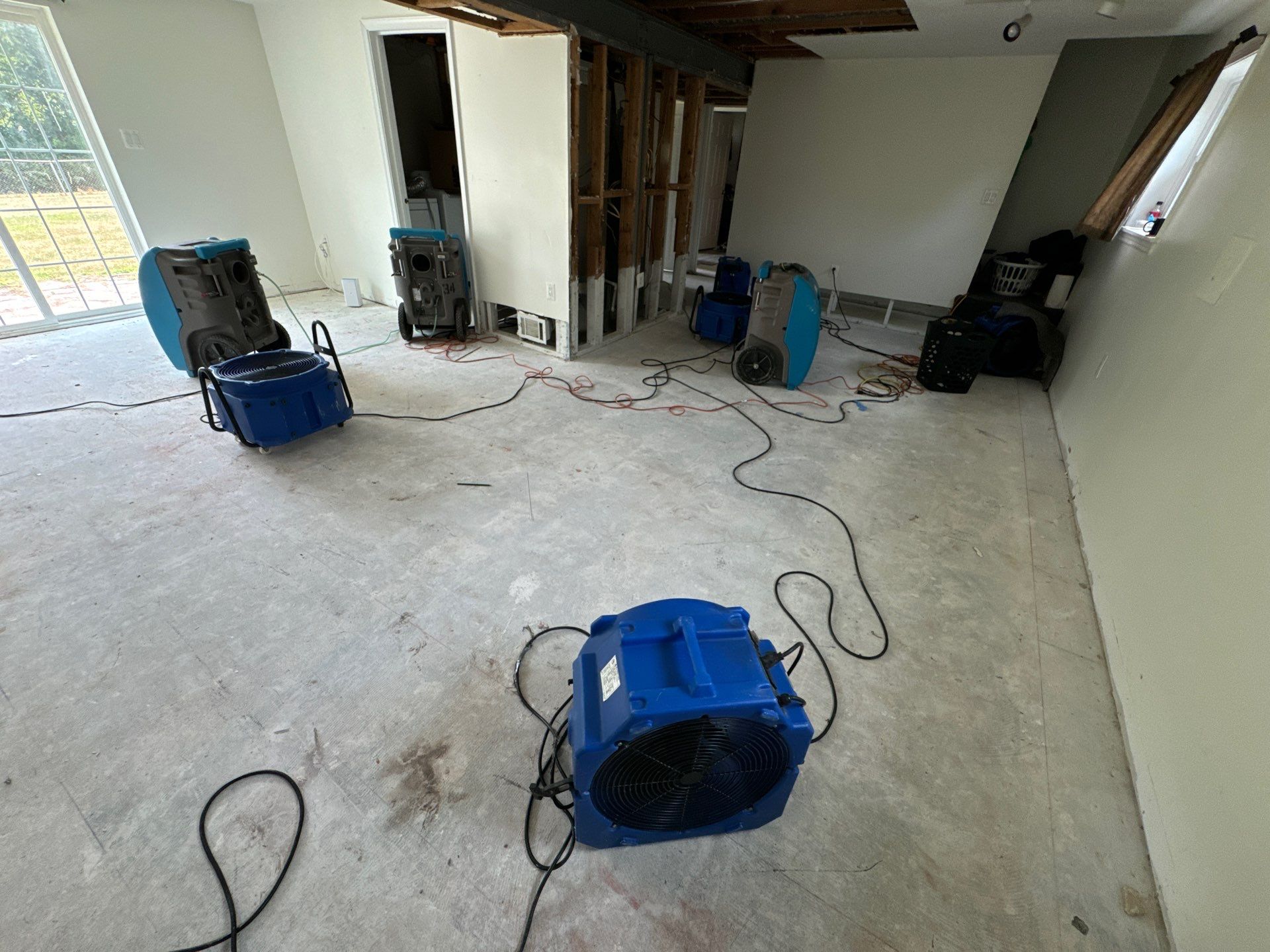
Our first step was thermal imaging of the walls and ceiling, revealing hidden moisture pockets that visual inspection alone would have missed. With those moisture maps in hand, we deployed industrial dehumidifiers and air movers positioned to pull moisture from both the visible surface and the concealed framing cavities. The equipment ran continuously, dropping relative humidity and drying the structural envelope to levels that halt mold proliferation—an approach consistent with IICRC S520 mold remediation principles.
Progress tracking confirmed steady moisture reduction, and the space is now prepared for final restoration work. The homeowner expressed satisfaction with the thoroughness of our diagnostic process and the speed with which drying equipment was brought to bear, ensuring the bedroom can return to safe, everyday use.
Frequently asked questions
How does thermal imaging help find hidden moisture in Sterling ceilings after a water intrusion?
Restoration Doctor uses thermal imaging cameras to detect temperature differentials that reveal moisture trapped inside walls and ceiling cavities—areas you can't see or touch. In Sterling's established subdivisions, where homes often have layered drywall and insulation from the 1970s–1990s, water can travel along framing and settle in hidden pockets. Identifying these areas early prevents secondary mold growth and ensures our structural drying targets every affected zone, not just the visible damage.
Why did mold develop after the water damage in this Sterling home, and how is it removed?
Mold followed the water intrusion because Loudoun County's hot, humid summers create ideal conditions for spore colonization once building materials stay wet beyond 48–72 hours. Restoration Doctor's mold remediation process includes containment of the affected room, HEPA filtration to capture airborne spores, removal of non-salvageable materials, and antimicrobial treatment of structural surfaces. Our industrial dehumidifiers and air movers eliminate the moisture source so mold cannot return after remediation is complete.
How long does it typically take to dry out a water-damaged room with dehumidifiers and air movers in Sterling, VA?
Drying timelines vary by the extent of saturation and the materials involved, but most residential water damage jobs in Sterling reach IICRC S500 drying standards within three to five days of continuous equipment operation. Restoration Doctor monitors moisture readings daily with calibrated meters, adjusting airflow and dehumidification as needed. Because this job required ceiling repair and hidden moisture extraction, we maintain equipment until every structural component reads dry to standard, preventing future mold or warping.
Can a ceiling damaged by water be repaired, or does it need full replacement?
Whether a water-damaged ceiling requires repair or replacement depends on how long it stayed wet, the material type, and whether mold has colonized the substrate. In this Sterling home, Restoration Doctor's thermal inspection revealed the moisture extent, allowing us to dry structural framing and replace only the compromised drywall sections rather than demo the entire ceiling. Targeted repair is often possible when the response is prompt and drying is thorough, saving both time and cost compared to a full rebuild.
What happens if water damage isn't dried completely before closing up walls in a Loudoun County home?
Incomplete drying traps residual moisture inside wall and ceiling cavities, where it fuels mold growth, wood rot, and odor—all hidden from view until the damage becomes severe. Restoration Doctor prevents this by using thermal imaging and moisture meters to verify that framing, insulation, and sheathing have reached dry standard before any reconstruction begins. In Loudoun County's humid climate, skipping this verification step almost guarantees a callback for mold remediation months later, which is why we document dry-down with daily readings and never close a job prematurely.
Explore more restoration work
All projects in Sterling · Water Damage Restoration in Sterling
Water, fire, or mold damage in Sterling?
Restoration Doctor responds 24/7 across Sterling and Northern Virginia. Free assessment and transparent, insurance-friendly estimates — no obligation.
See our Water Damage Restoration services at restorationdoctors.com →