Protecting Ceiling From Hidden Moisture
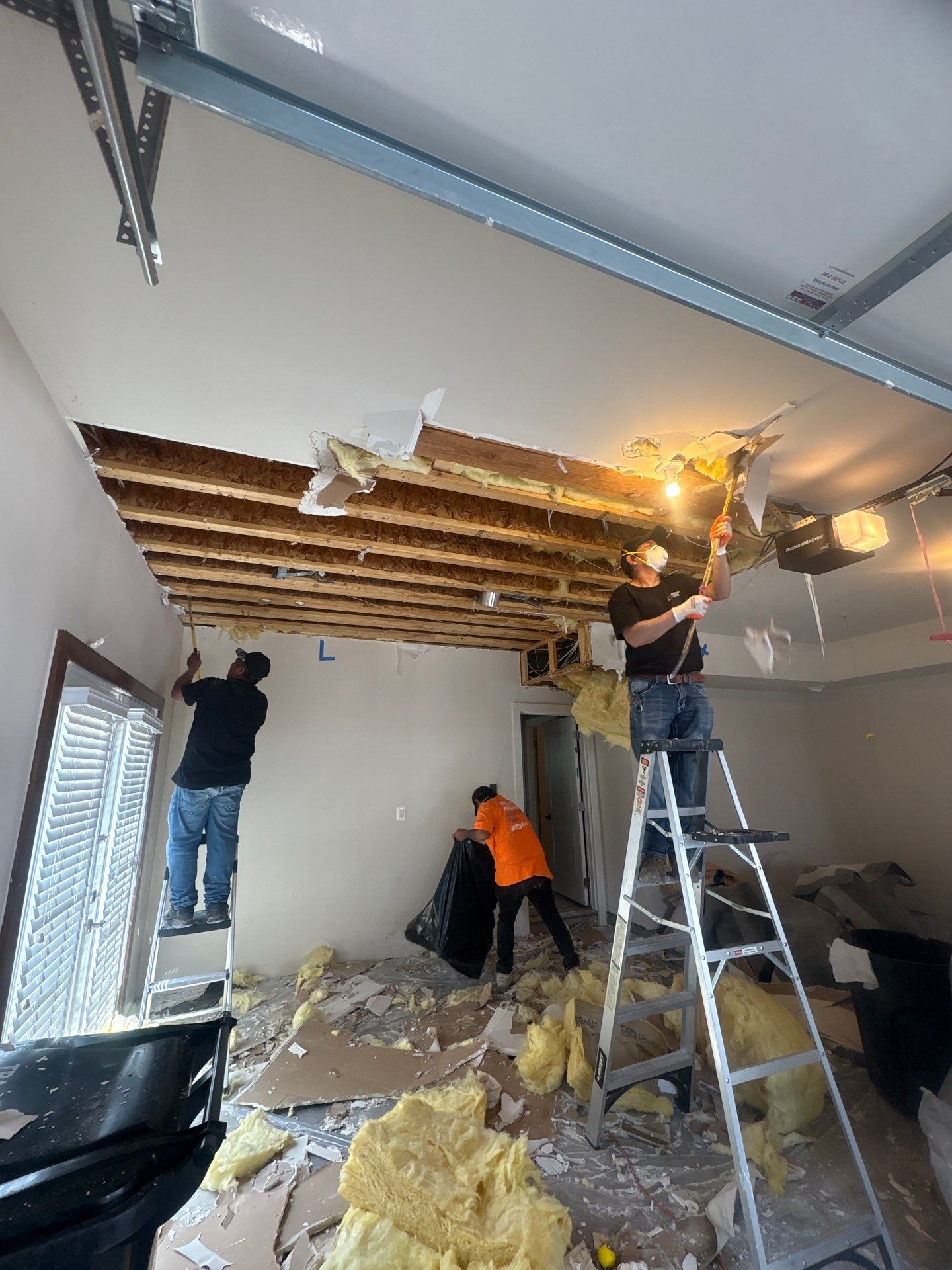
About this water damage restoration project
A roof leak in one of Sterling's established Loudoun County subdivisions had left moisture trapped behind a ceiling—a common vulnerability in homes from this building era, where aging roofing systems meet the Mid-Atlantic's heavy spring rains. The homeowner discovered the problem before visible staining became widespread, but hidden saturation had already compromised the ceiling structure.
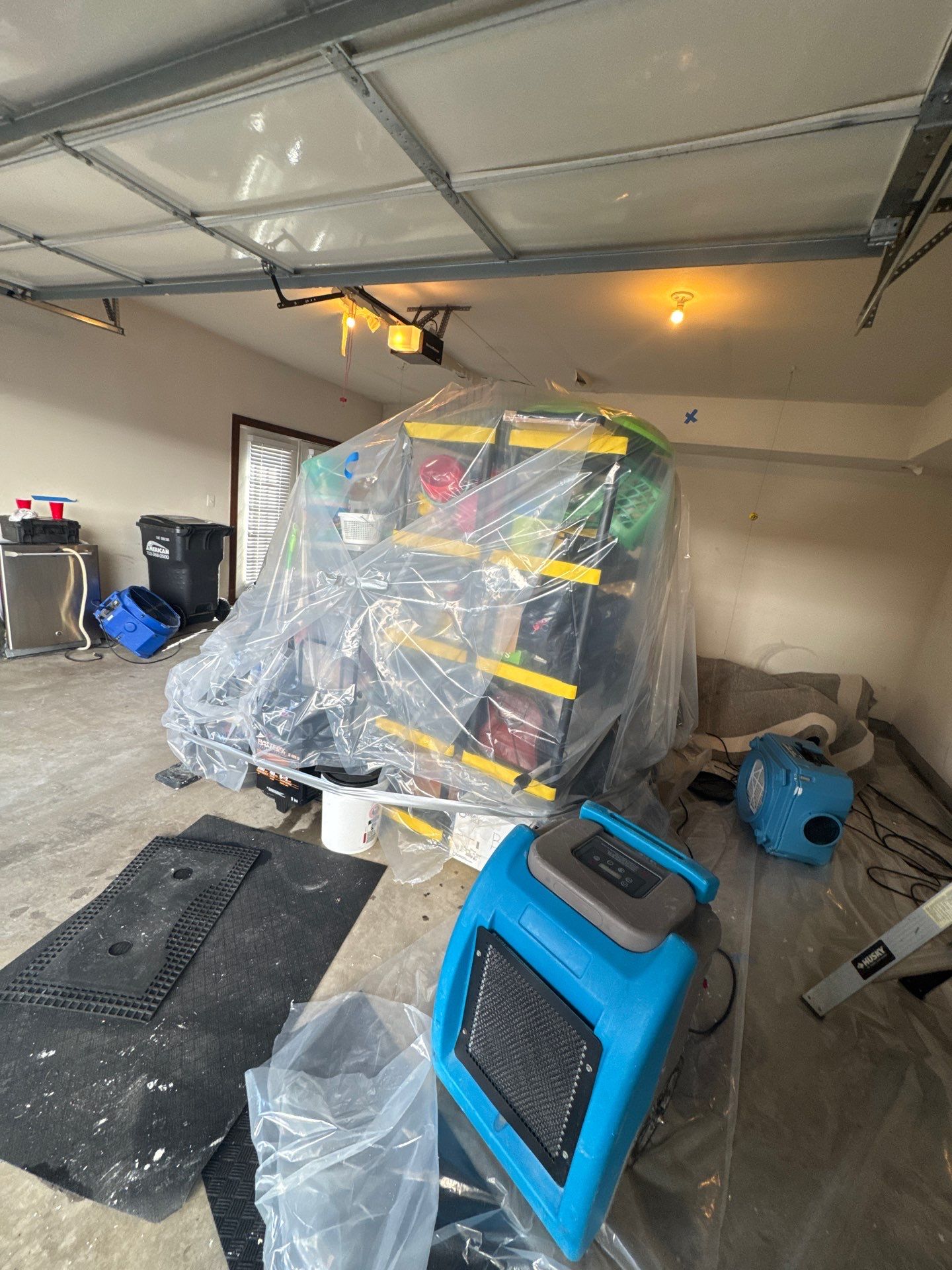
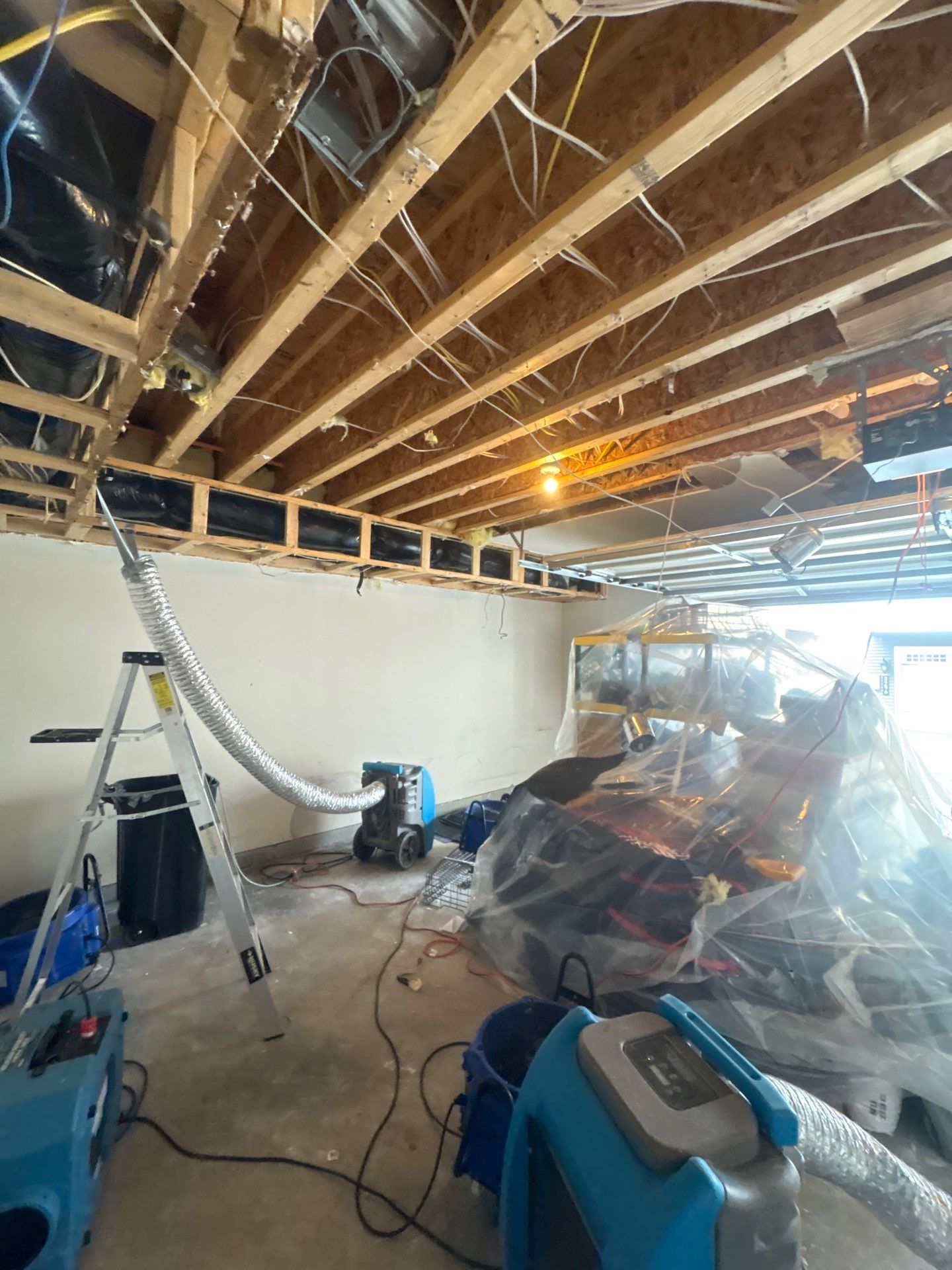
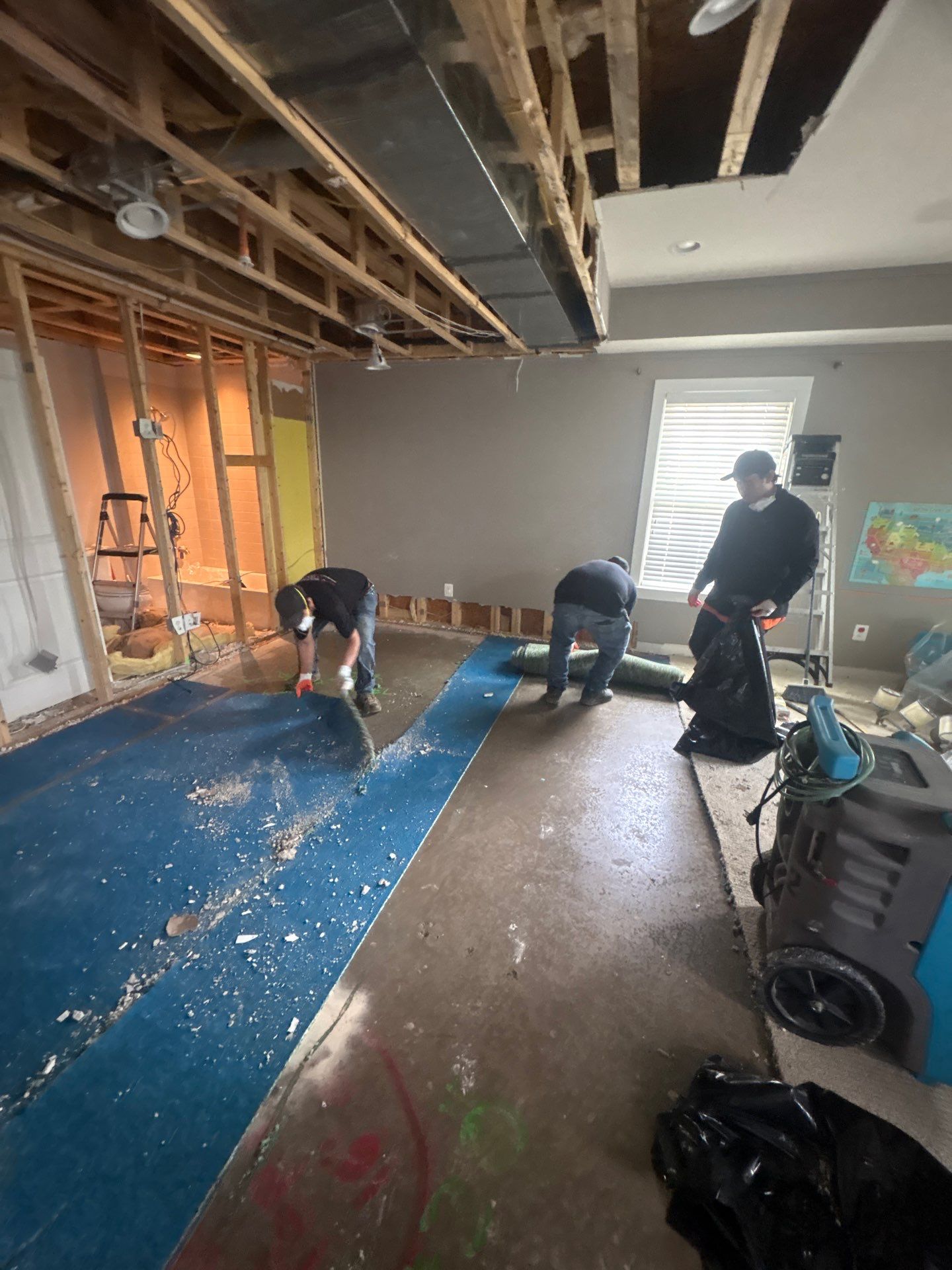
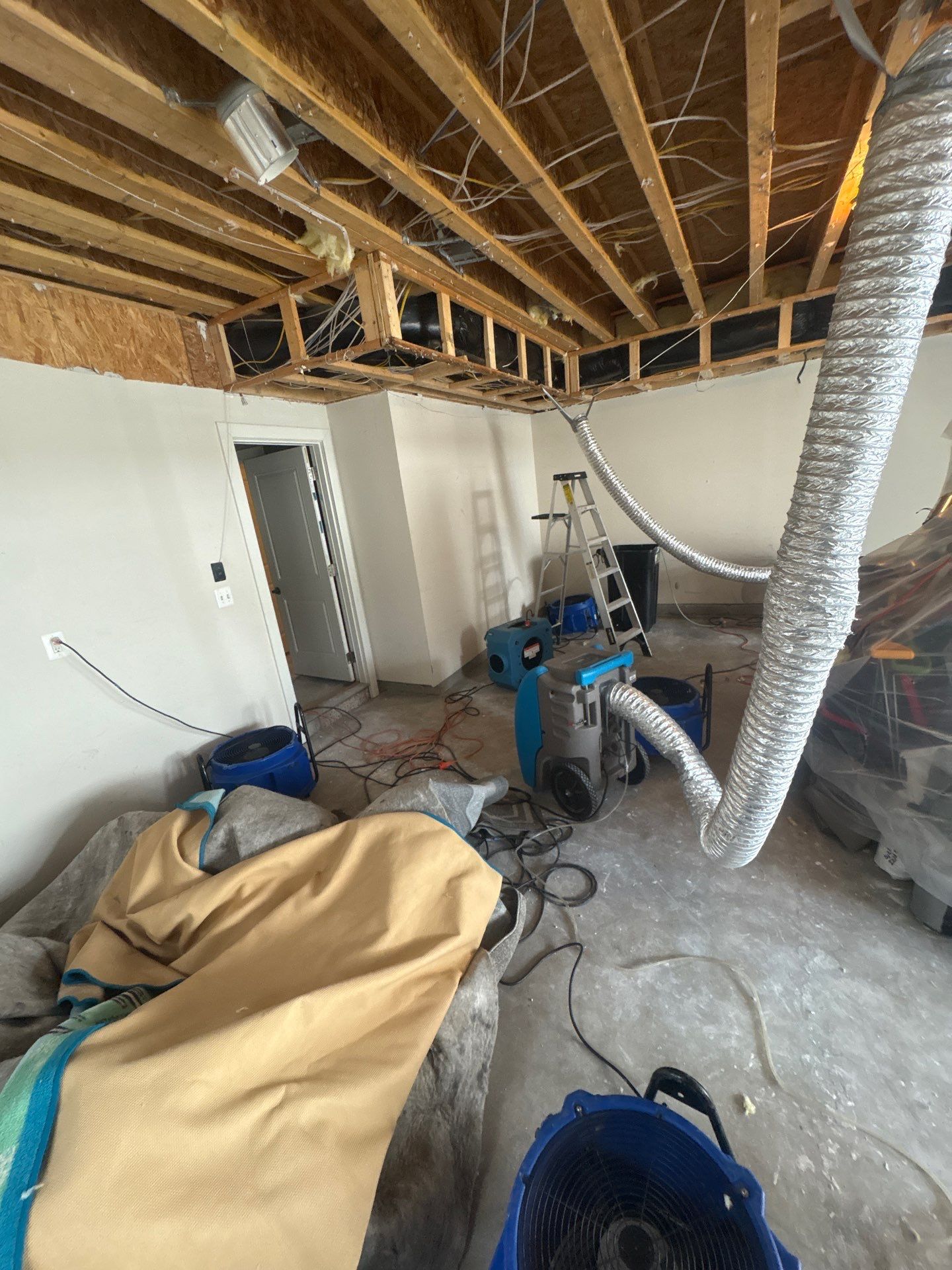
We began by removing the affected ceiling section to expose the full extent of moisture intrusion and eliminate the wet material that could no longer dry in place. With the cavity opened, we deployed commercial drying equipment to pull residual moisture from the framing and surrounding building envelope, following IICRC S500 protocols for structural drying. Throughout the process, we covered the homeowner's belongings with protective plastic sheeting to prevent dust and debris from reaching furniture and personal items below the work area.
The controlled removal and targeted drying approach prevented what could have escalated into a mold colonization event—a real risk in Virginia's humid summer months when trapped moisture meets warm indoor air. The homeowner noted their satisfaction with both the thoroughness of the work and the care taken to protect their home during the restoration, and the ceiling cavity was left dry and ready for reconstruction.
Reviews from Restoration Doctor customers
Restoration Doctor was a lifesaver after the storm! Their team responded quickly and efficiently, removing water and preventing further damage to our home. Very very professional, highly recommended!!
Frequently asked questions
Why did Restoration Doctor remove the ceiling section instead of just drying it in place?
When ceiling materials are saturated from roof or attic intrusion, the drywall and insulation often lose structural integrity and can harbor hidden moisture pockets that surface drying cannot reach. Restoration Doctor removed the compromised ceiling section in this Sterling home to expose the cavity, verify the extent of wetting in the framing and insulation above, and ensure thorough drying of all affected layers. This approach prevents trapped moisture from causing mold growth or secondary damage weeks later.
How does Restoration Doctor protect furniture and belongings during ceiling water damage repairs?
For this Sterling project, Restoration Doctor covered the homeowner's belongings with protective plastic sheeting before beginning demolition and drying work. Contents protection is a standard step in water damage restoration—it prevents dust, debris, and incidental moisture from affecting furniture, electronics, and personal items while technicians remove wet materials and operate drying equipment. In homes with extensive damage, contents may be moved to an unaffected room or temporarily relocated off-site.
What drying equipment is typically used for ceiling water damage in Loudoun County homes?
Restoration Doctor deployed professional drying equipment—likely air movers and dehumidifiers—to eliminate residual moisture from the framing, subfloor above, and surrounding structure after the wet ceiling was removed. In established subdivisions like those common in Sterling, where homes often have limited attic ventilation and layered insulation, controlled airflow and dehumidification are essential to bring wood moisture content down to safe levels. The equipment runs continuously and is monitored until moisture readings confirm the structure is dry.
Can roof leaks cause mold growth in Sterling attics and ceilings?
Yes—Loudoun County's hot, humid summers create ideal conditions for mold colonization when roof intrusion introduces moisture into attic spaces or ceiling cavities. Restoration Doctor's prompt removal of the wet ceiling section and deployment of drying equipment in this Sterling home directly addressed that risk by eliminating the moisture source before mold could establish. Structural drying to accepted standards is the primary defense against mold following roof or ceiling water intrusion.
How long does structural drying take after ceiling water damage?
Drying duration depends on the extent of saturation, the materials involved, and ambient conditions, but most residential structural drying projects in Northern Virginia take three to five days of continuous equipment operation. Restoration Doctor monitors moisture levels daily using meters and adjusts airflow or dehumidification as needed until the structure meets industry dry standards. In this Sterling case, removing the ceiling allowed faster, more complete drying than attempting to dry through intact materials.
Explore more restoration work
All projects in Sterling · Water Damage Restoration in Sterling
Water, fire, or mold damage in Sterling?
Restoration Doctor responds 24/7 across Sterling and Northern Virginia. Free assessment and transparent, insurance-friendly estimates — no obligation.
See our Water Damage Restoration services at restorationdoctors.com →