Water Damage Restoration
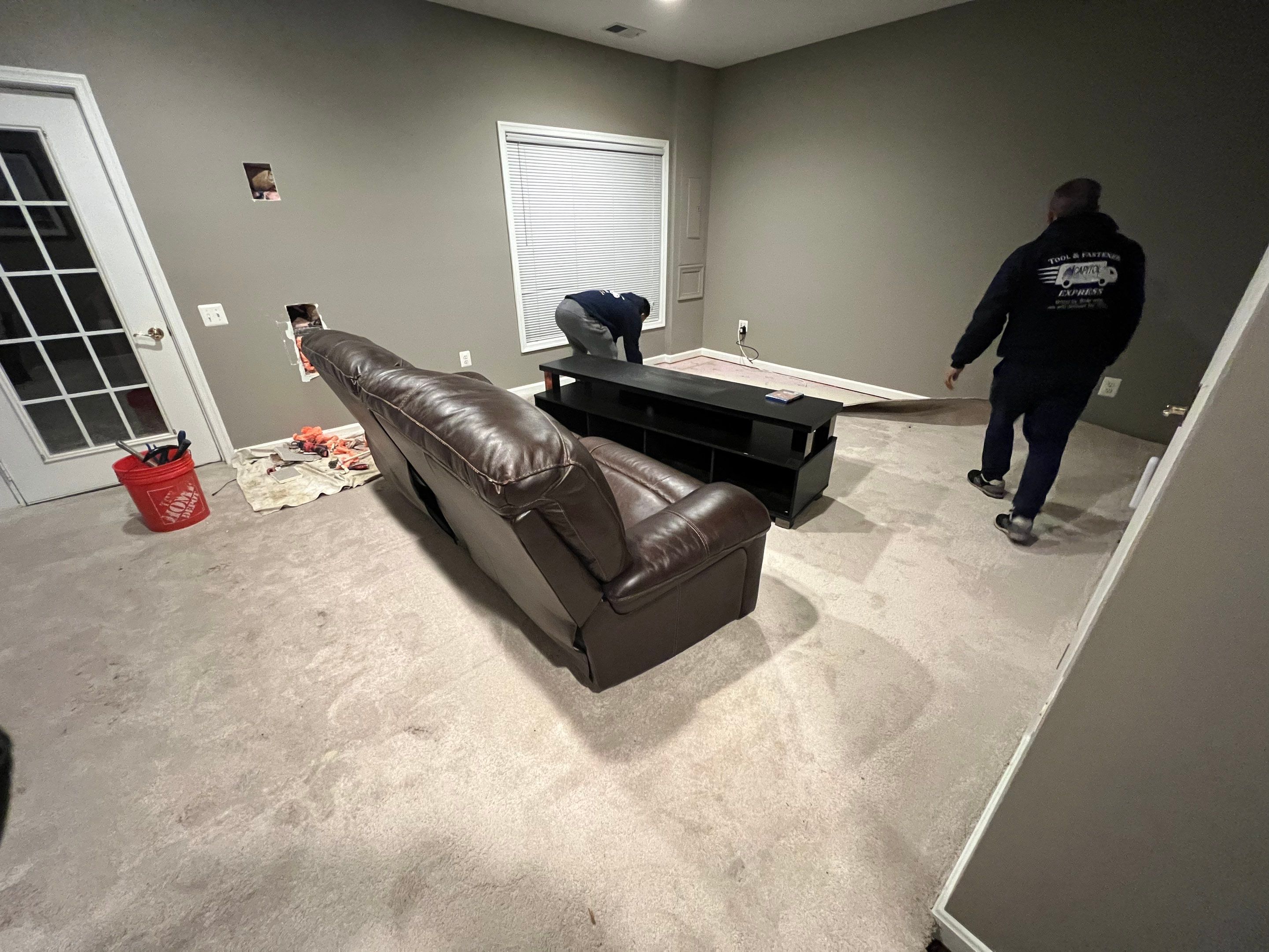
About this water damage restoration project
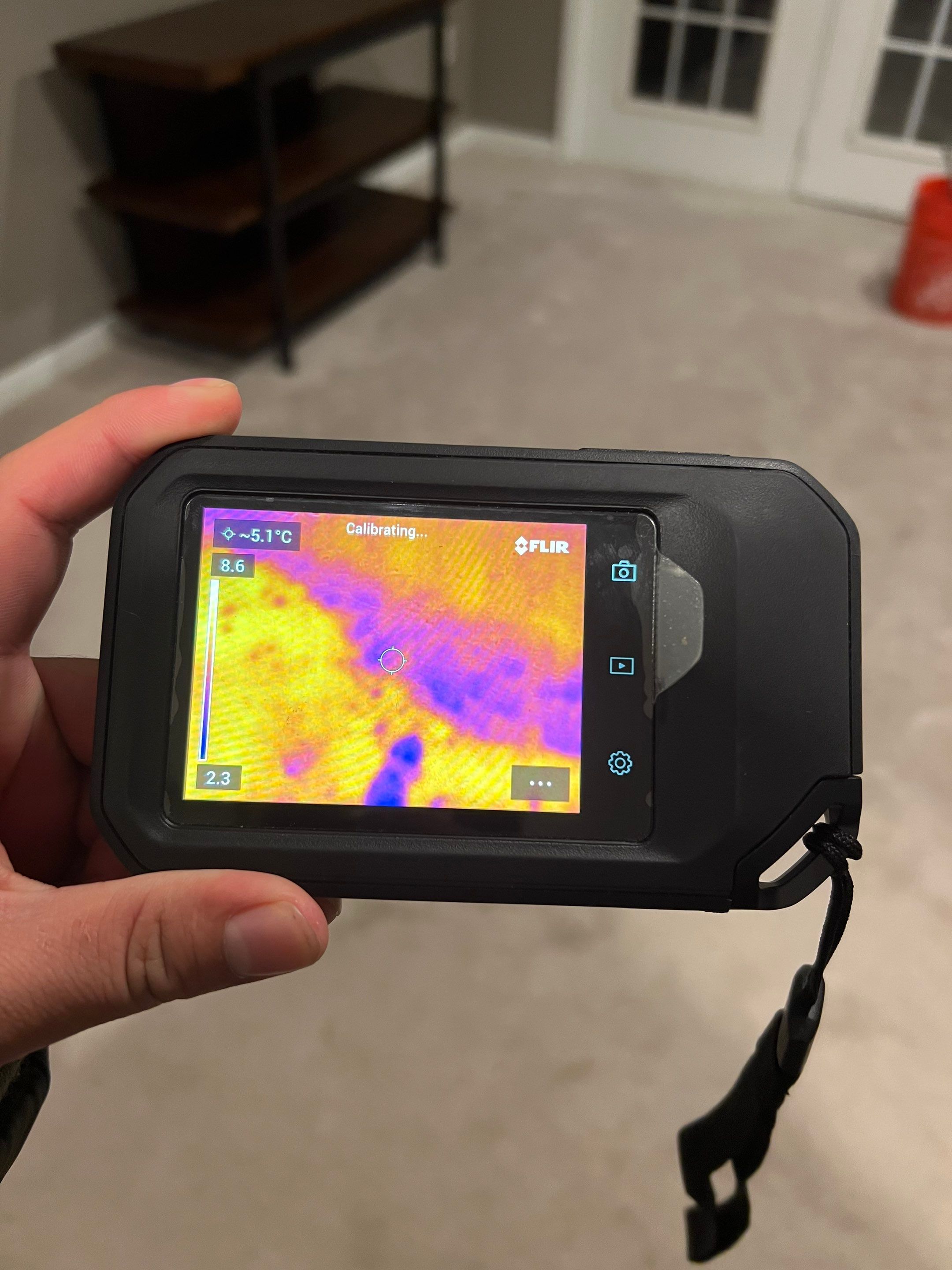
A basement moisture intrusion at a Rockville residential property had progressed to visible mold growth, a common sequence in Montgomery County's humid Mid-Atlantic climate where finished lower levels in established single-family homes remain vulnerable to groundwater seepage through foundation walls. We began with a thermal imaging survey to map hidden moisture reservoirs behind drywall and beneath carpeting—readings that surface inspection alone would miss.
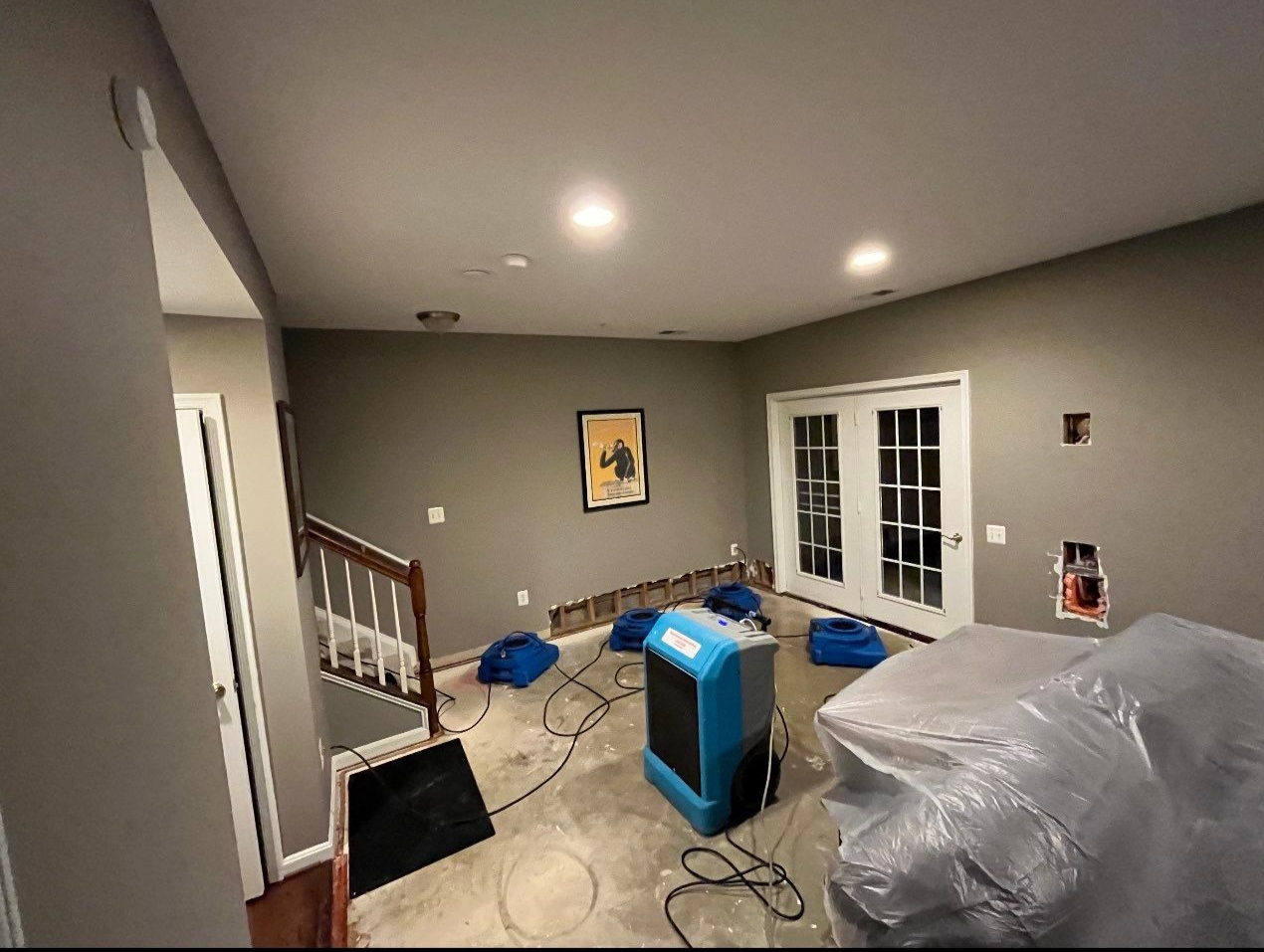
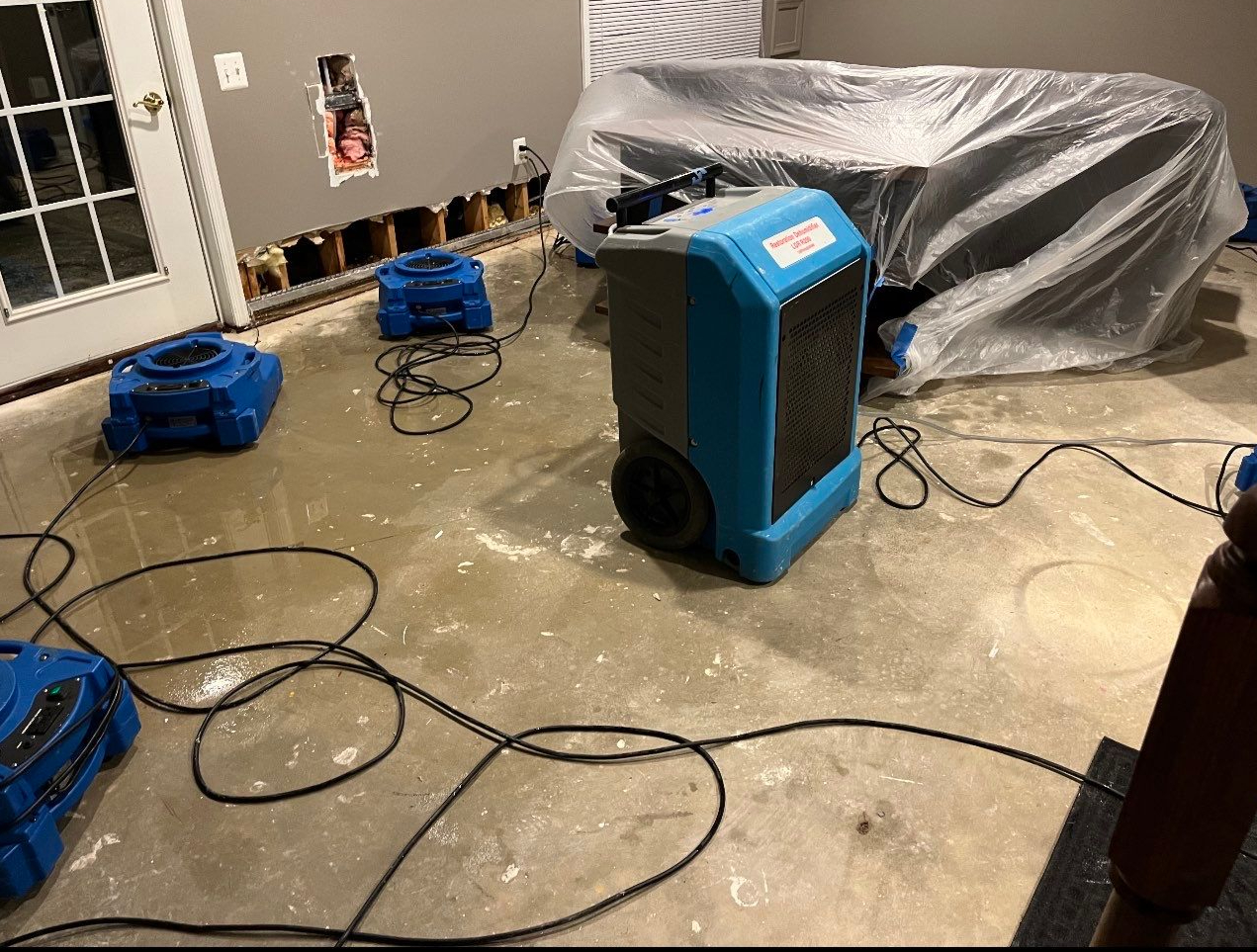
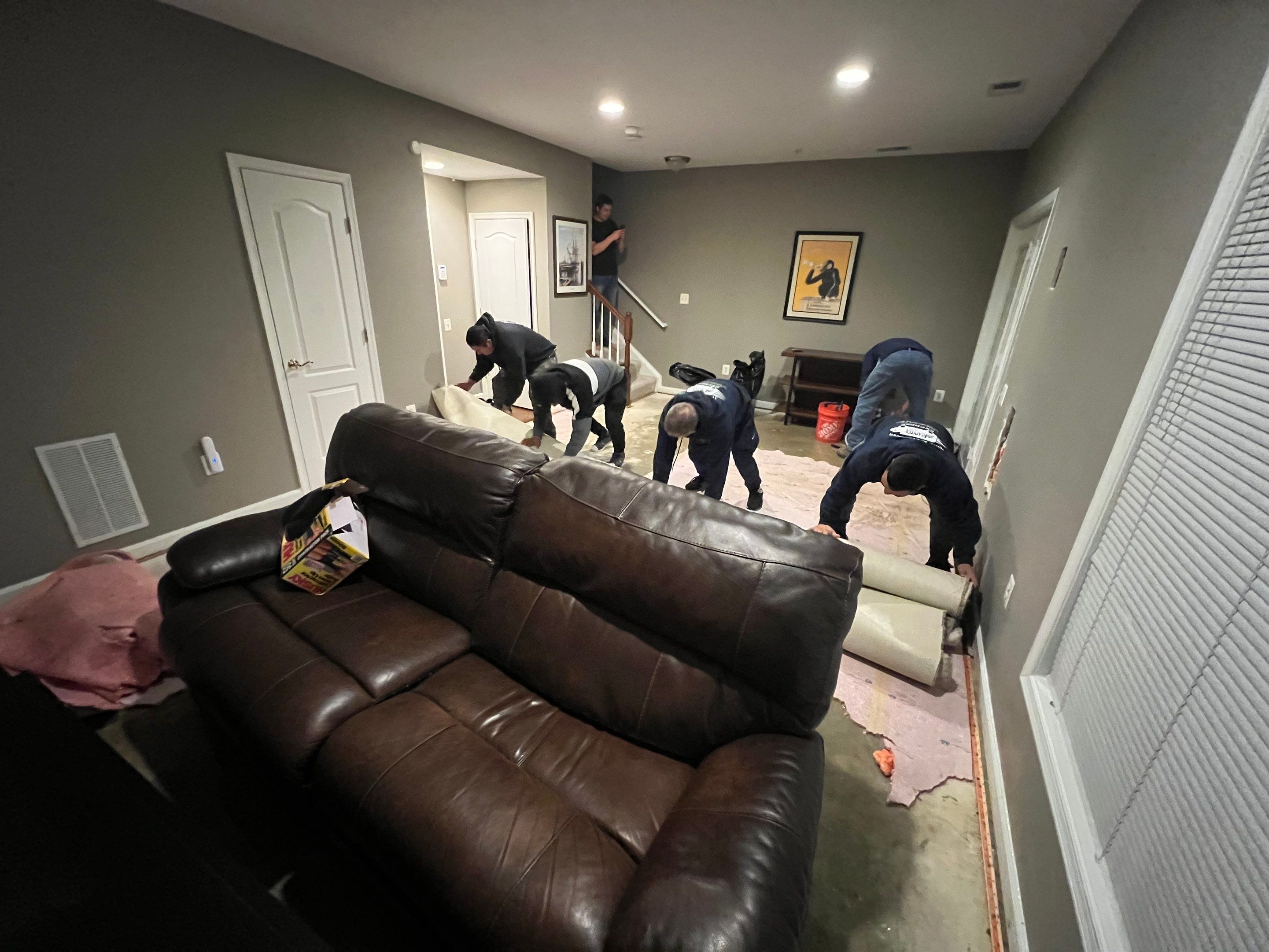
Furniture was relocated and carpet pulled back to expose saturated subflooring, then we opened targeted sections of drywall where thermal signatures confirmed trapped moisture. With moisture pockets accessible, we positioned air movers and commercial dehumidifiers to drive vapor from structural cavities and restore equilibrium psychrometric conditions, following IICRC S500 protocols for controlled drying environments. The setup ran continuously until moisture readings across all affected materials returned to dry standard.
The homeowner noted in their review how the systematic approach—from initial imaging through documented drying benchmarks—gave them confidence the work addressed the full extent of intrusion, not just surface symptoms. By eliminating residual moisture before mold could colonize deeper into framing or insulation, the intervention returned the basement to safe occupancy and pre-loss condition.
Frequently asked questions
Why is thermal imaging important for water damage assessment in Rockville basements?
Thermal imaging allows Restoration Doctor technicians to detect hidden moisture behind drywall and beneath flooring without destructive probing. In Montgomery County's older single-family homes, water intrusion often migrates laterally through wall cavities and subflooring, and thermal cameras reveal temperature differentials that pinpoint trapped moisture invisible to the eye. This precision prevents unnecessary demolition and ensures we dry every affected area, which is critical in Rockville's humid summers when undetected dampness can quickly support mold colonization.
What does structural drying involve after water seeps through basement walls in Rockville?
Restoration Doctor's structural drying process combines controlled airflow and dehumidification to remove moisture from building materials at the molecular level. For this Rockville water damage restoration, we placed air movers to accelerate evaporation from exposed flooring and opened wall sections, while commercial dehumidifiers continuously extracted humidity from the air. The goal is to return all materials—framing, subfloor, drywall—to their dry standard moisture content, preventing both microbial growth and long-term structural weakening common in Montgomery County's clay-rich soils where foundation seepage recurs.
How does mold remediation differ from just drying out a wet basement?
Drying halts new mold growth, but remediation addresses colonies already established on materials. When Restoration Doctor responds to mold following water intrusion in Rockville, we contain the affected zone, remove or clean contaminated materials under negative air pressure, and apply antimicrobial treatments where appropriate—steps aligned with IICRC S520 mold standards. In this case, the carpet and portions of drywall required removal because surface cleaning alone would not eliminate embedded growth, a common outcome when Mid-Atlantic humidity and delayed discovery give spores time to colonize porous substrates.
Can I stay in my Rockville home during water damage restoration and mold remediation?
Occupancy during restoration depends on the extent of the affected area and whether containment barriers isolate the work zone from living spaces. For this basement water damage and mold remediation in Rockville, Restoration Doctor set up physical containment and negative air machines to prevent cross-contamination, so the rest of the home remained habitable. If mold had spread to HVAC ducts or occupied floors, temporary relocation might be necessary, but most localized basement losses in Montgomery County's single-family homes allow residents to remain on-site with proper containment protocols in place.
How long does dehumidification and structural drying typically take after basement water intrusion?
Drying timelines vary with material type, saturation depth, and ambient conditions, but most contained basement losses in Rockville require three to five days of continuous dehumidification and air movement to reach dry standard. Restoration Doctor monitors moisture levels daily with meters and adjusts equipment placement as readings drop. Montgomery County's summer humidity can slow evaporation if outdoor air is not conditioned, so we use refrigerant or desiccant dehumidifiers to maintain low indoor relative humidity regardless of exterior weather, ensuring efficient drying without extending the timeline unnecessarily.
Explore more restoration work
All projects in Rockville · Water Damage Restoration in Rockville
Water, fire, or mold damage in Rockville?
Restoration Doctor responds 24/7 across Rockville and Northern Virginia. Free assessment and transparent, insurance-friendly estimates — no obligation.
See our Water Damage Restoration services at restorationdoctors.com →