Swift Kitchen Flood Recovery
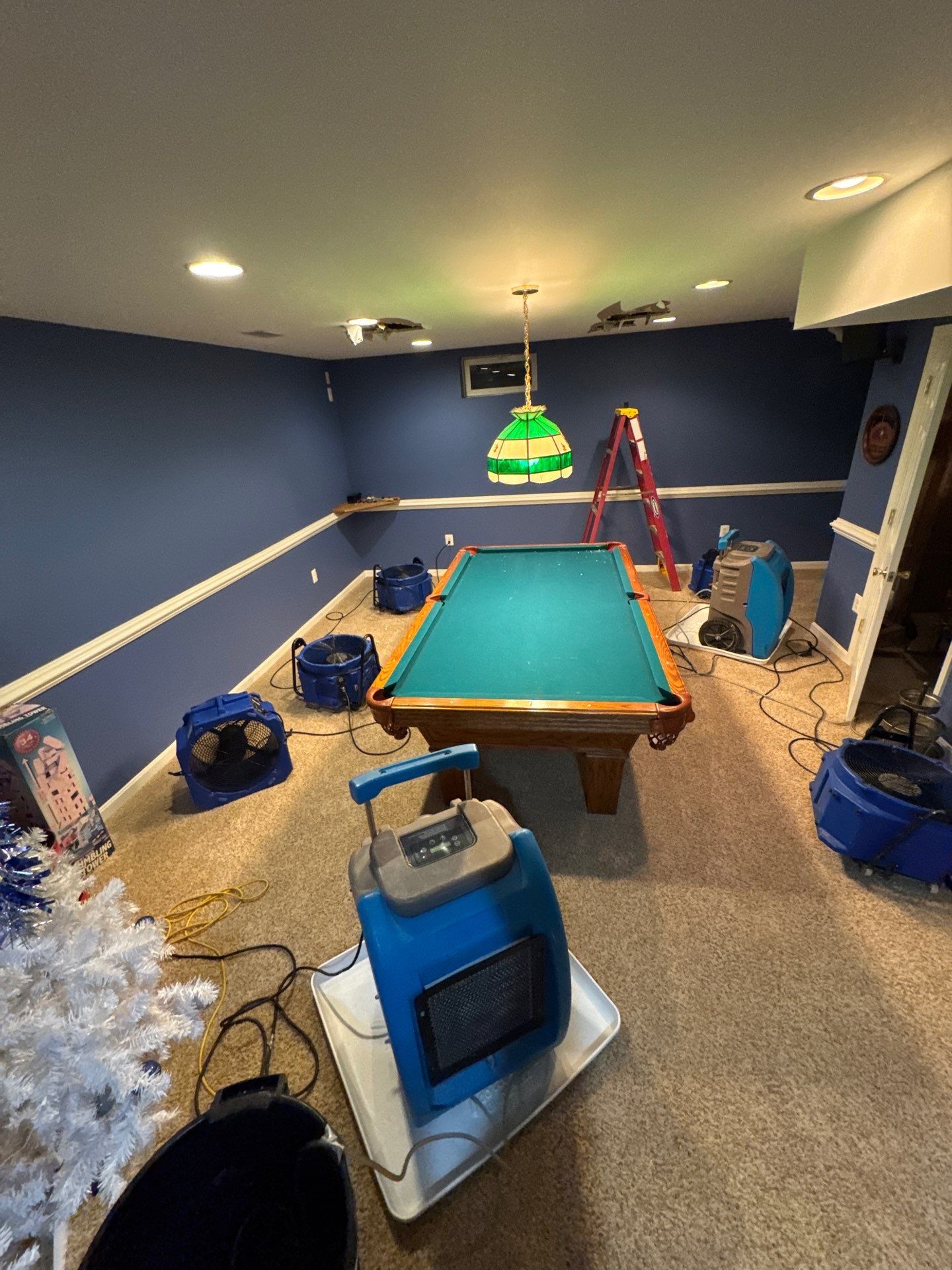
About this water damage restoration project
A kitchen water leak flooded this Linton Hall home in Prince William County, where newer-built subdivisions often feature open-plan layouts that allow water to spread quickly across continuous flooring. The homeowner called as standing water pooled across the kitchen and threatened adjacent living spaces.
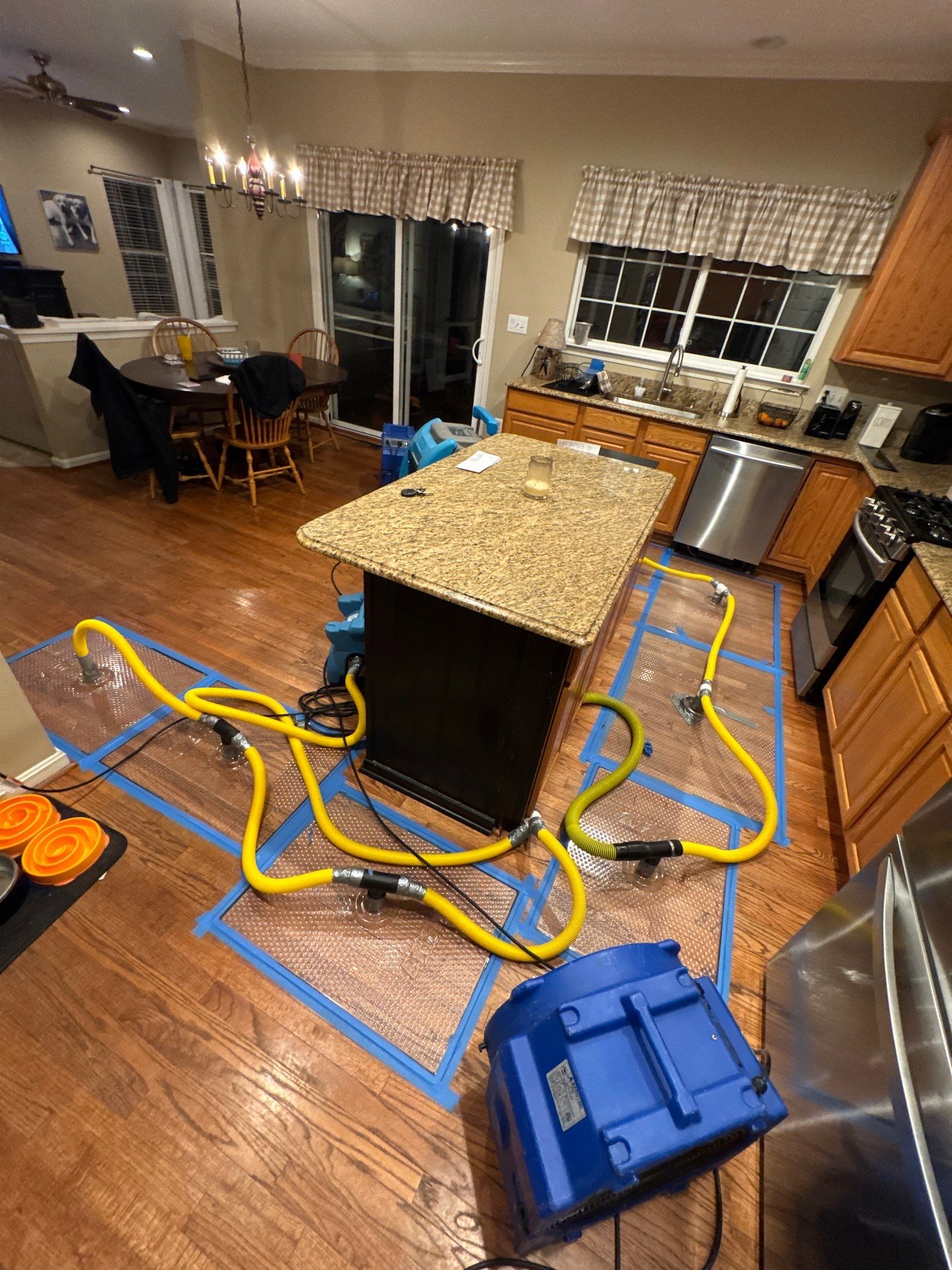
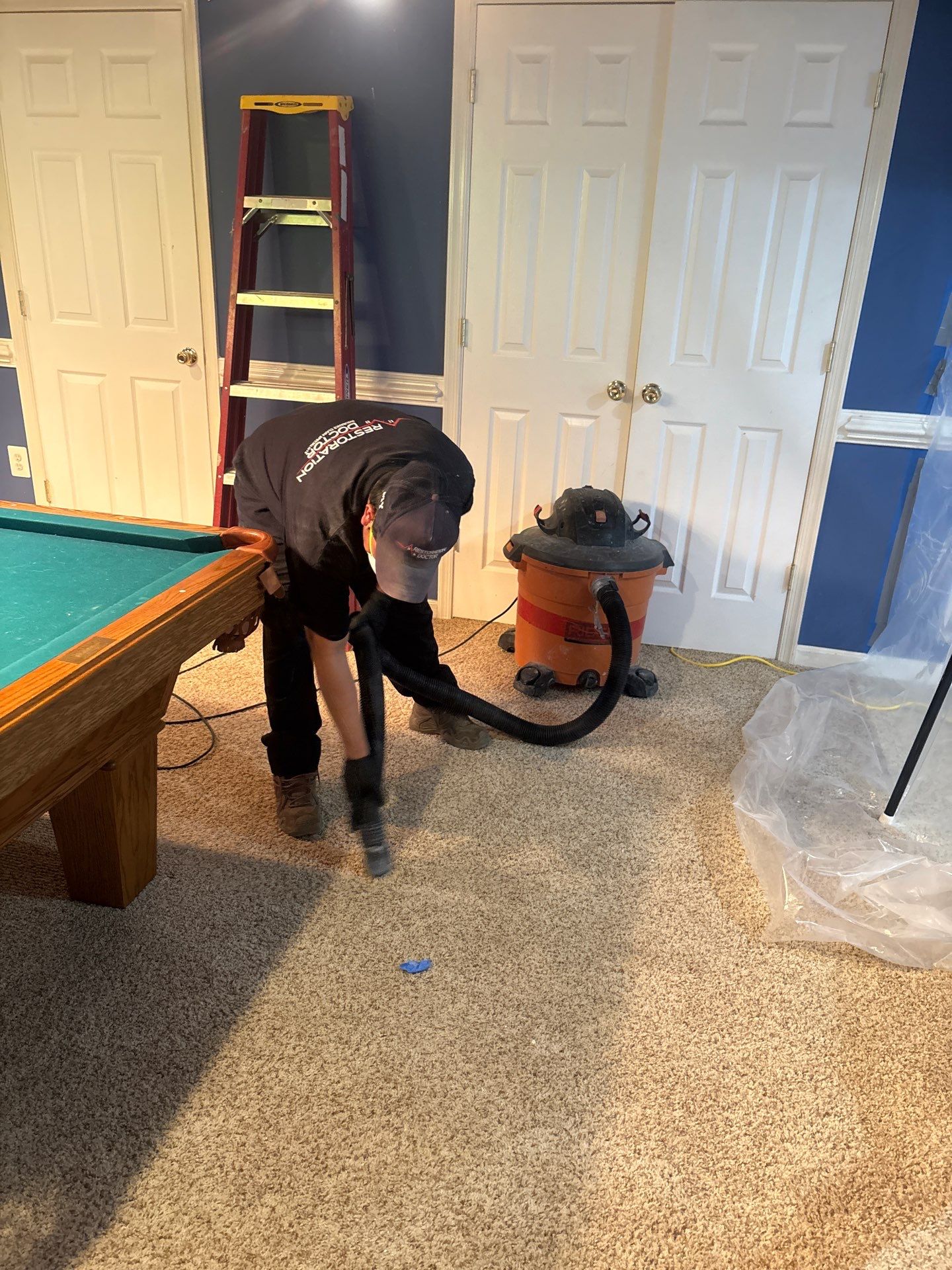
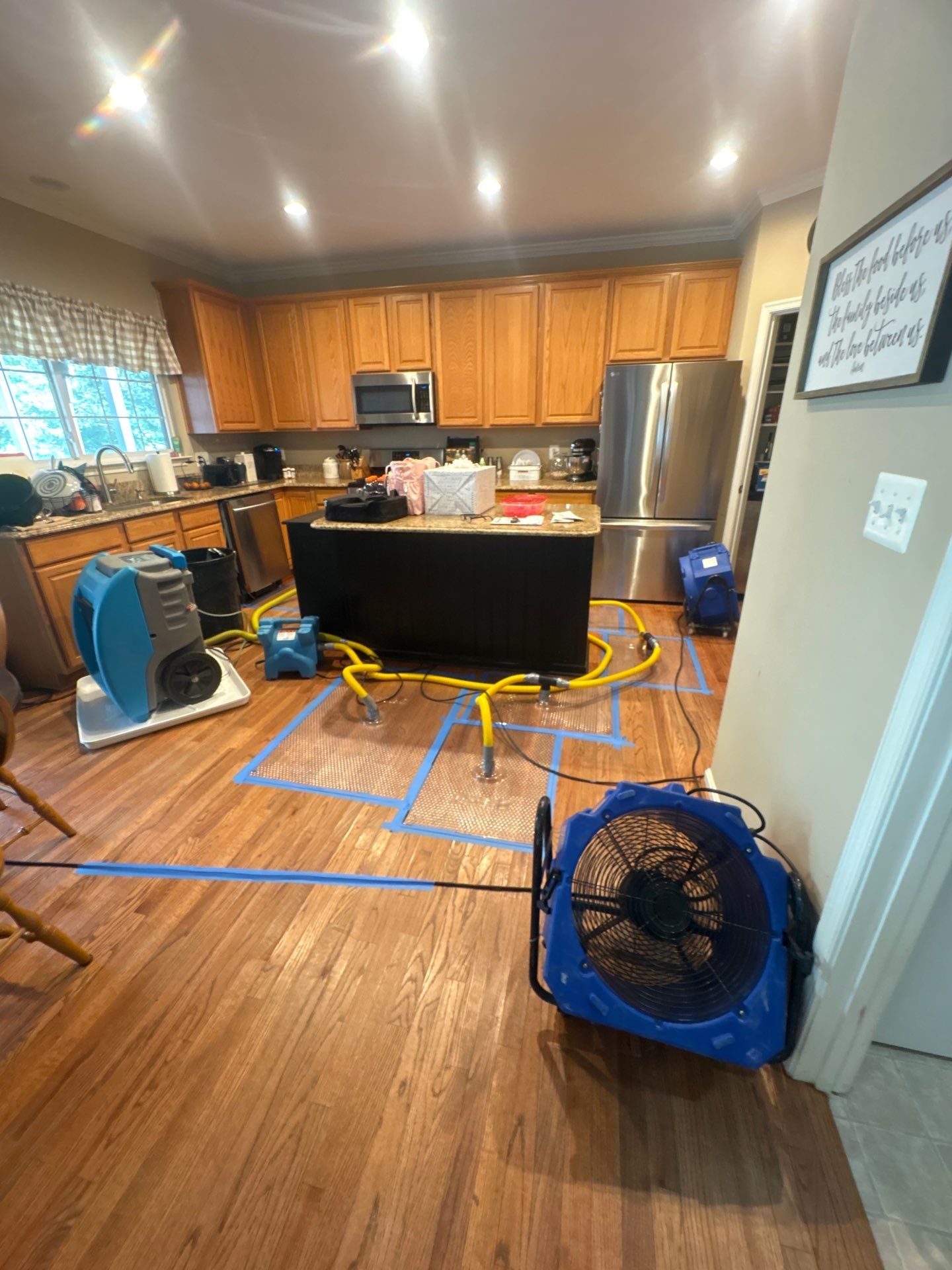
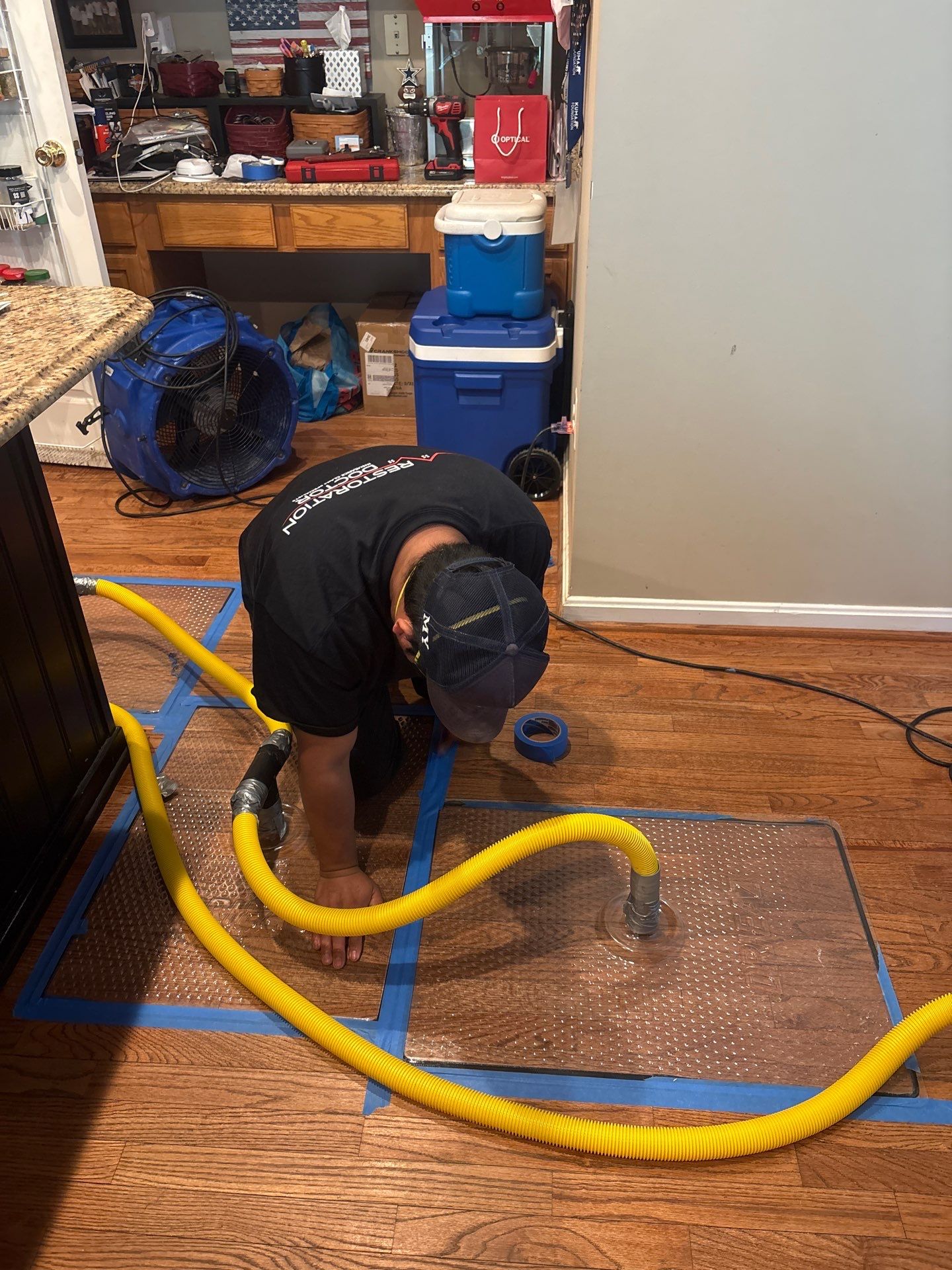
We arrived to find water actively covering the floor. Our first priority was extraction—we deployed truck-mounted pumps to remove the standing water, then covered the homeowner's belongings with protective plastic sheeting to prevent secondary damage during the drying phase. Once the floor was cleared, we positioned commercial air movers and dehumidifiers throughout the affected zones to pull residual moisture from subflooring and lower wall cavities, following IICRC S500 water damage restoration protocols for Category 1 losses.
The equipment ran continuously while we monitored drying progress with moisture meters, adjusting airflow as conditions changed. In Prince William County's humid Mid-Atlantic climate, controlled mechanical drying is essential to prevent trapped moisture from seeding mold growth in wall assemblies.
The homeowner expressed satisfaction with both the speed of our response and the care taken to protect their property throughout the process. The kitchen returned to a dry, stable condition, ready for any necessary finish repairs.
Frequently asked questions
How quickly does water damage need to be addressed in Linton Hall homes?
In Prince William County's hot, humid summers, water damage requires immediate response—standing water and elevated humidity accelerate secondary issues like warping and microbial growth. Restoration Doctor responded to this Linton Hall kitchen flood by extracting standing water and deploying commercial drying equipment the same day, preventing deeper structural moisture intrusion common in the region's newer-construction homes.
What does structural drying involve after a kitchen flood?
Structural drying uses industrial dehumidifiers and air movers to remove moisture from building materials—walls, subfloors, and framing—that absorbed water during the flood. For this Linton Hall job, Restoration Doctor placed high-velocity equipment to target affected areas after extraction, monitoring conditions until materials returned to dry standard and eliminating the risk of hidden moisture pockets.
Can my belongings be protected during water damage restoration?
Yes—contents protection is a standard part of comprehensive water restoration. At this Linton Hall property, Restoration Doctor covered and secured household items with protective plastic sheeting before beginning extraction and drying work, preventing cross-contamination and allowing the homeowner's belongings to remain safely in place during the restoration process.
Why is flooring often affected by kitchen water leaks in townhomes?
Kitchen leaks in townhome and single-family layouts—common in Prince William County subdivisions like those around Linton Hall—often spread quickly across open-plan floors, saturating carpet, padding, and underlayment before the source is located. Restoration Doctor's flooring remediation on this job included removing compromised materials and drying the subfloor to prevent long-term issues like delamination or odor.
Does water damage restoration in Virginia follow industry standards?
Licensed restorers like Restoration Doctor follow IICRC S500 water damage protocols, which define proper extraction, drying, and monitoring procedures regardless of location. This Linton Hall kitchen flood was managed using those standards—controlled drying, moisture mapping, and documentation—to ensure the structure was returned to a safe, stable condition.
Explore more restoration work
All projects in Linton Hall · Water Damage Restoration in Linton Hall
Water, fire, or mold damage in Linton Hall?
Restoration Doctor responds 24/7 across Linton Hall and Northern Virginia. Free assessment and transparent, insurance-friendly estimates — no obligation.
See our Water Damage Restoration services at restorationdoctors.com →