Thermal-Assisted Inspection and Rapid Water Remediation
About this water damage restoration project
A water intrusion emergency in a Gainesville home—part of Prince William County's newer residential construction—demanded swift technical assessment, particularly given the Mid-Atlantic humidity that can accelerate secondary damage in occupied structures. The homeowner contacted us immediately after discovering the leak, and we deployed our diagnostic protocol the same day.
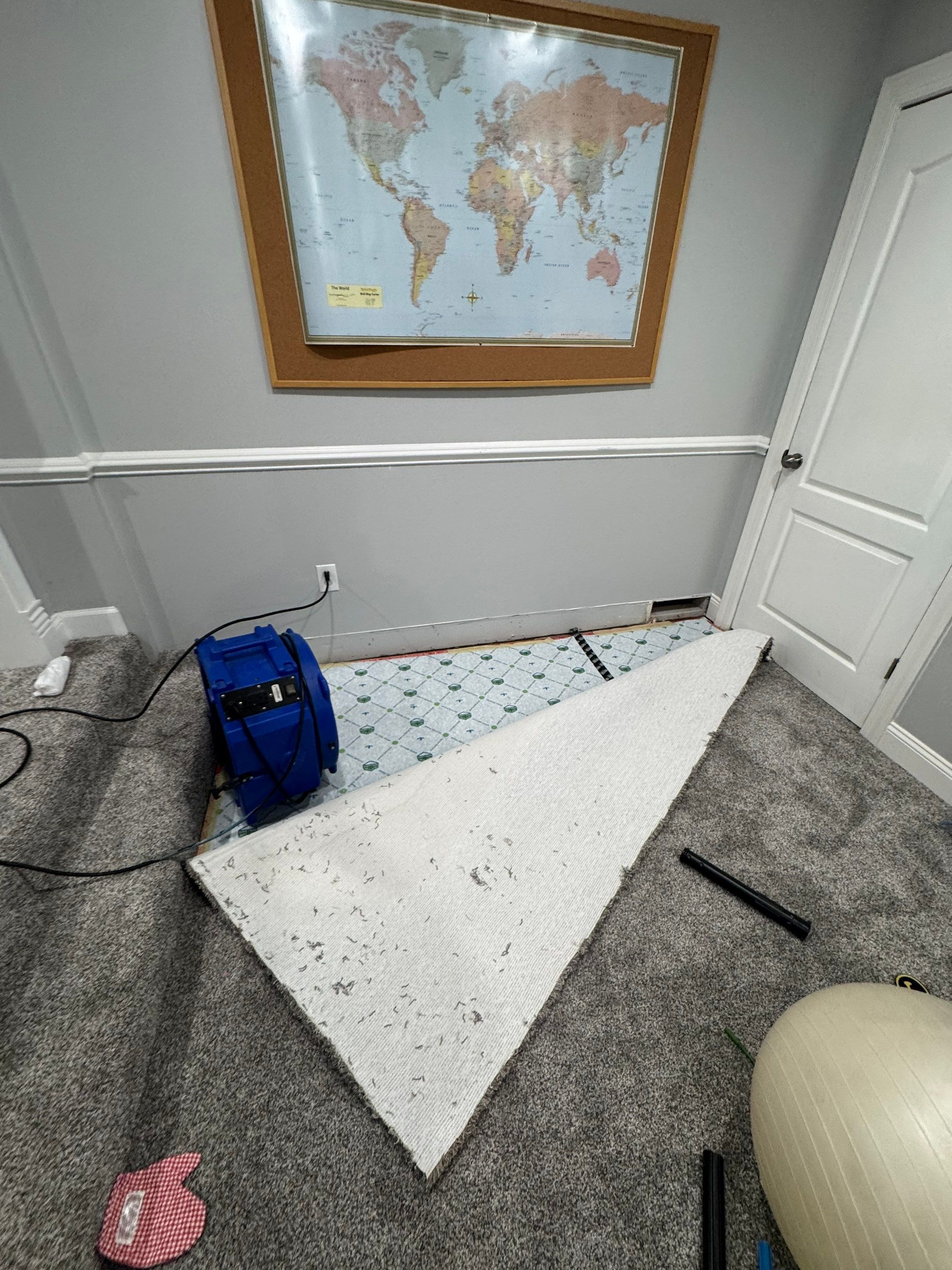
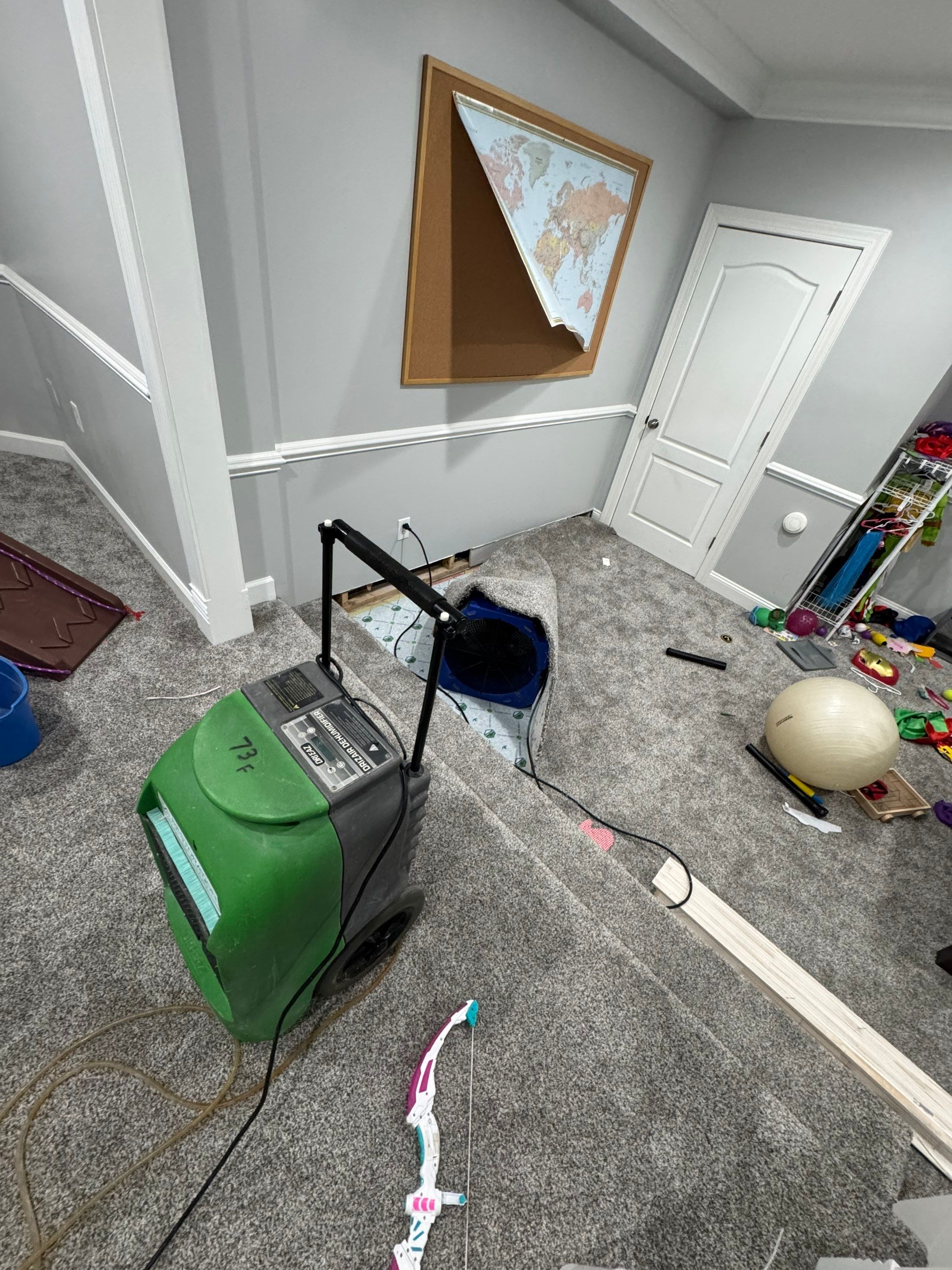
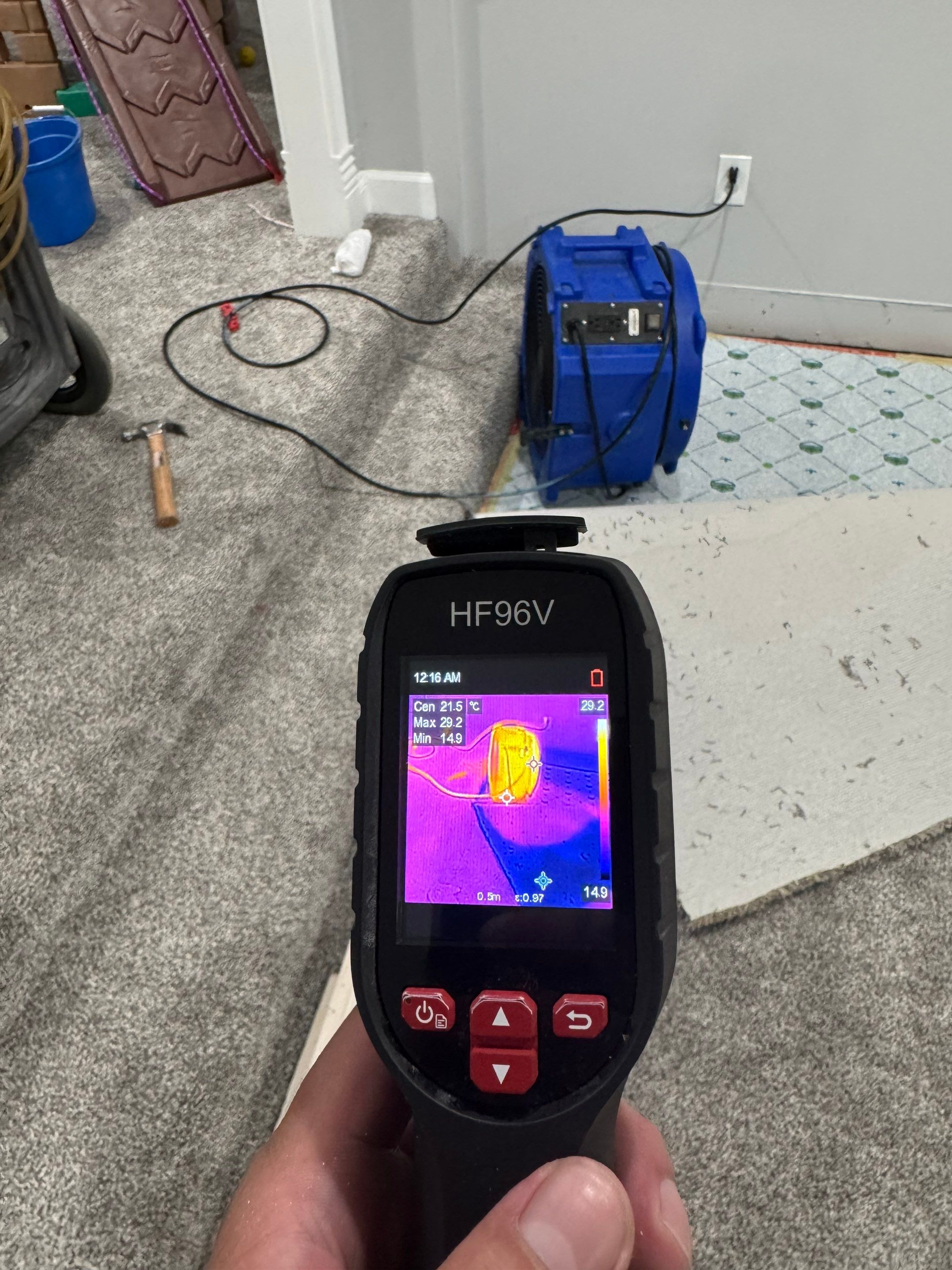
Our first step was a comprehensive thermal imaging inspection to map the full extent of moisture migration, including hidden saturation behind finished surfaces that visual assessment alone would miss. The infrared scan revealed water wicking patterns in wall cavities and subfloor assemblies, defining the precise remediation perimeter. With the affected zones documented, we positioned commercial-grade air movers and dehumidification equipment according to IICRC S500 drying protocols, creating controlled airflow across all compromised materials.
We monitored moisture levels throughout the drying cycle, adjusting equipment placement as readings dropped toward acceptable thresholds. The targeted approach prevented over-drying in unaffected areas while ensuring thorough remediation where water had actually traveled. The homeowner expressed satisfaction with both the diagnostic clarity and the methodical execution, noting the difference that thermal imaging made in addressing hidden moisture they would not have known to look for.
Frequently asked questions
Why is thermal imaging used for water damage inspections in Gainesville homes?
Restoration Doctor uses thermal imaging to detect hidden moisture in walls, ceilings, and floors that visual inspection alone cannot reveal. In Prince William County's newer-built homes, water can migrate through modern building materials and settle in concealed cavities, making infrared technology essential for mapping the full extent of intrusion. This non-invasive approach identifies all affected areas before structural drying begins, preventing incomplete remediation that could lead to secondary damage.
How long does structural drying typically take after water intrusion in a Gainesville property?
Drying timelines depend on the materials affected, the volume of water introduced, and ambient conditions during remediation. In Prince William County's hot, humid summers, controlled drying with commercial dehumidifiers and air movers is critical to counteract the moisture-heavy outdoor air that can slow natural evaporation. Restoration Doctor monitors moisture levels daily with meters to confirm materials have returned to dry standard before equipment is withdrawn.
What happens if water damage isn't dried properly in newer homes like those common in Gainesville?
Incomplete drying in modern construction can trap moisture behind vapor barriers, within insulated wall assemblies, or under engineered flooring systems typical of Prince William County subdivisions. Restoration Doctor's structural drying process addresses these risks by placing equipment strategically based on thermal-imaging findings and verifying dry-down with calibrated moisture meters. Proper remediation prevents warping, delamination, and microbial growth that compromise both the building envelope and indoor air quality.
Does homeowners insurance typically cover emergency water damage restoration in Virginia?
Most homeowners policies in Virginia cover sudden and accidental water damage, such as supply-line failures or appliance leaks, though coverage specifics vary by carrier and policy language. Restoration Doctor works directly with insurance adjusters to document the scope of loss with photos, moisture readings, and equipment logs that support the claim. Gradual seepage or maintenance-related issues are often excluded, so prompt response to acute water intrusion is both a coverage and a building-protection priority.
What equipment does Restoration Doctor use for structural drying after water damage?
Restoration Doctor deploys commercial-grade air movers to accelerate evaporation from surfaces, low-grain refrigerant dehumidifiers to extract moisture from the air, and moisture meters to track drying progress in affected materials. The equipment configuration is tailored to the job's thermal-imaging findings and the building materials present. This combination creates controlled drying conditions that bring structural components back to equilibrium efficiently and in accordance with industry restoration standards.
Explore more restoration work
All projects in Gainesville · Water Damage Restoration in Gainesville
Water, fire, or mold damage in Gainesville?
Restoration Doctor responds 24/7 across Gainesville and Northern Virginia. Free assessment and transparent, insurance-friendly estimates — no obligation.
See our Water Damage Restoration services at restorationdoctors.com →