Ceiling Leak Remediation and Kitchen Restoration
About this mold remediation project
A ceiling leak in a Gainesville kitchen triggered flooding that demanded immediate attention—a common risk in Prince William County's newer-built homes, where hot, humid Mid-Atlantic summers can accelerate hidden moisture problems once water breaches the envelope. The homeowner contacted us after discovering the extent of the intrusion, which had spread across flooring and raised concerns about secondary mold growth.
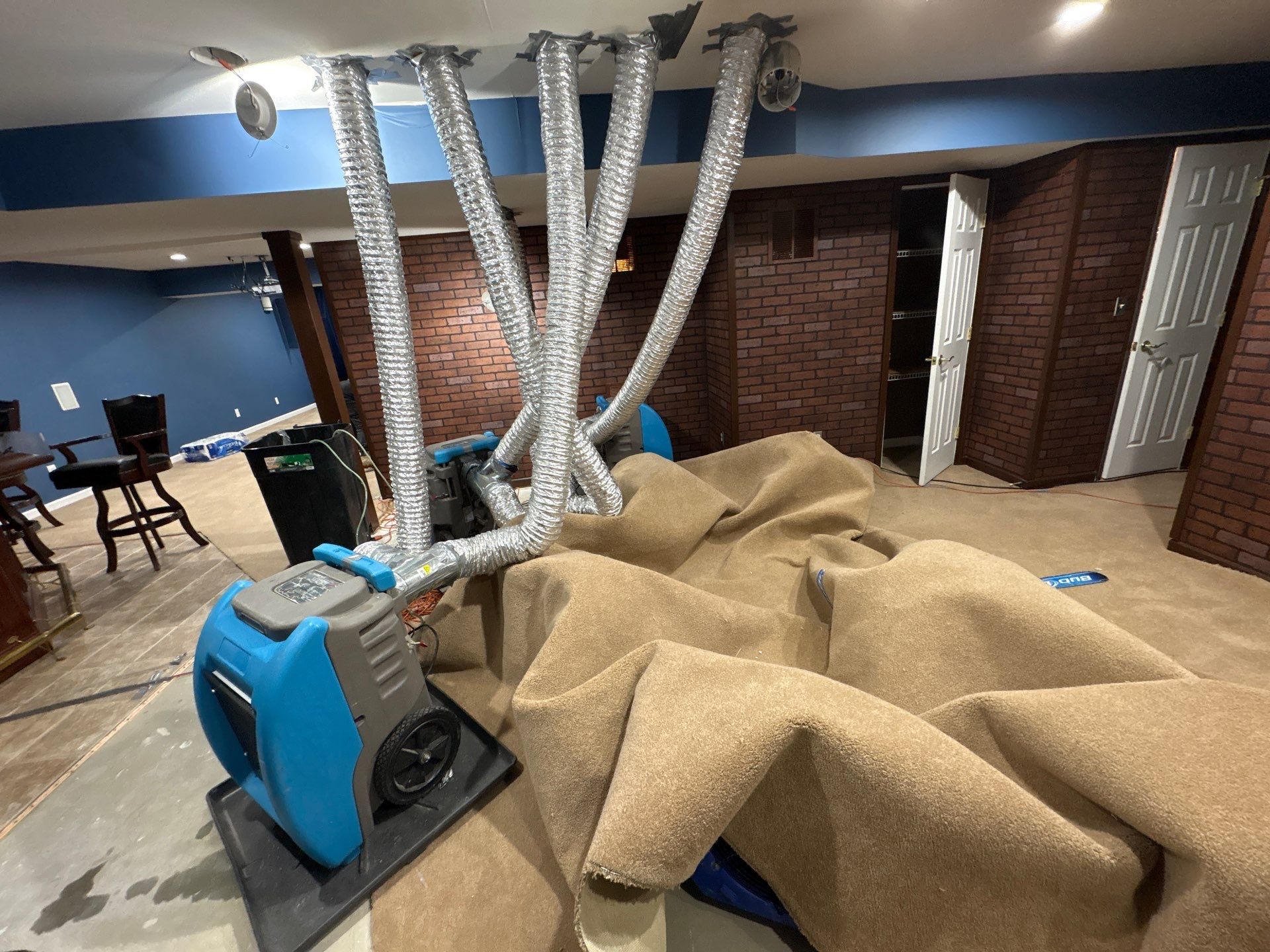
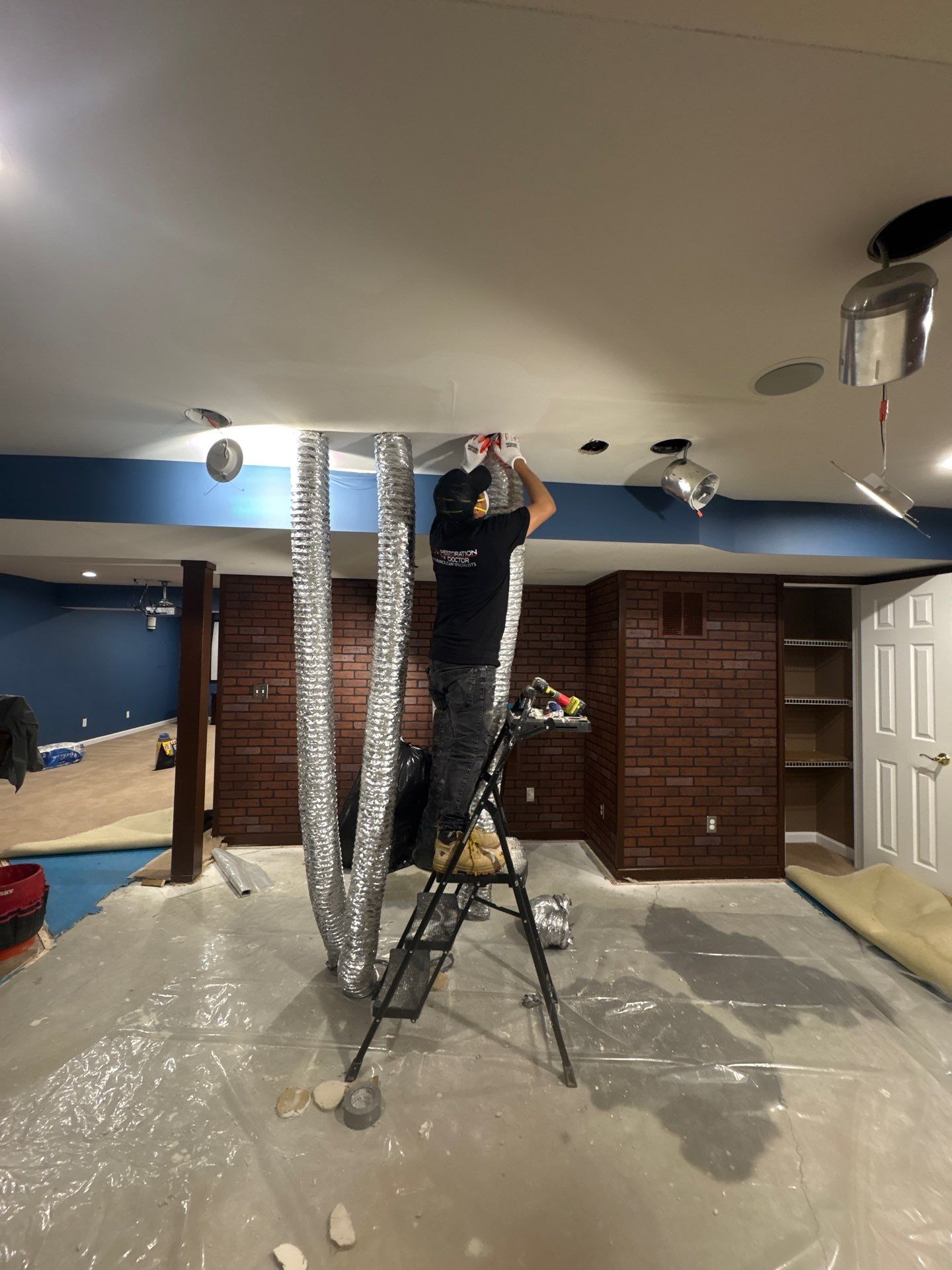
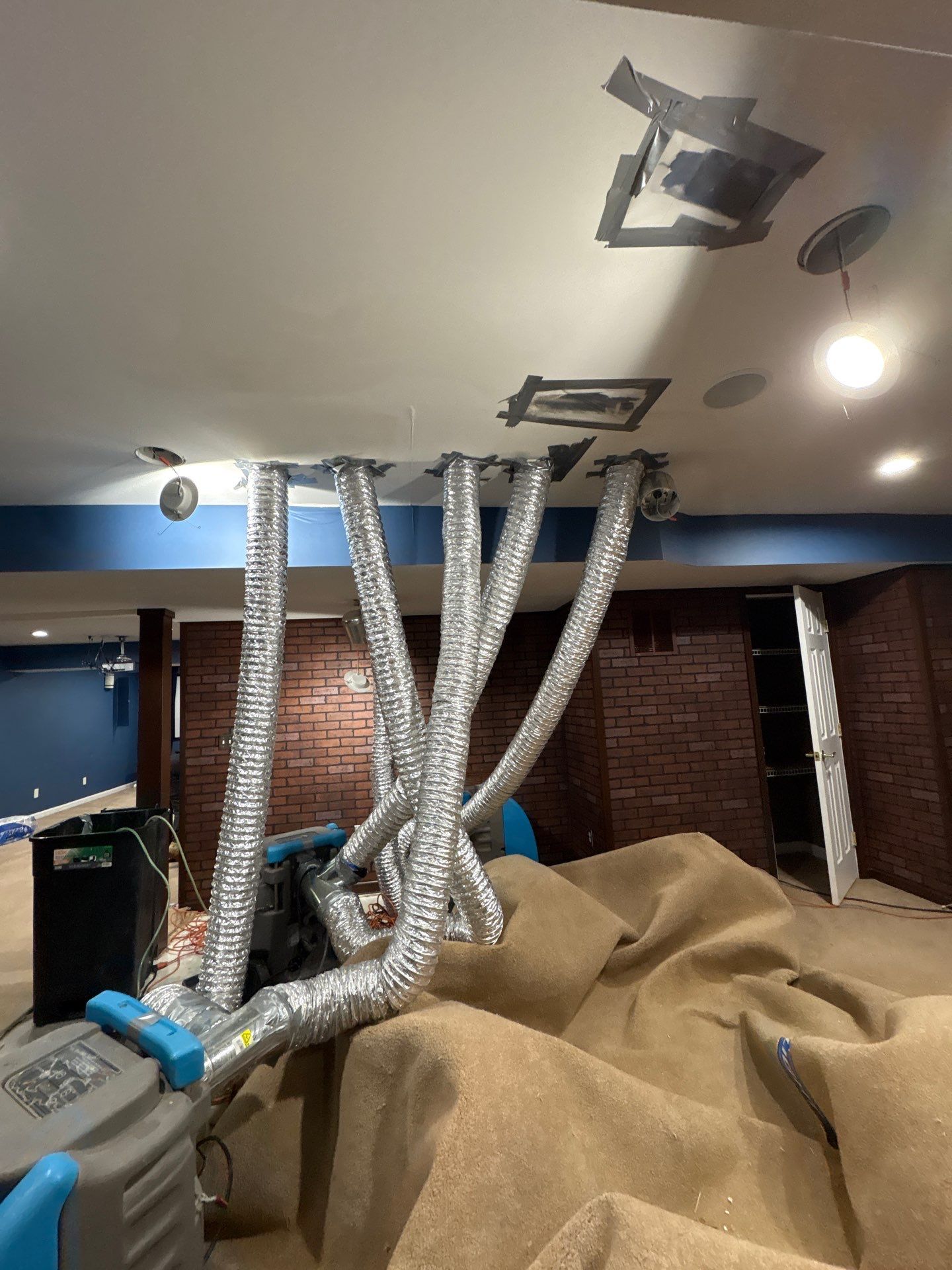
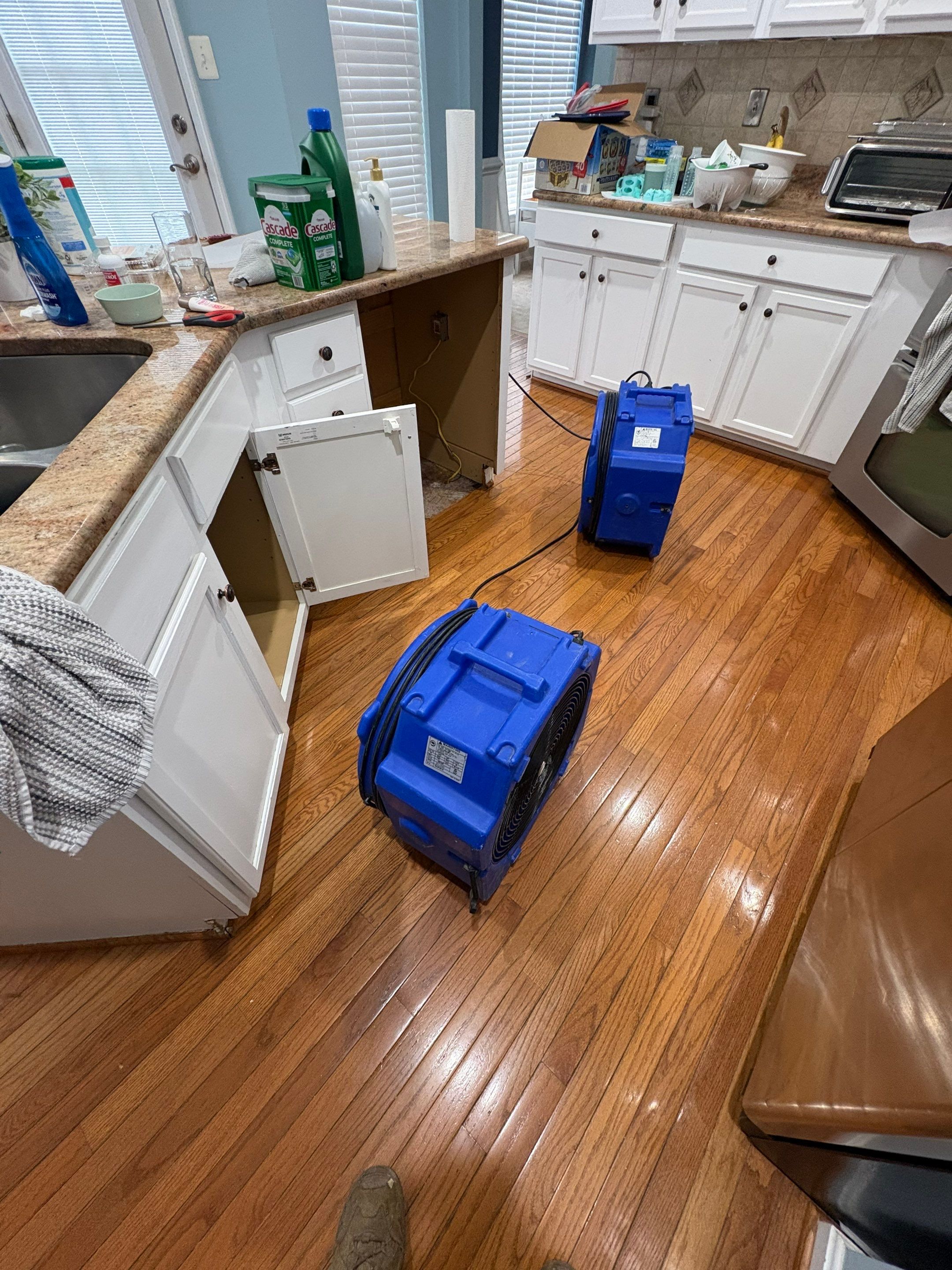
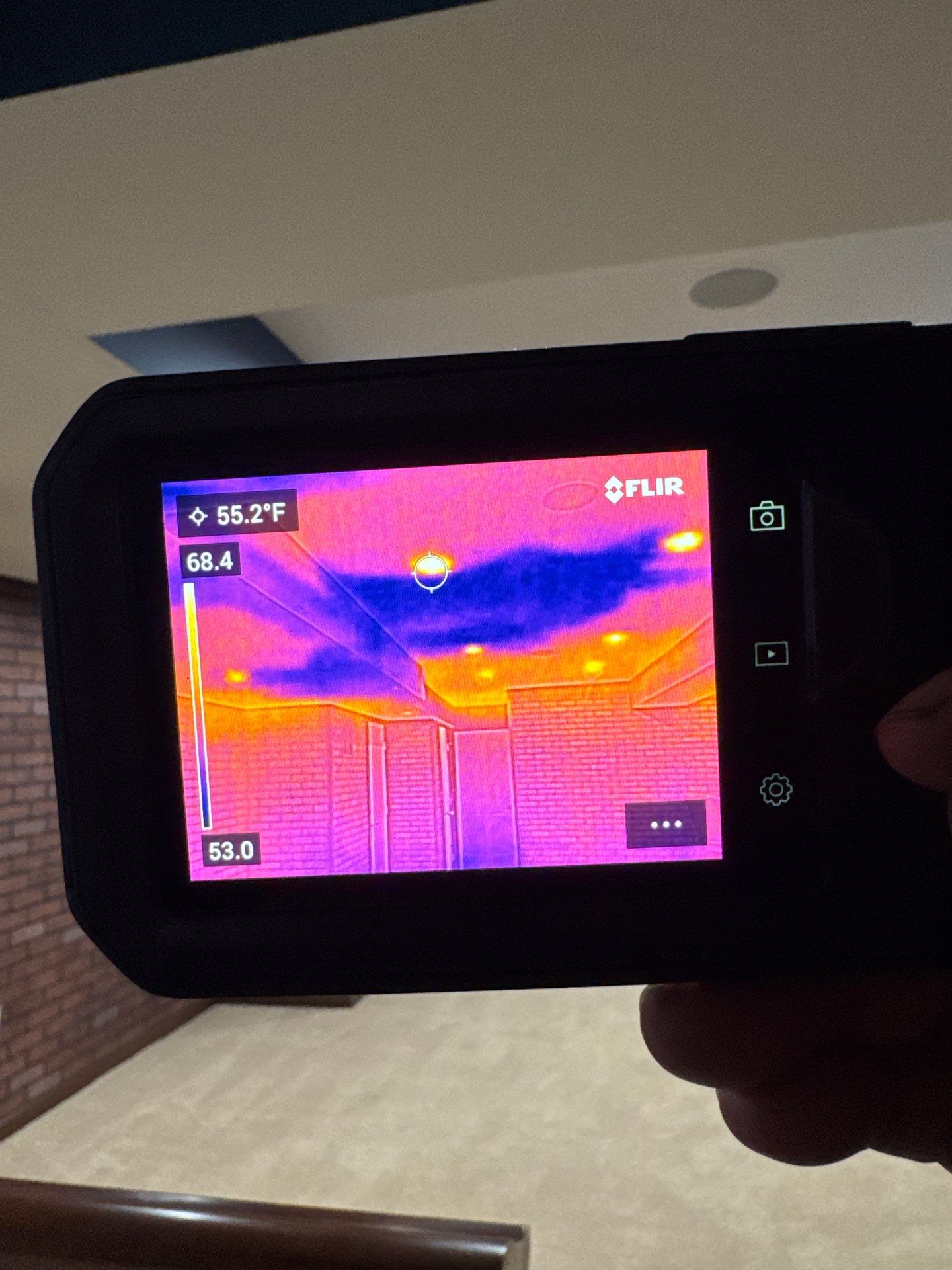
We began with thermal imaging to map moisture migration beyond the visible wet area, identifying pockets of saturation in wall cavities and subfloor zones the naked eye would miss. With the full scope understood, we deployed commercial dehumidifiers and air movers to drive moisture levels down, then carefully lifted and dried the affected carpets rather than discarding them outright. This step-by-step drying protocol follows IICRC S500 principles and gave the homeowner a cost-effective path to restoration.
Once the space reached equilibrium, we addressed mold growth that had begun where standing water had lingered, applying antimicrobial treatment to affected surfaces and verifying clearance with follow-up moisture readings. The kitchen returned to a dry, stable baseline, and the homeowner noted their satisfaction with both the thoroughness of the inspection and the care taken with salvageable materials.
Frequently asked questions
How does thermal imaging help locate hidden moisture after a ceiling leak in Gainesville?
Thermal imaging allows Restoration Doctor technicians to detect temperature differentials behind walls, above ceilings, and under flooring—areas where moisture from a ceiling leak may have traveled unseen. In Gainesville's newer-built homes, where drywall and insulation can trap water without visible staining, this non-invasive scan maps the full extent of saturation before demolition begins. It ensures we dry the entire affected envelope, not just the obvious damage.
Why was carpet removal necessary after water intrusion in this Gainesville kitchen?
When standing water from the ceiling leak reached the carpeted areas, the padding beneath absorbed moisture rapidly and became a reservoir for microbial growth. Restoration Doctor removed and assessed the carpet to dry the subfloor properly and prevent mold colonization in the pad, which cannot be effectively dried in place. In Prince William County's humid Mid-Atlantic climate, any porous material left wet becomes a liability within days.
What does structural drying involve after mold remediation in a Gainesville home?
Structural drying at this Gainesville property involved placing commercial dehumidifiers and air movers to pull moisture from framing, subfloor, and ceiling cavities exposed during the ceiling repair. Restoration Doctor monitored moisture levels daily until all materials reached equilibrium with the ambient environment, a critical step before reconstruction to prevent recurring mold. The process typically runs several days depending on the extent of saturation and airflow access.
Does homeowners insurance in Prince William County typically cover mold remediation after a sudden ceiling leak?
Most homeowners policies in Prince William County cover mold remediation when it results directly from a sudden, accidental water event like a ceiling leak—provided the homeowner acts promptly to mitigate the loss. Restoration Doctor works with insurance adjusters to document the timeline, scope, and causal link between the intrusion and the mold growth. Coverage exclusions apply if the leak was long-standing or due to deferred maintenance, so early professional inspection matters.
How long does a combined moisture inspection, drying, and mold remediation project take in Gainesville?
The timeline for a project like this Gainesville job—thermal inspection, structural drying, mold remediation, and ceiling/flooring repair—depends on the extent of hidden moisture and the materials affected. Restoration Doctor's drying phase alone often requires three to five days to bring framing and subfloors to safe levels, with remediation and reconstruction following in sequence. Hot, humid Mid-Atlantic summers can extend drying times if outdoor air is not conditioned, so we use closed-system dehumidification to control the environment.
Explore more restoration work
All projects in Gainesville · Mold Remediation in Gainesville
Water, fire, or mold damage in Gainesville?
Restoration Doctor responds 24/7 across Gainesville and Northern Virginia. Free assessment and transparent, insurance-friendly estimates — no obligation.
See our Mold Remediation services at restorationdoctors.com →