Comprehensive Water Damage Repair
About this mold remediation project
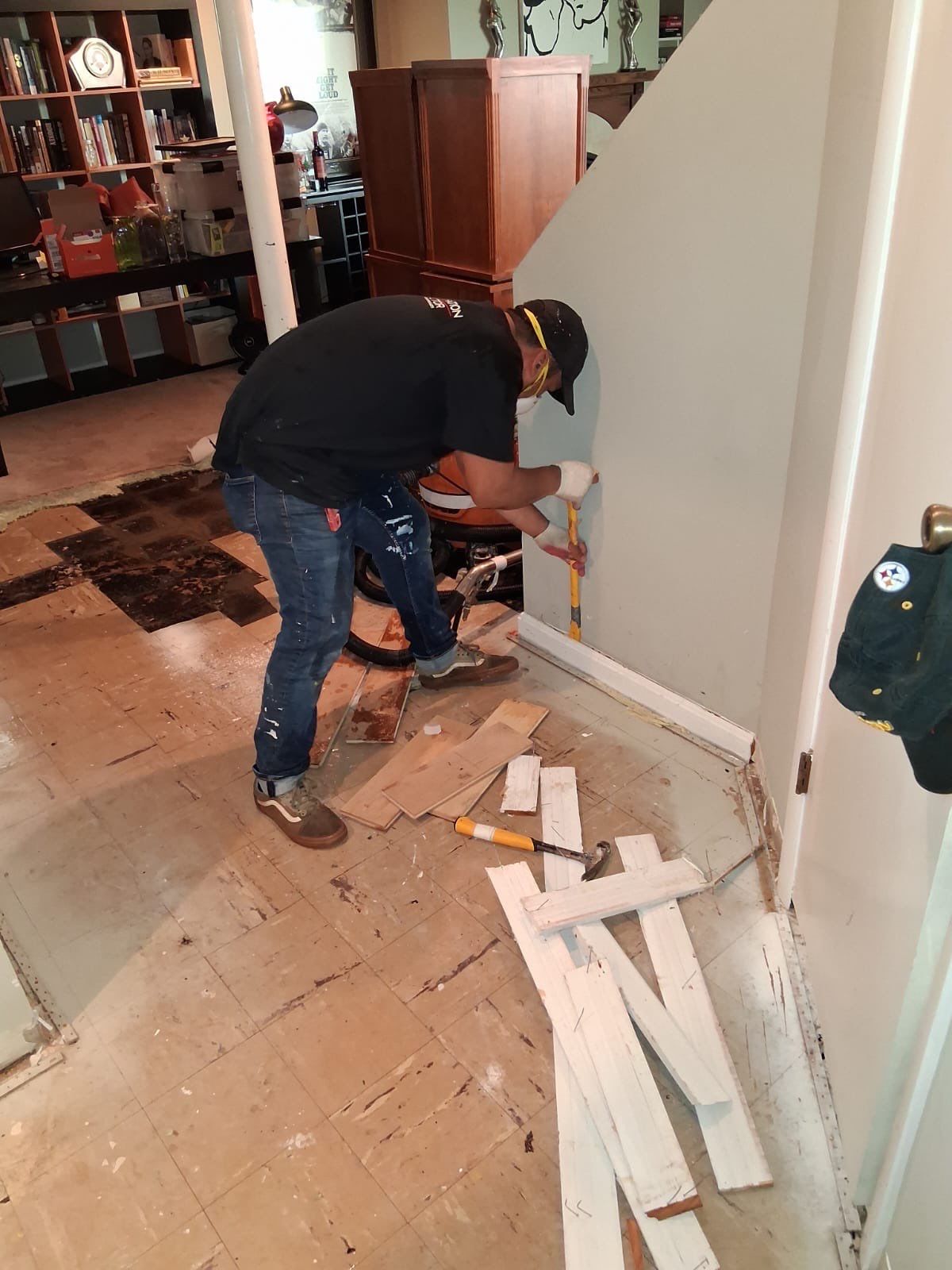
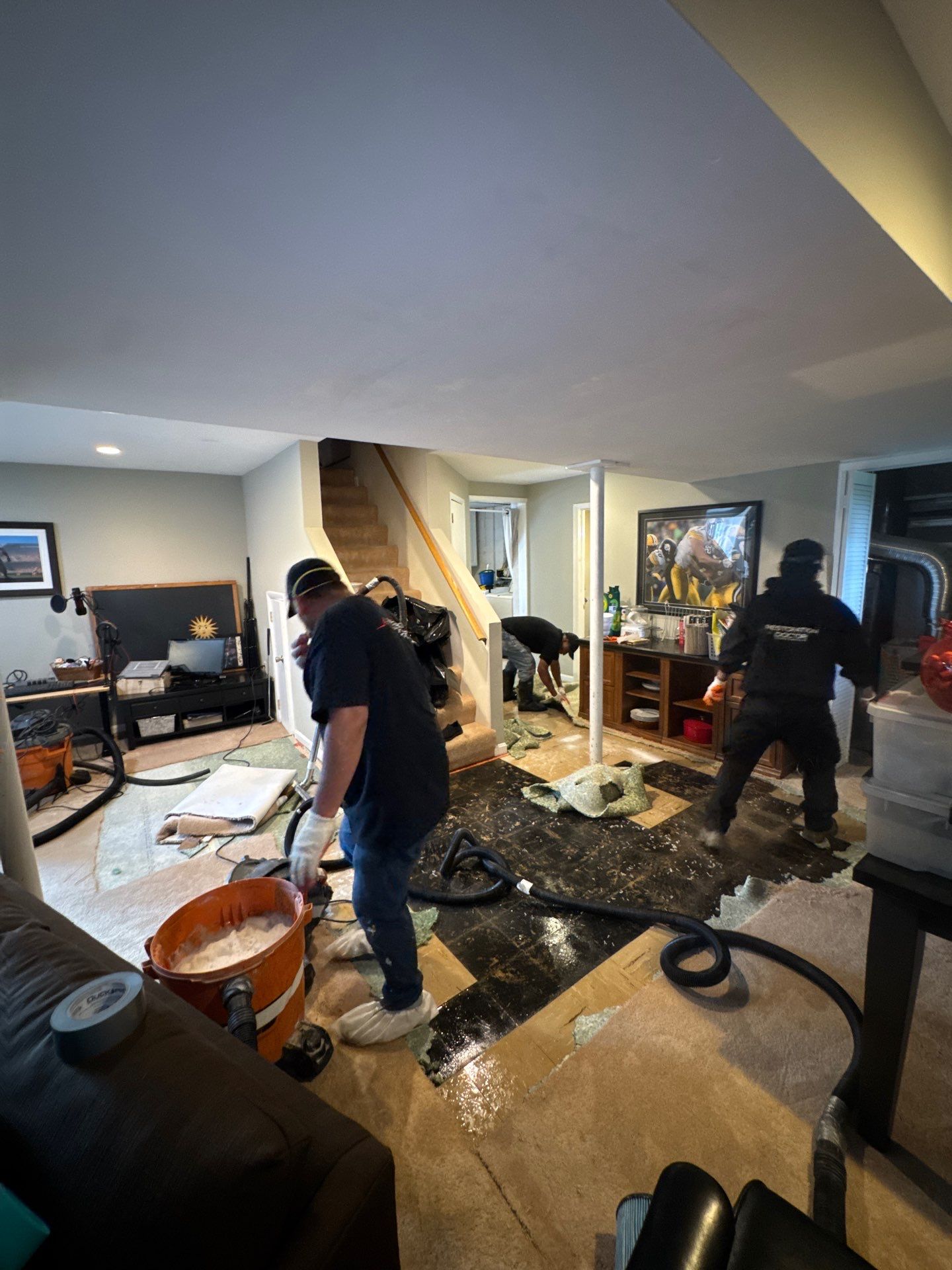
A high-powered vacuum extraction was the first step in clearing standing water from this Falls Church residence, where mold had taken hold after an undetected intrusion. In the City of Falls Church, where established mid-20th-century single-family homes often contain original plumbing vulnerable to winter freeze-thaw failures, water that remains hidden behind finished surfaces can feed mold colonies long before homeowners notice visible growth.
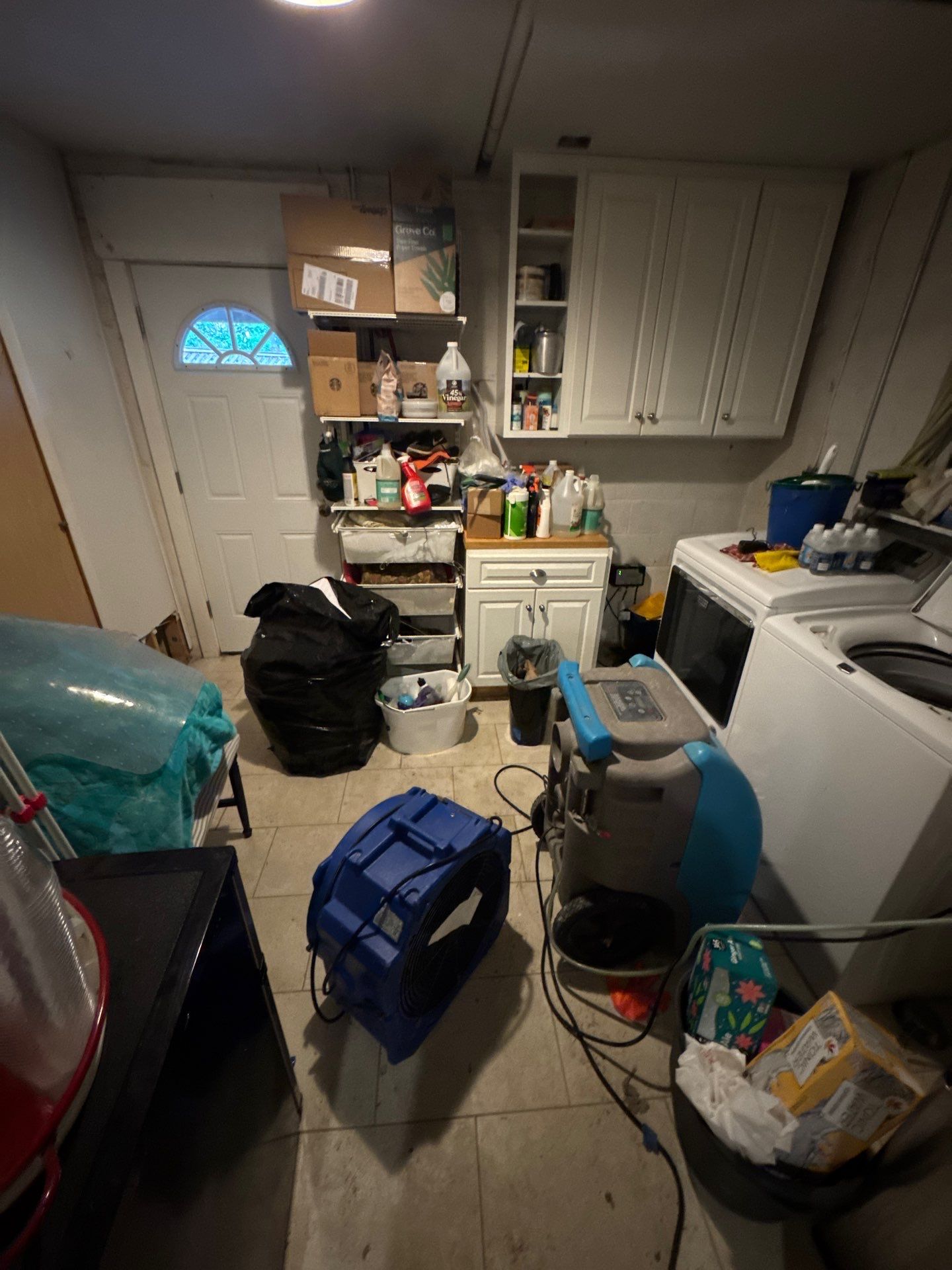
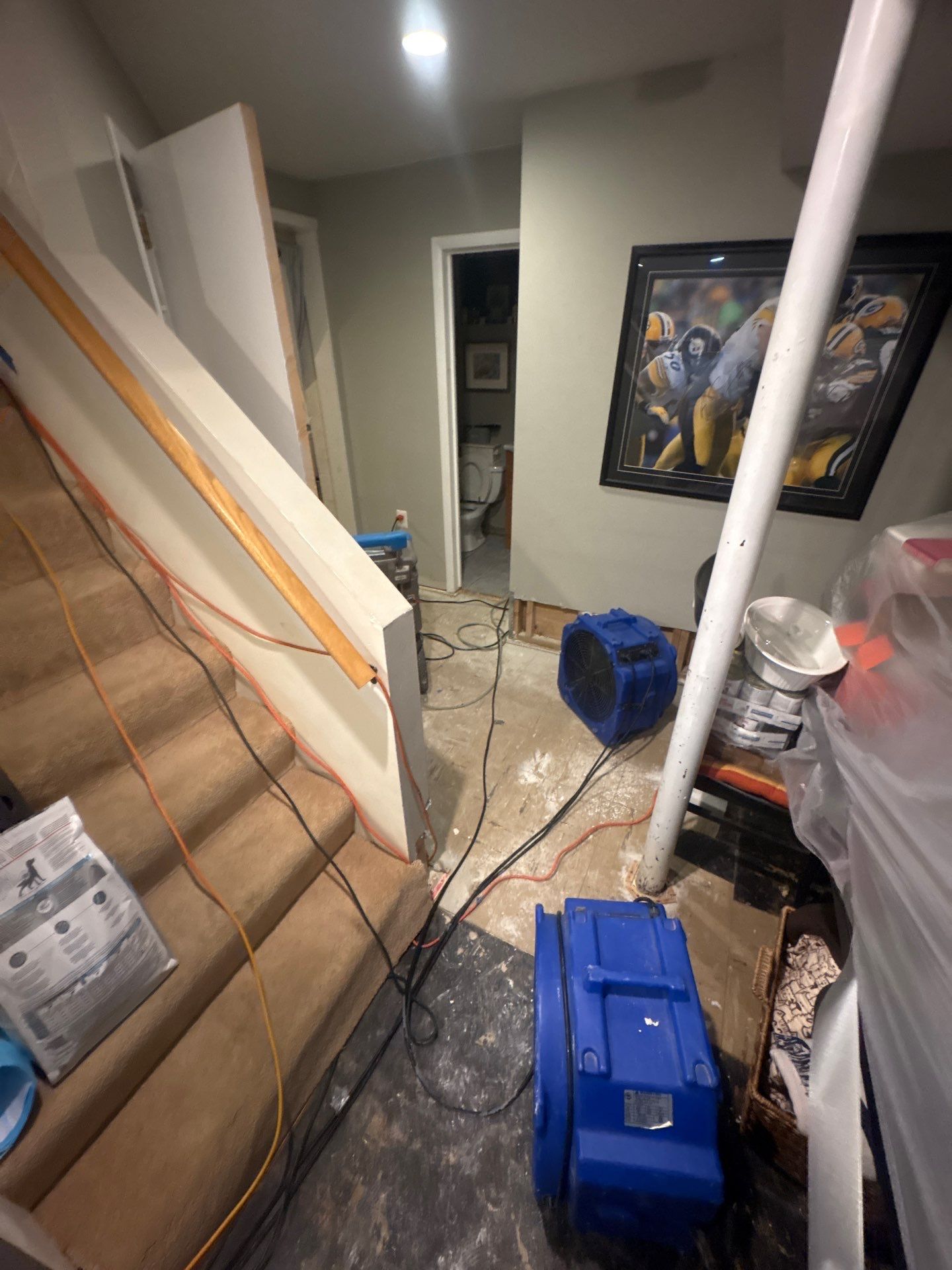
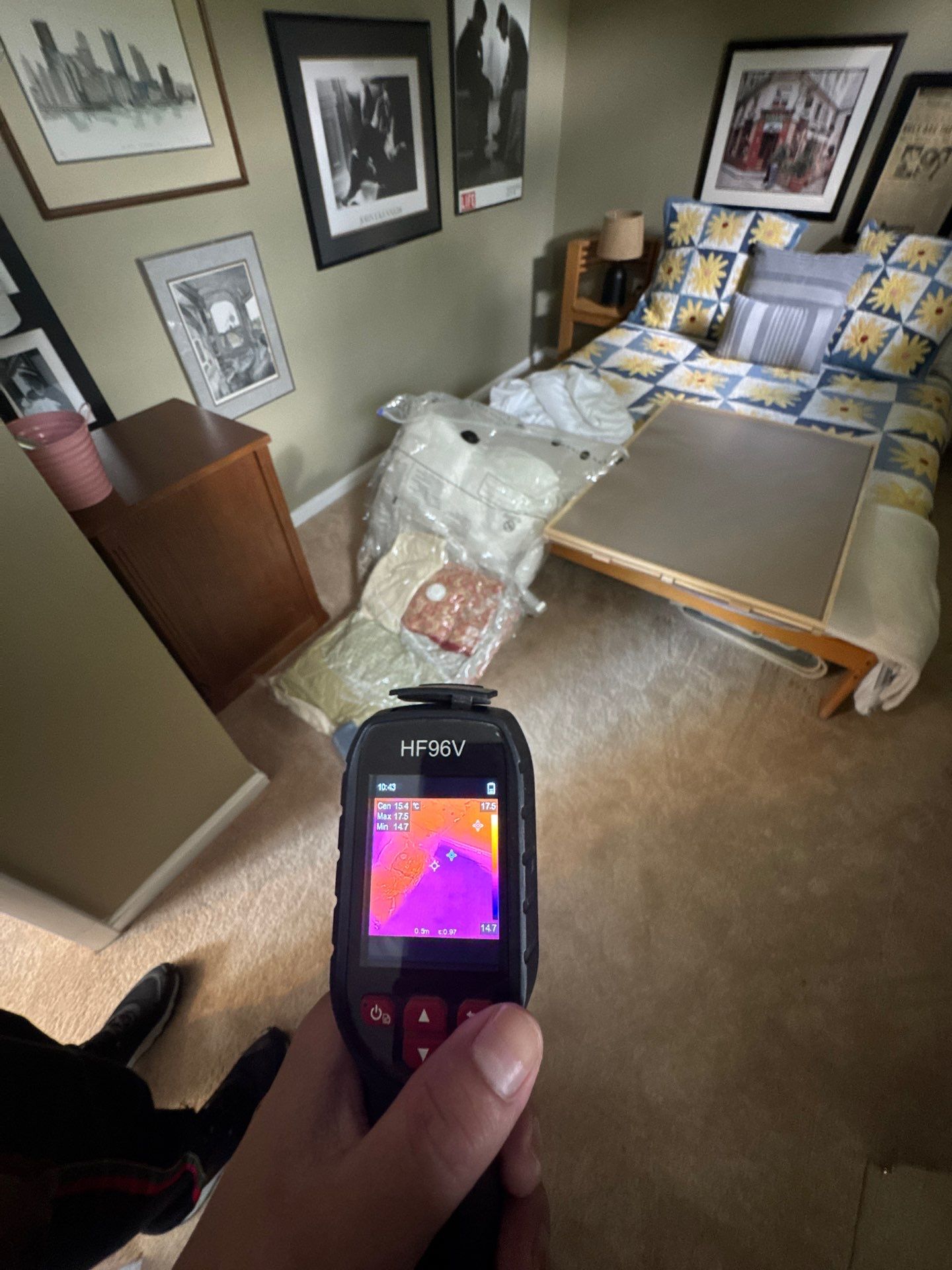
Thermal imaging guided the entire restoration, mapping moisture migration through wall cavities and subflooring that visual inspection alone would have missed. The scanning revealed elevated readings in baseboards and lower drywall sections, prompting selective demolition of those materials rather than wholesale removal. Advanced air movers and dehumidifiers then brought the structural envelope back to equilibrium, with the thermal camera used periodically to confirm drying progress in previously saturated zones.
Replacement of damaged baseboards and wall sections completed the physical restoration, following the IICRC S520 mold remediation standard's protocol for removal of porous materials that cannot be reliably cleaned. The antimicrobial application and final clearance testing ensured that spore counts returned to normal ambient levels, closing out a project where early moisture detection technology made the difference between a targeted repair and a far more invasive rebuild.
Frequently asked questions
Why is thermal imaging important during water damage restoration in Falls Church homes?
Thermal imaging allows Restoration Doctor technicians to detect hidden moisture trapped inside wall cavities and structural materials without invasive demolition. In Falls Church's mid-20th century housing stock, where plumbing runs through older framing, this technology ensures we identify all affected areas before they develop into secondary mold growth, guiding targeted drying and replacement decisions.
What does wall and baseboard replacement involve after water intrusion in a Falls Church property?
After extracting standing water and thoroughly drying the structure, Restoration Doctor removes water-damaged drywall and baseboards that cannot be salvaged. We then install new materials to match the existing finishes, restoring both the structural integrity and appearance of your Falls Church home while eliminating any mold-compromised components.
How does freeze-thaw damage lead to mold problems in older Falls Church homes?
Winter freeze-thaw cycles common to Northern Virginia can cause older plumbing lines to crack or burst, releasing water into walls and flooring. If not addressed quickly, the moisture creates conditions for mold colonization within days. Restoration Doctor's rapid extraction and structural drying process, combined with moisture monitoring, prevents mold from establishing in these vulnerable mid-century residential structures.
How long does mold remediation typically take in Falls Church after water damage?
The timeline for mold remediation in Falls Church depends on the extent of water intrusion and affected materials. For a project involving standing-water extraction, structural drying, and selective wall and baseboard replacement, Restoration Doctor typically completes the work over several days, with drying monitored continuously via thermal imaging to ensure all moisture is eliminated before reconstruction begins.
Explore more restoration work
All projects in Falls Church · Mold Remediation in Falls Church
Water, fire, or mold damage in Falls Church?
Restoration Doctor responds 24/7 across Falls Church and Northern Virginia. Free assessment and transparent, insurance-friendly estimates — no obligation.
See our Mold Remediation services at restorationdoctors.com →