Thorough Inspection and Drying for a Safer Home
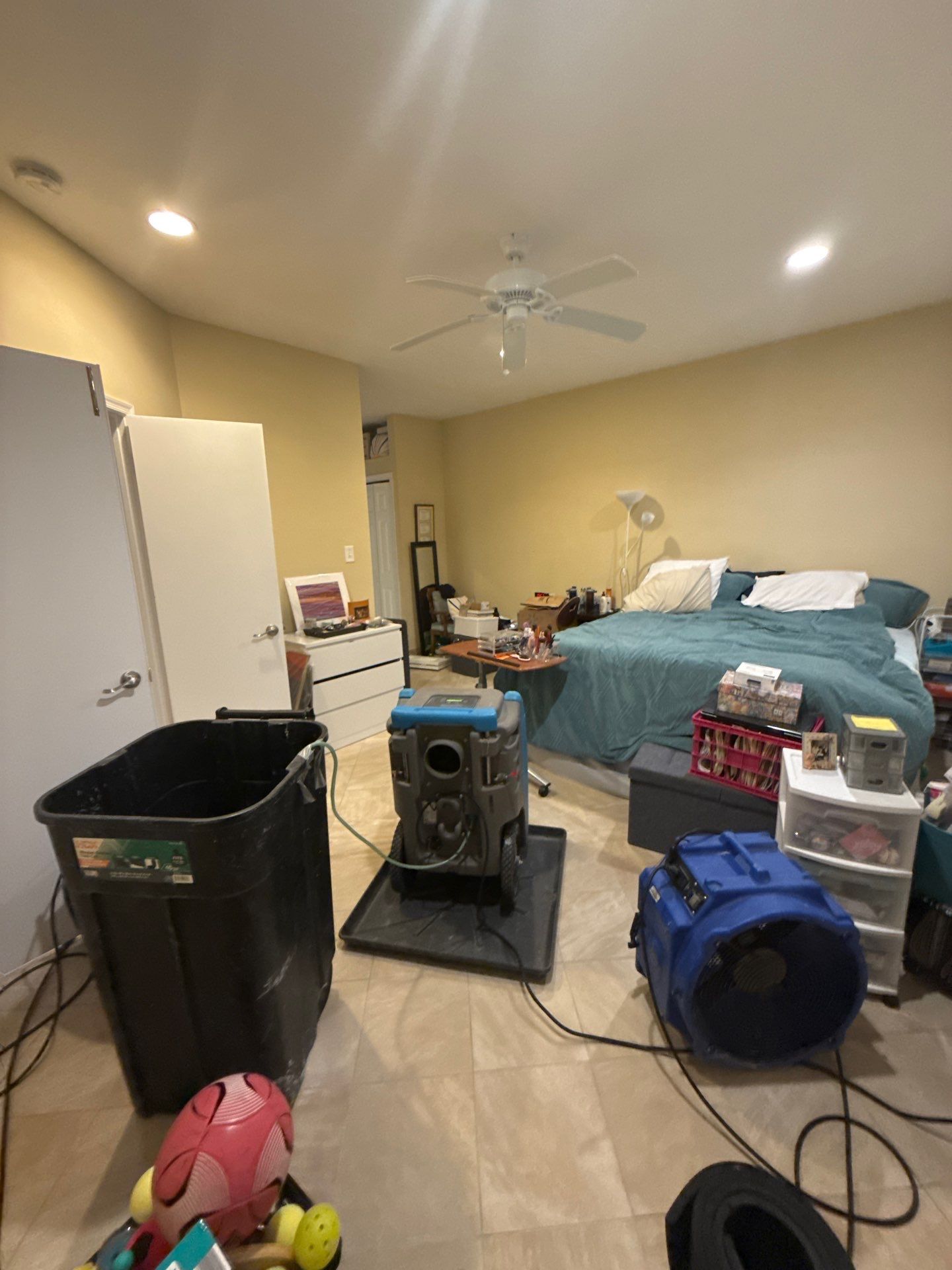
About this water damage restoration project
When water intrusion leads to mold in the City of Fairfax, where humid Mid-Atlantic summers can accelerate growth in both historic-district homes and mid-century subdivisions, early detection and containment become essential. This residential loss required a methodical approach to assess hidden moisture and prevent further contamination.
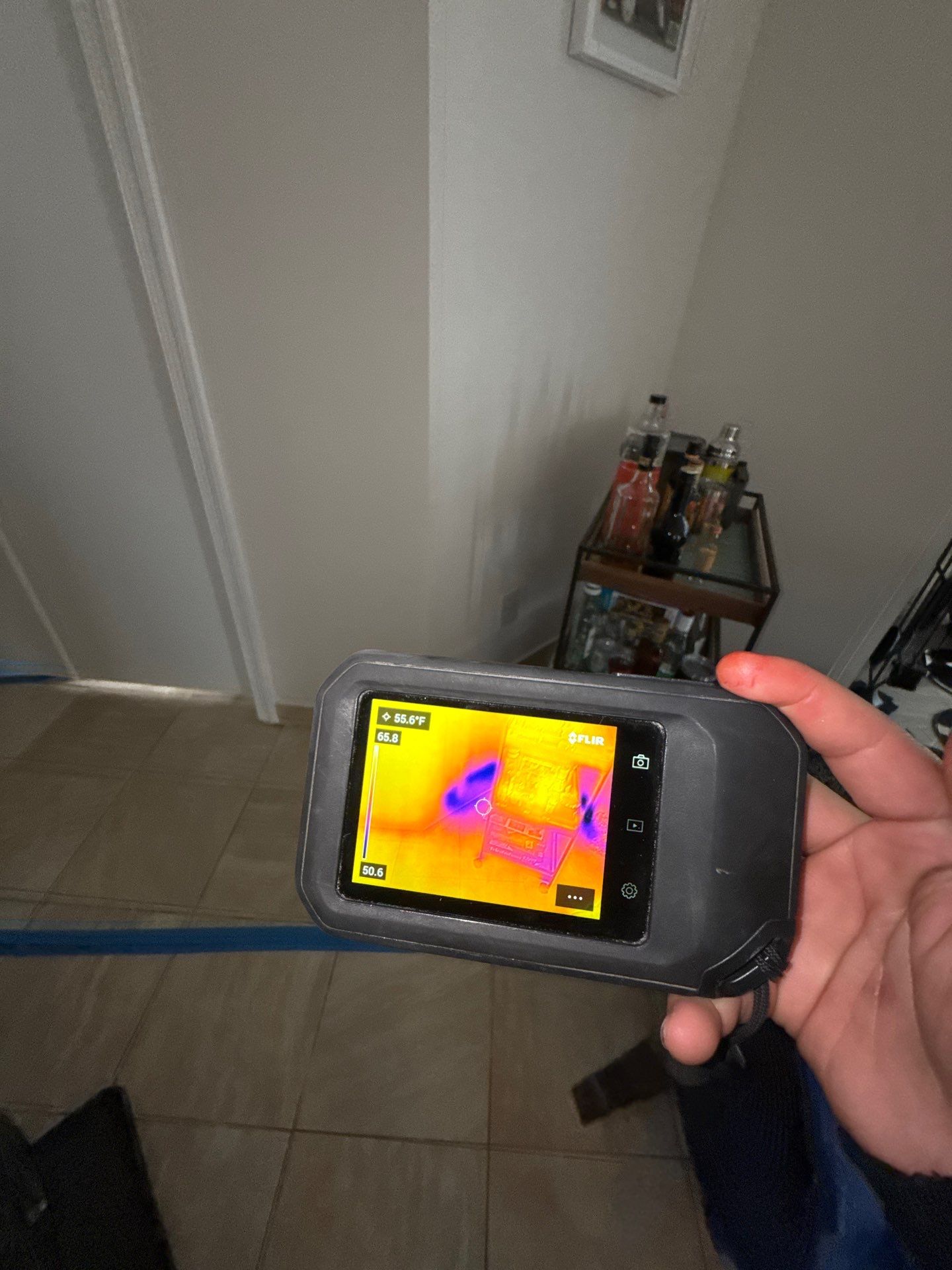
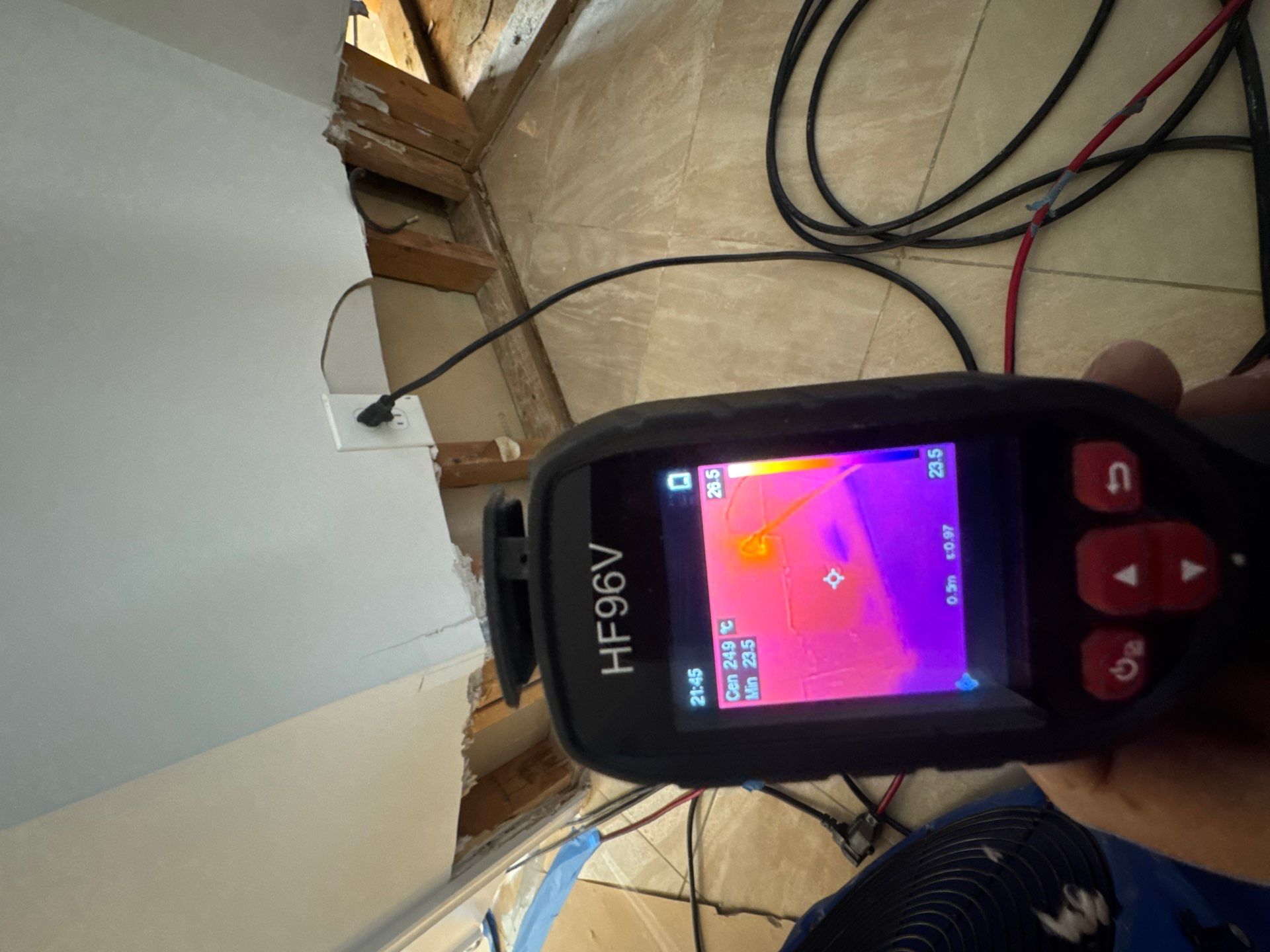
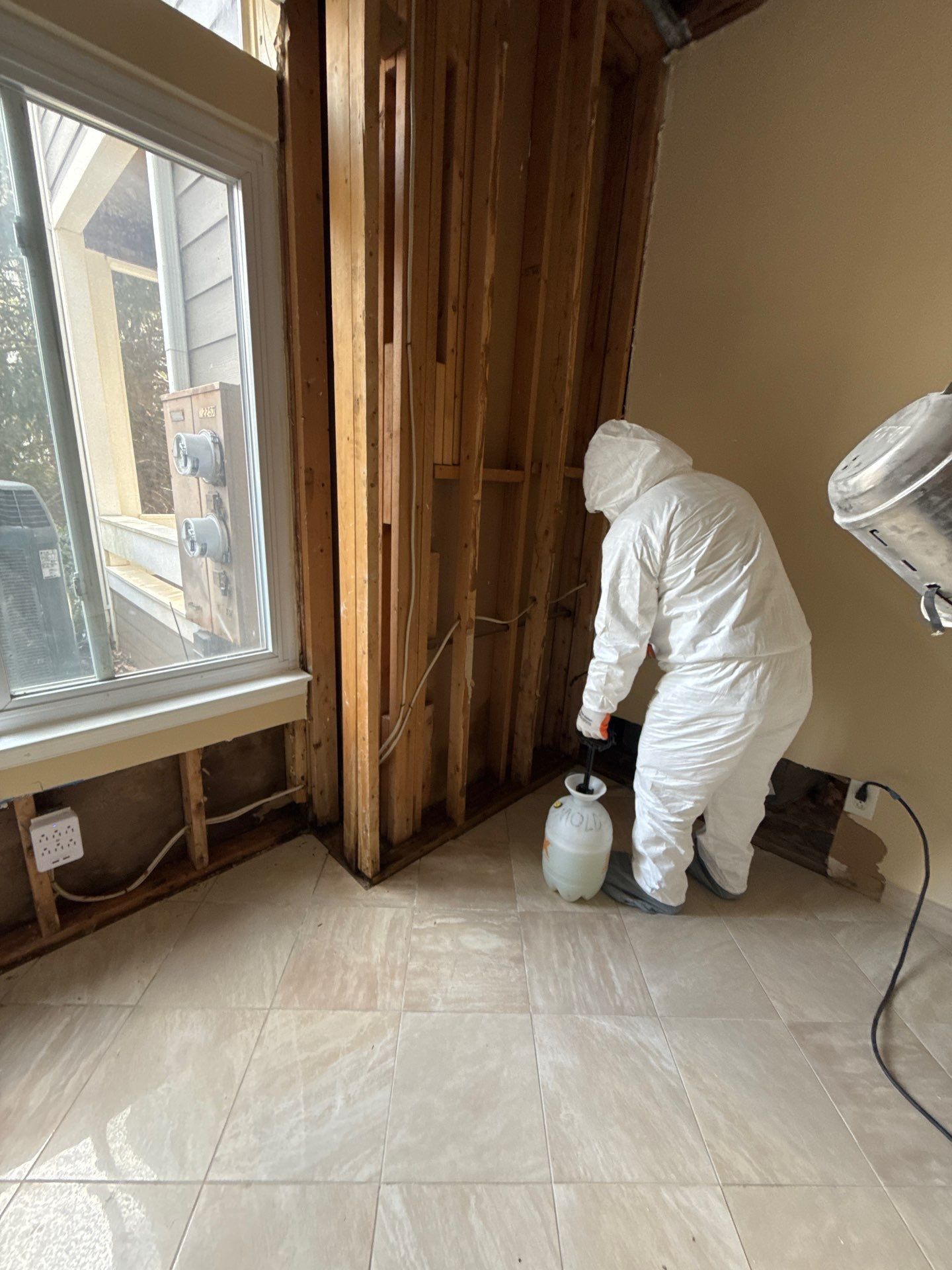
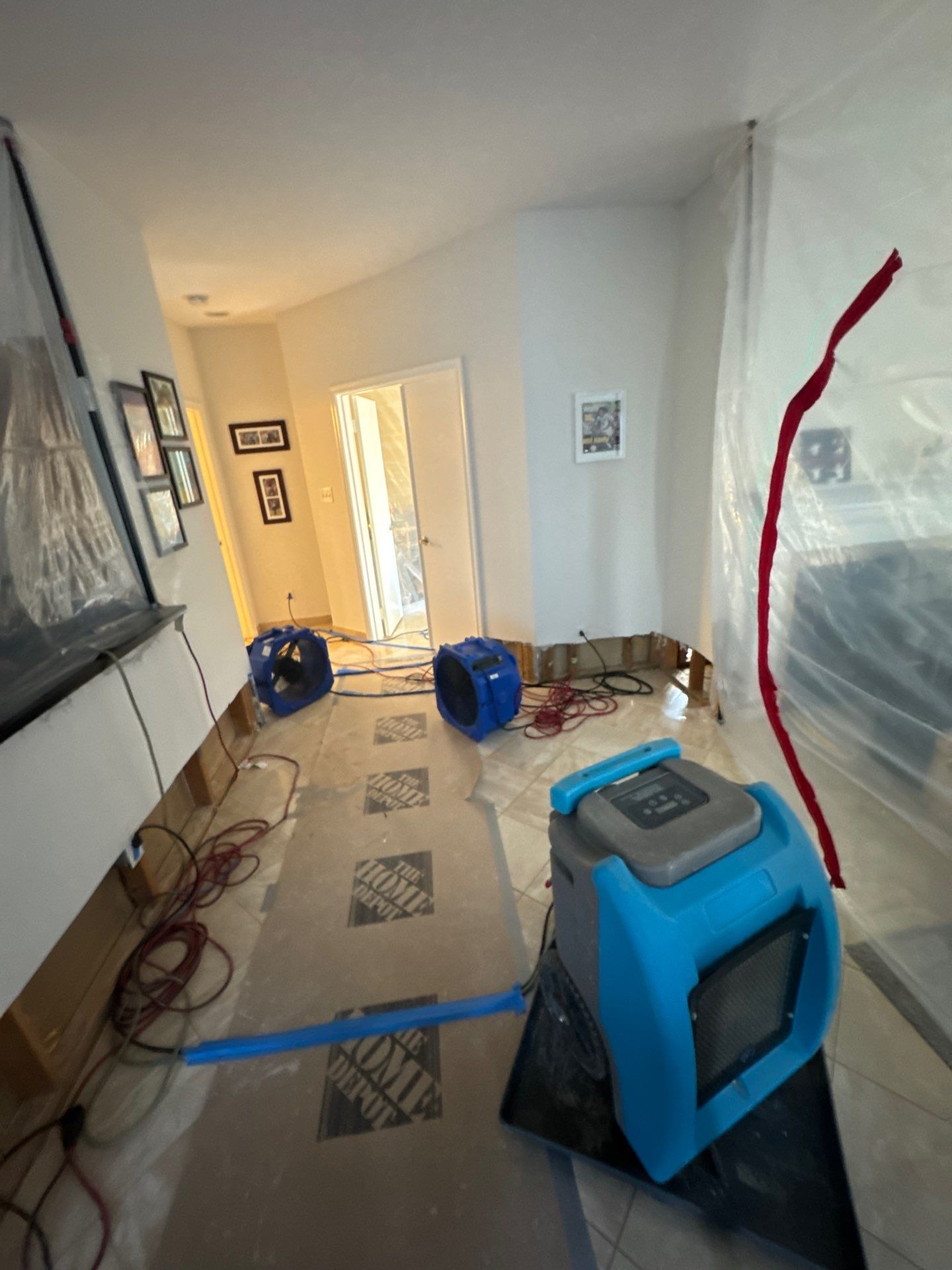
We began with a thermal imaging inspection to map the full extent of water migration behind finished surfaces—a diagnostic step that reveals temperature differentials where moisture has traveled beyond the visible damage. Once the affected zones were identified, we built a plastic containment barrier to isolate the work area and limit airborne particulate movement during demolition. Removing the compromised ceiling and baseboards exposed the structure for thorough drying, allowing air movement and dehumidification to bring materials back to stable moisture levels in accordance with IICRC S520 guidelines. After drying was verified, we sanitized all affected surfaces to address microbial concerns.
The homeowner noted their satisfaction with the thoroughness of the process. By addressing both the immediate water damage and the conditions that allowed mold to develop, the project restored a safer indoor environment and provided a clean foundation for reconstruction.
Reviews from Restoration Doctor customers
Restoration Doctor was a total lifesaver when our home got flooded. They showed up super fast and knew exactly what to do. They were really nice and easy to talk to, and they worked super hard to get our place dry. We were amazed at how fast they were and how careful they were about everything. Thanks to them, we were back in our home in no time. If you ever need help with water damage, these guys are the best!
Frequently asked questions
Why was thermal imaging used during the moisture inspection after water intrusion in this Fairfax home?
Restoration Doctor used thermal imaging to detect hidden moisture pockets behind walls and ceilings that aren't visible to the naked eye. In Fairfax's older housing stock, water can migrate through framing cavities and insulation, and thermal cameras reveal temperature differentials that indicate wet materials. This ensures we identify the full extent of damage before containment and drying begin, preventing mold from taking hold in overlooked areas.
What does a plastic containment barrier accomplish during mold remediation following water damage?
The containment barrier Restoration Doctor installed isolates the affected area and prevents airborne mold spores from spreading to clean parts of the home during demolition and cleaning. We seal the work zone with plastic sheeting and maintain negative air pressure so contaminated air exhausts outdoors rather than circulating through living spaces. This is standard protocol under IICRC S520 guidelines and critical in humid Mid-Atlantic climates where spores can easily colonize new surfaces.
Does removing ceiling material and baseboards always mean the damage was severe?
Not necessarily—Restoration Doctor removes affected materials when moisture has compromised their structural integrity or when they've been in contact with contaminated water long enough to support microbial growth. In this Fairfax job, the ceiling and baseboards had absorbed enough moisture that drying them in place would have left hidden mold risk, so controlled removal and replacement was the safer, faster path to a dry, sanitary structure.
How does Fairfax's humid summer climate affect the timeline for structural drying after water intrusion?
High outdoor humidity during Mid-Atlantic summers slows evaporation because the air holds less additional moisture, so Restoration Doctor uses commercial dehumidifiers and air movers to create controlled drying conditions indoors. We monitor moisture levels in framing and subfloor materials daily, and in Fairfax's climate a thorough dry-down typically requires maintaining those controlled conditions longer than it would in a drier region to reach safe equilibrium levels.
What does sanitizing the area after water damage restoration actually involve?
After structural drying and any necessary demolition, Restoration Doctor applies EPA-registered antimicrobial solutions to all affected surfaces to eliminate residual bacteria and inhibit future microbial growth. We treat framing, subfloors, and any remaining building materials that contacted the water, then verify with final moisture readings that the structure is both dry and biologically safe before reconstruction begins.
Explore more restoration work
All projects in Fairfax · Water Damage Restoration in Fairfax
Water, fire, or mold damage in Fairfax?
Restoration Doctor responds 24/7 across Fairfax and Northern Virginia. Free assessment and transparent, insurance-friendly estimates — no obligation.
See our Water Damage Restoration services at restorationdoctors.com →