Water Damage from Basement Window Well Overflow
About this water damage restoration project
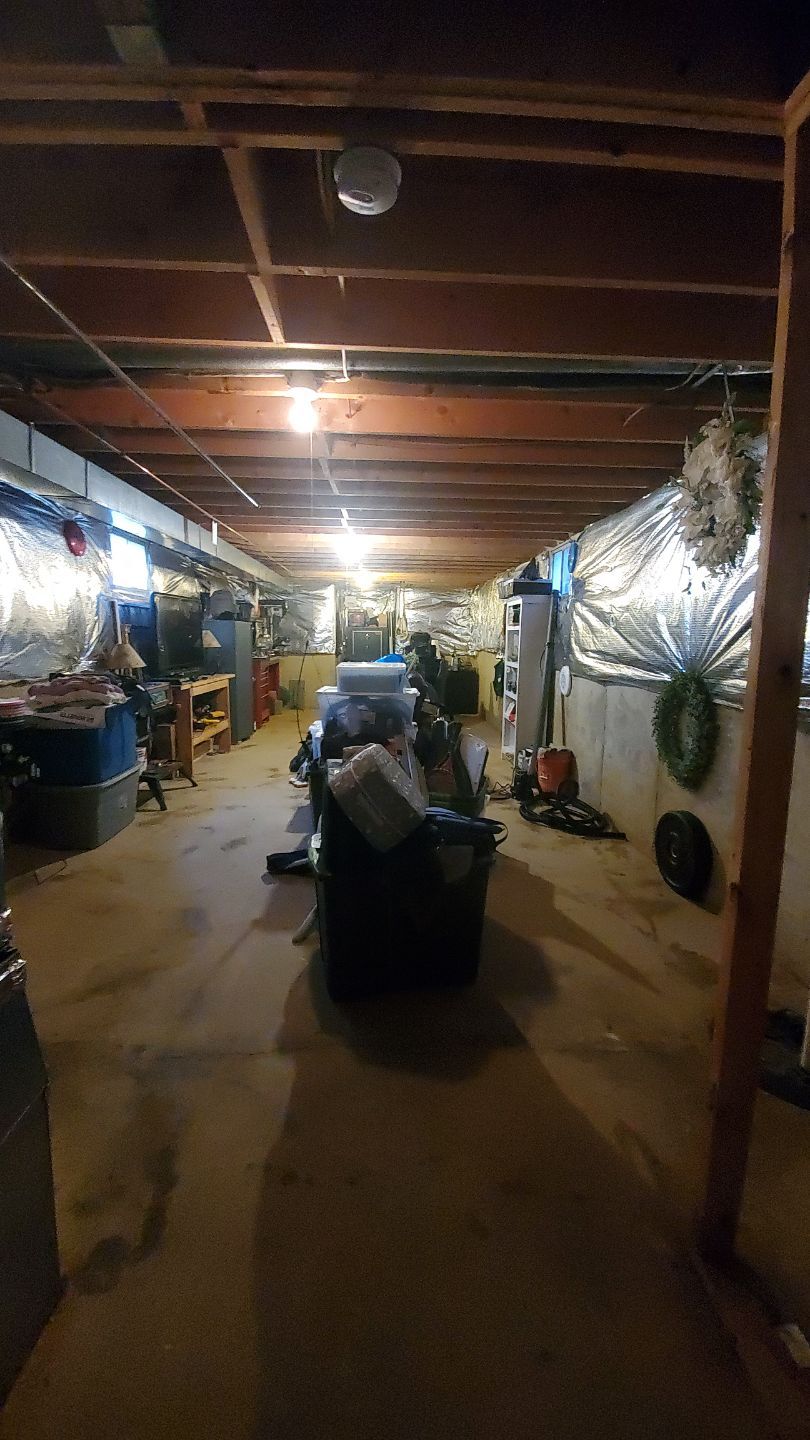
Heavy rains in the Mid-Atlantic can overwhelm basement window wells quickly, and in Bethesda's established neighborhoods—where mature landscaping often channels runoff toward older foundation details—a single storm proved enough to flood this home's lower level. The homeowner returned to find standing water pooling across the basement floor, the result of a window well that had overtopped and breached the seal.
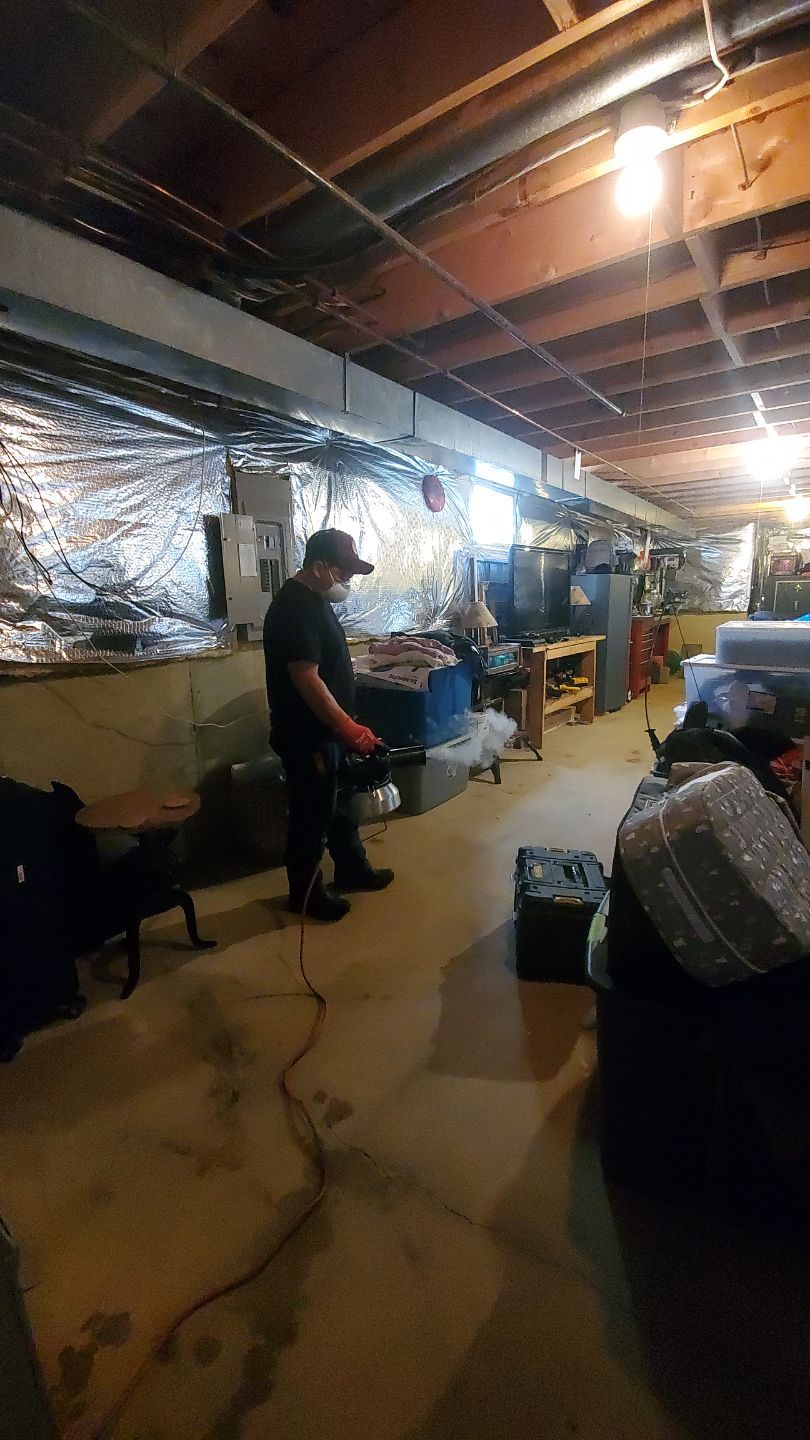
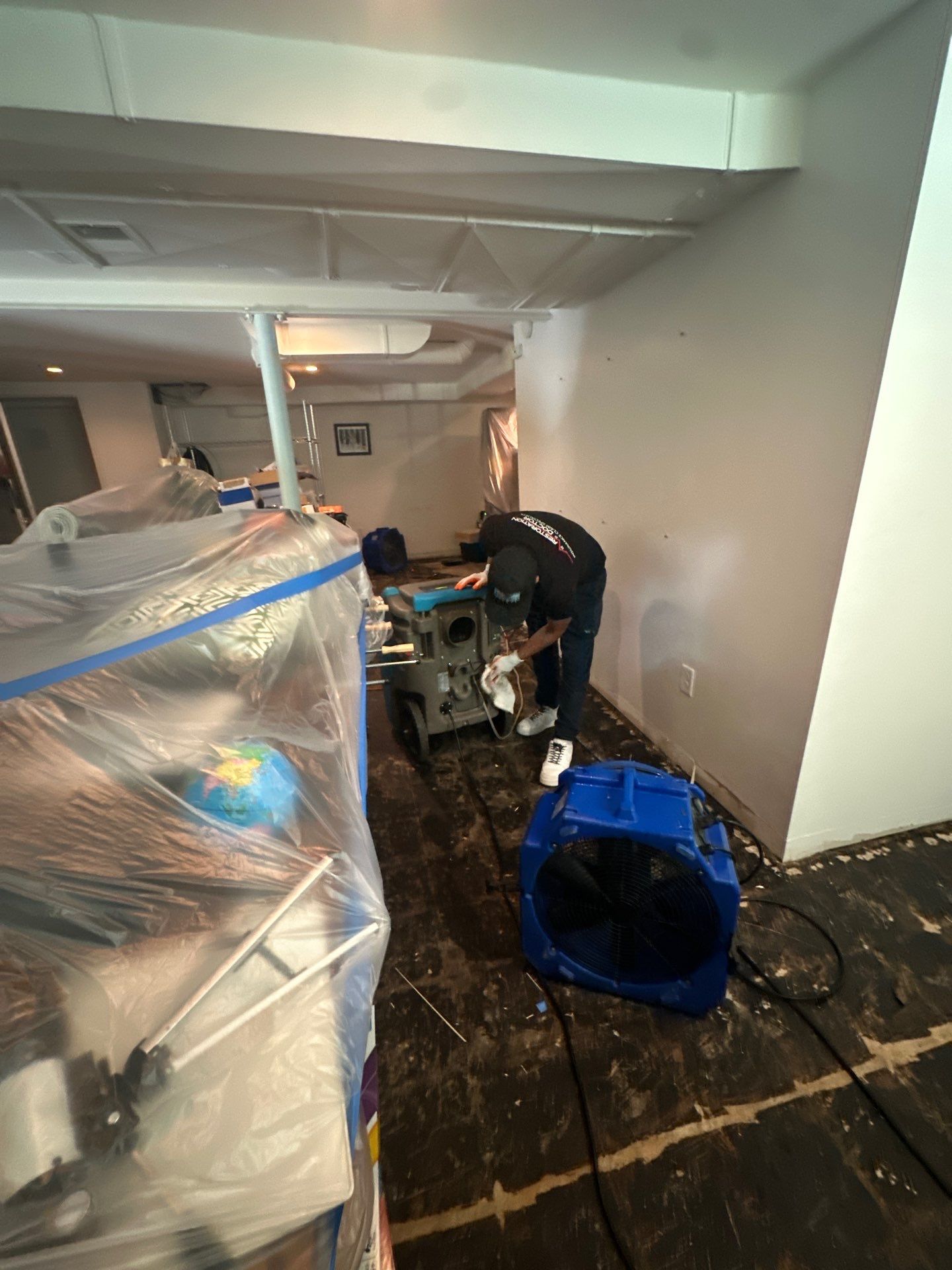
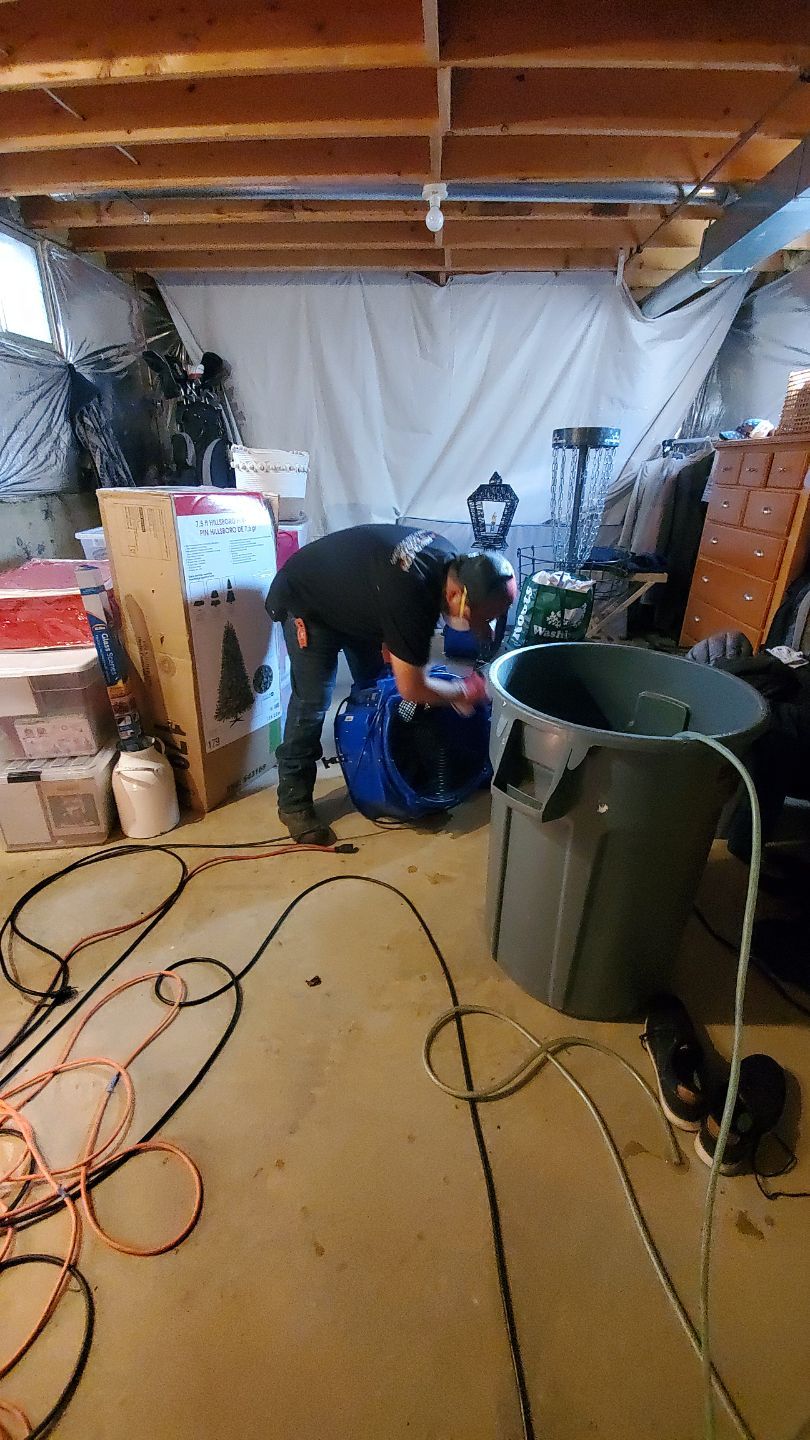
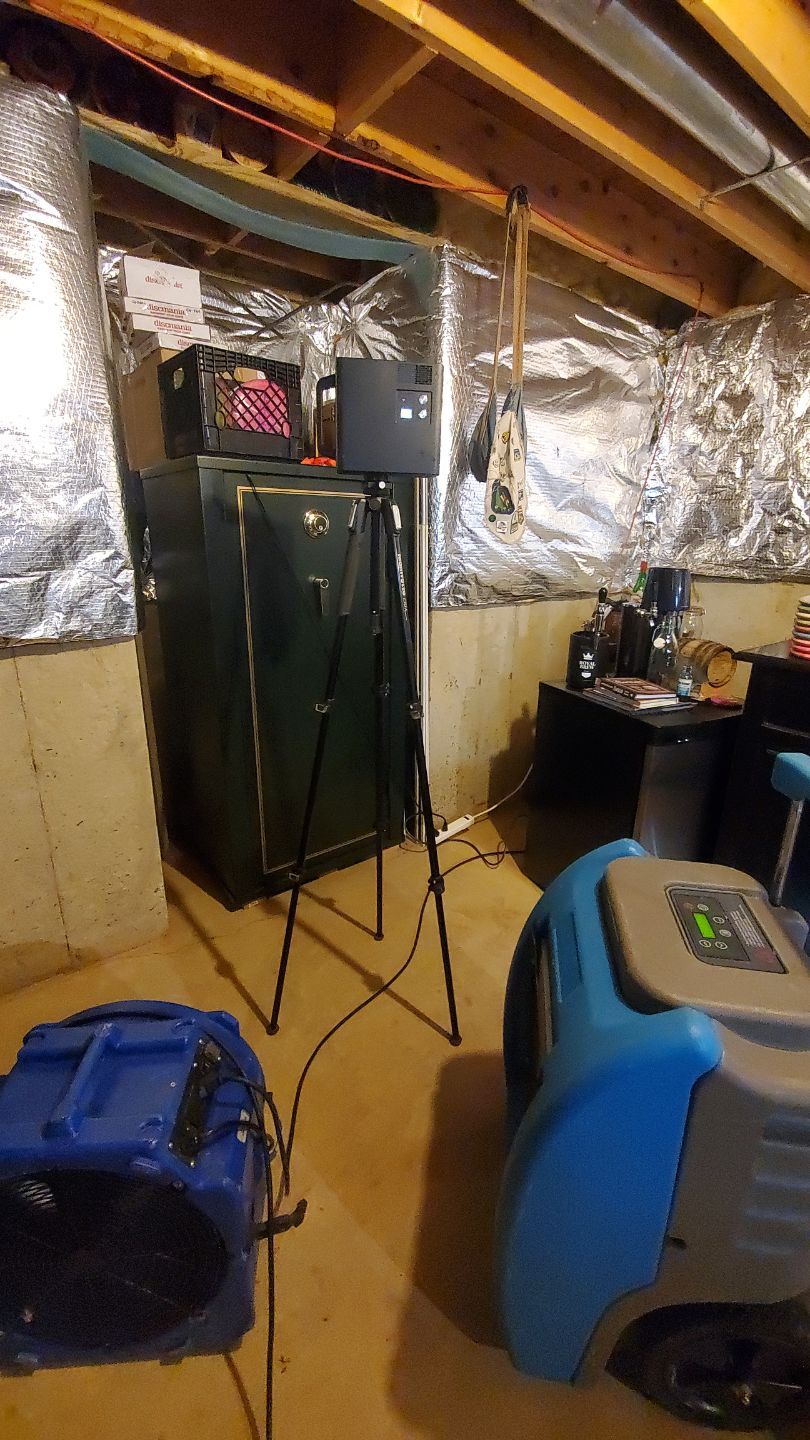
Our crew arrived to extract the standing water using truck-mounted equipment, then placed industrial dehumidifiers and air movers to pull residual moisture from the concrete slab and lower wall cavities. Thermal imaging confirmed hidden saturation behind the drywall, which we opened selectively to ensure complete drying. Once moisture readings normalized, we applied an EPA-registered antimicrobial to all affected surfaces—a precaution aligned with IICRC S520 protocols, given that mold had already begun to colonize the damp framing.
The rebuild phase focused on matching the original finishes: new drywall, primer, and paint on the walls, and replacement luxury vinyl plank flooring that replicated the pre-loss appearance. We returned the basement to full function without visible reminder of the intrusion. The homeowner's review noted both the thoroughness of the drying process and the care taken during reconstruction, and the space now serves the household as it did before the storm—dry, clean, and safe.
Frequently asked questions
How does Restoration Doctor handle standing water extraction from a basement in Bethesda?
Restoration Doctor uses commercial-grade extraction equipment to remove standing water quickly, preventing further saturation of structural materials and flooring. In Bethesda's Montgomery County, where basement window well overflows are common during heavy rains, our technicians assess the extent of intrusion and deploy truck-mounted extractors and portable pumps to clear water efficiently. We then establish drying protocols using industrial dehumidifiers and air movers calibrated to the basement's moisture load.
What mold remediation steps are necessary after water damage to basement flooring and walls in Montgomery County?
After water intrusion affects basement walls and flooring, Restoration Doctor follows containment and removal protocols to address mold colonization safely. We remove compromised porous materials like carpet and drywall that cannot be salvaged, apply antimicrobial treatments to affected framing and concrete, and verify moisture levels have returned to dry standards before reconstruction. Montgomery County's humid Mid-Atlantic summers accelerate mold growth on wet surfaces, making rapid response and thorough drying essential to prevent spread.
Can damaged basement flooring be saved after a window well overflow, or does it require replacement?
Whether basement flooring can be saved depends on the material, saturation duration, and contamination level. Restoration Doctor evaluates carpet, laminate, and tile on a case-by-case basis—carpet padding typically requires disposal after standing water exposure, while certain hard surfaces can be dried and sanitized if extraction occurs promptly. In this Bethesda job, we removed water-damaged carpet and padding, dried the subfloor to stable moisture content, and prepared the surface for new flooring installation.
How long does structural drying take after basement water damage in Bethesda, MD?
Structural drying timelines vary with the volume of water, affected materials, and ambient humidity, but most basement drying projects in Bethesda require three to five days of monitored dehumidification and air movement. Restoration Doctor takes daily moisture readings of walls, framing, and subfloors to track progress and adjusts equipment placement as materials release trapped water. We do not begin antimicrobial treatment or reconstruction until all structural components meet dry-standard thresholds.
What antimicrobial treatments does Restoration Doctor apply after water and mold remediation?
Restoration Doctor applies EPA-registered antimicrobial solutions to cleaned and dried surfaces to inhibit future microbial growth on framing, concrete, and other non-porous materials. These treatments are part of our standard protocol following water extraction and mold removal, ensuring that basement environments in humid climates like Montgomery County remain protected after restoration. Application occurs only after moisture levels have stabilized and contaminated materials have been removed.
Explore more restoration work
All projects in Bethesda · Water Damage Restoration in Bethesda
Water, fire, or mold damage in Bethesda?
Restoration Doctor responds 24/7 across Bethesda and Northern Virginia. Free assessment and transparent, insurance-friendly estimates — no obligation.
See our Water Damage Restoration services at restorationdoctors.com →