Water Damage Restoration
About this water damage restoration project
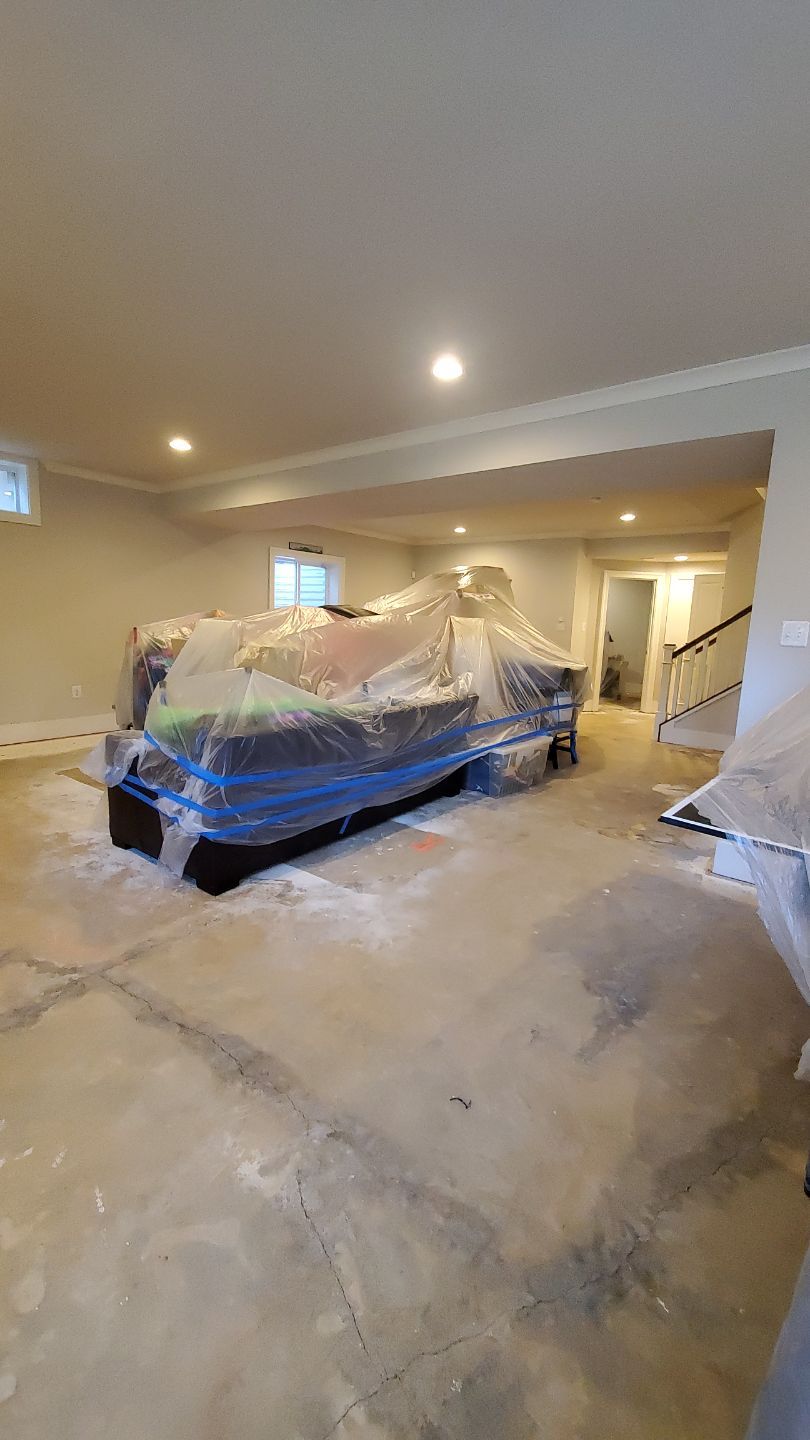
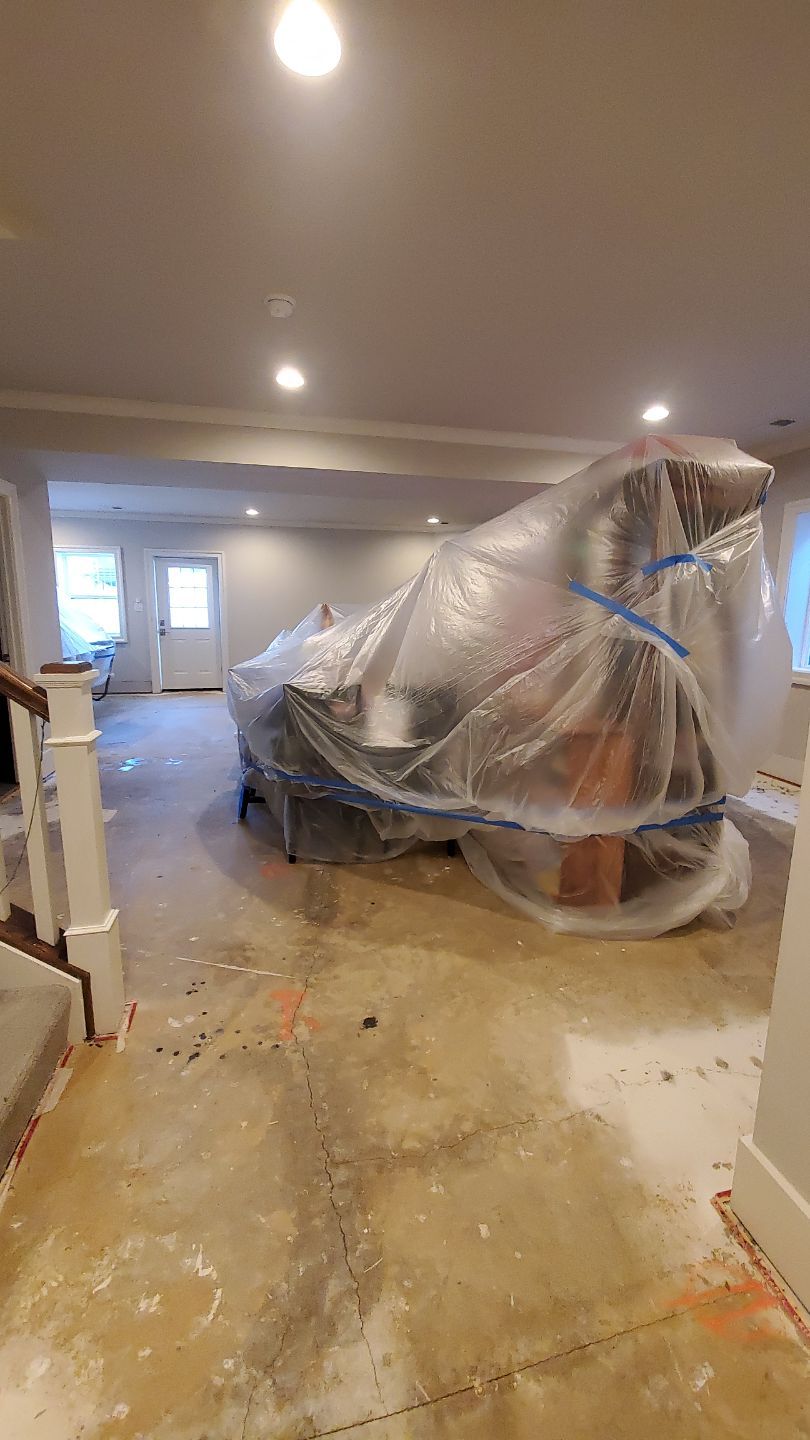
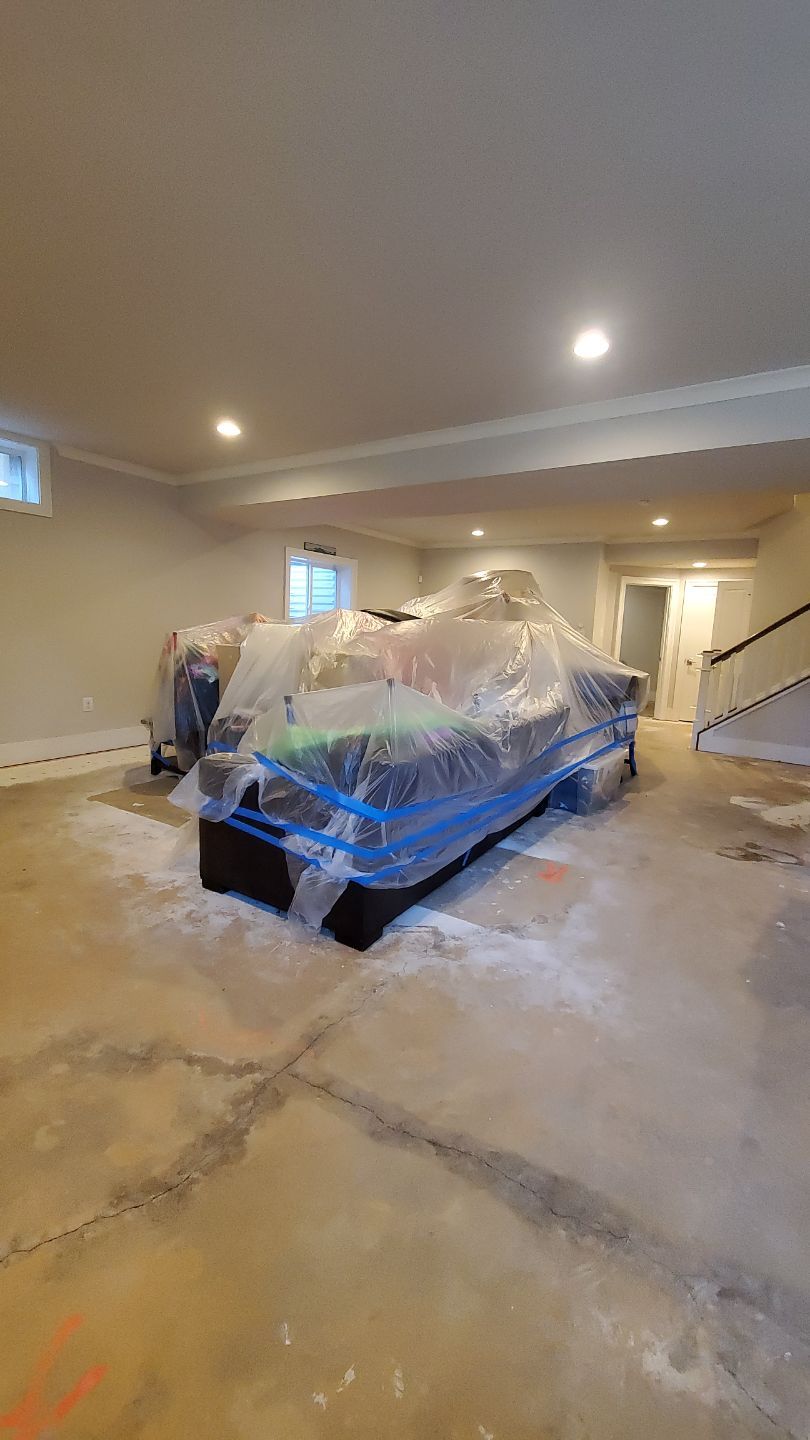
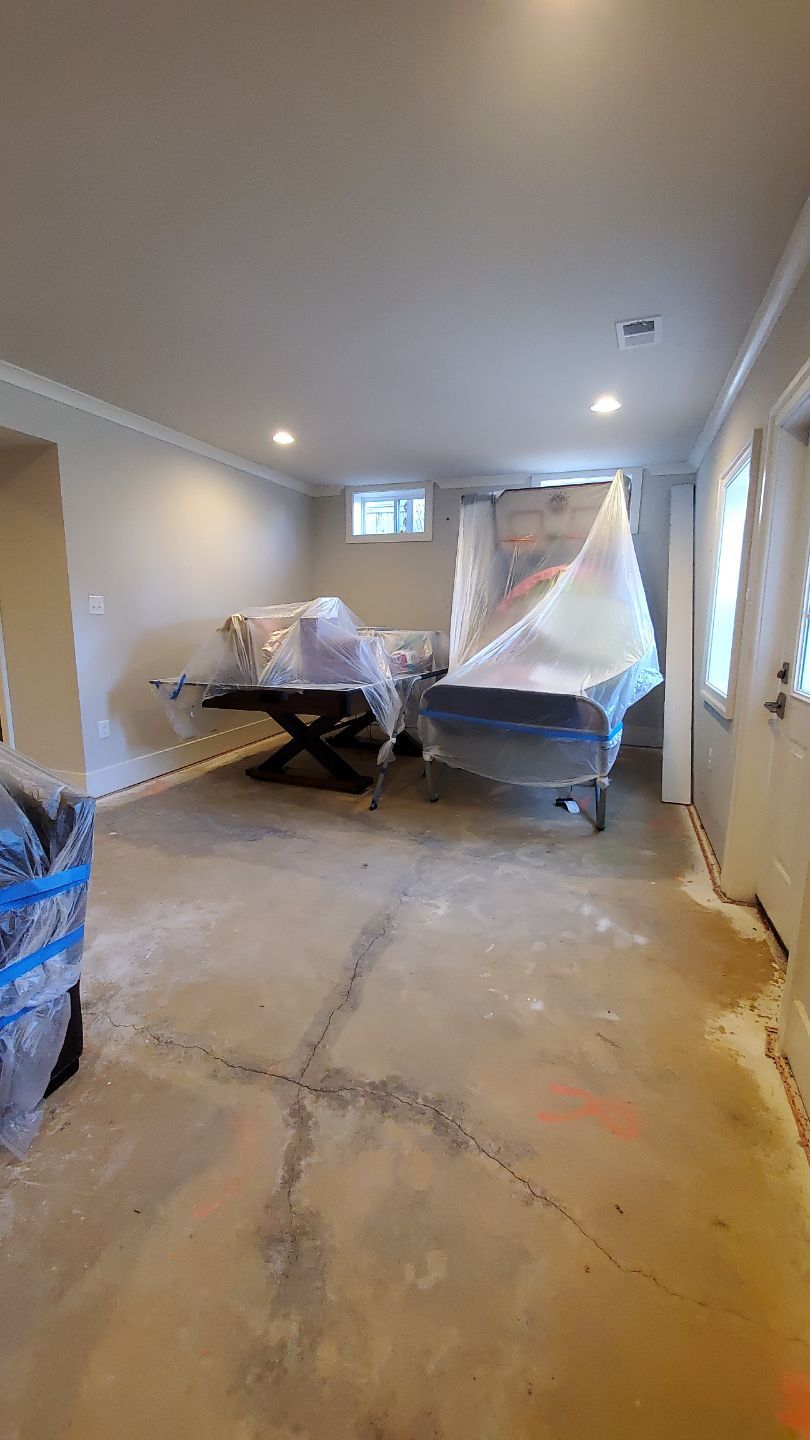
Water intrusion in a residential property had already seeded mold growth by the time our team arrived, a sequence common to Arlington County's dense, older housing stock where winter freeze-thaw cycles stress aging plumbing and humid Mid-Atlantic summers accelerate secondary contamination. The response followed IICRC S520 protocol: furniture was immediately draped in protective plastic sheeting to isolate contents from airborne spores, then damaged flooring was pulled back to the concrete slab to expose the full moisture footprint and eliminate porous materials harboring growth.
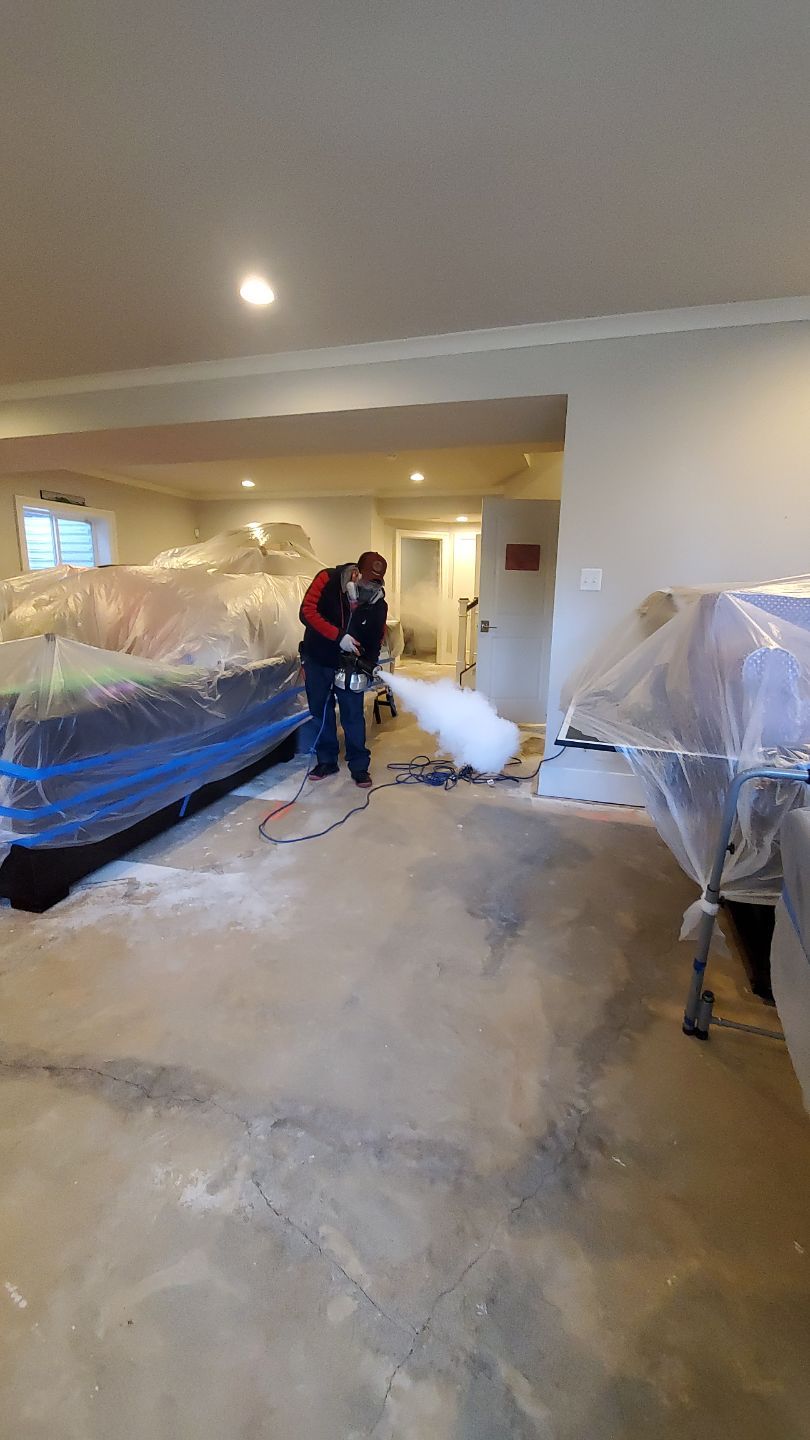
Drying equipment—dehumidifiers and air movers—was positioned to drive moisture from structural surfaces, while specialized fogging equipment applied an antimicrobial treatment to address bacterial and fungal contamination throughout the affected space. This layered approach targeted both the visible damage and the microbial load left behind by prolonged moisture exposure.
The homeowner's review reflected confidence in the outcome, noting the thoroughness of the containment and sanitation work. By the time drying was complete, the concrete substrate registered dry to standard, and the space was cleared for reconstruction—a controlled process that prevented a localized water intrusion from becoming a long-term indoor air quality problem.
Frequently asked questions
Why is fogging equipment used after water intrusion with mold in Arlington County properties?
Restoration Doctor uses specialized fogging equipment to distribute antimicrobial agents throughout affected spaces in Arlington, targeting airborne mold spores and surface contamination that water intrusion creates. This sanitation step follows IICRC S520 mold remediation protocols and is especially important in Arlington County's dense housing stock, where moisture can migrate between units or levels. Fogging reaches areas that manual cleaning cannot, helping prevent cross-contamination during the drying phase.
What happens to flooring and carpet after standing water is extracted in an Arlington home?
After extracting standing water from this Arlington property, Restoration Doctor removed the damaged flooring and carpet to expose the concrete subfloor beneath, allowing moisture trapped in porous materials to escape. Wet carpet and padding act as reservoirs that slow structural drying and feed mold growth, so removal is often necessary when saturation is deep. Dehumidifiers and air movers were then positioned directly over the concrete to pull residual moisture efficiently.
How does dehumidification work alongside air movers during water damage drying in Northern Virginia?
Restoration Doctor positions dehumidifiers to lower the ambient humidity while air movers accelerate evaporation from wet surfaces, creating a controlled drying environment. In Arlington's Mid-Atlantic climate, outdoor humidity can interfere with drying, so dehumidifiers pull moisture from the air and the air movers keep airflow constant across floors and walls. This combination brings materials to dry standard faster than either method alone, reducing the window for secondary mold colonization.
Does furniture need to be moved or protected during water damage restoration in Arlington apartments and condos?
Yes—Restoration Doctor protects furniture in place with plastic sheeting when immediate relocation isn't practical, as was done at this Arlington job site. In garden apartments and mid-rise buildings common to Arlington County, hallways and elevators may limit what can be moved quickly, so on-site protection prevents further moisture absorption and cross-contamination during extraction and drying. Contents that remain dry can often stay in the space under protective barriers while equipment runs.
What does 'moisture-free before restoration' mean after water damage in a Northern Virginia home?
Restoration Doctor dries affected materials to industry dry standard—measured with moisture meters—before any reconstruction or finish work begins, ensuring no trapped moisture remains that could support mold or rot. At this Arlington property, dehumidifiers and air movers ran until concrete and framing reached equilibrium moisture content, typically comparable to the surrounding unaffected structure. Starting repairs over wet materials invites hidden mold growth and material failure, so verification drying is complete protects the investment in restoration.
Explore more restoration work
All projects in Arlington · Water Damage Restoration in Arlington
Water, fire, or mold damage in Arlington?
Restoration Doctor responds 24/7 across Arlington and Northern Virginia. Free assessment and transparent, insurance-friendly estimates — no obligation.
See our Water Damage Restoration services at restorationdoctors.com →