Water Damage Restoration
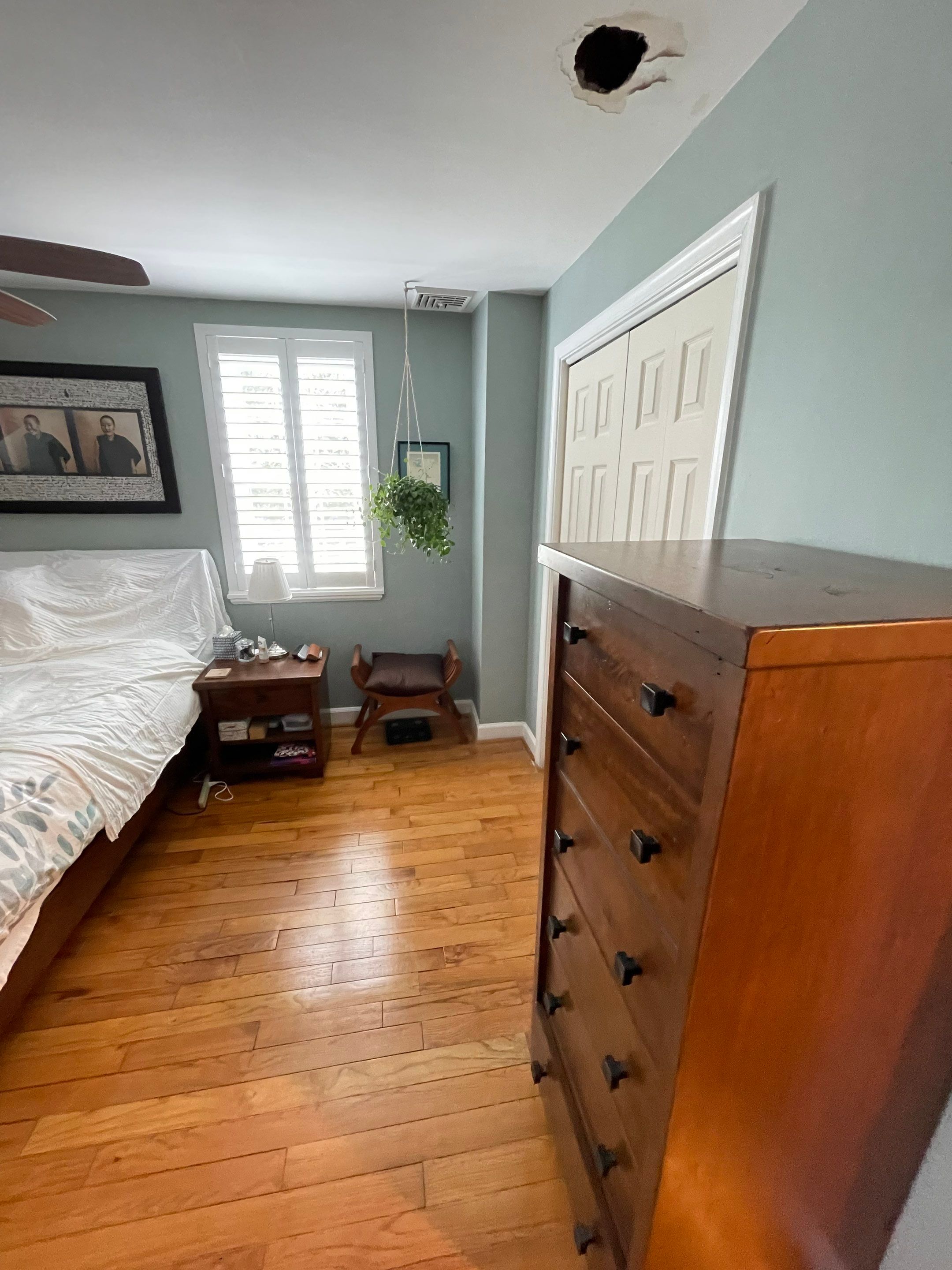
About this water damage restoration project
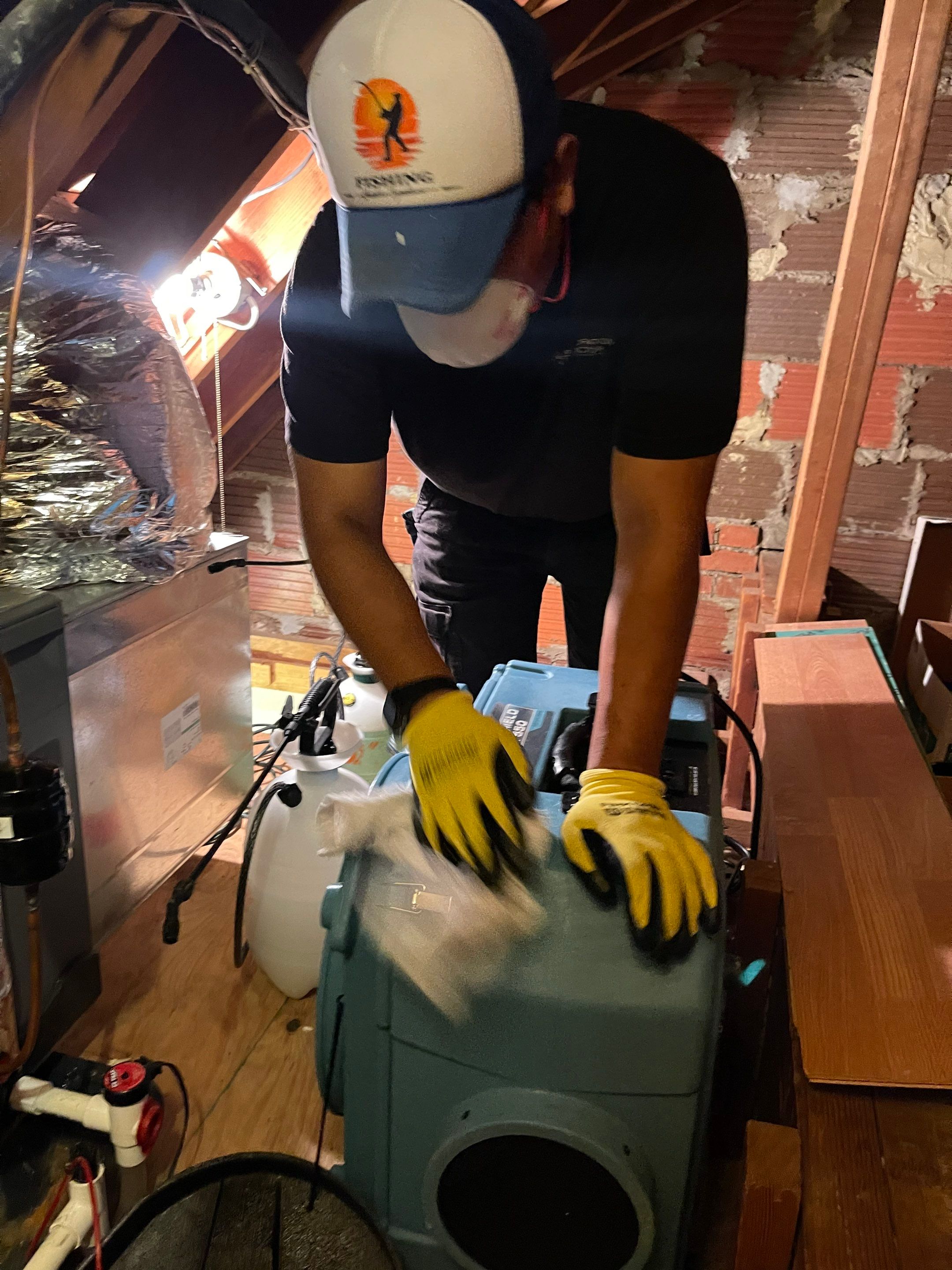
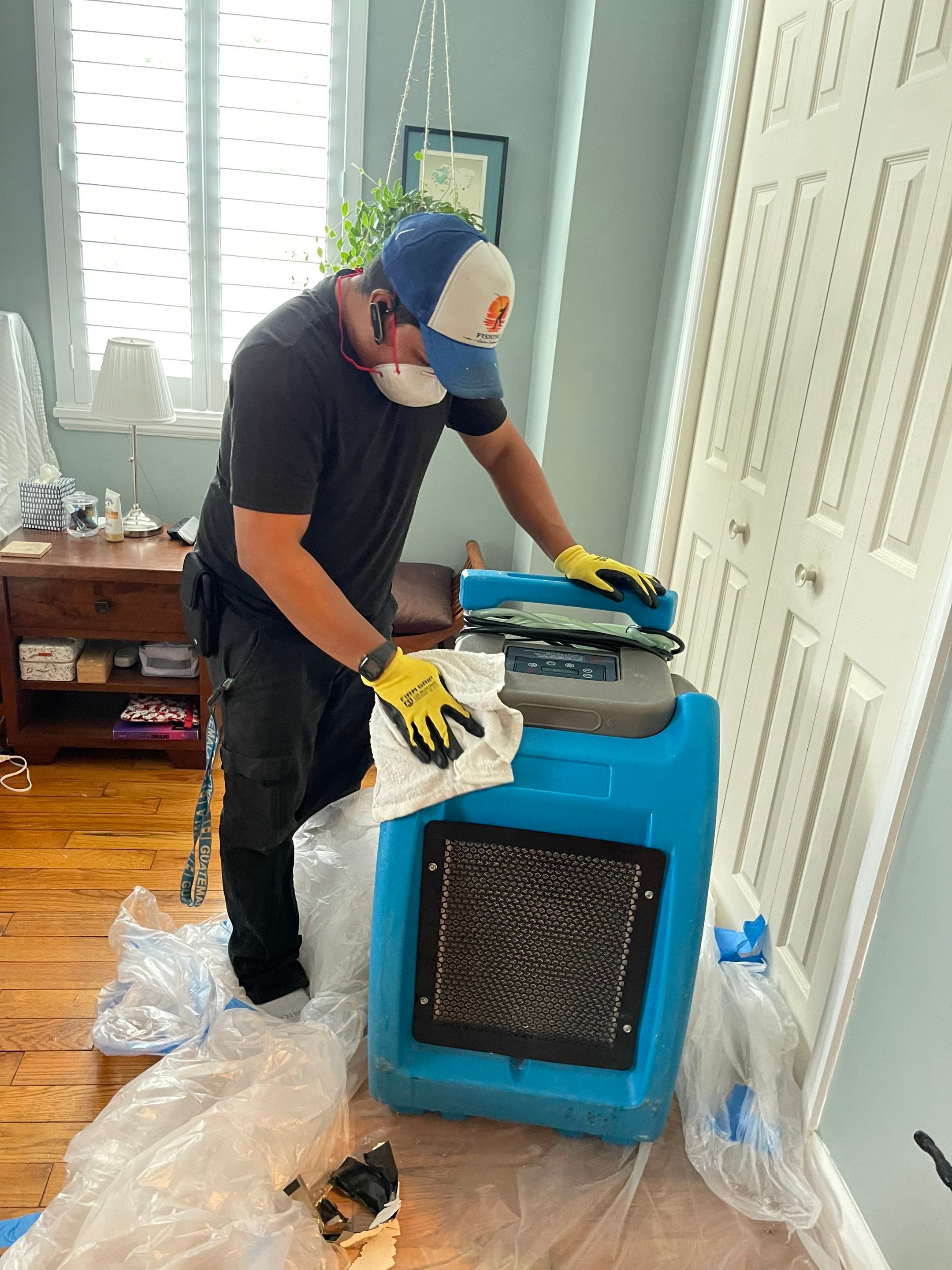
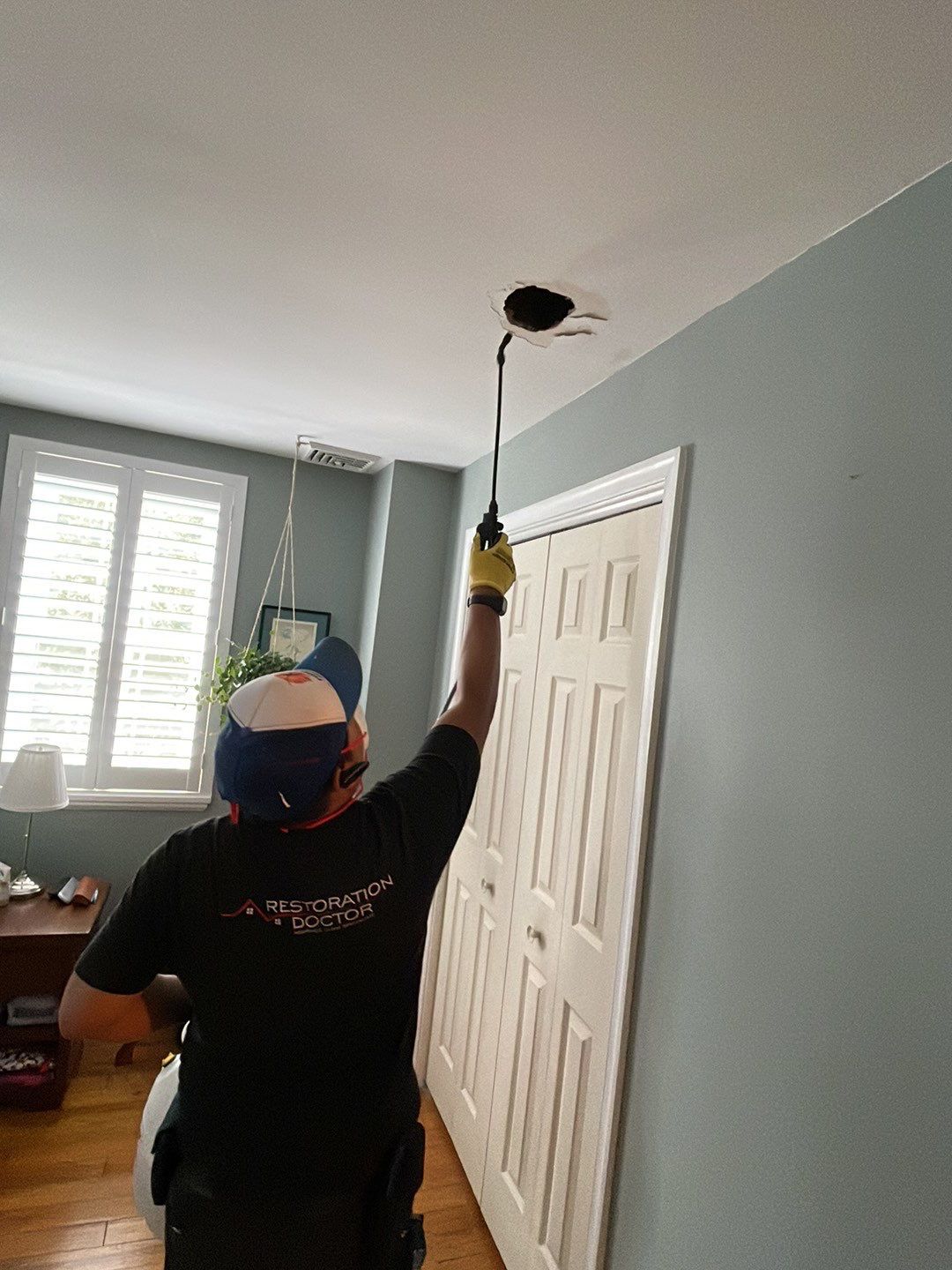
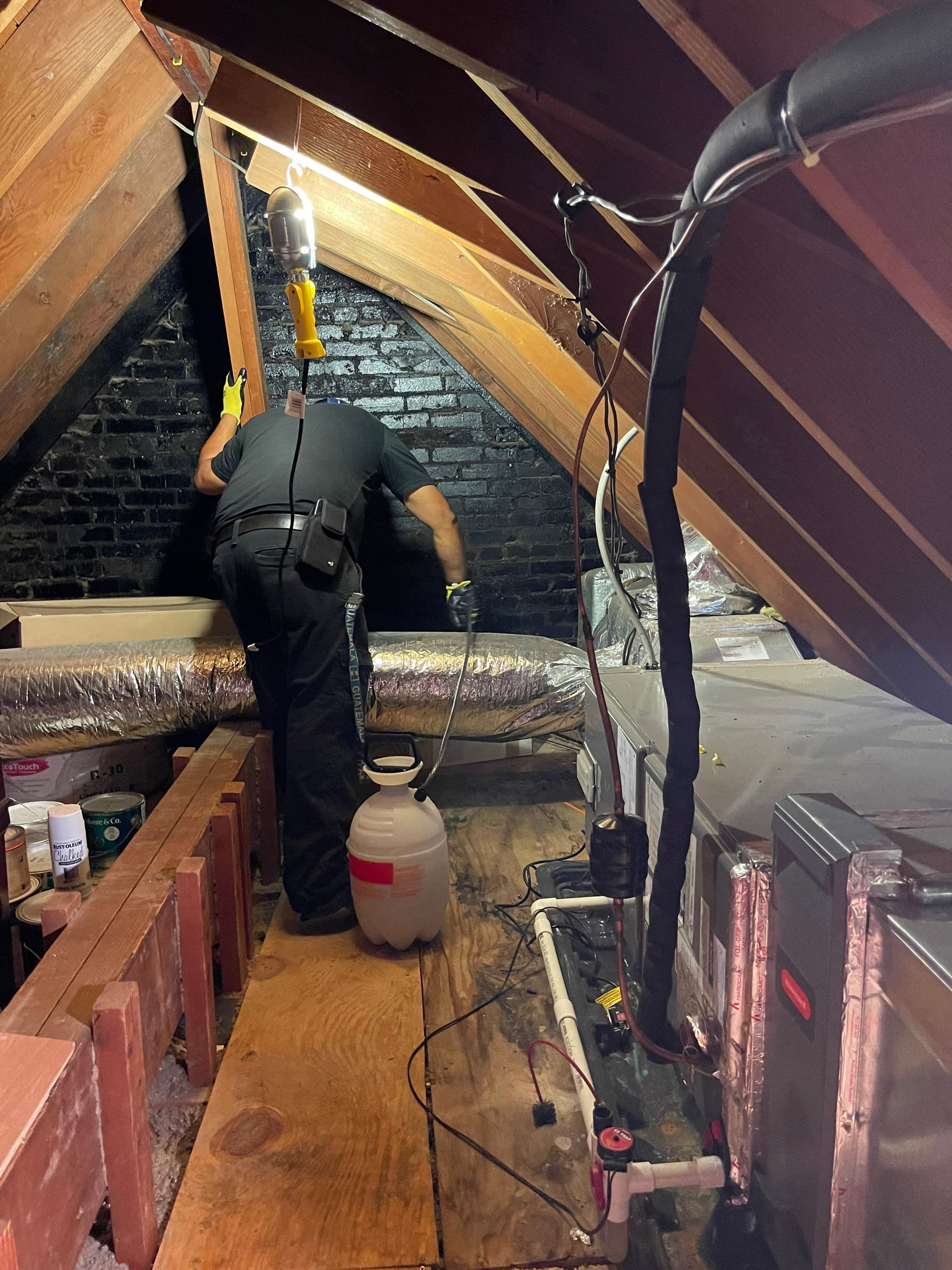
A bedroom and attic compromised by mold following water intrusion required immediate containment and remediation. In Arlington County's dense residential housing stock—where garden apartments and closer-in single-family homes often share aging plumbing vulnerable to Northern Virginia's freeze-thaw cycles—undetected moisture can escalate quickly from a minor leak to a full mold event.
Our technicians established negative air pressure and HEPA filtration to isolate spores during the removal of damaged drywall in both affected areas. High-capacity dehumidifiers and air movers then reduced moisture content in the remaining framing and subfloor to levels that would not support further growth, following IICRC S520 mold remediation protocols. Once dry-down was verified, antimicrobial treatments were applied to all exposed surfaces to inhibit recolonization.
The combination of thorough drying, selective demolition, and chemical treatment restored indoor air quality and structural integrity. The homeowner noted their satisfaction with the outcome, and the residence was returned to safe occupancy with no remaining visible mold or elevated moisture readings.
Reviews from Restoration Doctor customers
Restoration Doctor truly exceeded my expectations! Their mold damage restoration services in Maryland were exceptional. The team was professional, efficient, and knowledgeable. They quickly assessed the situation and provided a comprehensive solution that restored my property to its original condition. I am extremely satisfied with their prompt response time and the quality of their workmanship. Highly recommend Restoration Doctor for any mold damage restoration needs!
Frequently asked questions
How does Restoration Doctor handle mold remediation in Arlington County homes after water intrusion affects both bedrooms and attics?
Restoration Doctor follows IICRC S520 mold remediation standards when water intrusion spreads across multiple levels in Arlington County properties. For this job, we removed moisture-damaged drywall in the bedroom and attic, applied antimicrobial treatments to affected structural surfaces, and used HEPA filtration to capture airborne spores during the work. High-capacity dehumidifiers and air movers brought both spaces to dry standard before reconstruction could begin.
Why is structural drying critical after water damage in Arlington's dense residential buildings?
In Arlington's mix of garden apartments and closer-in single-family homes, shared walls and compact floor plans allow moisture to migrate quickly between units and floors if not arrested. Restoration Doctor uses continuous moisture monitoring and industrial dehumidification to dry framing, subfloors, and drywall to safe levels—preventing secondary mold growth and protecting both the affected unit and adjacent spaces from ongoing damage.
What flooring materials typically require removal during water damage restoration in Northern Virginia homes?
Carpet, pad, and engineered wood are the most vulnerable; once saturated, carpet pad wicks moisture into subflooring and baseboards, creating ideal conditions for microbial growth. For this Arlington job, Restoration Doctor removed compromised flooring and carpet, dried the subfloor with targeted air movement, and sanitized all exposed surfaces. Tile and sealed hardwood can sometimes be saved if dried promptly, but each material is assessed on-site.
How long does it take to fully dry a home after water intrusion in Arlington, VA?
Drying timelines depend on the extent of saturation, affected materials, and indoor humidity—but most residential water losses in Arlington County reach dry standard within three to five days under controlled dehumidification. Restoration Doctor monitors moisture readings daily in walls, subfloors, and ceilings to confirm the structure is stable before antimicrobial treatment and reconstruction proceed.
Can mold return after professional remediation if the original water source is fixed?
Mold will not recolonize treated surfaces as long as the moisture source is eliminated and indoor humidity stays below 60 percent. Restoration Doctor's antimicrobial application and structural drying for this Arlington job addressed both the active growth and the underlying water intrusion, but homeowners should monitor for new leaks—particularly in attic spaces where Northern Virginia's freeze-thaw cycles can stress older plumbing and roof penetrations.
Explore more restoration work
All projects in Arlington · Water Damage Restoration in Arlington
Water, fire, or mold damage in Arlington?
Restoration Doctor responds 24/7 across Arlington and Northern Virginia. Free assessment and transparent, insurance-friendly estimates — no obligation.
See our Water Damage Restoration services at restorationdoctors.com →