Kitchen Ceiling Water Damage Repair
About this mold remediation project
A significant water leak damaged a kitchen ceiling in an Arlington County home, where dense residential construction and the freeze-thaw cycles common to Northern Virginia's older plumbing can turn a compromised pipe joint into a ceiling failure overnight. The homeowner called us after discovering visible water staining and the threat of secondary mold growth in the affected space.
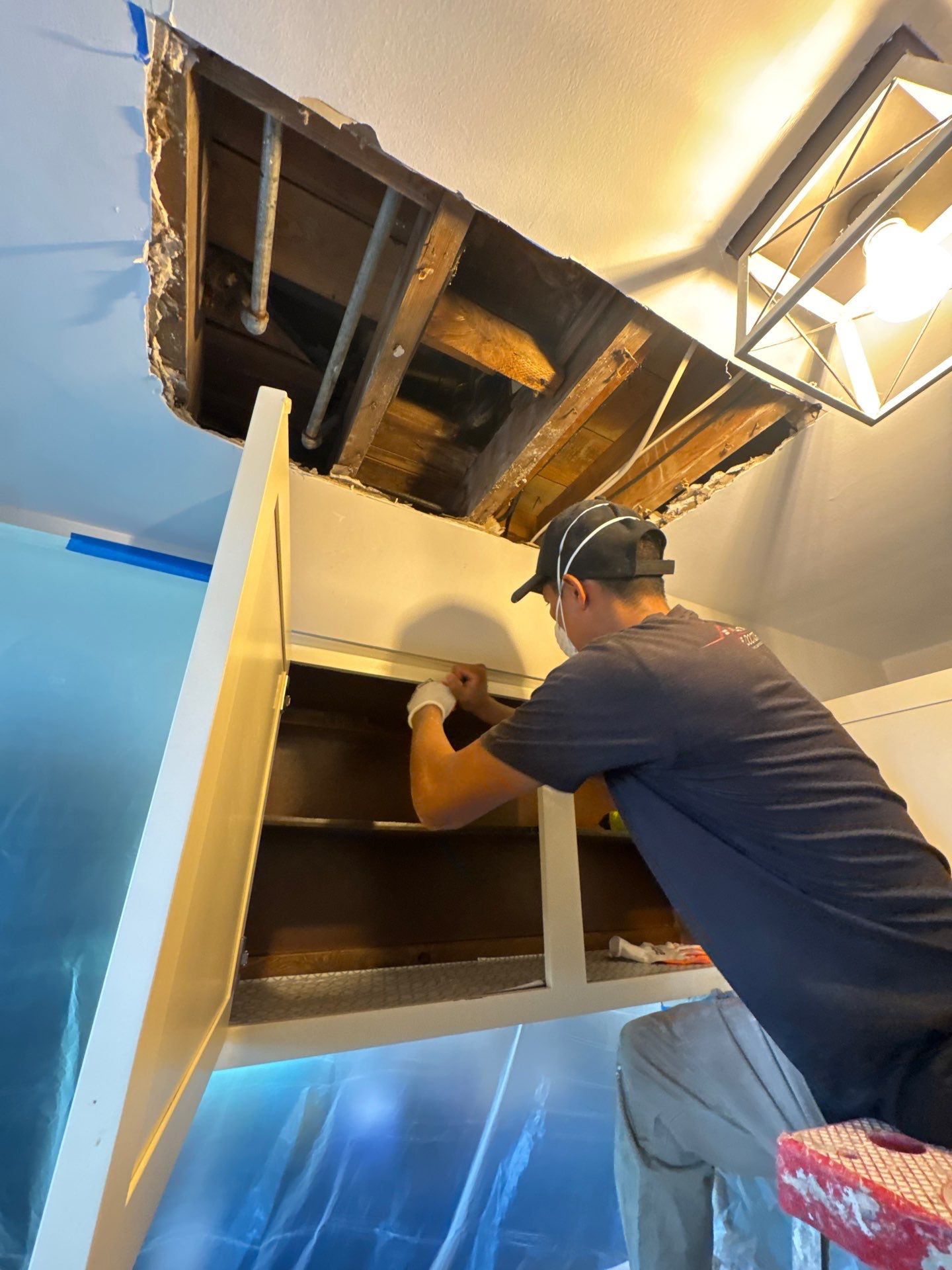
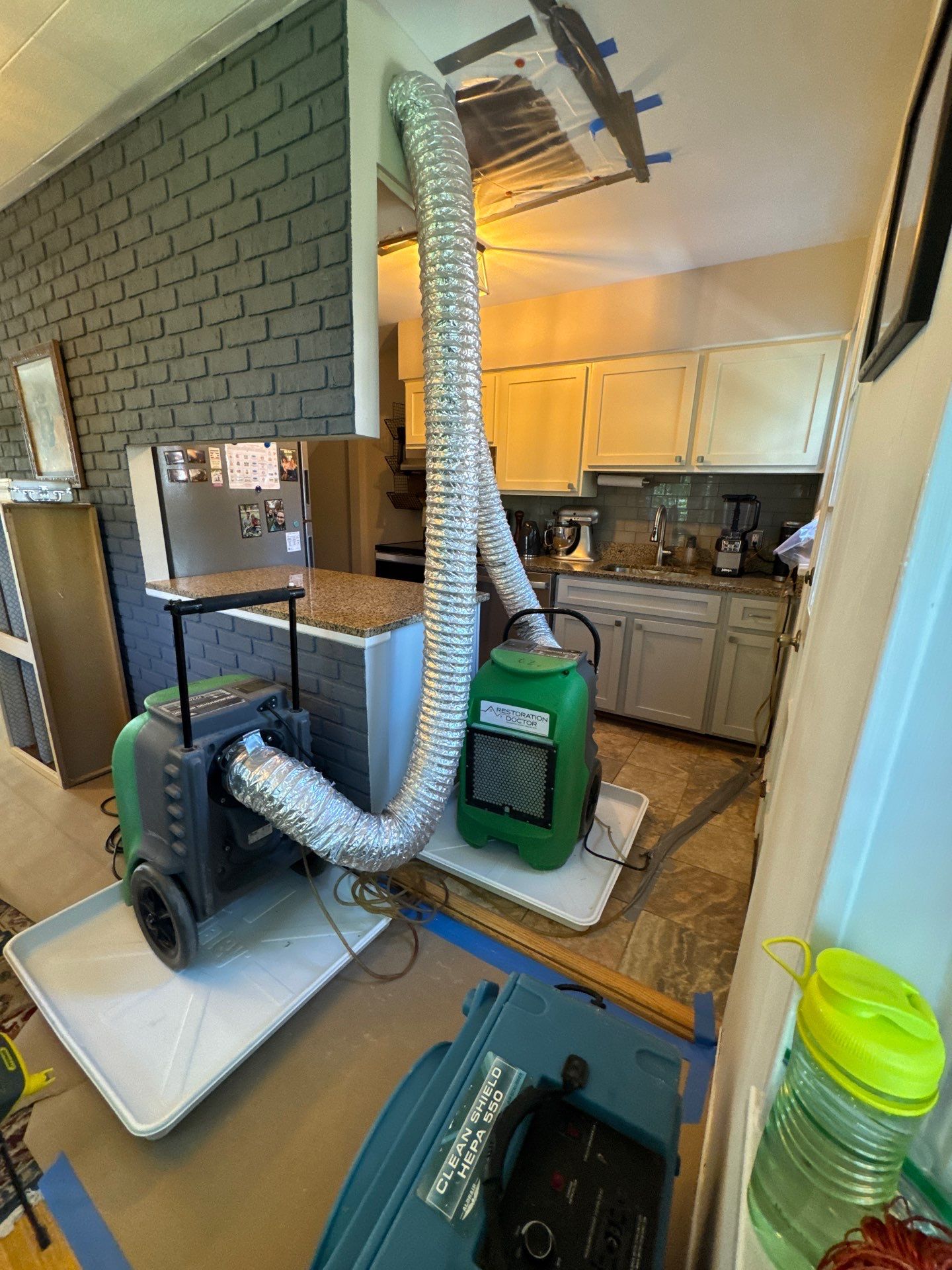
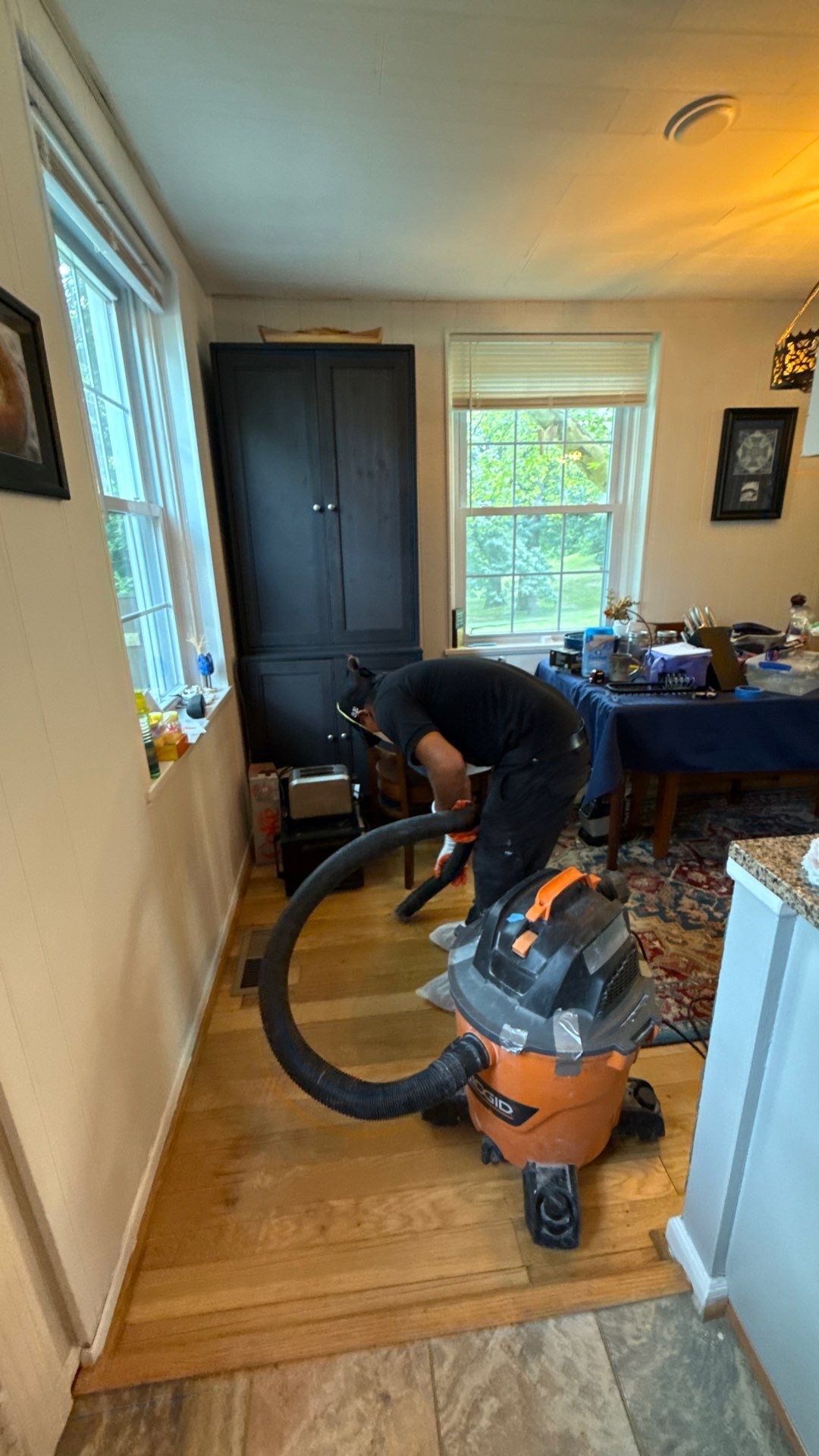
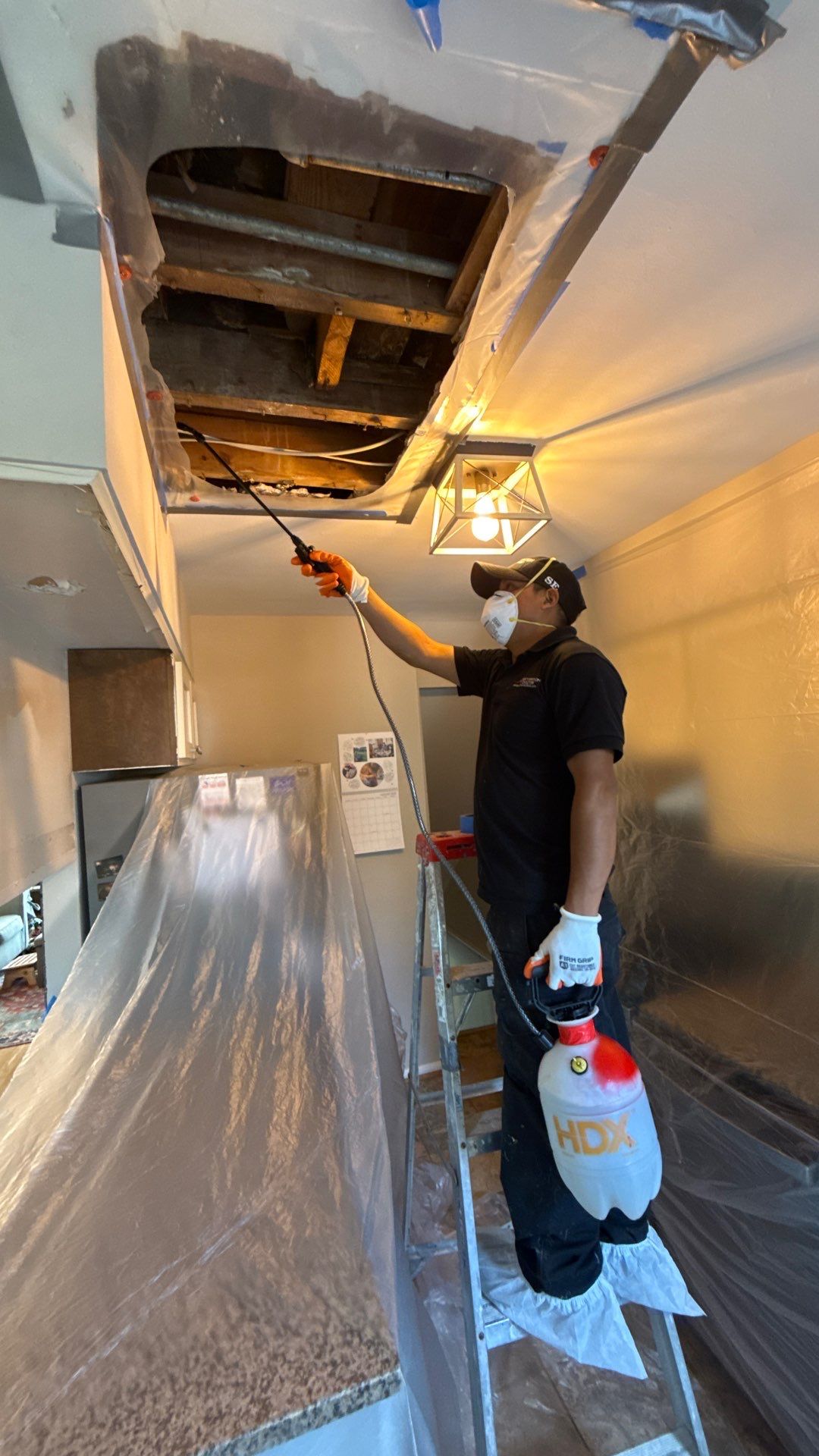
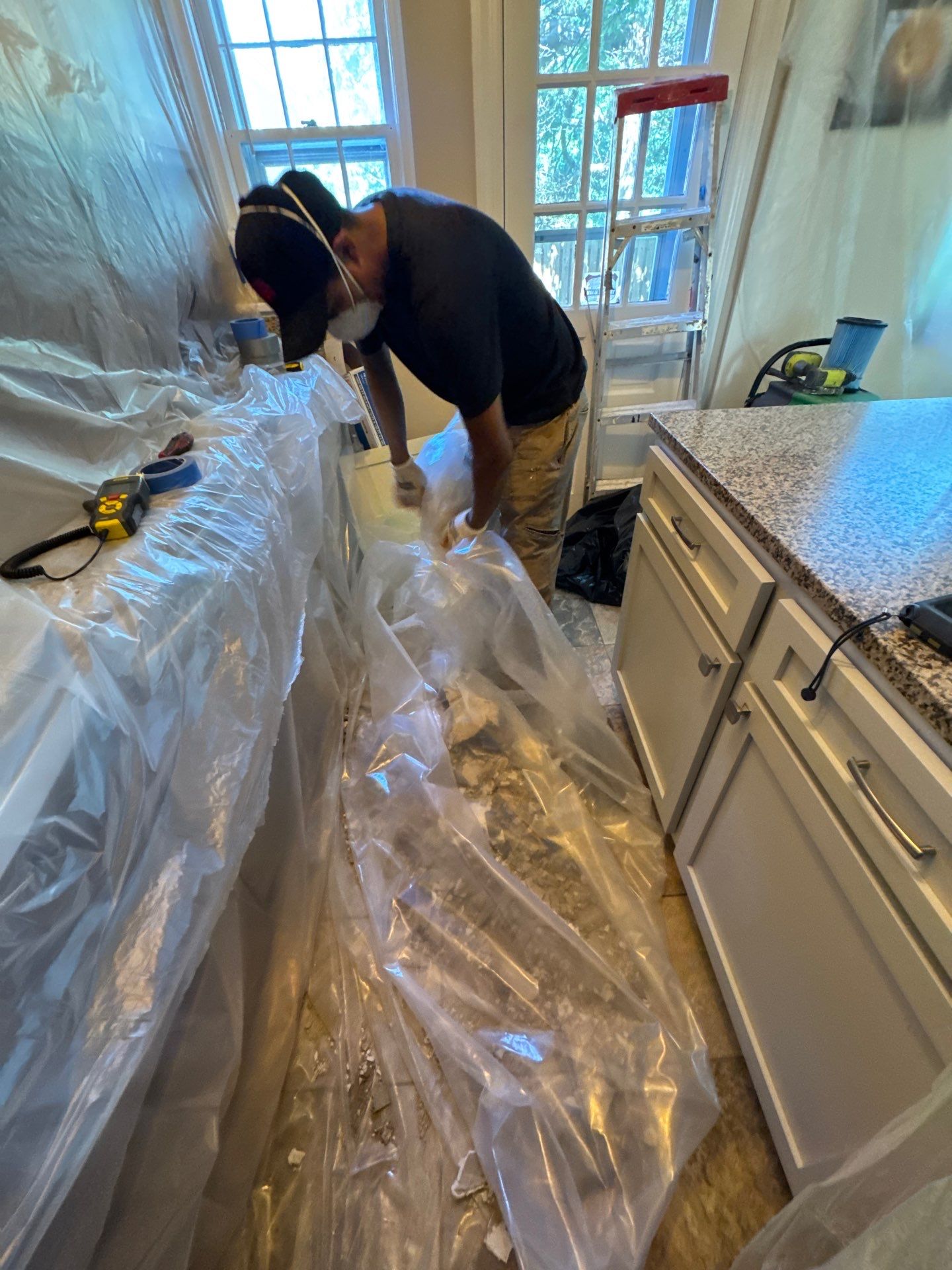
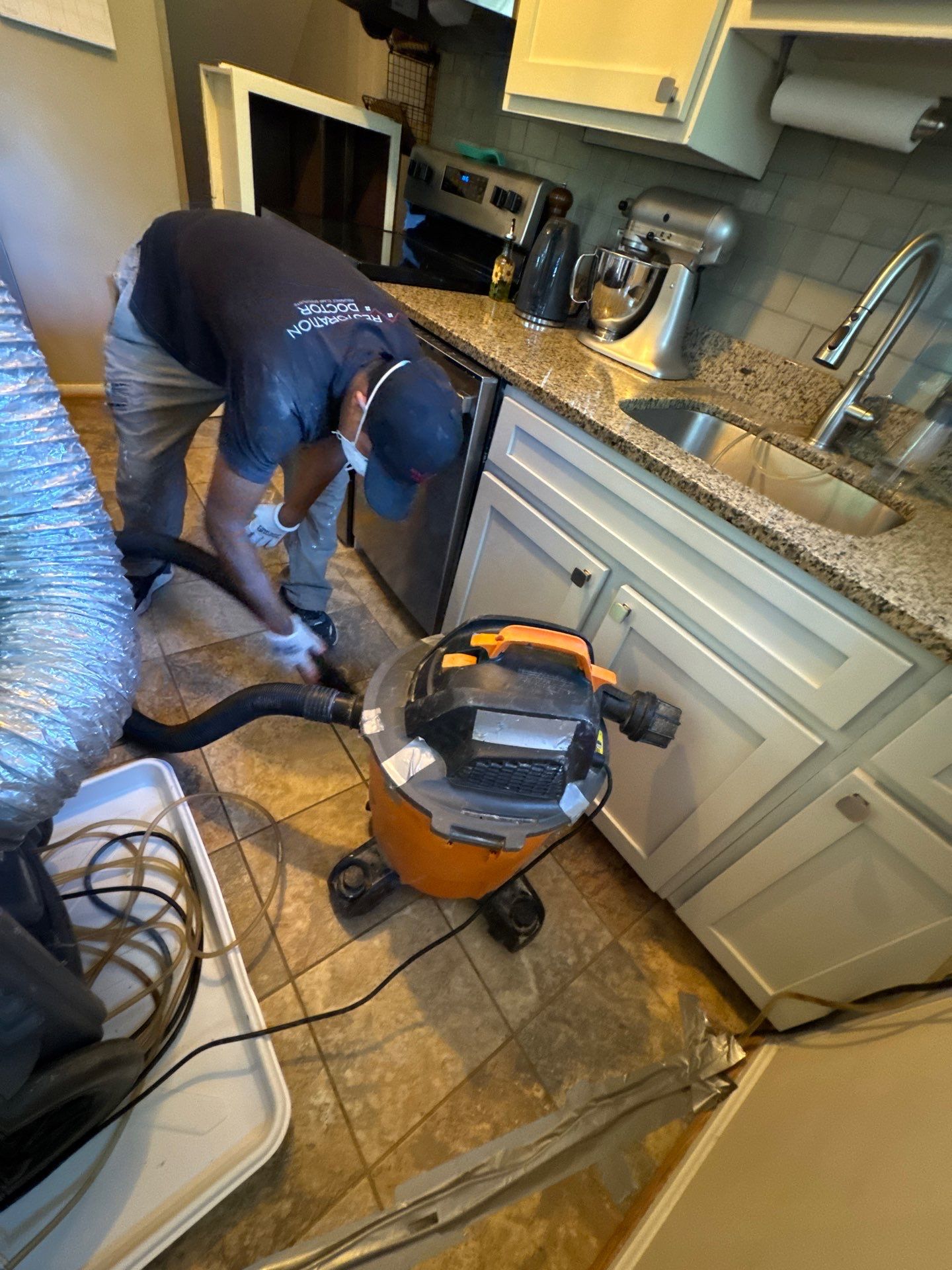
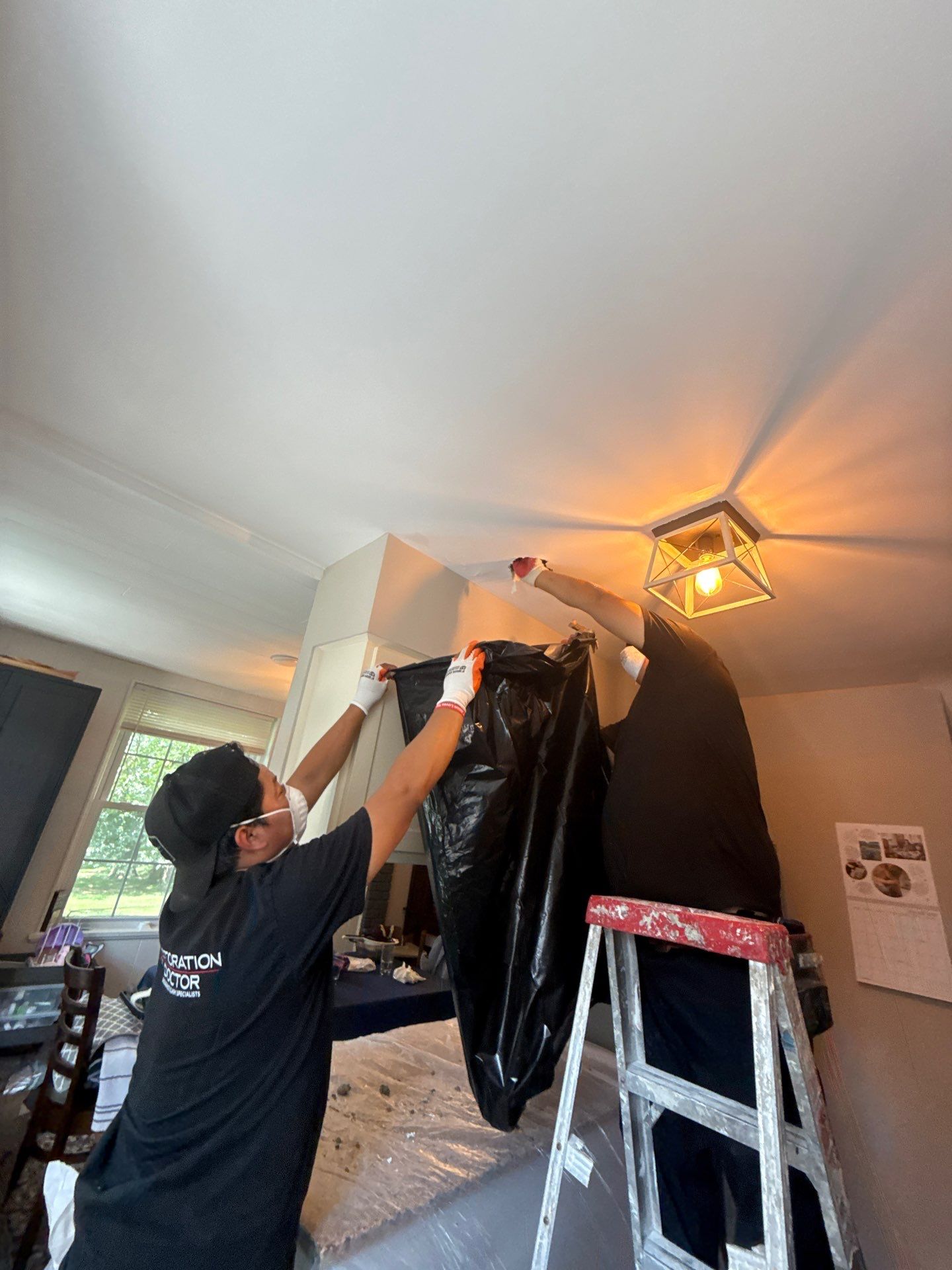
We began by protecting the kitchen contents with plastic sheeting, then extracted standing water using commercial vacuums and removed the saturated ceiling material that could no longer dry in place. The damaged wall sections came out next, exposing the framing to airflow and allowing us to locate and repair the source leak. With the envelope secured, we placed drying equipment to bring the structure back to standard moisture levels and applied antimicrobial treatment to all affected surfaces, following IICRC S520 protocol to prevent mold colonization.
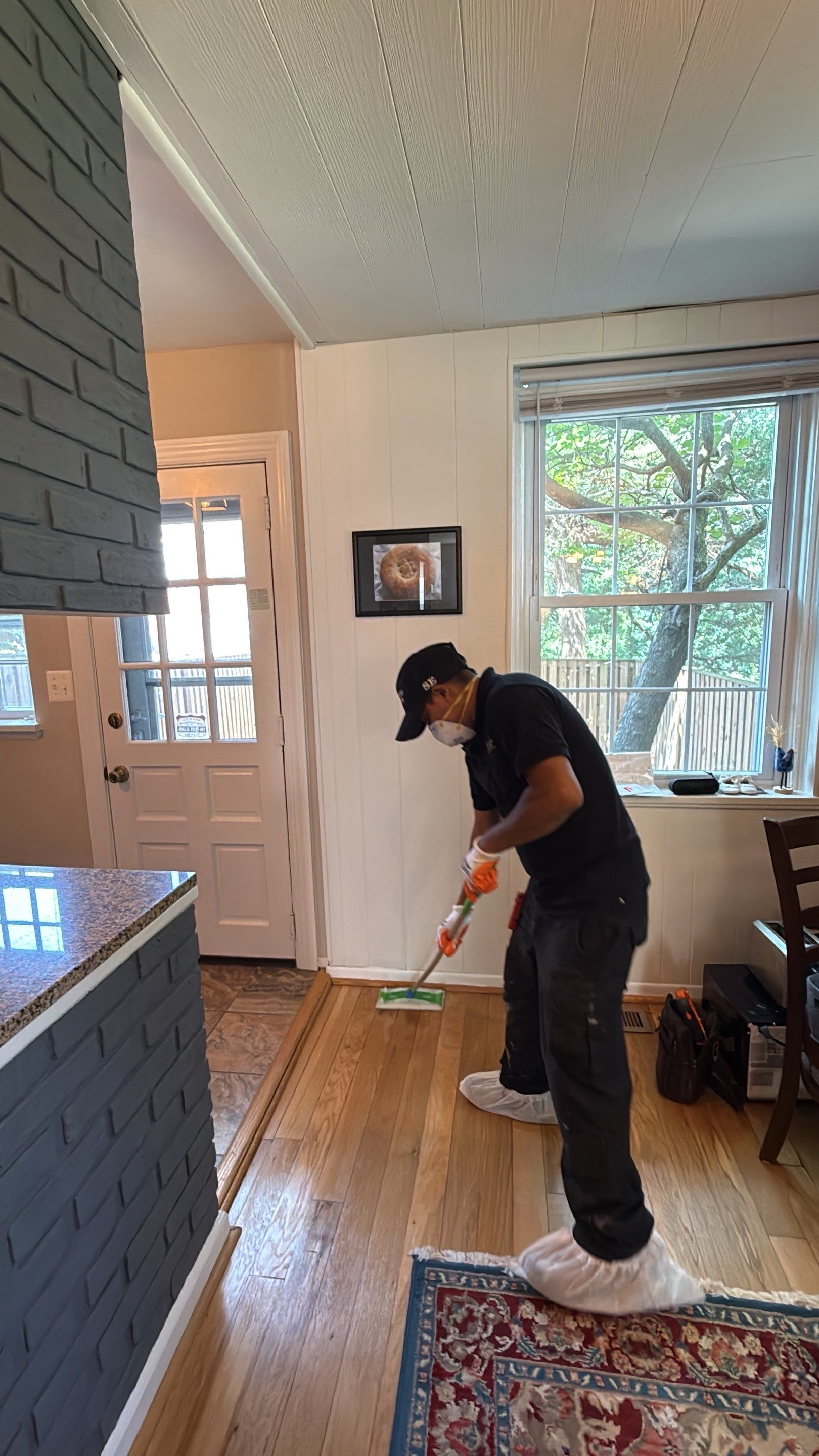
The homeowner noted in their review how quickly the space returned to normal use, and the linked photos document the progression from visible water damage through controlled demolition to a clean, dried assembly ready for rebuild. The job illustrates how prompt water removal and targeted drying can keep a kitchen leak from becoming a long-term air-quality problem in Arlington's humid Mid-Atlantic climate.
Frequently asked questions
How does a ceiling water leak in an Arlington kitchen lead to mold growth?
When a ceiling leak allows standing water to saturate drywall and framing, moisture trapped inside wall cavities creates ideal conditions for mold colonization—especially in Arlington County's humid Mid-Atlantic climate. Restoration Doctor's response on this job included immediate extraction, structural drying with professional equipment, and removal of water-damaged ceiling and wall sections to eliminate hidden moisture reservoirs before mold could establish. Sanitization and mold remediation protocols then addressed any early growth triggered by the intrusion.
What does mold remediation after water damage involve in a dense Arlington residential building?
Restoration Doctor's mold remediation process for this Arlington kitchen began with containment—protecting belongings with plastic sheeting—followed by standing-water extraction using commercial vacuums and deployment of drying equipment to bring structural moisture levels down. Affected drywall sections were removed and replaced, then all exposed surfaces were sanitized to prevent spore colonization. This scope aligns with IICRC S520 mold remediation standards and the immediate drying requirements of S500 for water intrusion events.
Why is rapid structural drying critical after a ceiling leak in Northern Virginia homes?
Northern Virginia's winter freeze-thaw cycles and humid summers mean that moisture from a ceiling leak can migrate quickly into wall cavities and insulation, especially in Arlington's mix of older single-family homes and mid-rise buildings where plumbing runs through shared structural chases. Restoration Doctor deployed drying equipment immediately on this job to halt that migration, preventing secondary damage and the mold growth that typically follows when wet building materials remain above safe moisture thresholds for more than a day or two.
Can I stay in my Arlington home during mold remediation and water-damage repairs?
For a localized kitchen ceiling repair like this Arlington job, occupants can often remain in unaffected areas of the home while Restoration Doctor's containment measures—plastic sheeting, negative air if needed—isolate the work zone. The decision depends on the extent of mold growth, the home's layout, and any occupant sensitivities; your project manager will assess conditions on-site and recommend the safest approach for your household.
How long does it take to dry out water-damaged walls and ceilings after extraction?
Drying timelines vary with the materials affected, the volume of water, and ambient humidity, but professional equipment—air movers, dehumidifiers—typically brings structural components to safe moisture levels within three to five days under monitored conditions. On this Arlington job, Restoration Doctor removed standing water first, then deployed drying equipment and replaced saturated drywall sections to accelerate the process and prevent prolonged exposure that invites mold.
Explore more restoration work
All projects in Arlington · Mold Remediation in Arlington
Water, fire, or mold damage in Arlington?
Restoration Doctor responds 24/7 across Arlington and Northern Virginia. Free assessment and transparent, insurance-friendly estimates — no obligation.
See our Mold Remediation services at restorationdoctors.com →