Immediate Water Damage Response
About this mold remediation project
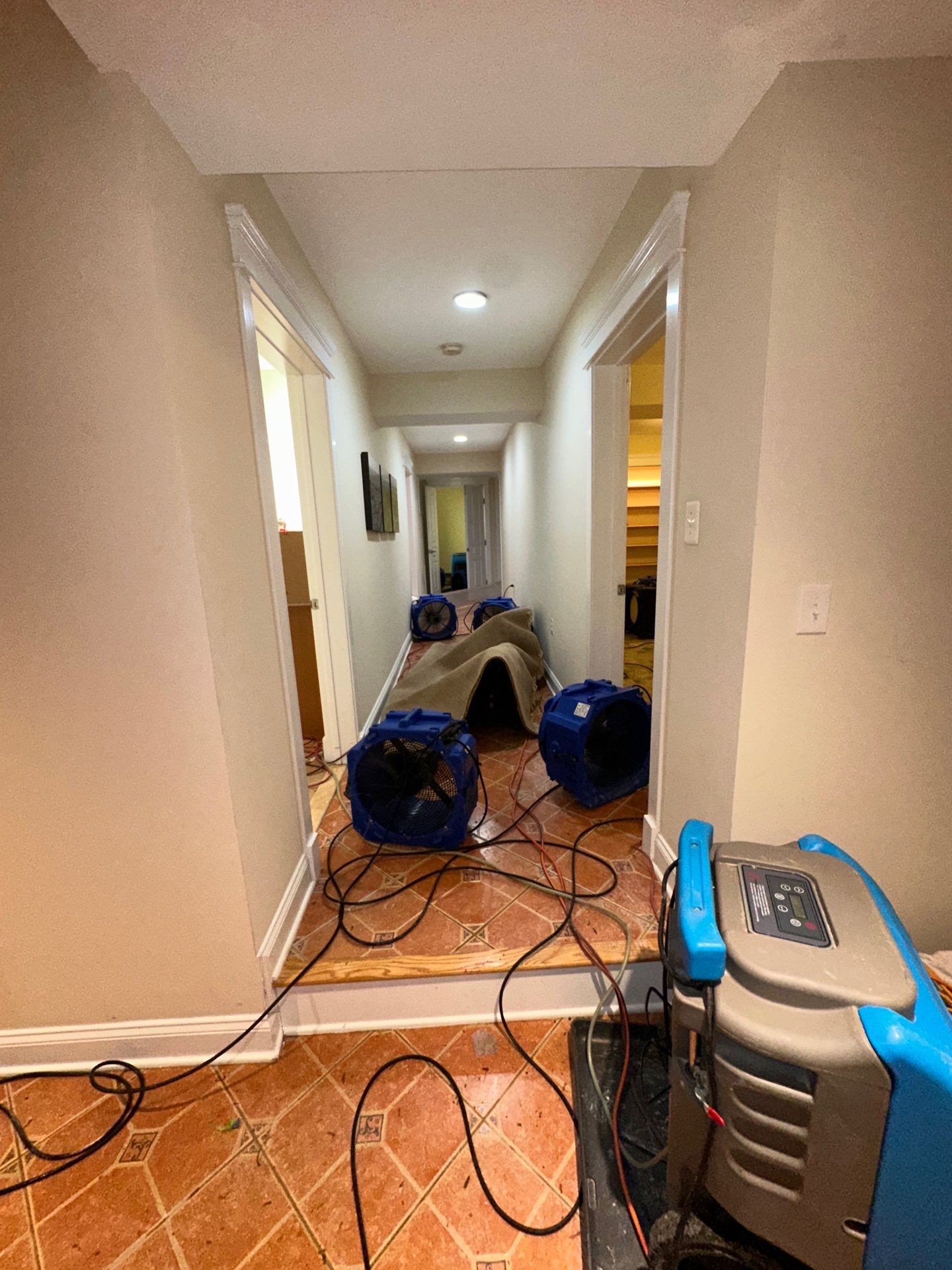
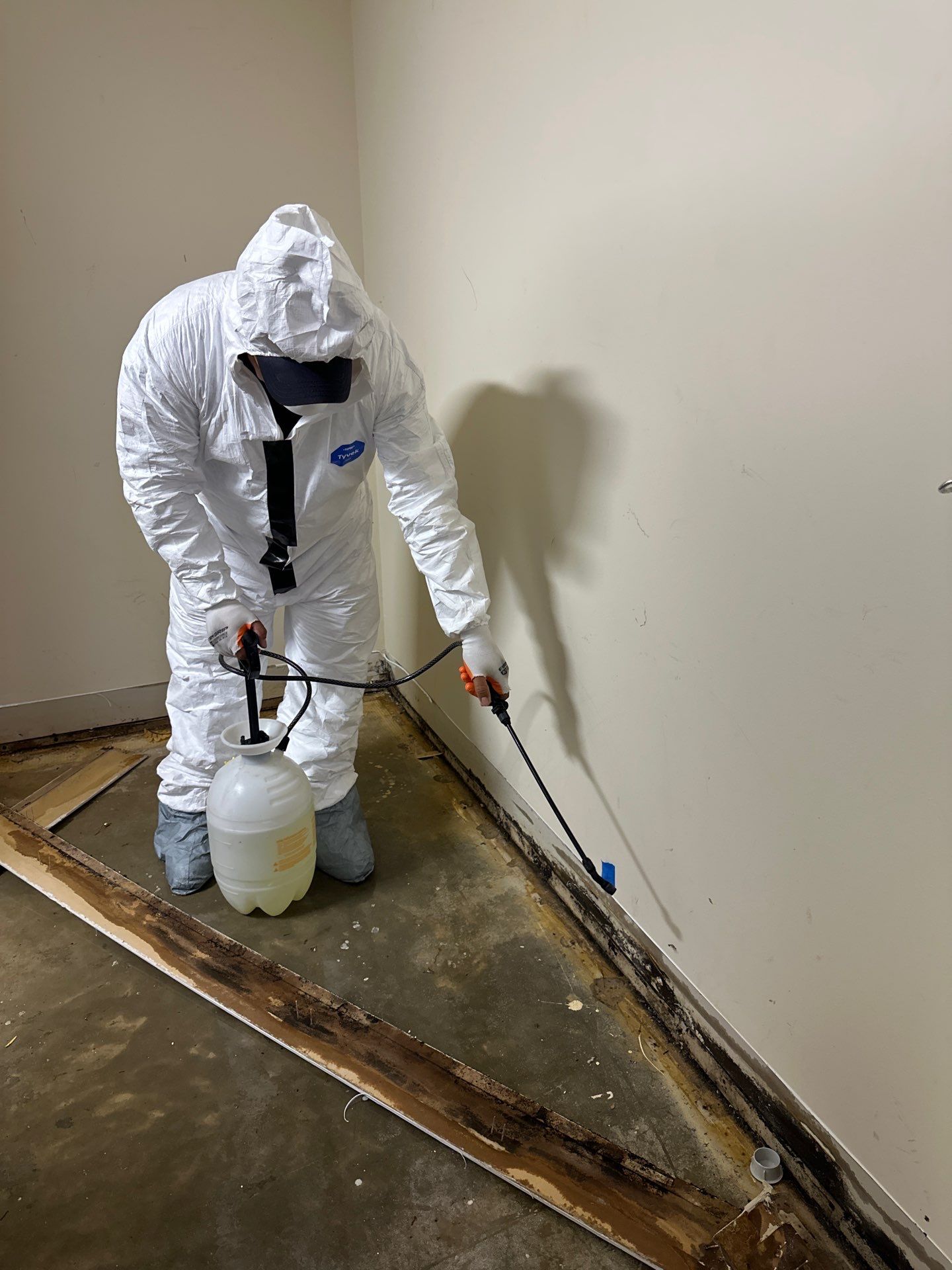
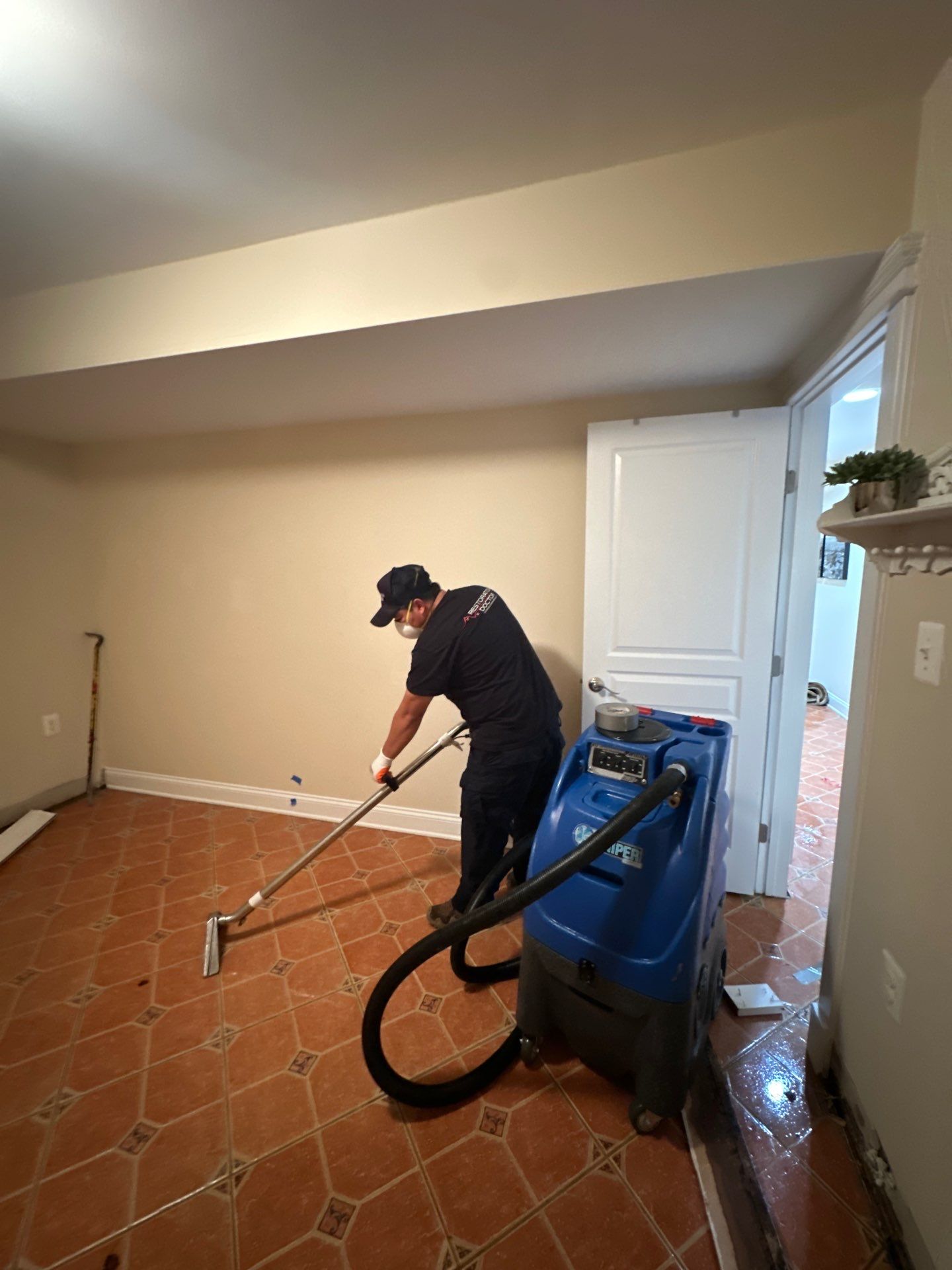
When water intrusion triggered mold growth in an Arlington County garden apartment—the kind of dense, closer-in residential building where shared plumbing runs and limited ventilation can accelerate secondary damage—we moved quickly to contain both the immediate water problem and the microbial growth that followed. This job required a two-phase response: first addressing the standing water, then remediating the mold that had already taken hold.
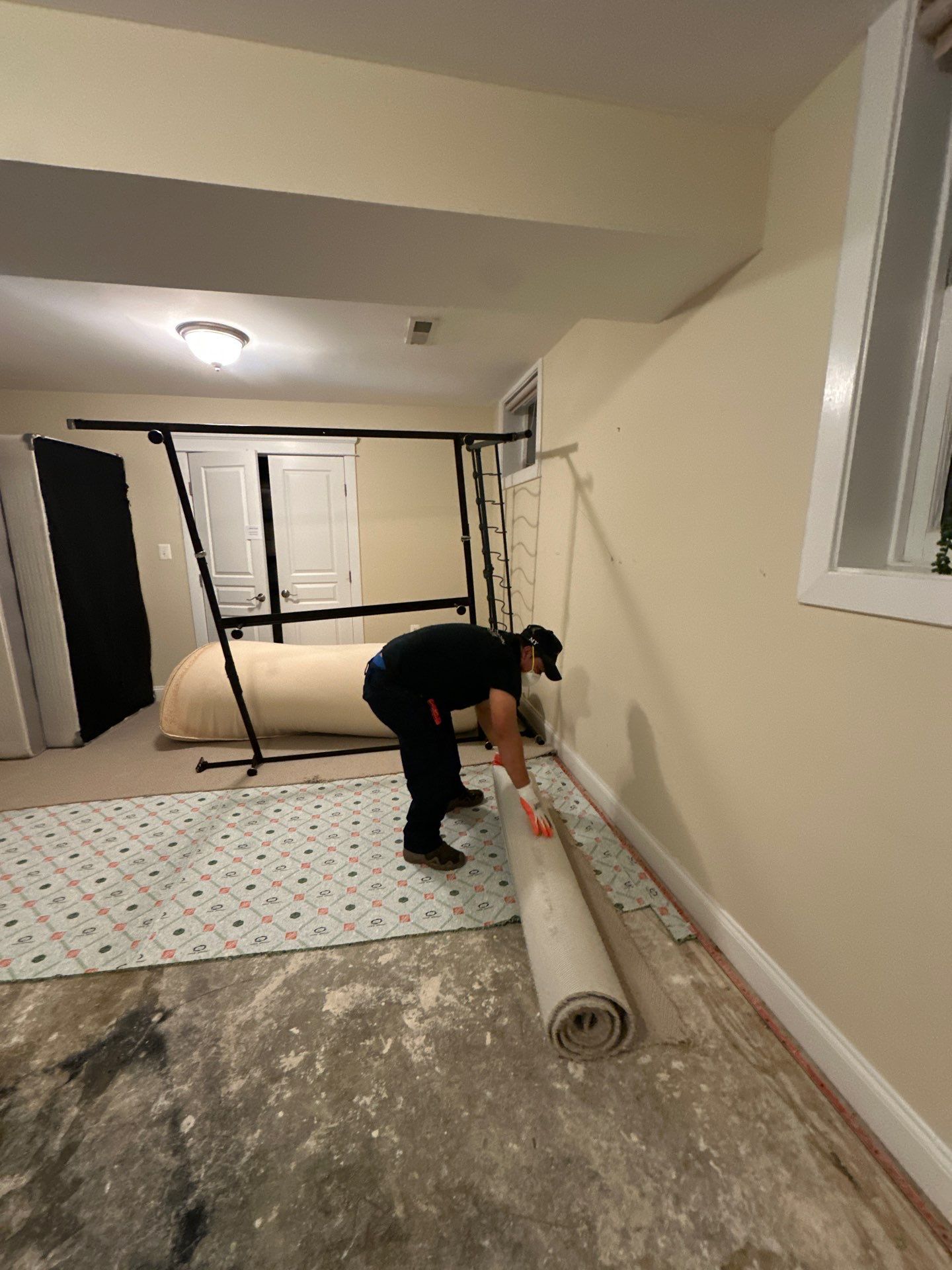
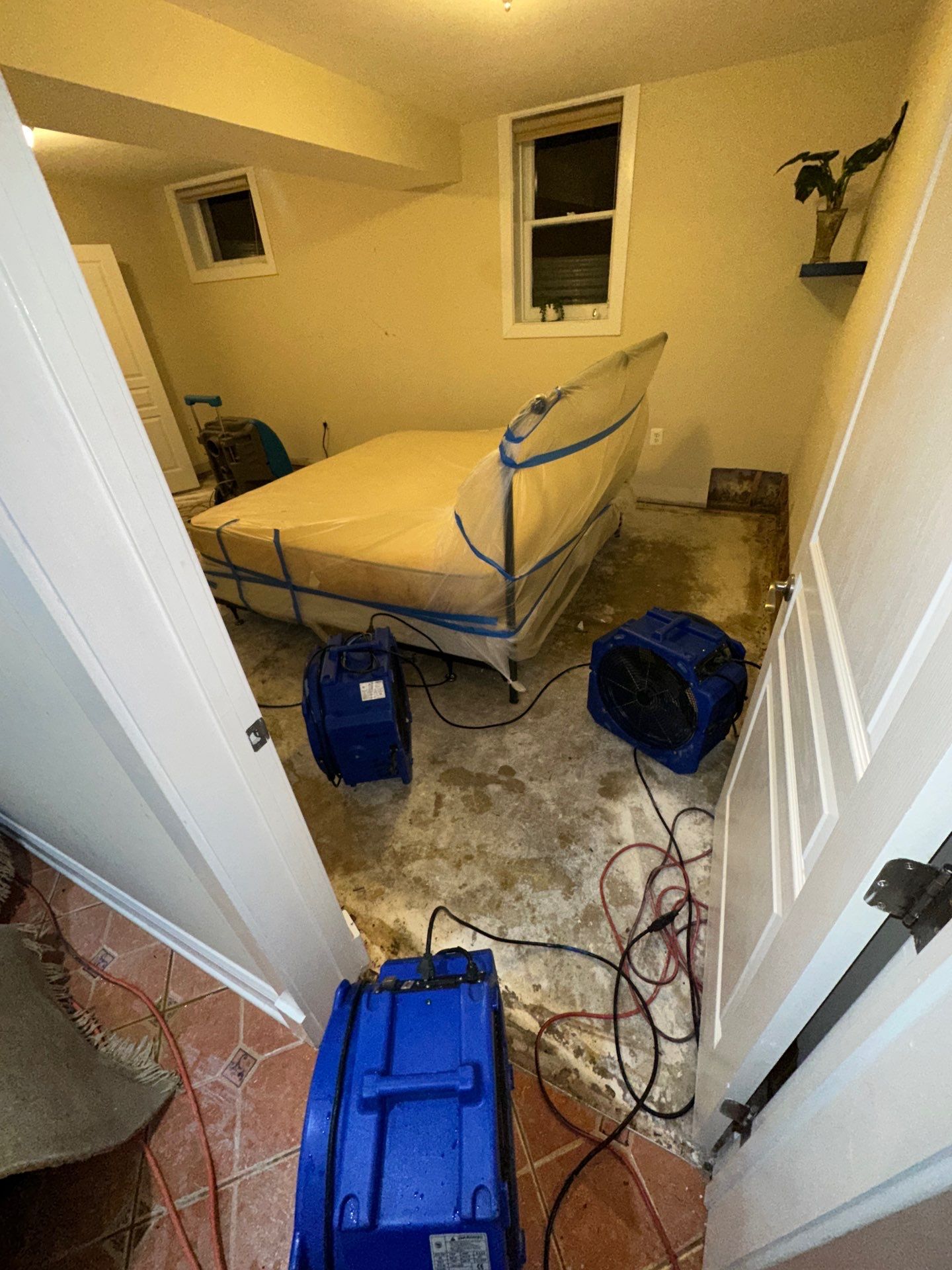
We began by removing soaked carpeting and deploying commercial extraction vacuums to pull excess water from the affected rooms. Belongings were draped with plastic sheeting to protect them from demolition dust, then we cut out and replaced the damaged wall sections where moisture had wicked into the drywall and cavity. With the wet materials removed, we positioned drying equipment to bring the space back to equilibrium and applied EPA-registered antimicrobial treatments to the cleaned surfaces, following IICRC S520 protocols for mold remediation in residential structures.
The homeowner noted in their review how relieved they were to see the problem handled methodically from start to finish. By treating both the water source and the mold it fed, we restored the unit to a dry, sanitized condition and reduced the risk of recurrence—a critical outcome in Arlington's older, tightly built residential stock where moisture problems rarely stay isolated.
Frequently asked questions
Why did Restoration Doctor replace wall sections during this Arlington mold remediation job?
When water intrusion saturates drywall or framing in Arlington County's dense housing stock, the porous material can harbor embedded mold growth that sanitizing alone cannot address. Restoration Doctor removed and replaced the compromised wall sections to eliminate the contaminated substrate, then sanitized the newly exposed framing before reconstruction. This ensures the mold colony is physically removed rather than simply treated in place.
How does standing-water extraction prevent mold after a water loss in Arlington, VA?
Restoration Doctor deployed commercial extractors to pull standing water from the affected floors immediately, reducing the moisture load before it could migrate into subflooring, baseboards, and wall cavities. In Arlington's humid Mid-Atlantic climate, any water left in porous materials creates ideal conditions for mold colonization within days. Rapid extraction, followed by structural drying equipment, keeps moisture levels below the threshold mold spores need to germinate.
What does sanitizing involve after water damage and wall replacement in an Arlington home?
Restoration Doctor applied EPA-registered antimicrobial solutions to all affected surfaces—including the newly exposed framing after wall removal and the surrounding structure—to neutralize residual mold spores and bacteria introduced by the water intrusion. Sanitizing is the final step after extraction, drying, and reconstruction, ensuring the remediated space is microbiologically clean before returning it to the homeowner.
Can carpet be saved after water intrusion, or does it always require replacement in Arlington mold jobs?
In this Arlington case, Restoration Doctor removed the soaked carpets because prolonged saturation and the presence of mold made salvage impractical—carpet and padding act as reservoirs for moisture and organic matter that feed mold growth. Whether carpet can be saved depends on the category of water, how long it sat, and the extent of contamination; here, removal was the only path to a clean, dry substrate.
Explore more restoration work
All projects in Arlington · Mold Remediation in Arlington
Water, fire, or mold damage in Arlington?
Restoration Doctor responds 24/7 across Arlington and Northern Virginia. Free assessment and transparent, insurance-friendly estimates — no obligation.
See our Mold Remediation services at restorationdoctors.com →