Water Damage Restoration Alexandria
About this water damage restoration project
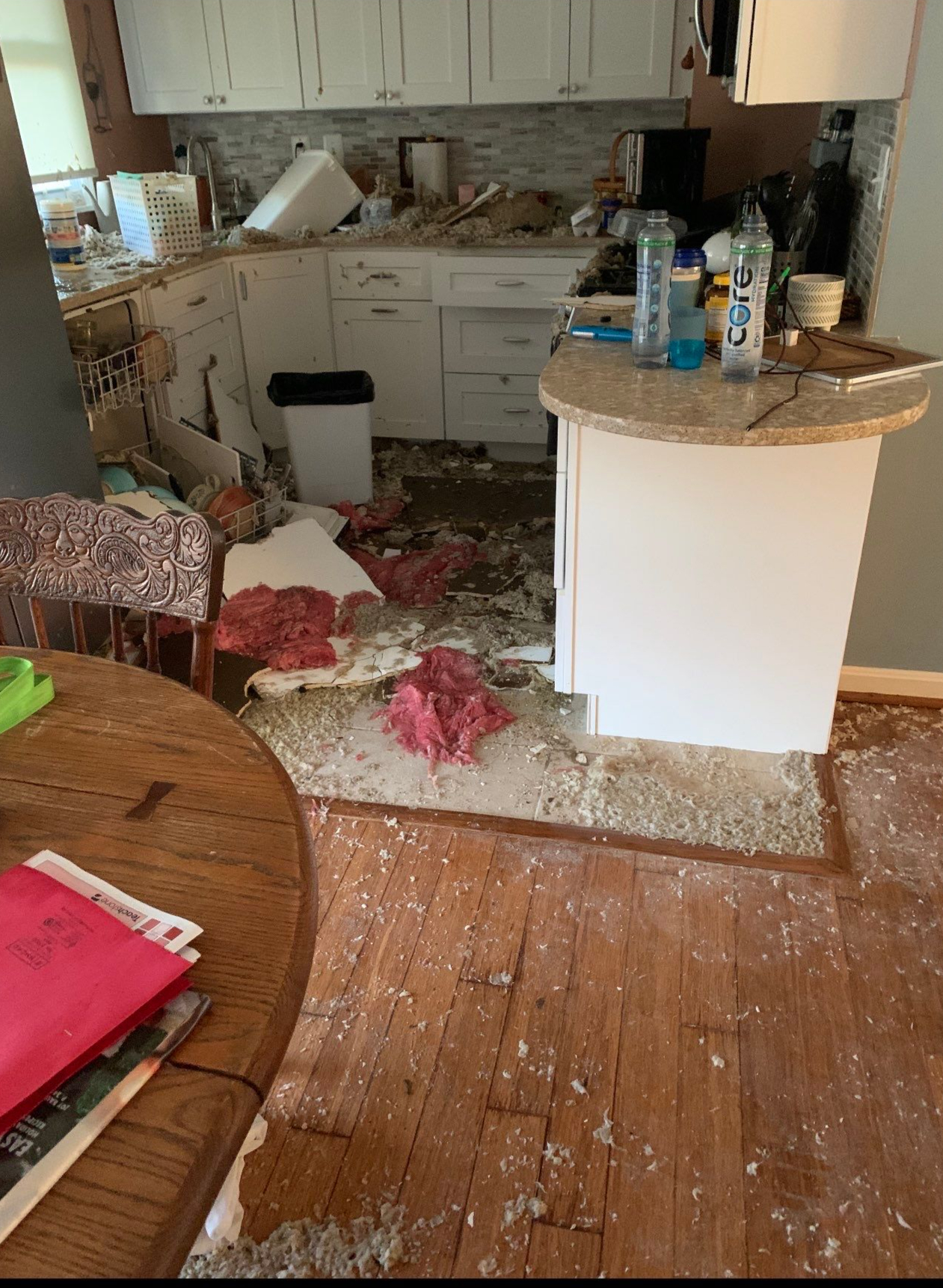
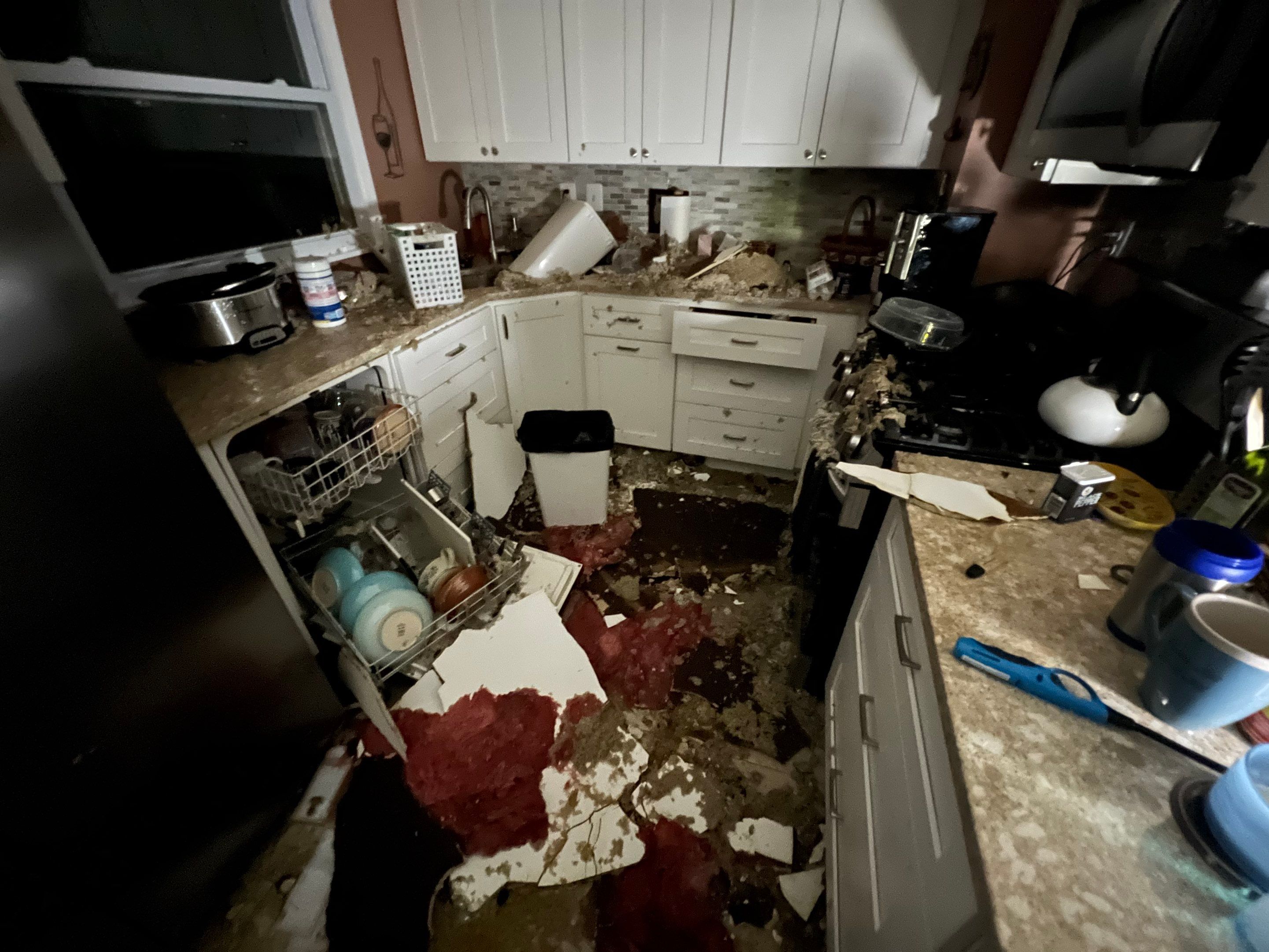
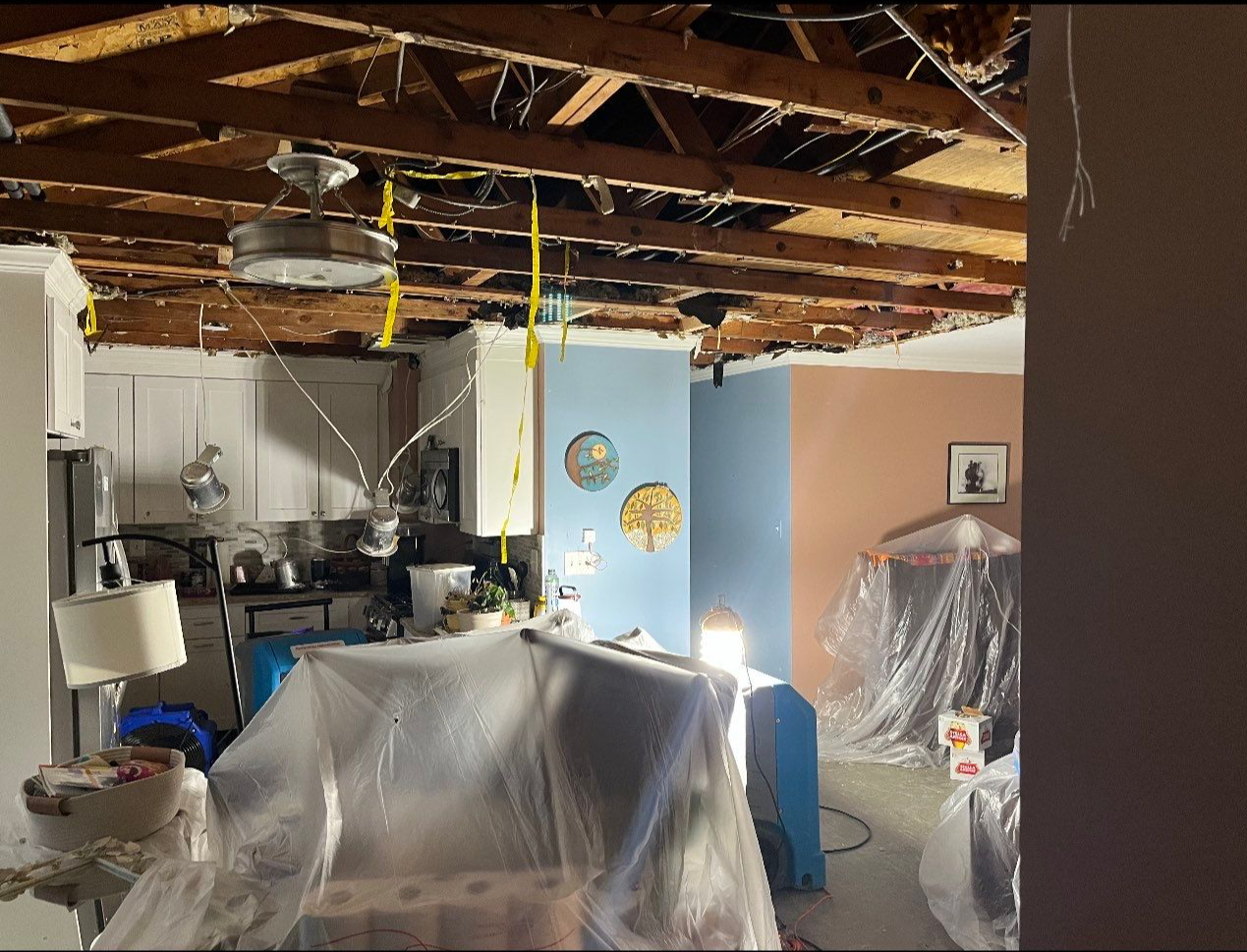
A residential kitchen and dining area in the City of Alexandria sustained ceiling collapse and extensive moisture damage—a sequence particularly concerning in Alexandria's mix of mid-20th-century single-family housing, where older framing and concealed plumbing can allow water intrusion to spread undetected before visible failure occurs. Mold had already begun to establish following the intrusion, necessitating both structural removal and aggressive environmental control.
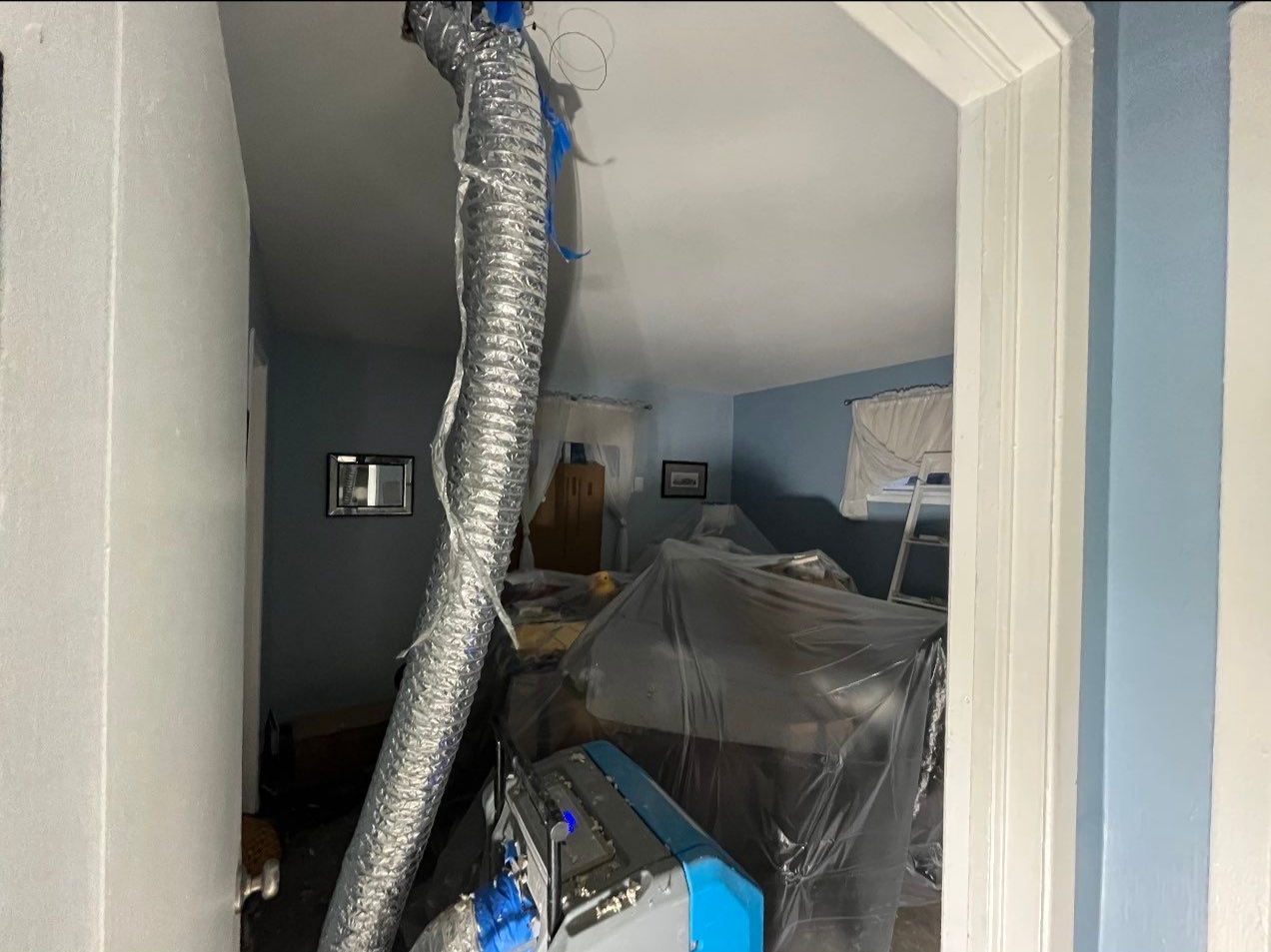
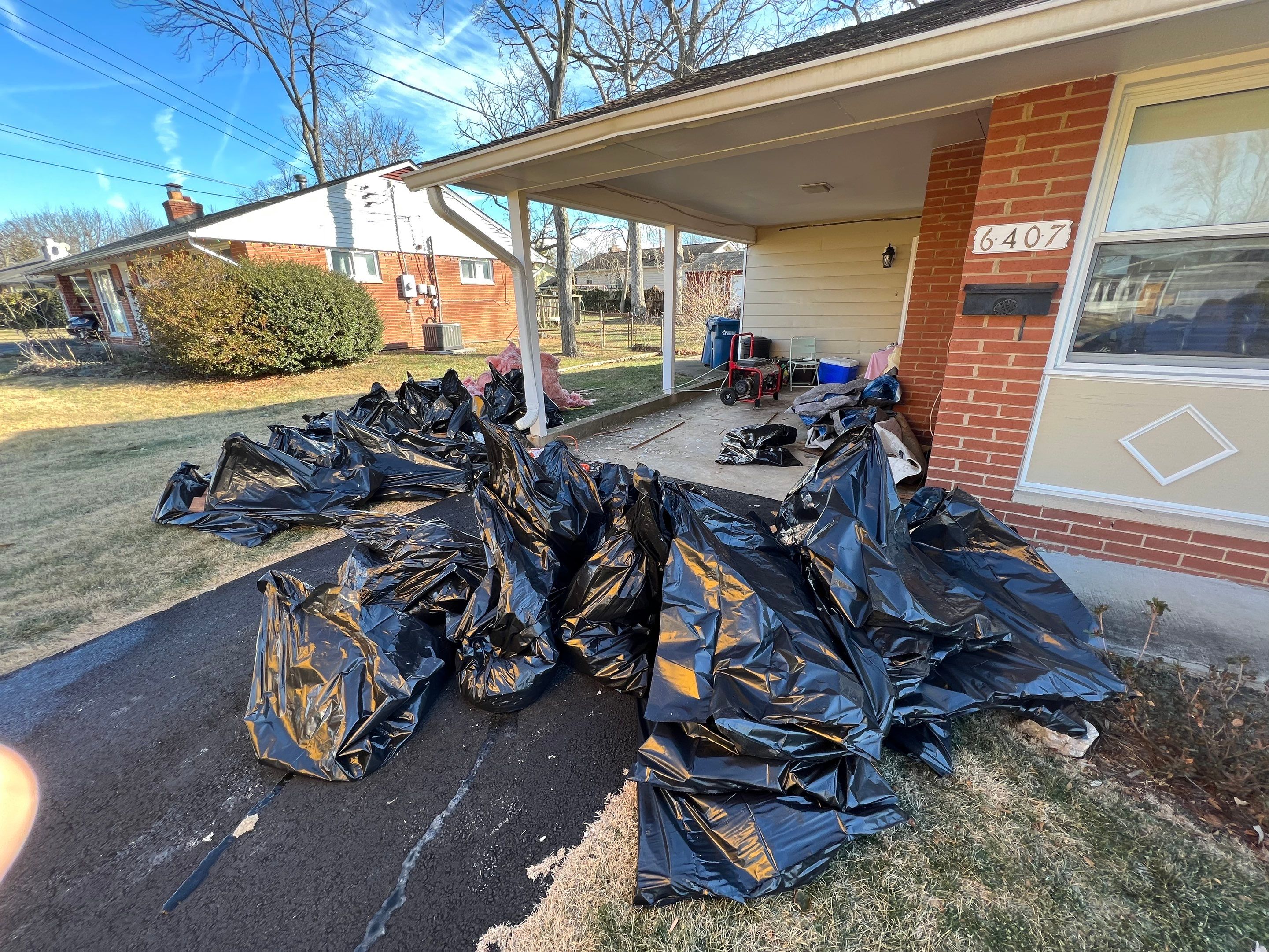
Our technicians removed the compromised ceiling sections and deployed thermal imaging to map moisture migration into wall cavities and subfloor areas the visible damage hadn't revealed. Industrial air movers and commercial dehumidifiers ran continuously in the affected zones, guided by regular moisture-meter readings to verify drying progress and ensure conditions hostile to further microbial amplification. The work followed IICRC S500 water-damage protocols, with particular attention to psychrometric monitoring—critical when mold is already present and any residual moisture extends the contamination window.
Throughout the drying phase, we maintained close communication with the homeowner, who later noted their satisfaction with both the thoroughness of the moisture mapping and the care taken to keep unaffected areas of the home protected during equipment operation. The combination of structural removal, targeted drying, and environmental monitoring brought the kitchen and dining space back to stable, dry conditions ready for rebuild.
Reviews from Restoration Doctor customers
Their prompt service saved my home from further water damage. Exceptional work, Restoration Doctor!
Frequently asked questions
Why was thermal imaging used during the water damage restoration in Alexandria?
Restoration Doctor used thermal-imaging cameras to locate hidden moisture pockets behind walls and within ceiling cavities that aren't visible to the naked eye. In Alexandria's older housing stock—including many mid-20th-century structures with layered finishes—water can migrate along framing and settle in concealed voids, and thermal imaging ensures our technicians map every affected area before drying begins. This prevents mold from establishing in overlooked damp zones after the visible damage is repaired.
How does mold remediation differ from simply drying out water damage in Alexandria, VA?
Drying addresses active moisture, while mold remediation removes colonized growth that has already taken hold—as happened in this Alexandria property following prolonged water intrusion. Restoration Doctor's mold remediation follows IICRC S520 protocols: we establish containment to prevent spore spread, remove affected porous materials like the collapsed ceiling sections, apply antimicrobial treatments to salvageable surfaces, and verify clearance with post-remediation air sampling. Structural drying alone won't eliminate established mold; remediation is a separate, controlled process.
What rooms are most vulnerable to hidden moisture after a ceiling collapse in an Alexandria home?
In this Alexandria restoration, the kitchen and dining area bore the brunt of the collapse, but moisture doesn't respect room boundaries—it wicks through drywall, soaks insulation above adjacent spaces, and travels along joists into hallways or bedrooms. Restoration Doctor's moisture-mapping protocol traces the full extent of saturation using thermal cameras and pin meters, placing dehumidifiers and air movers in every affected zone, not just where the visible damage occurred. Adjoining rooms are monitored daily until readings confirm drying to standard.
How long does water damage restoration typically take in Alexandria, VA?
Drying timelines depend on the extent of saturation, materials affected, and ambient conditions—in Alexandria's humid Mid-Atlantic climate, dehumidification often runs longer than in drier regions. For a loss of this scope, with collapsed ceilings and structural drying in multiple rooms, Restoration Doctor typically monitors equipment for three to five days, taking daily moisture readings until materials reach dry-standard thresholds. Reconstruction (ceiling rebuild, finish work) follows once drying is verified complete.
Can freeze-thaw pipe failures lead to the kind of water intrusion that causes mold in Alexandria homes?
Yes—winter freeze-thaw cycles are a common culprit in Alexandria and across Northern Virginia, especially in older homes with galvanized or poorly insulated supply lines. A slow leak from a compromised pipe joint can saturate ceiling cavities and wall framing for weeks before a collapse makes the damage visible, giving mold ample time to colonize. Restoration Doctor encounters this pattern frequently in the City of Alexandria's mid-century housing stock, where original plumbing is reaching the end of its service life.
Explore more restoration work
All projects in Alexandria · Water Damage Restoration in Alexandria
Water, fire, or mold damage in Alexandria?
Restoration Doctor responds 24/7 across Alexandria and Northern Virginia. Free assessment and transparent, insurance-friendly estimates — no obligation.
See our Water Damage Restoration services at restorationdoctors.com →