Comprehensive Recovery from Ceiling and Wall Leaks
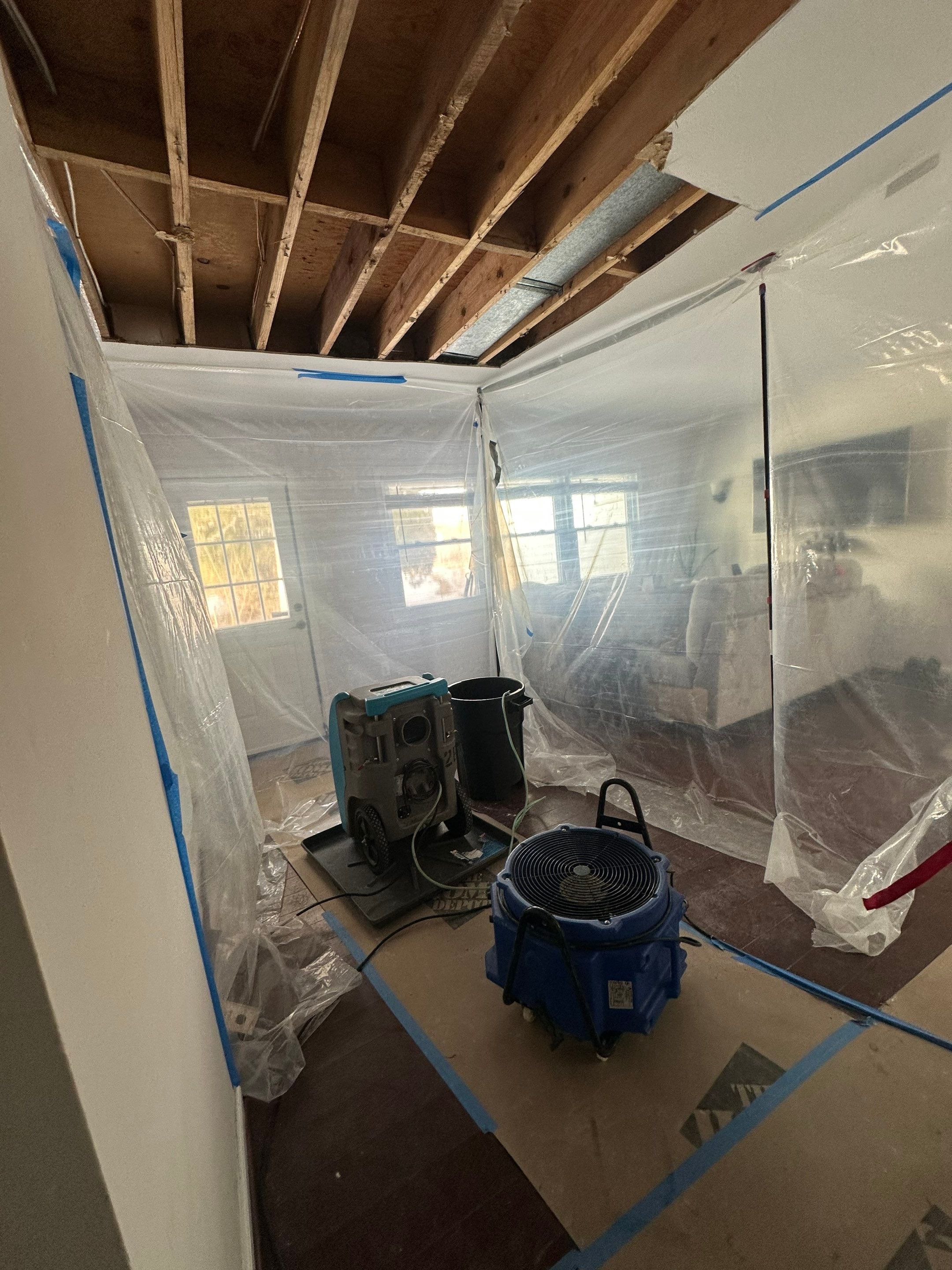
About this mold remediation project
A ceiling and wall leak in this Alexandria home created conditions favorable to mold growth, a scenario we encounter frequently in the City of Alexandria's mix of historic row homes and mid-20th-century single-family stock, where aging plumbing and winter freeze-thaw cycles can compromise building envelopes and lead to hidden moisture intrusion.
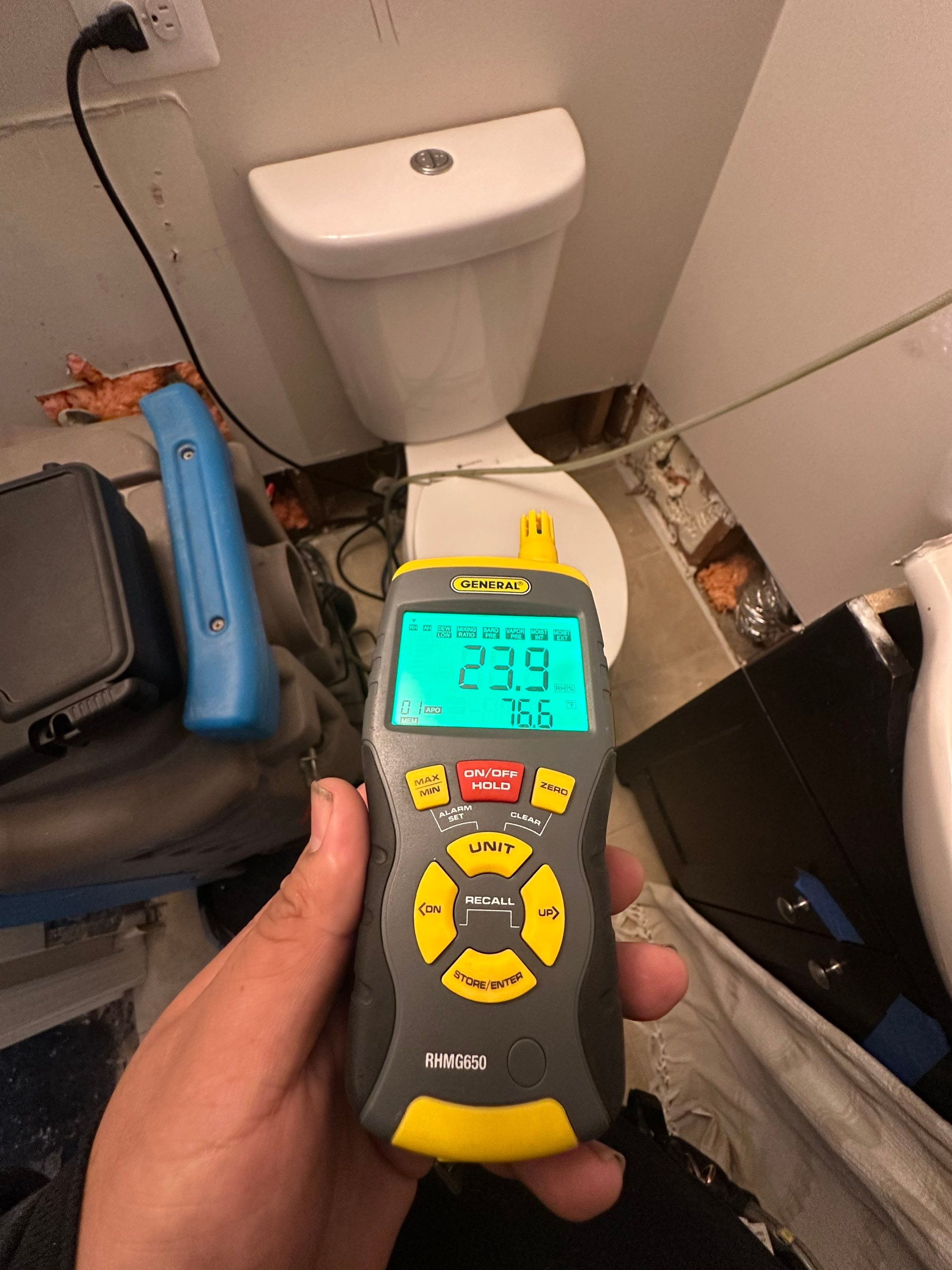
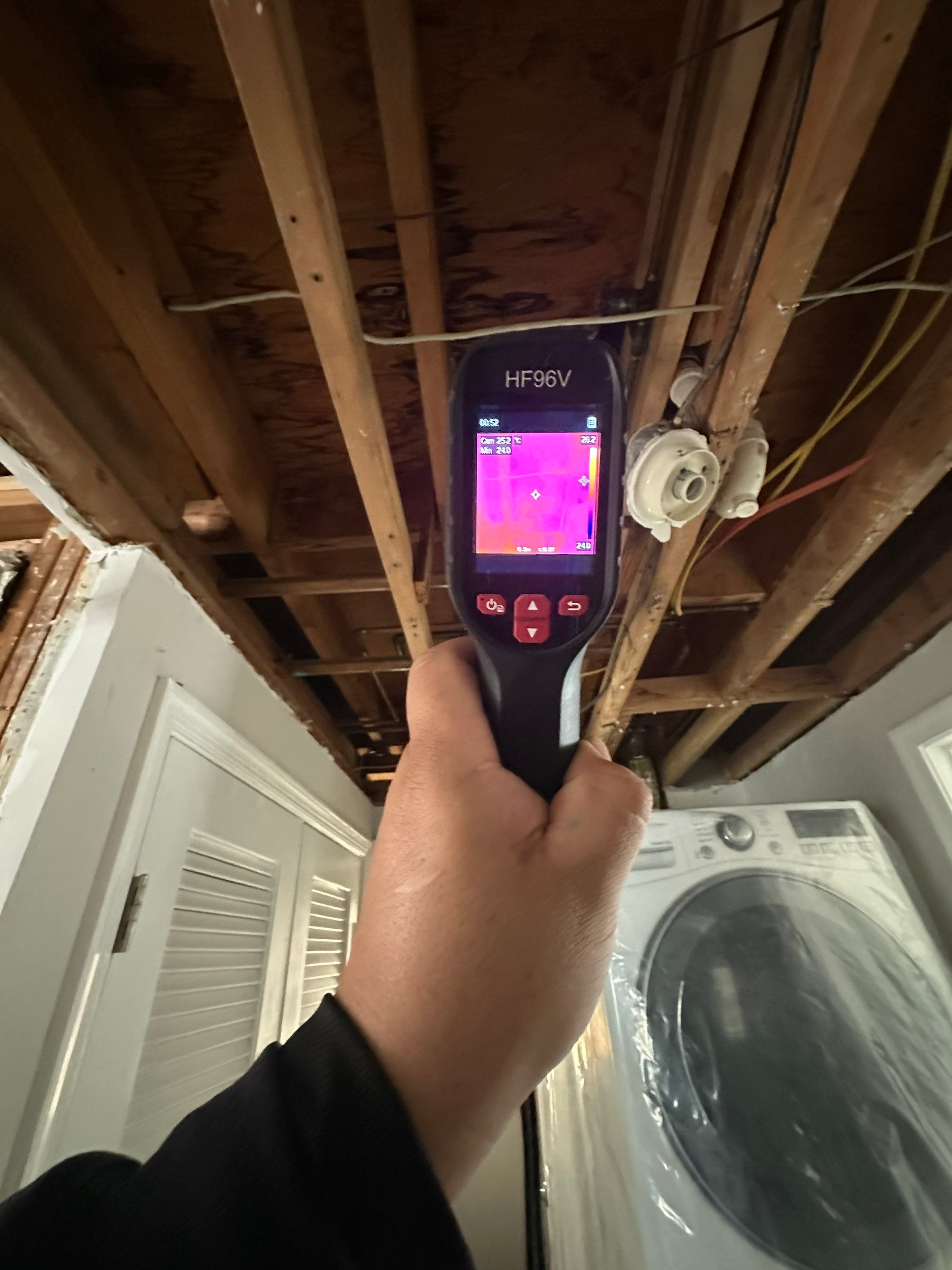
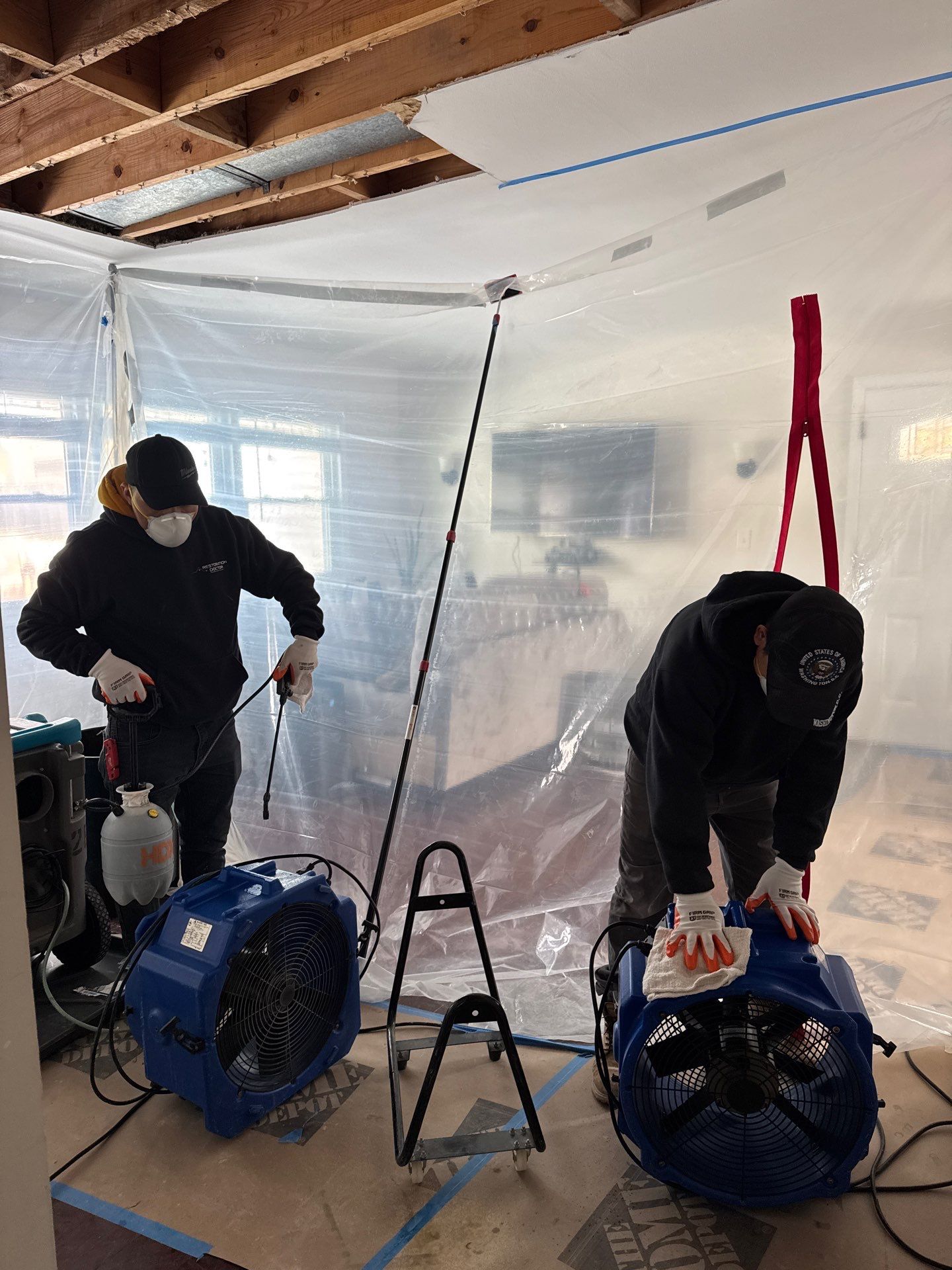
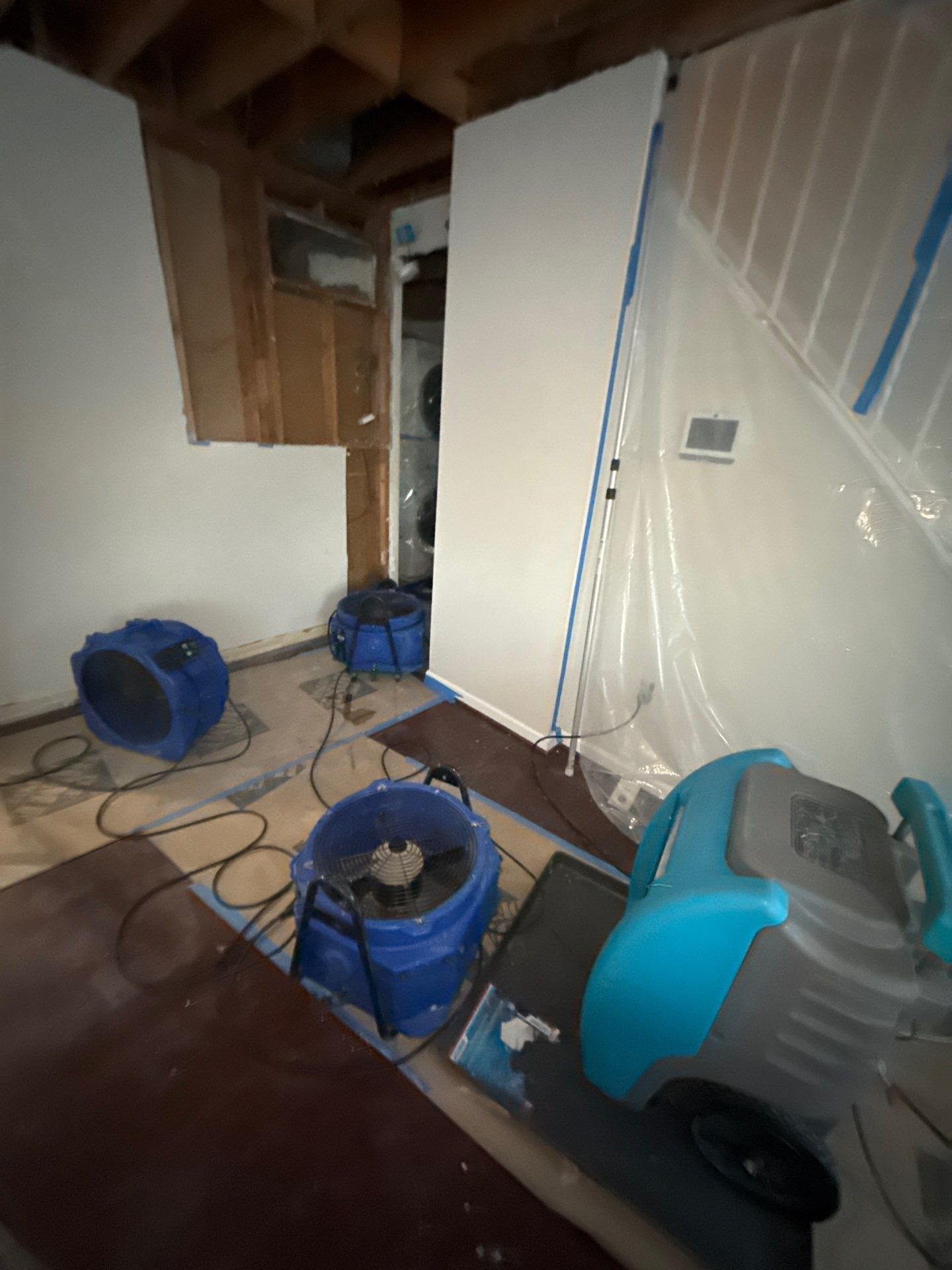
We began by isolating the affected rooms with plastic sheeting containment to prevent airborne spore migration during the remediation process. Thermal imaging and moisture meters allowed us to map the full extent of water intrusion beyond what was visible on the surface, confirming elevated humidity levels in the ceiling cavity and wall assemblies. Industrial fans and dehumidifiers were positioned to bring the environment back to dry standard conditions, a necessary step before any material removal could proceed safely.
Once the space was stabilized, we carefully removed compromised ceiling and wall materials, working methodically to minimize dust and debris. The combination of containment, controlled drying, and selective demolition followed the IICRC S520 mold remediation standard, ensuring that hidden reservoirs were addressed rather than simply treating surface symptoms.
The homeowner's satisfaction with the outcome reflects the care taken at each phase, from initial assessment through final clearance of the affected areas.
Reviews from Restoration Doctor customers
I am truly grateful and amazed at the time and effort that was put into the restoration of my flooded basement. The workers were kind and curious. And the prices were very affordable. I would definitely recommend checking with them for any problems associated with flooding restoration.
Frequently asked questions
How does thermal imaging help detect hidden moisture after a leak in an Alexandria home?
Restoration Doctor uses thermal-imaging cameras during moisture inspections to identify temperature differentials behind walls and ceilings that indicate trapped water—critical in Alexandria's older row homes and mid-century construction where leaks can migrate through concealed cavities. The technology maps moisture without invasive demolition, guiding targeted drying and preventing mold colonization in areas standard meters might miss. Combined with direct moisture readings, thermal scans ensure no wet material is left behind after water intrusion.
Why is containment with plastic sheeting necessary during mold remediation?
Restoration Doctor isolates mold-affected areas using polyethylene barriers and negative air pressure to prevent airborne spore migration to clean zones during remediation work. This containment protocol, aligned with IICRC S520 mold standards, is especially important in Alexandria's attached row homes and garden apartments where shared walls and HVAC systems can spread contamination. The barrier stays in place until all affected materials are removed and surfaces are cleaned, protecting the rest of the residence.
What role do dehumidifiers play after water damage leads to mold growth?
Dehumidifiers extract moisture from the air and building materials, lowering relative humidity below the threshold mold requires to colonize—a key step in Restoration Doctor's structural drying process following water intrusion in Alexandria. In the Mid-Atlantic's humid climate, ambient conditions can slow natural evaporation, so commercial-grade dehumidification accelerates drying of framing, drywall, and insulation to prevent further fungal growth. Continuous humidity monitoring ensures conditions reach safe levels before containment is removed.
Does ceiling and wall material always need to be removed after mold develops?
Restoration Doctor removes porous materials—drywall, insulation, and compromised framing—when mold has colonized them, as these substrates cannot be reliably cleaned in place. Non-porous surfaces like metal studs or sealed concrete may be treated and retained if contamination is surface-level, but in this Alexandria job the ceiling and wall cavities required selective demolition to eliminate hidden growth. The extent of removal depends on how far moisture traveled and how long conditions favored fungal expansion before discovery.
How long does a typical mold remediation project take in Northern Virginia?
Timeline varies with the size of the affected area, the materials involved, and drying conditions—Restoration Doctor's Alexandria projects involving containment, selective demolition, and structural drying typically span several days to a week. Older housing stock common to the city, with plaster-and-lath or multi-layer ceiling assemblies, may extend drying time compared to modern drywall construction. Moisture levels and air quality are verified at each stage before containment is released and reconstruction begins.
Explore more restoration work
All projects in Alexandria · Mold Remediation in Alexandria
Water, fire, or mold damage in Alexandria?
Restoration Doctor responds 24/7 across Alexandria and Northern Virginia. Free assessment and transparent, insurance-friendly estimates — no obligation.
See our Mold Remediation services at restorationdoctors.com →