Water damage restoration
About this water damage restoration project
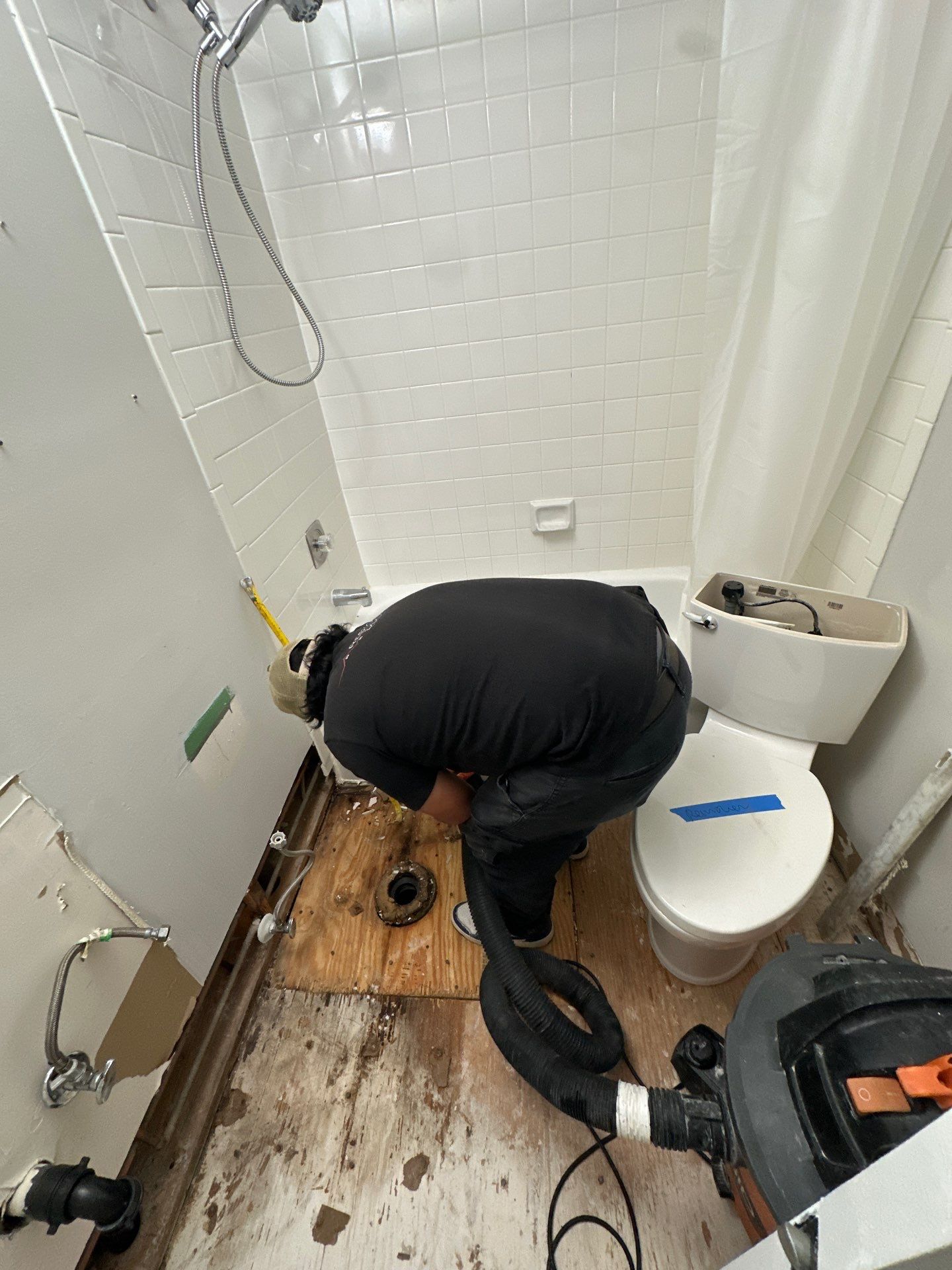
A bathroom leak at a Reston property had saturated flooring around the toilet and extended moisture into the subfloor, creating the conditions for secondary mold growth common to Fairfax County's humid Mid-Atlantic climate and the older plumbing found in many of the area's 1960s–1990s planned-community homes. We removed the compromised flooring to expose the full extent of water penetration below the visible surface.
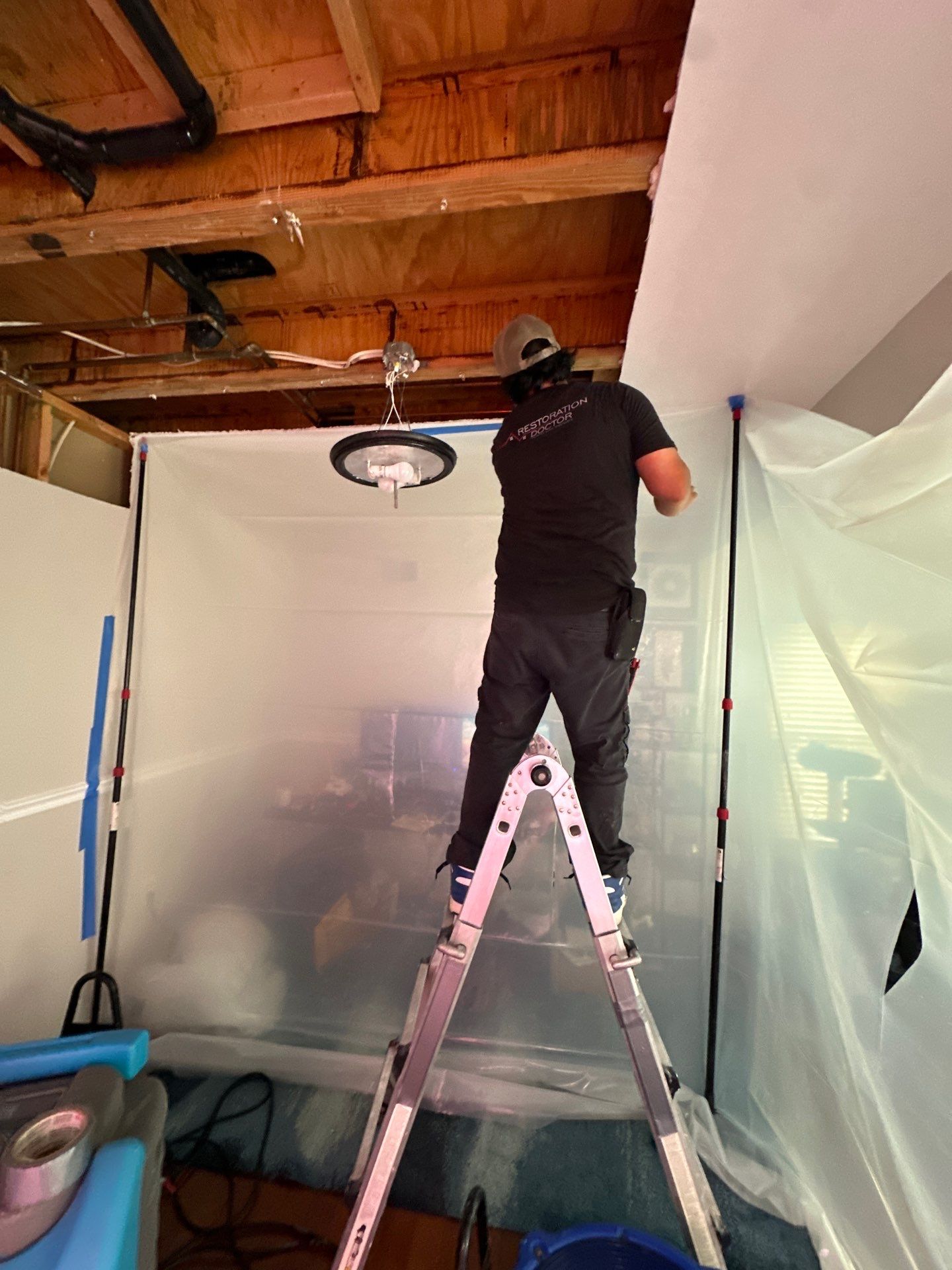
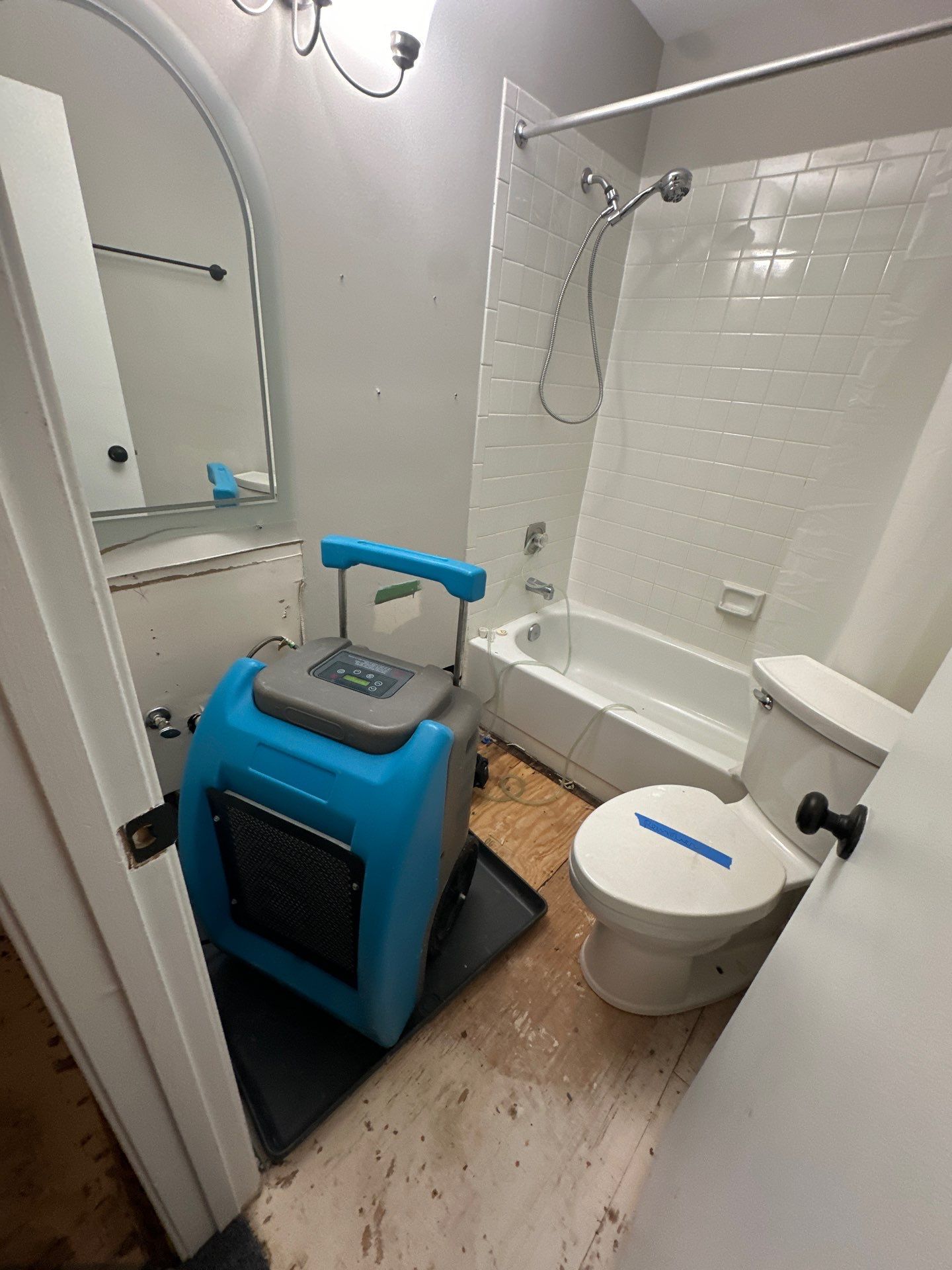
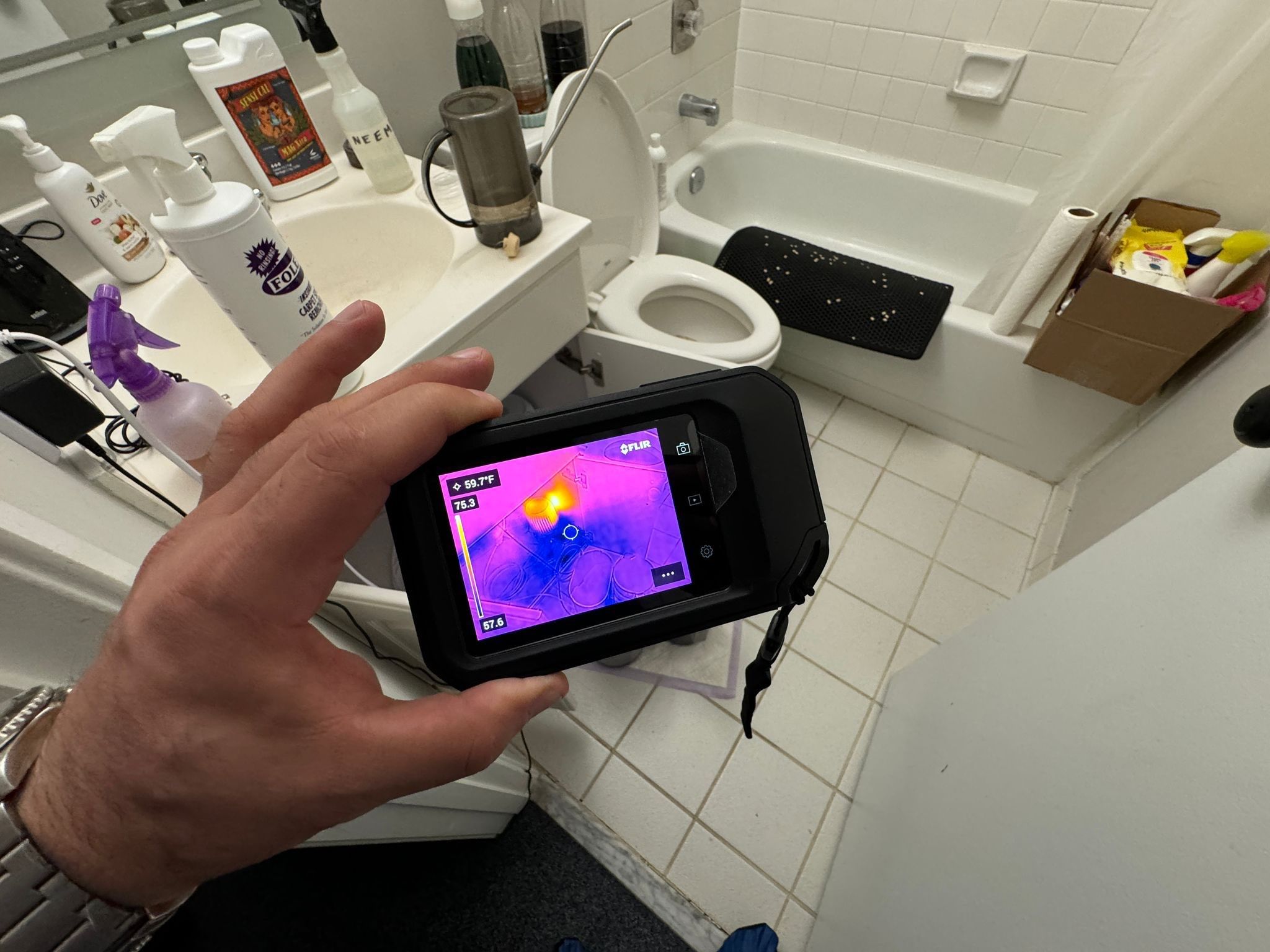
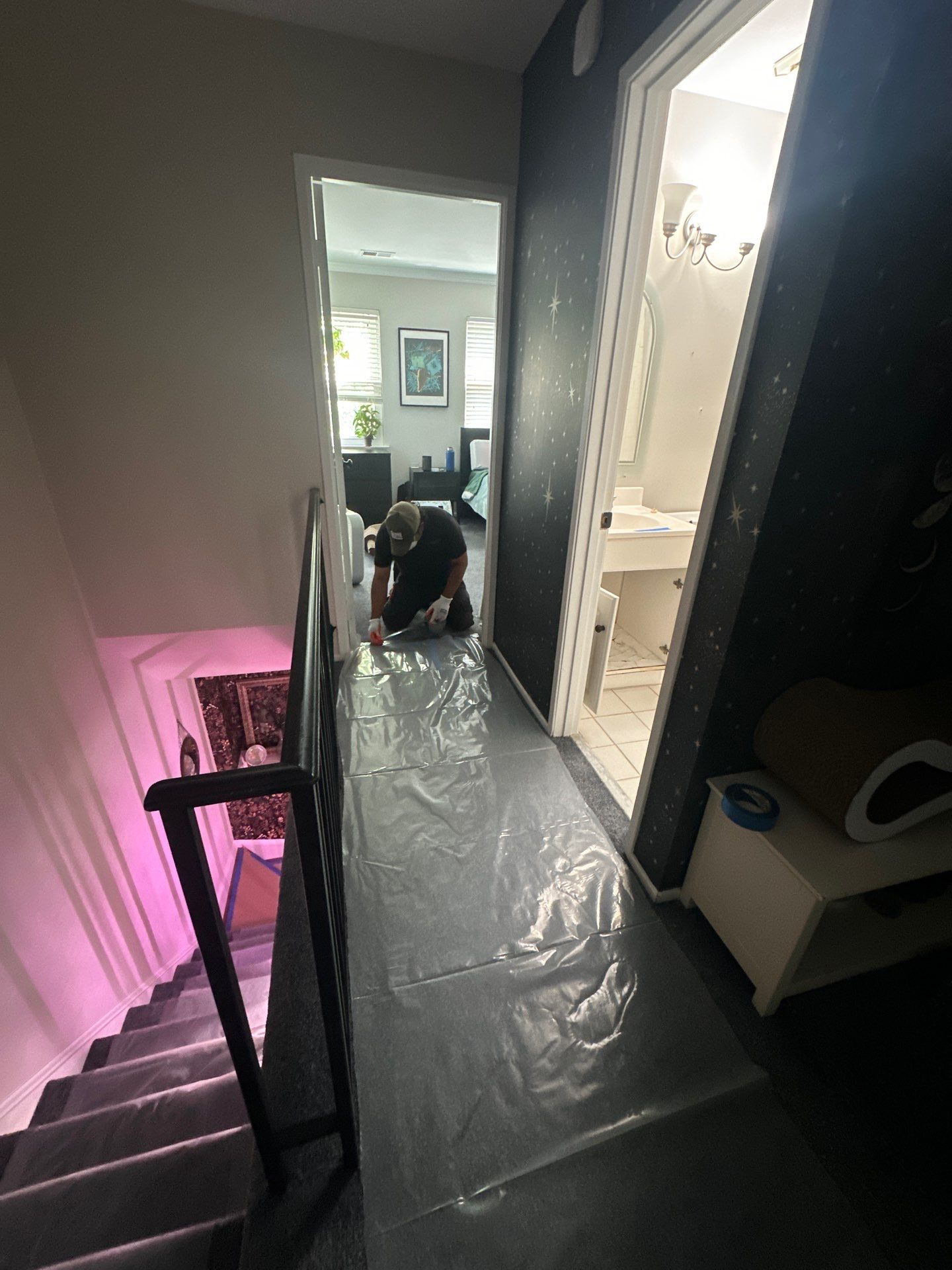
Thermal imaging revealed hidden moisture pockets that standard visual inspection would have missed, guiding placement of air movers and dehumidifiers to target those areas directly. We established protective coverings in the hallway to contain dust and maintain clean access during drying operations. Overhead, the leak had damaged ceiling material directly below the source; we treated this area with antimicrobial application to arrest mold colonization, then monitored moisture readings through the drying cycle to confirm levels had returned to normal before closing the project.
The scope followed IICRC S500 water-damage protocols, ensuring both the visible damage and the concealed moisture were addressed in sequence. The homeowner's review reflected satisfaction with the thoroughness of the work and the care taken to protect unaffected areas during the process.
Frequently asked questions
How does thermal imaging help find hidden moisture after a bathroom water leak in Reston?
Restoration Doctor uses thermal-imaging cameras to detect temperature differentials that reveal moisture trapped behind walls, under flooring, and in ceiling cavities—areas visual inspection alone would miss. In this Reston bathroom restoration, thermal imaging confirmed moisture had migrated beyond the visible damage around the toilet, guiding our placement of air movers and dehumidifiers to dry the subfloor and framing completely. This technology prevents hidden pockets from feeding mold growth weeks after the visible repairs are finished.
Why did you remove the flooring around the toilet instead of just drying the surface?
Water that pools around a toilet base typically penetrates the flooring material and saturates the subfloor beneath, where surface drying cannot reach it. Restoration Doctor removed the damaged flooring in this Reston property to expose the wet subfloor, allowing us to clean contamination from the leak and position drying equipment directly on the affected wood. Leaving compromised flooring in place would have trapped moisture and created ideal conditions for mold colonization in Fairfax County's humid summer climate.
What did the ceiling damage indicate, and how do you prevent mold after a leak like this?
Ceiling staining below a bathroom typically means water migrated through the floor assembly into the space below, saturating insulation and drywall. After drying the structure in this Reston home, Restoration Doctor treated the affected ceiling area with antimicrobial agents and monitored moisture readings until they returned to dry standard, following IICRC S520 protocols. Hot, humid Mid-Atlantic conditions make thorough drying and post-treatment essential to prevent mold from establishing in porous materials that held moisture.
How long does water damage restoration take for a bathroom leak in Reston, VA?
Drying time depends on the extent of saturation, the materials affected, and ambient humidity, but most bathroom water losses in Fairfax County's planned-community homes require three to five days of monitored dehumidification and air movement. Restoration Doctor tracks moisture levels daily with meters, adjusting equipment as needed, and does not begin repairs until readings confirm the structure has returned to dry standard. Jobs involving subfloor exposure and ceiling treatment, like this Reston restoration, often fall in that typical range.
Do you protect the rest of the house during water damage work in a townhome?
Yes—Restoration Doctor placed protective coverings in the hallway during this Reston job to contain dust and debris from the flooring removal and to prevent tracking moisture or contaminants into adjacent living areas. In townhomes and attached housing common to Fairfax County's 1960s–1990s planned communities, containment measures keep the work zone isolated while air movers and dehumidifiers run, maintaining cleanliness and minimizing disruption to the household.
Explore more restoration work
All projects in Reston · Water Damage Restoration in Reston
Water, fire, or mold damage in Reston?
Restoration Doctor responds 24/7 across Reston and Northern Virginia. Free assessment and transparent, insurance-friendly estimates — no obligation.
See our Water Damage Restoration services at restorationdoctors.com →