Comprehensive Water Damage Restoration and Containment
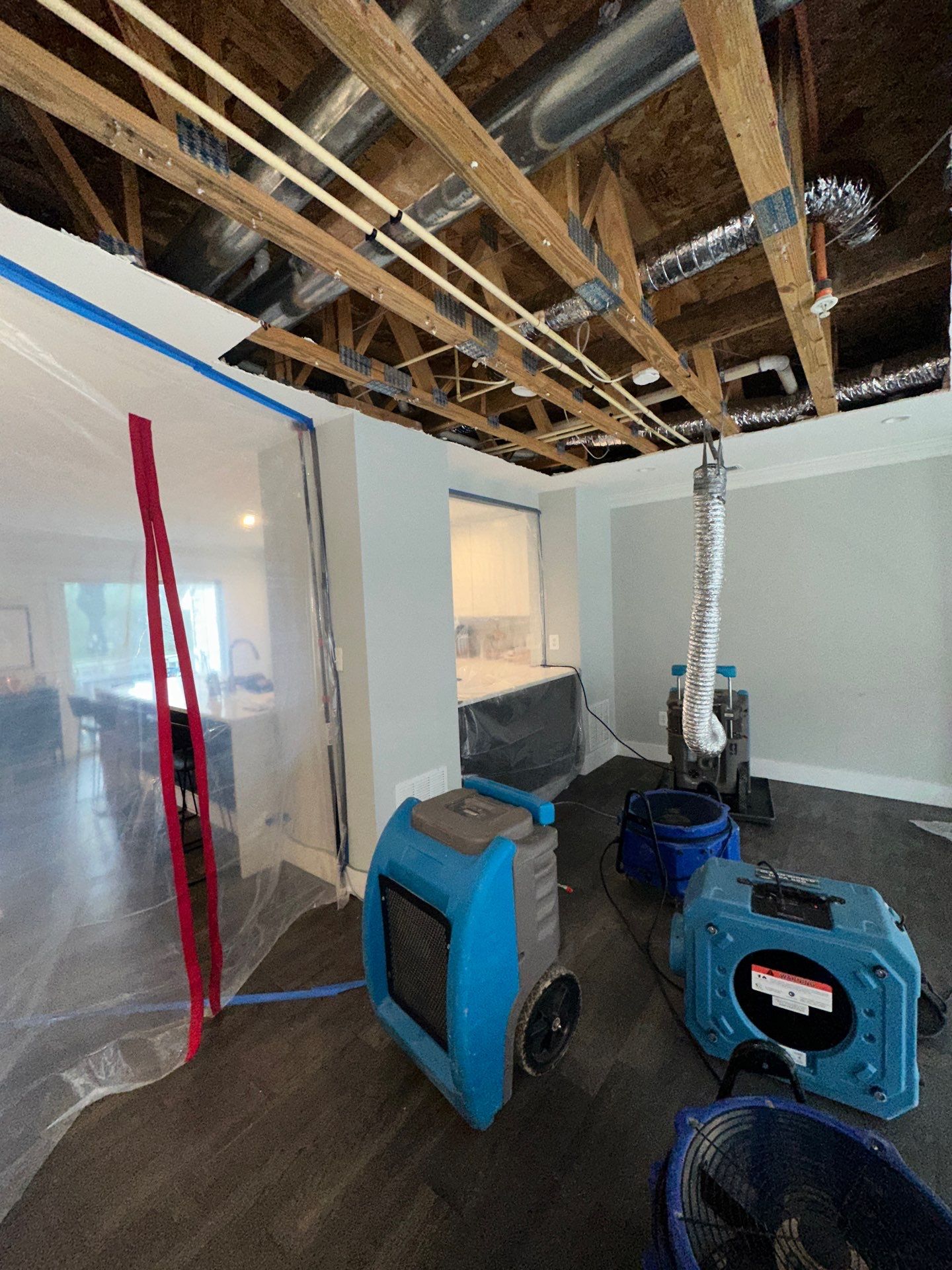
About this water damage restoration project
A leaking water hose in this Reston home produced the kind of cascading moisture intrusion common to Fairfax County's older planned-community housing stock, where finished basements and shared walls can spread damage quickly if not isolated. The homeowner's prompt call allowed us to limit the affected footprint before humidity levels rose to a point where mold colonization became likely in the Mid-Atlantic summer climate.
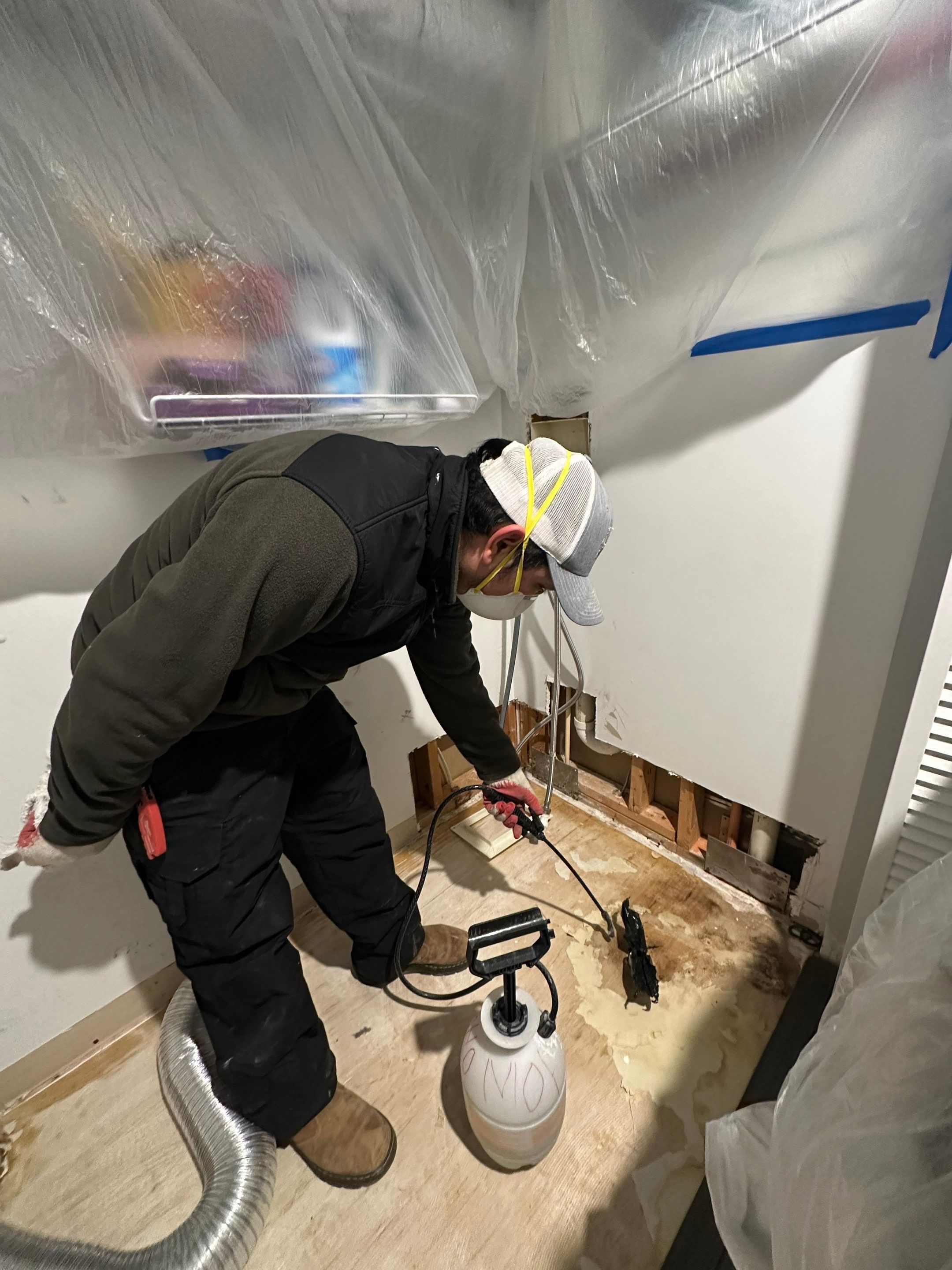
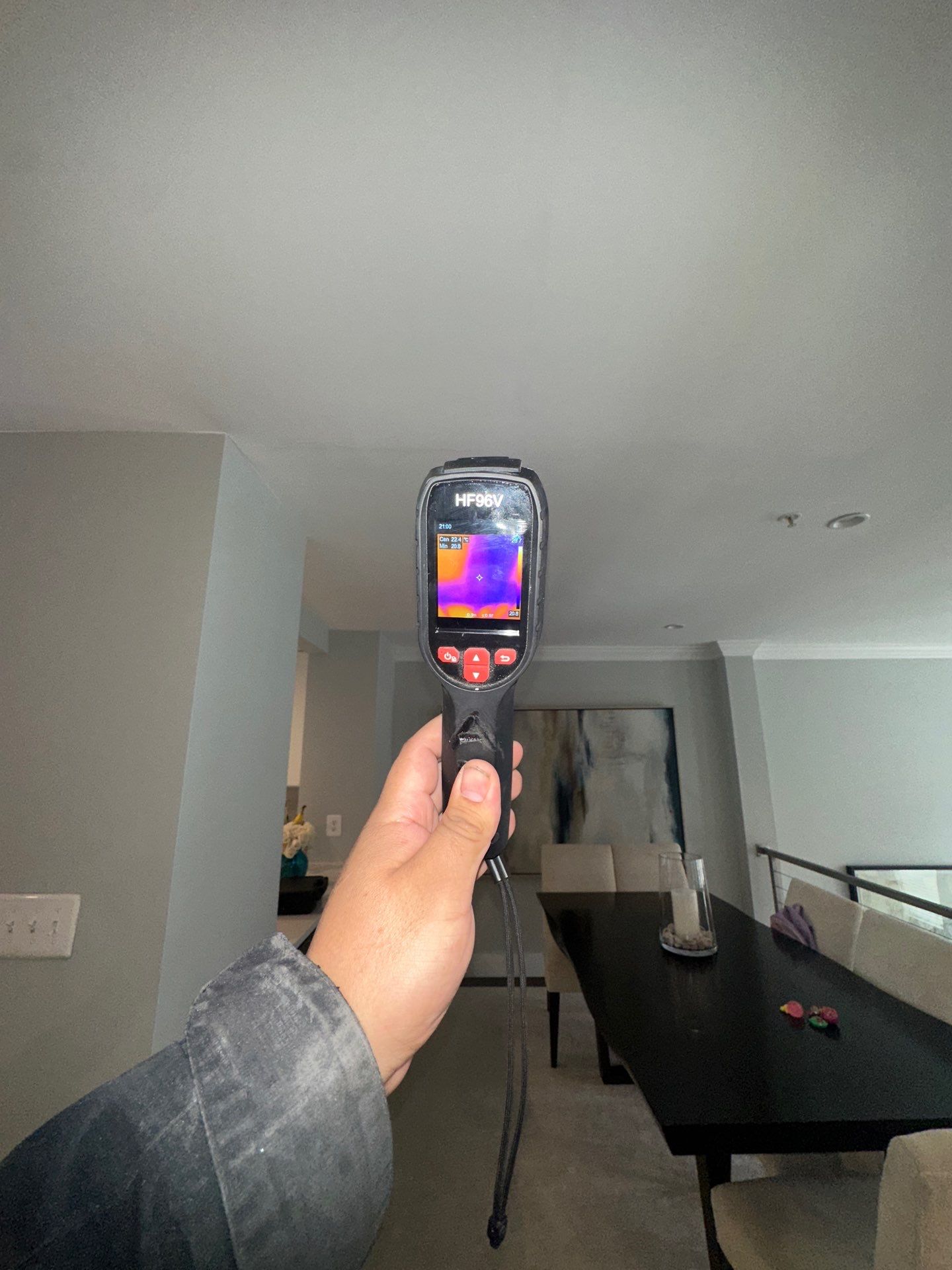
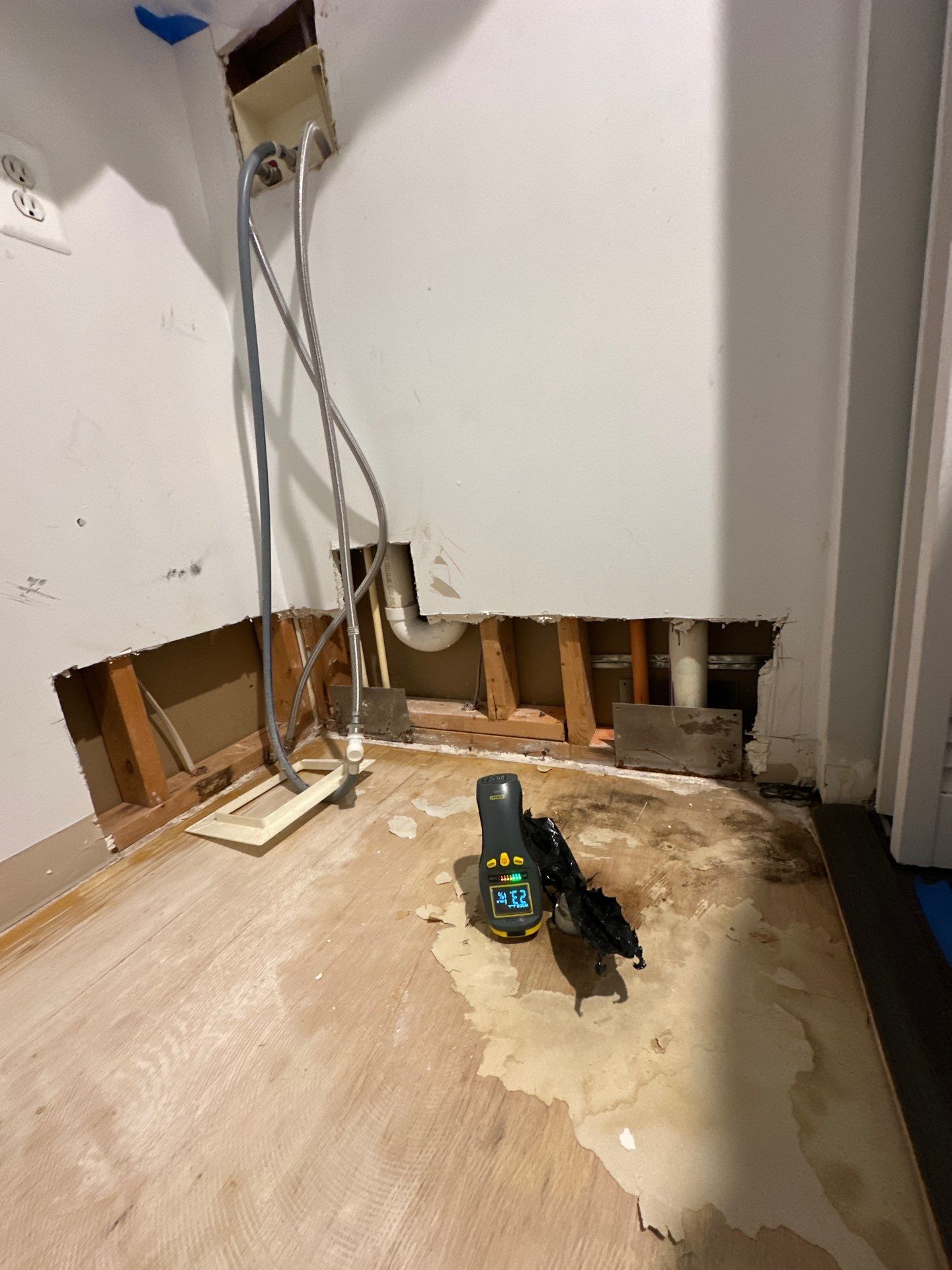
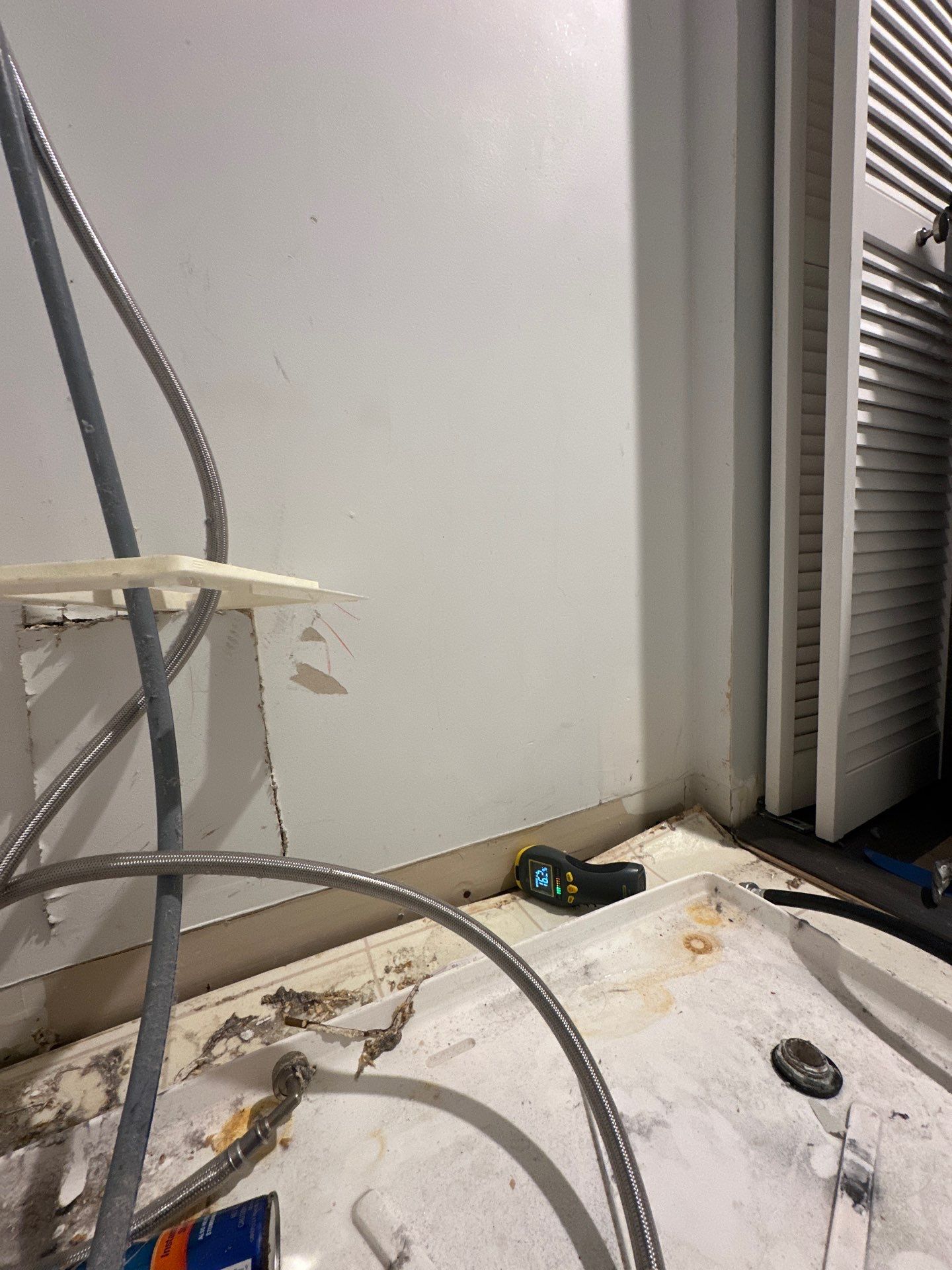
We began with thermal imaging to map the full extent of moisture migration through walls and flooring—a critical step in multi-area losses where visible water staining rarely tells the complete story. Once the affected zones were identified, we erected plastic containment barriers to isolate the wet areas from the rest of the home, preventing cross-contamination and controlling airflow. Air movers and a dehumidifier were positioned according to IICRC S500 drying protocols, with moisture readings taken at regular intervals to track progress and confirm structural materials were returning to dry standard.
After drying was verified complete, we sanitized all impacted surfaces to address any microbial activity introduced by the standing water. The homeowner noted their satisfaction with both the thoroughness of the process and the care taken to protect unaffected spaces during the work. The controlled approach—containment, monitored drying, and final sanitization—restored the home to a safe, habitable condition without the need for speculative demolition.
Reviews from Restoration Doctor customers
This business is top tier in water damage restoration service. They have customer service 24/7 to help you when an emergency comes up. There fast and quick to solve all water damage and mold issues. I would highly recommend there business.
Frequently asked questions
Why was thermal imaging used for water damage assessment in this Reston home?
Restoration Doctor used thermal imaging to detect moisture migration that isn't visible to the eye, which is especially important in Fairfax County's planned-community townhomes where water can travel through shared walls and floor assemblies. The camera revealed the full extent of damage from the leaking hose across multiple areas, ensuring our containment and drying equipment targeted every affected zone. This technology prevents hidden moisture from being overlooked in older construction typical of Reston's 1960s–1990s housing stock.
What does a containment barrier do during water restoration?
In this Reston project, Restoration Doctor installed plastic containment barriers to isolate the water-damaged areas from unaffected parts of the home. This prevented airborne moisture and contaminants from spreading during the drying process, protected the homeowner's belongings in adjacent rooms, and allowed our dehumidifiers and air movers to work more efficiently in a controlled environment. Containment is standard practice when damage spans multiple rooms, as it did here.
How does Fairfax County's humid climate affect water damage drying?
Hot, humid Mid-Atlantic summers in Fairfax County make structural drying more challenging because ambient moisture slows evaporation from wet building materials. For this Reston job, Restoration Doctor continuously monitored moisture levels and ran dehumidification equipment alongside air movers to pull humidity out of the air while drying the structure. Without active dehumidification in this climate, residual moisture can linger and create conditions for secondary mold growth.
What does sanitizing after water damage involve?
After structural drying was complete in this Reston home, Restoration Doctor applied EPA-registered antimicrobial agents to all affected surfaces to eliminate bacteria and prevent microbial growth from the contaminated water. Sanitizing is a final step that ensures the restored areas are safe for occupancy, particularly important when water has sat long enough to compromise indoor air quality. The treatment addressed both visible surfaces and porous materials that absorbed moisture.
How long does water damage restoration typically take in a multi-area loss?
Drying time depends on the extent of saturation, the materials affected, and environmental conditions, but a loss like this one in Reston—spanning multiple areas with structural drying and containment—often requires several days of continuous monitoring and equipment operation. Restoration Doctor tracks moisture readings daily until materials return to dry standard, which in Fairfax County's summer humidity can take longer than in drier climates. The timeline prioritizes thorough drying over speed to prevent long-term issues.
Explore more restoration work
All projects in Reston · Water Damage Restoration in Reston
Water, fire, or mold damage in Reston?
Restoration Doctor responds 24/7 across Reston and Northern Virginia. Free assessment and transparent, insurance-friendly estimates — no obligation.
See our Water Damage Restoration services at restorationdoctors.com →