Water Damage Restoration Reston VA
About this mold remediation project
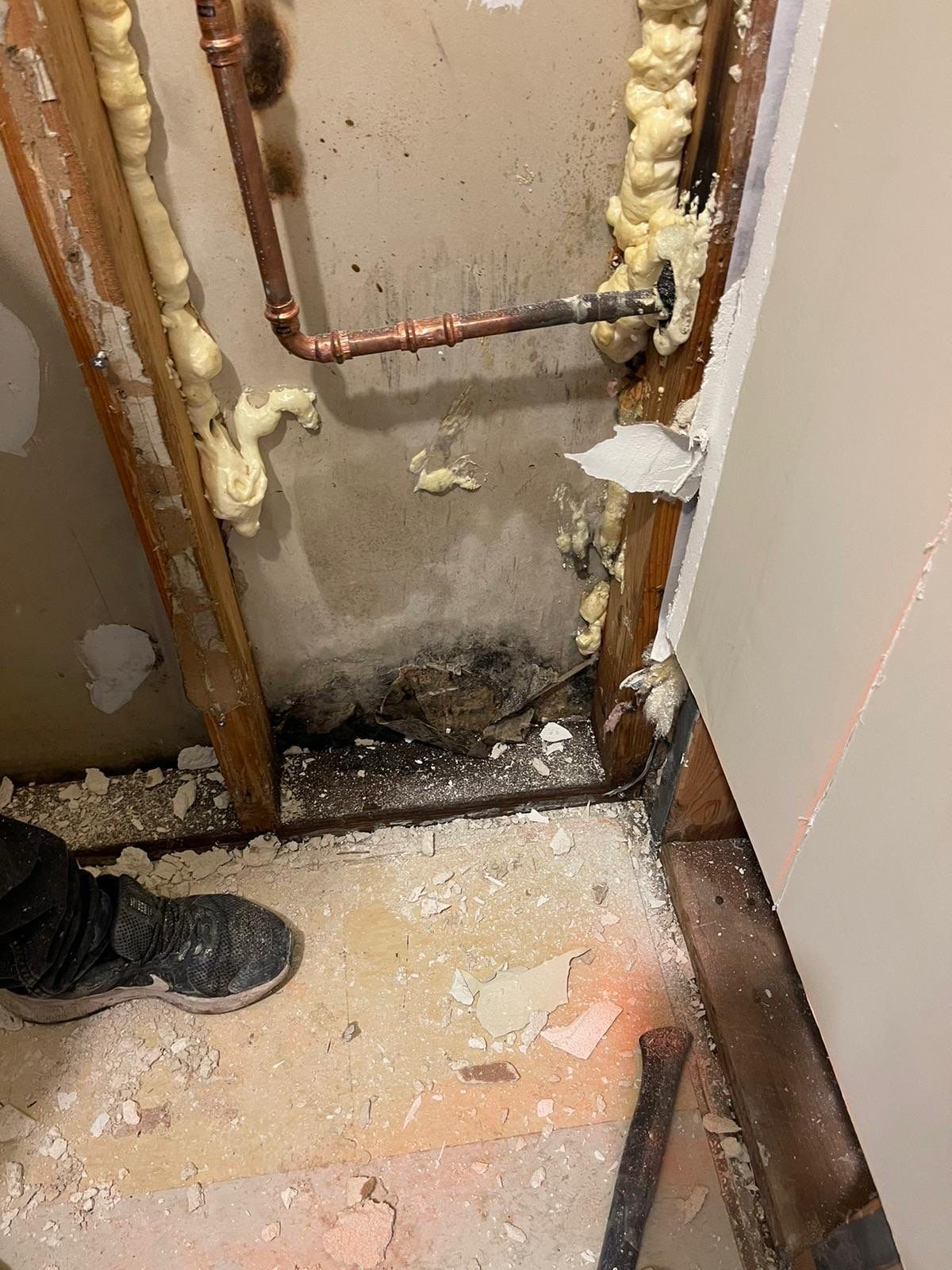
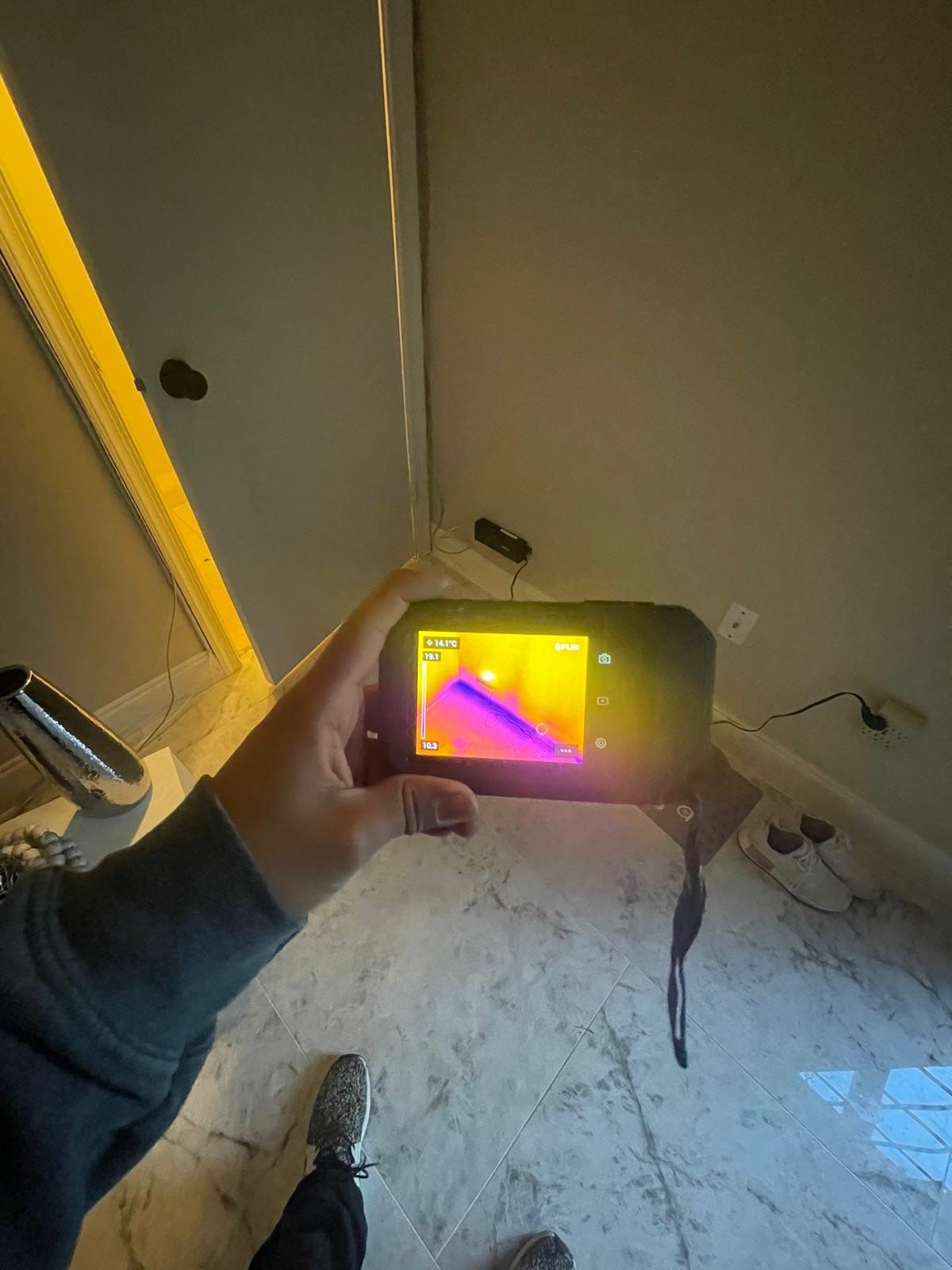
Thermal imaging revealed moisture intrusion behind walls at a Reston property where water damage had created conditions favorable to mold growth—a common risk in Fairfax County's planned communities, where hot, humid Mid-Atlantic summers can accelerate microbial activity when moisture goes unresolved. The inspection uncovered damaged piping concealed within the wall assembly, the source of the intrusion that had allowed mold to establish.
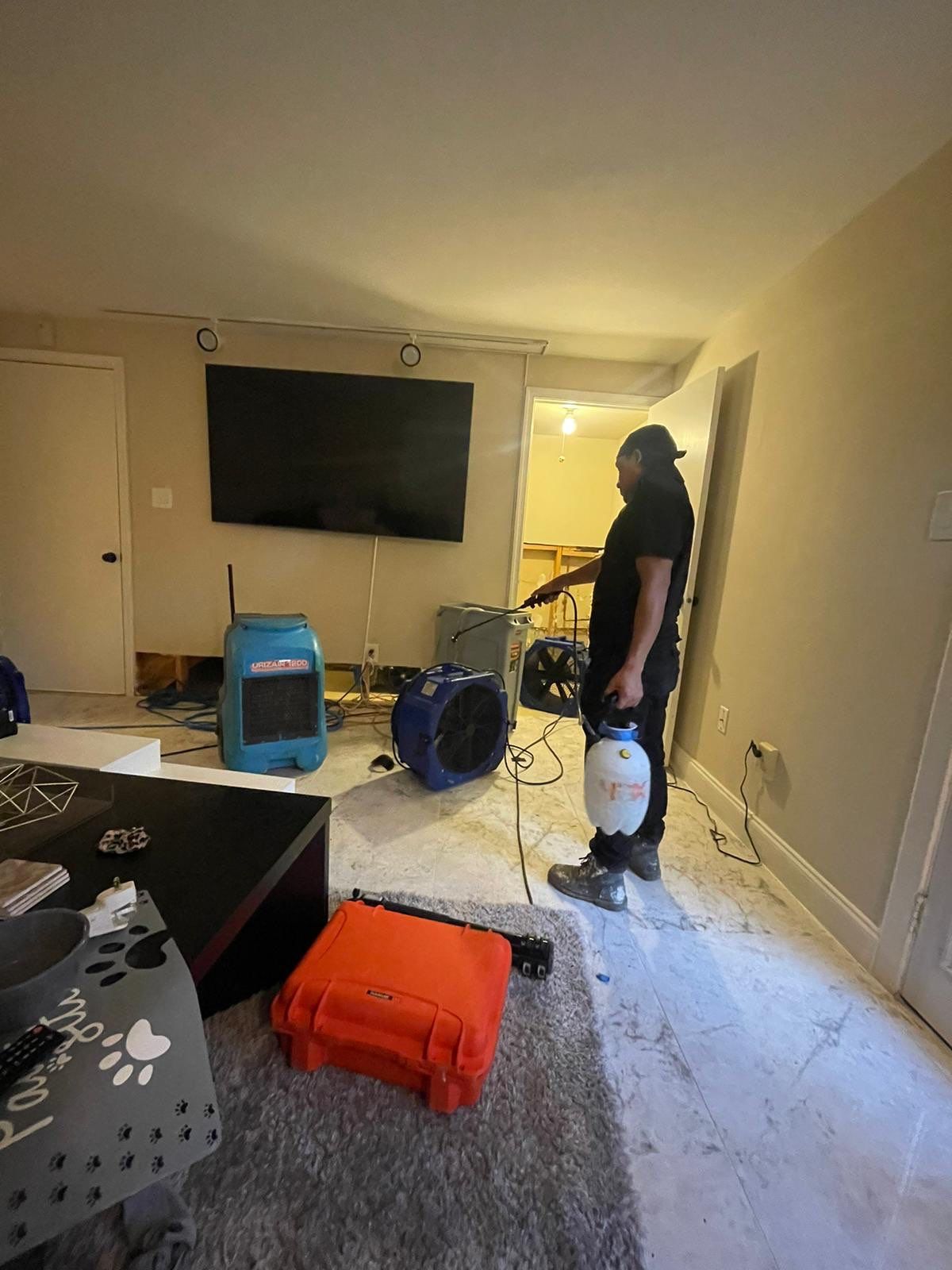
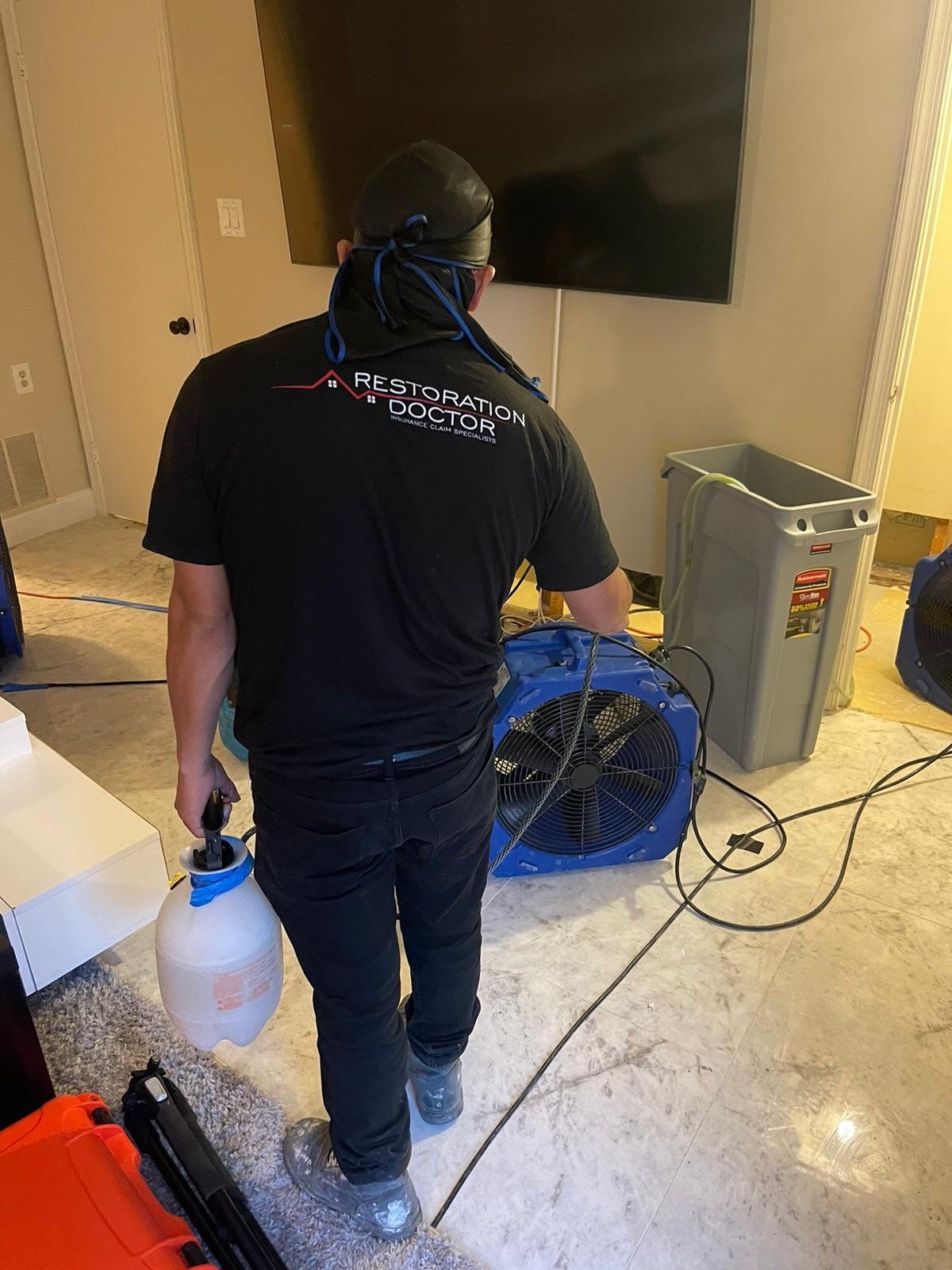
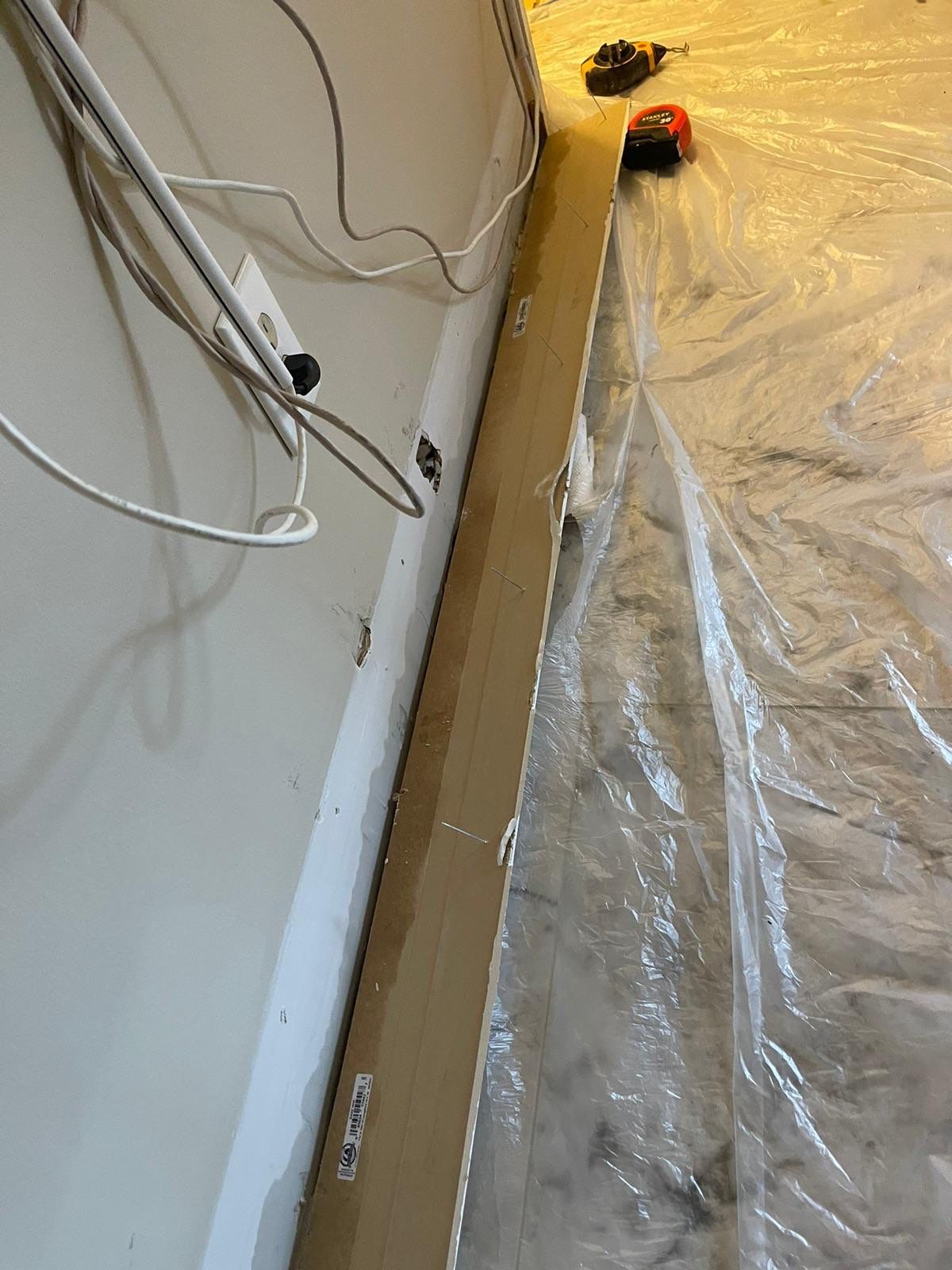
We deployed high-efficiency air movers and dehumidifiers to bring the affected wall cavities and flooring back to dry standard, monitoring the drying process to ensure moisture levels dropped to safe thresholds. Plastic sheeting and floor coverings isolated undamaged sections of the home while the remediation proceeded. Once structural drying was confirmed, an antimicrobial solution was applied to inhibit further mold growth, following IICRC S520 protocols for remediation in residential environments.
The homeowner expressed confidence in the thoroughness of the work, noting the care taken to protect unaffected areas while addressing the hidden damage. The combination of diagnostic thermal imaging and targeted moisture control allowed us to resolve both the immediate water intrusion and the secondary mold growth it had caused, restoring the property to safe, habitable condition.
Frequently asked questions
Why is thermal imaging used to find hidden moisture after water intrusion in Reston homes?
Restoration Doctor uses thermal imaging during mold remediation in Reston because many of Fairfax County's planned-community homes from the 1960s–1990s have concealed plumbing runs behind walls and under flooring. Infrared cameras reveal temperature differentials caused by trapped moisture that visual inspection alone would miss, allowing technicians to locate damaged piping and saturated structural cavities before mold colonizes. This diagnostic step is essential in humid Mid-Atlantic climates where unresolved moisture quickly becomes a mold problem.
What does antimicrobial application do after drying out water-damaged flooring and carpet?
After structural drying is complete, Restoration Doctor applies an EPA-registered antimicrobial solution to surfaces that were wet, including subfloor and wall cavities exposed during carpet and flooring remediation. The treatment inhibits mold spore germination on materials that reached elevated moisture levels, which is critical in Reston's hot, humid summers where conditions favor rapid fungal growth. It is a preventive measure, not a substitute for removing already-colonized material or correcting the moisture source.
How do air movers and dehumidifiers work together to dry walls after a pipe leak is found?
High-velocity air movers create airflow across wet wall surfaces and under removed flooring, evaporating moisture into the air; commercial dehumidifiers then extract that water vapor and lower the ambient humidity so evaporation continues. Restoration Doctor monitors moisture readings in the affected structure daily until materials return to dry standard, a process governed by psychrometric principles and the IICRC S500 water-damage standard. The equipment runs continuously until drying goals are met, typically several days depending on the extent of saturation.
Does homeowners insurance in Fairfax County typically cover mold remediation that follows a sudden pipe failure?
Most standard homeowners policies in Fairfax County cover mold remediation when it results directly from a sudden, accidental water loss like a burst pipe, as was the case in this Reston project. Restoration Doctor works with insurance adjusters to document the moisture intrusion, the hidden plumbing damage discovered via thermal imaging, and the scope of drying and antimicrobial work required. Coverage for long-term seepage or maintenance-related mold is often limited, so prompt reporting and mitigation of the initial water event is important.
Why protect undamaged sections with plastic sheeting during a mold remediation job in a townhome?
In Reston's attached and semi-attached planned-community housing stock, containment barriers prevent cross-contamination of living spaces and limit the spread of airborne mold spores disturbed during flooring removal and structural drying. Restoration Doctor uses plastic sheeting and floor coverings to isolate the work zone, a practice aligned with IICRC S520 mold-remediation guidelines. This is especially important in townhomes where HVAC systems and shared walls can distribute particulates between units if containment is not maintained.
Explore more restoration work
All projects in Reston · Mold Remediation in Reston
Water, fire, or mold damage in Reston?
Restoration Doctor responds 24/7 across Reston and Northern Virginia. Free assessment and transparent, insurance-friendly estimates — no obligation.
See our Mold Remediation services at restorationdoctors.com →