Water and Mold Remediation with Full Structural Restoration
About this mold remediation project
Water intrusion had created a rapidly escalating mold problem in this Reston home, threatening both the structure and indoor air quality. In Fairfax County's planned communities of townhomes and single-family homes built during the 1960s–1990s, hot and humid Mid-Atlantic summers can accelerate mold colonization once moisture finds its way into wall cavities and subfloor assemblies—making swift containment essential.
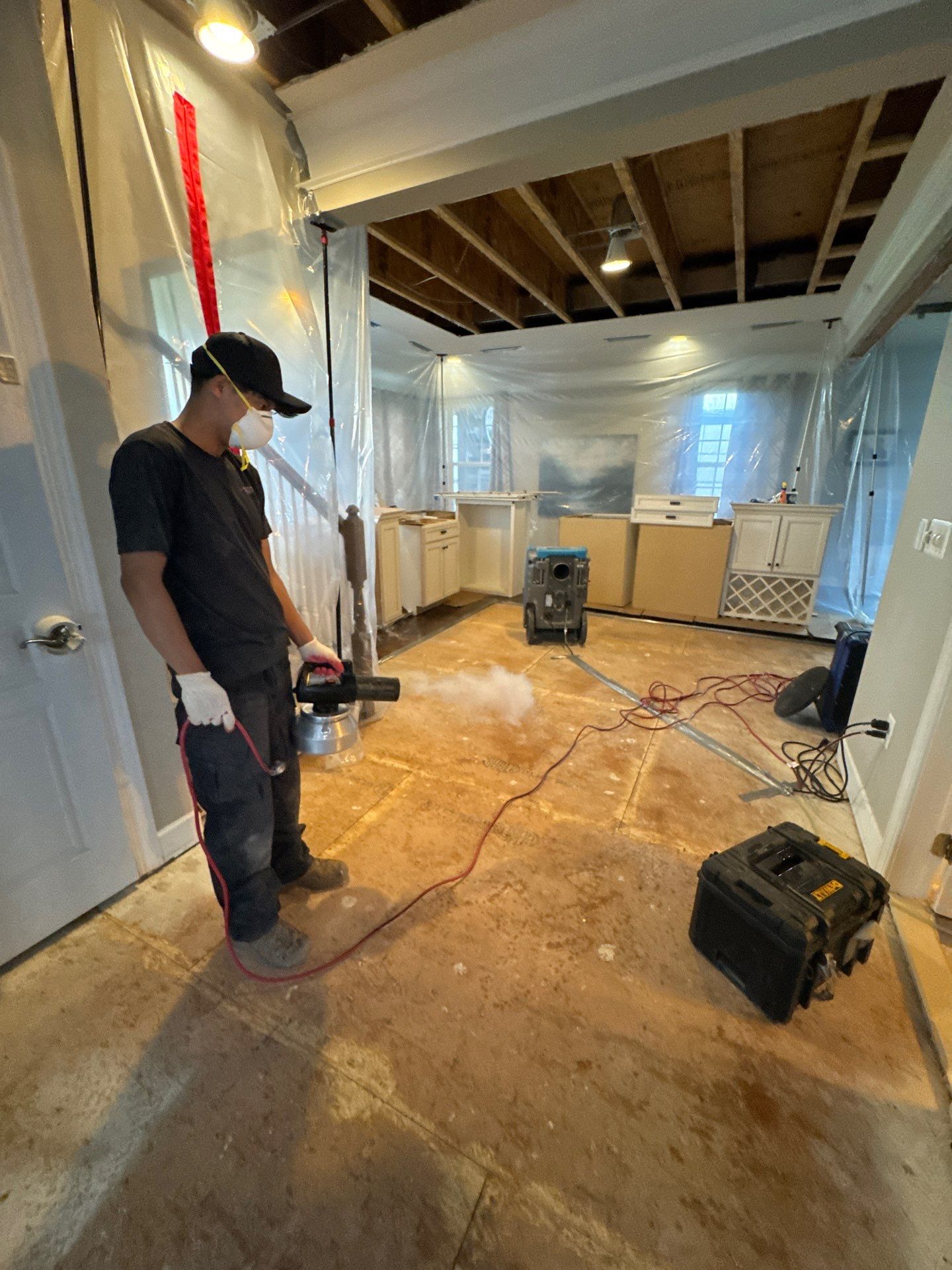
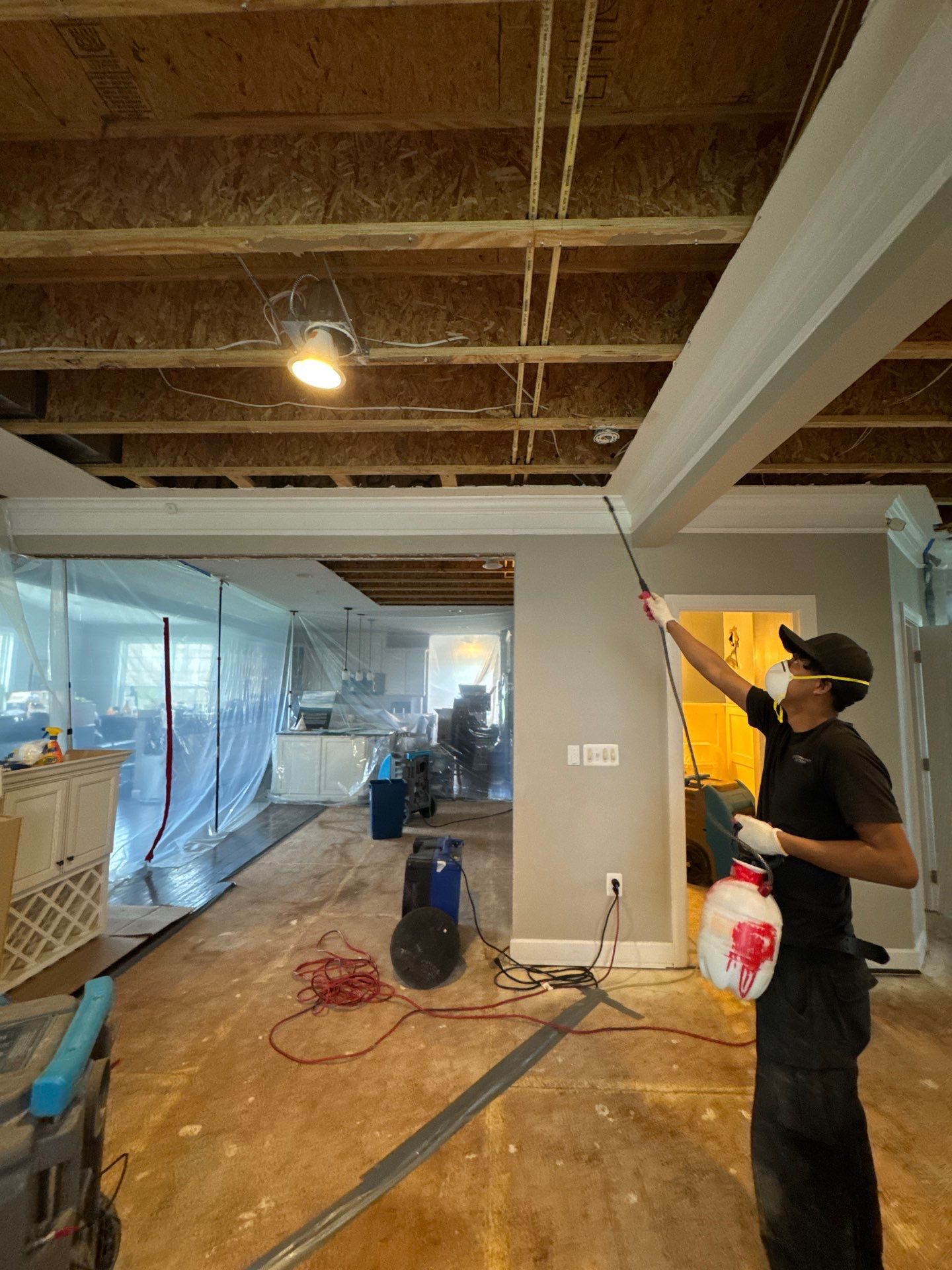
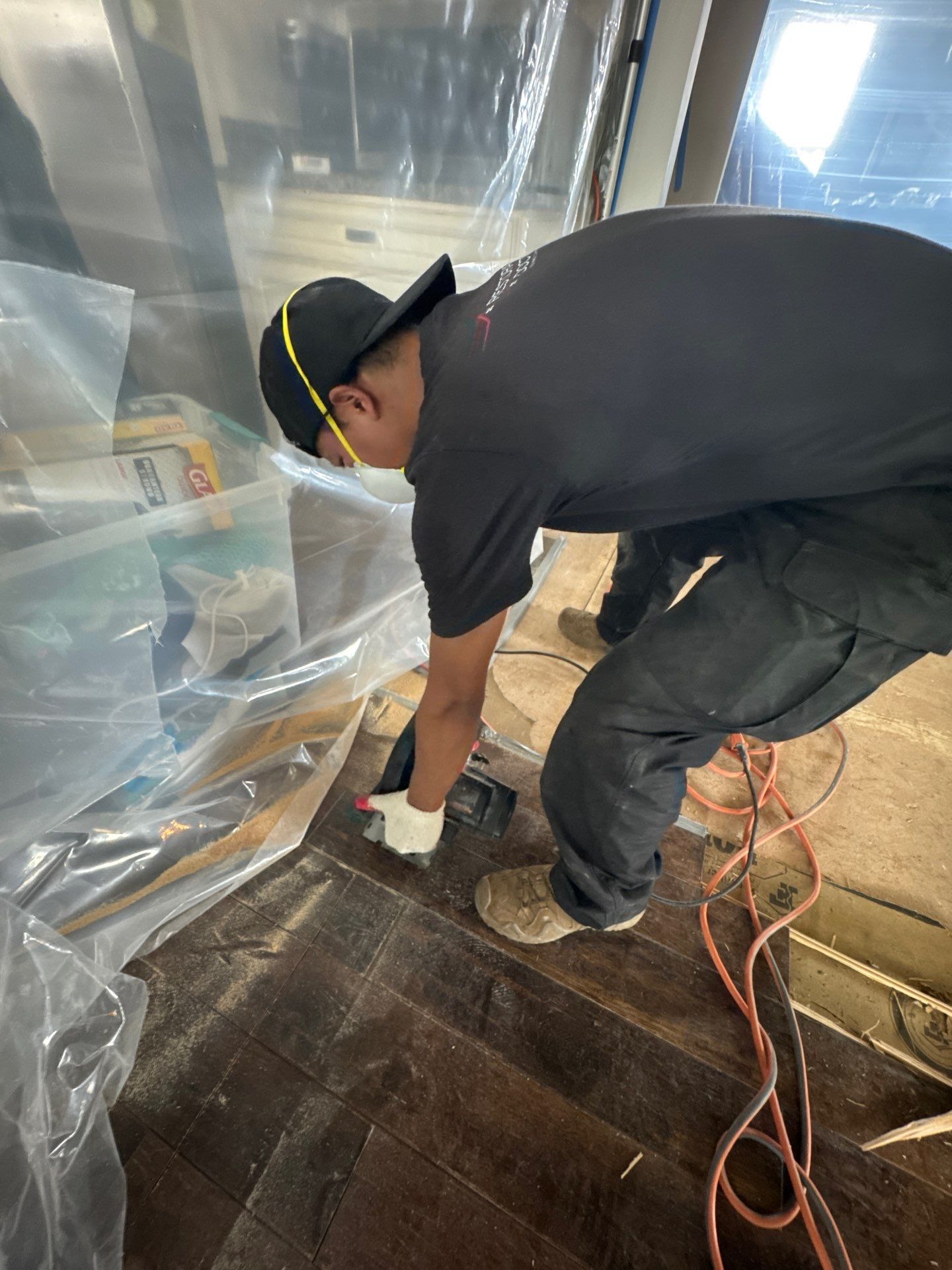
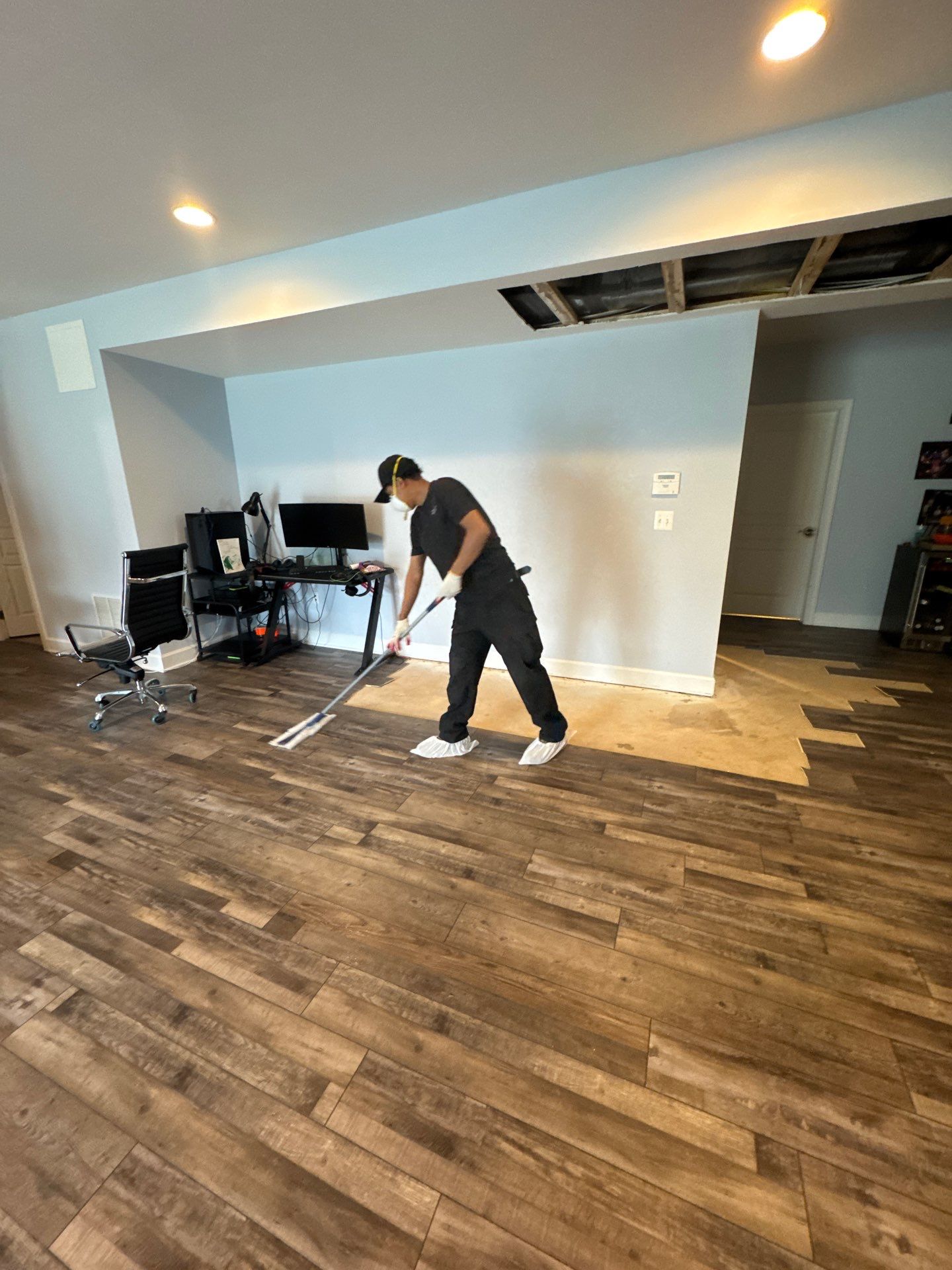
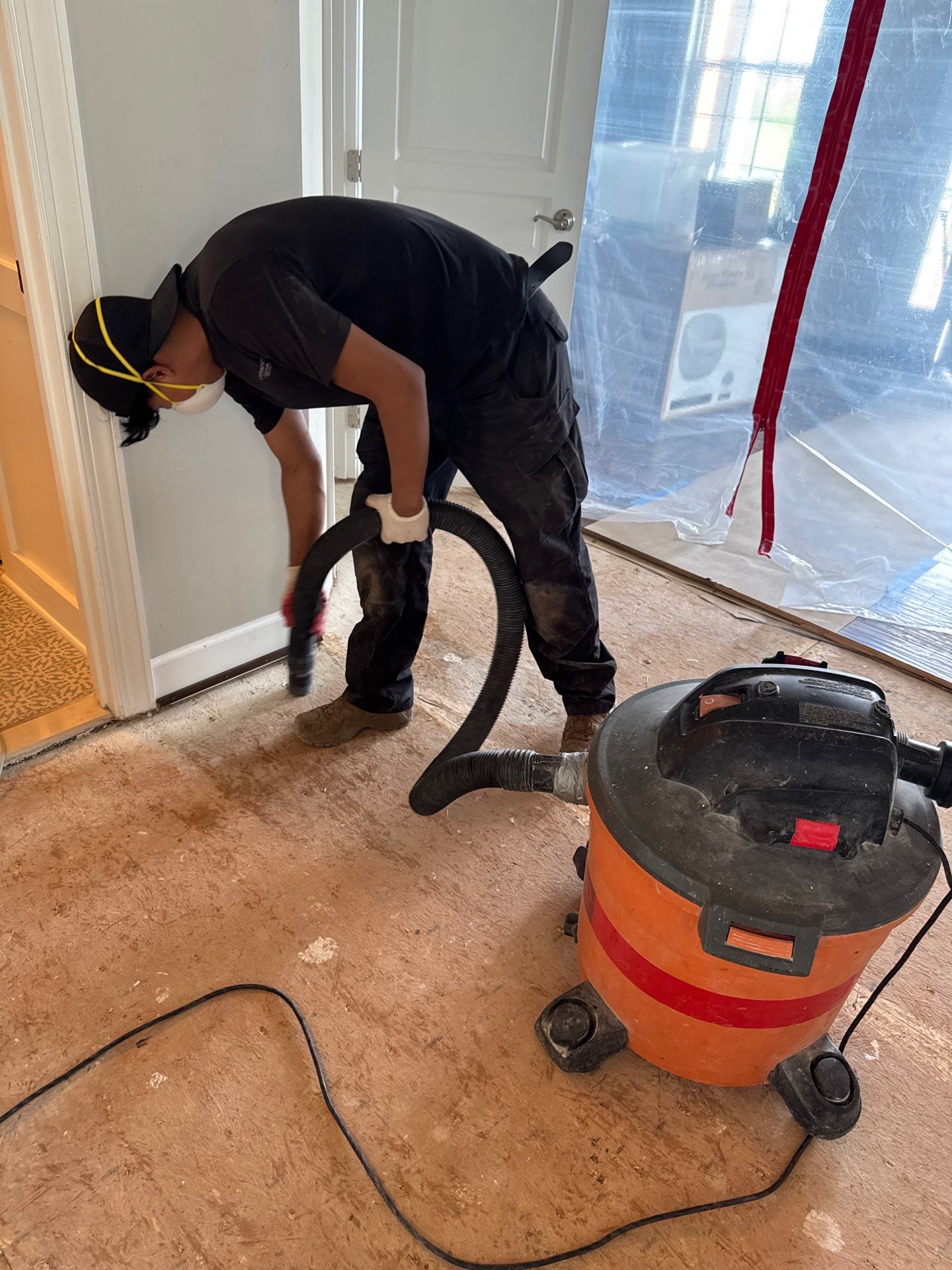
Our technicians established a physical containment barrier as the first step, isolating the affected area to prevent airborne spore migration to clean zones during remediation. High-efficiency particulate air vacuums removed moisture and loose contamination from structural surfaces, while damaged flooring sections were torn out and replaced. Ceiling repairs addressed overhead intrusion points, and commercial-grade dehumidification equipment ran continuously to bring cavity moisture levels down to safe thresholds. The work followed IICRC S520 mold remediation protocols, ensuring that both visible growth and hidden reservoirs were addressed.
After structural drying verified completion, we sanitized all remediated surfaces and deployed fogging equipment to treat remaining airspace, neutralizing residual spore counts. The homeowner noted in their review how thoroughly the team worked to restore both the visible damage and their confidence in the home's air quality—a response that reflects the care taken at each phase of this combined water extraction and mold mitigation project.
Frequently asked questions
Why is mold remediation in Reston townhomes often more complex than in detached homes?
Reston's planned-community townhomes, many built in the 1960s–1990s, share common walls and HVAC pathways that can allow mold spores to migrate between units if containment isn't established immediately. Restoration Doctor sets up physical containment barriers—as we did in this Fairfax County job—to isolate the affected space before extraction and structural drying begin. This prevents cross-contamination and protects neighboring units while we remove damaged flooring, repair ceilings, and complete fogging for full mitigation.
What does a containment barrier actually do during mold remediation after water intrusion?
A containment barrier is a sealed plastic partition with negative air pressure that keeps airborne mold spores confined to the work zone while remediation is underway. In this Reston project, Restoration Doctor erected containment before extracting standing water and removing compromised materials, ensuring spores didn't spread to unaffected rooms during the ceiling repair and flooring replacement. It's a standard control measure under IICRC S520 and critical when water damage has already allowed colonization to begin.
How does Fairfax County's humid summer climate affect mold growth after a water intrusion?
Hot, humid Mid-Atlantic summers create ideal conditions for mold to establish and spread quickly once moisture is present—especially in older construction where ventilation may be limited. Restoration Doctor responds by combining rapid extraction with structural drying equipment and dehumidification to bring indoor humidity down below the threshold mold needs to thrive. In this Reston case, we followed drying with antimicrobial fogging to address any residual spores after the flooring and ceiling repairs were complete.
Can you live in the house while mold remediation and structural drying are happening?
It depends on the extent of containment and the areas affected, but in many cases—including this Reston job—occupants can remain in unaffected parts of the home while Restoration Doctor works behind a sealed barrier. The containment isolates the remediation zone, and negative air machines vent spores outdoors, so daily life can continue safely in other rooms. We coordinate access and timing with homeowners to minimize disruption while ensuring thorough moisture removal and sanitization.
What happens to carpet and flooring that's been exposed to both water and mold?
Porous materials like carpet and pad typically cannot be salvaged once mold has colonized them, so removal and replacement is standard practice. In this Fairfax County project, Restoration Doctor extracted standing water first to stop further wicking, then removed and disposed of affected flooring according to containment protocol before installing new material. Hard flooring may be cleanable if caught early, but carpeting that's been wet for more than a day or two usually requires full remediation to eliminate embedded spores.
Explore more restoration work
All projects in Reston · Mold Remediation in Reston
Water, fire, or mold damage in Reston?
Restoration Doctor responds 24/7 across Reston and Northern Virginia. Free assessment and transparent, insurance-friendly estimates — no obligation.
See our Mold Remediation services at restorationdoctors.com →