Water damage restoration
About this water damage restoration project
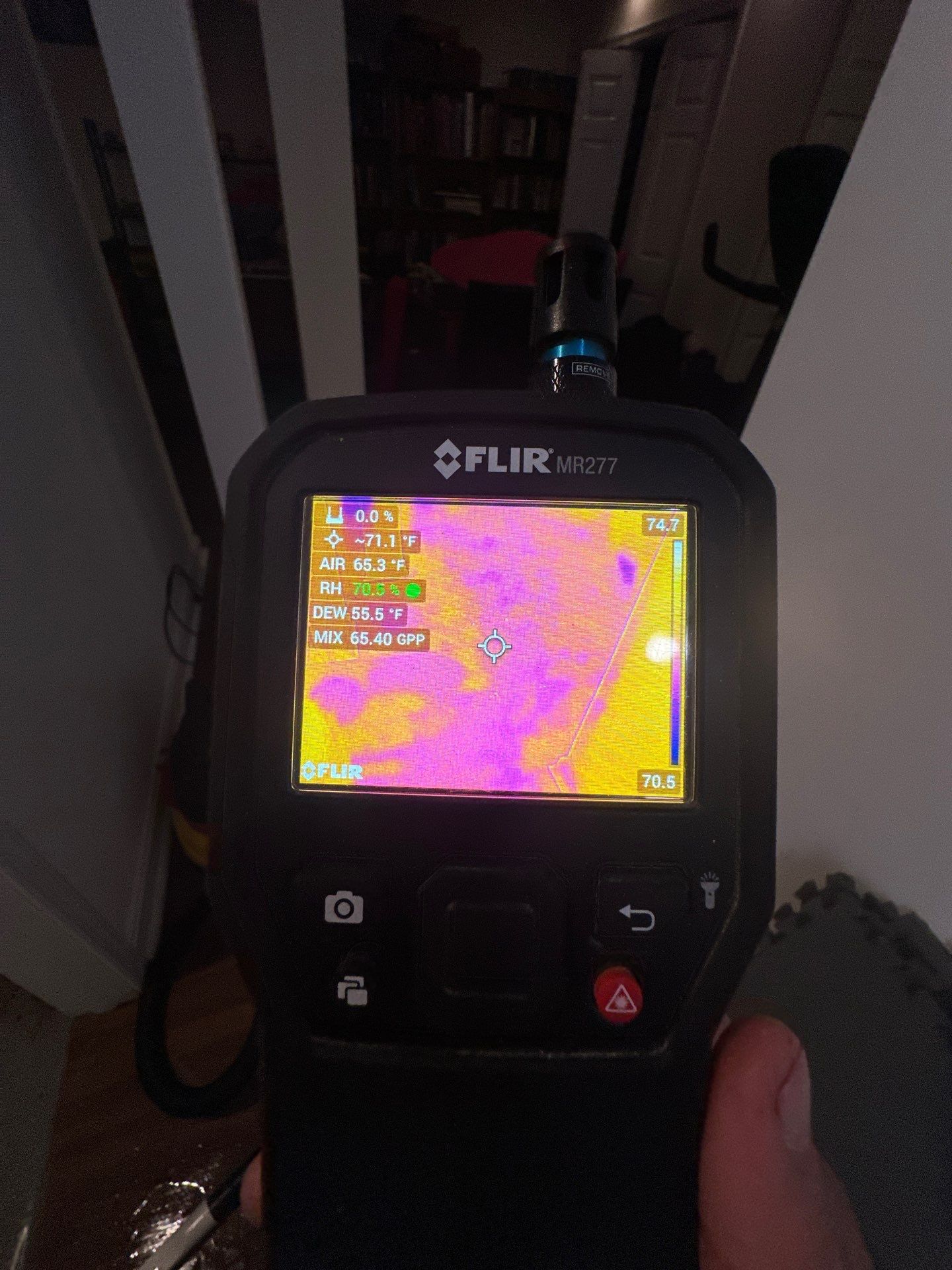
Hidden moisture beneath floors and along walls demanded precise detection before drying could begin. This Potomac property, situated in Montgomery County where established single-family homes on larger lots face hot, humid Mid-Atlantic summers, required thermal imaging to map the full extent of water intrusion that surface inspection alone would have missed.
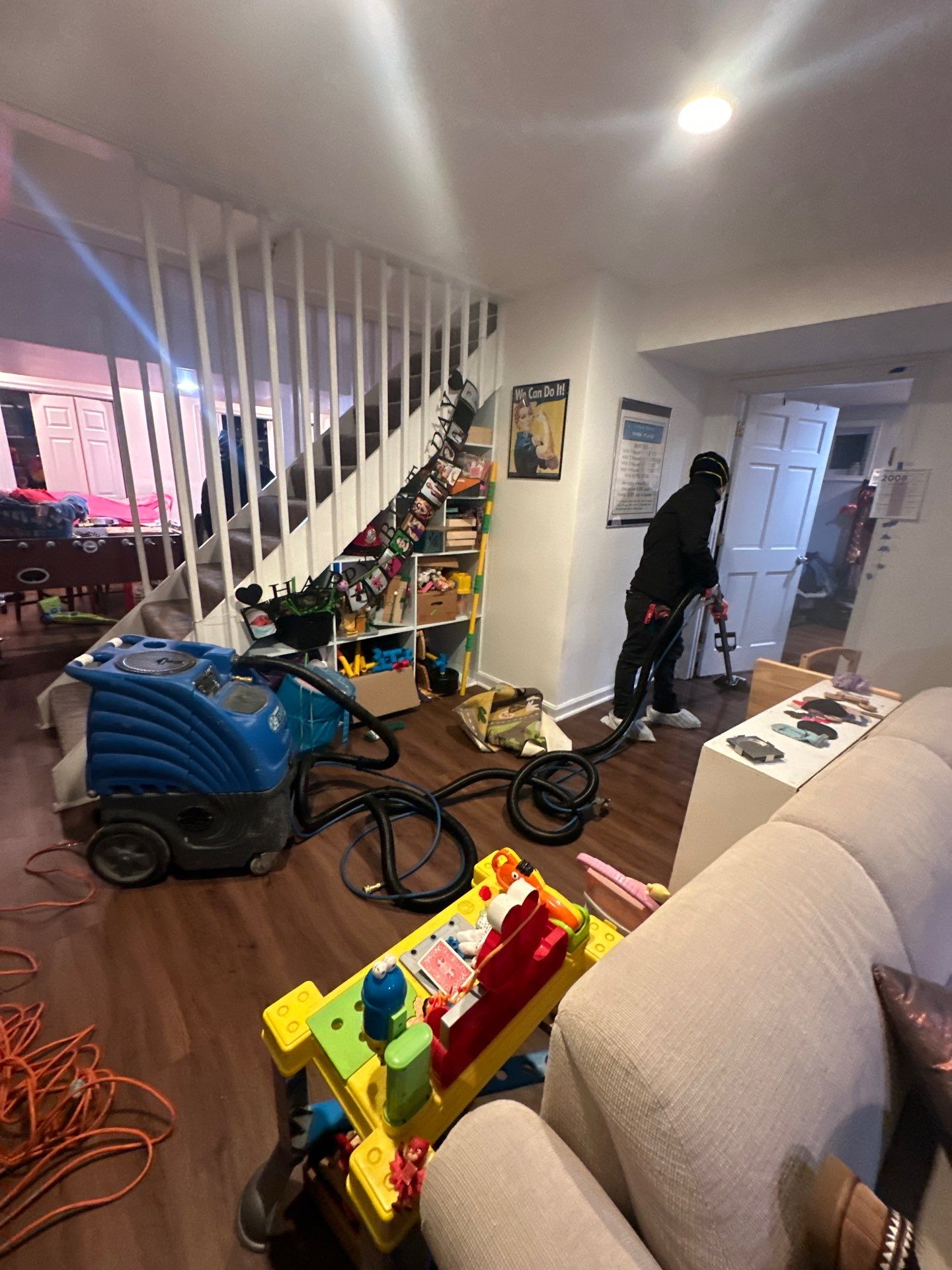
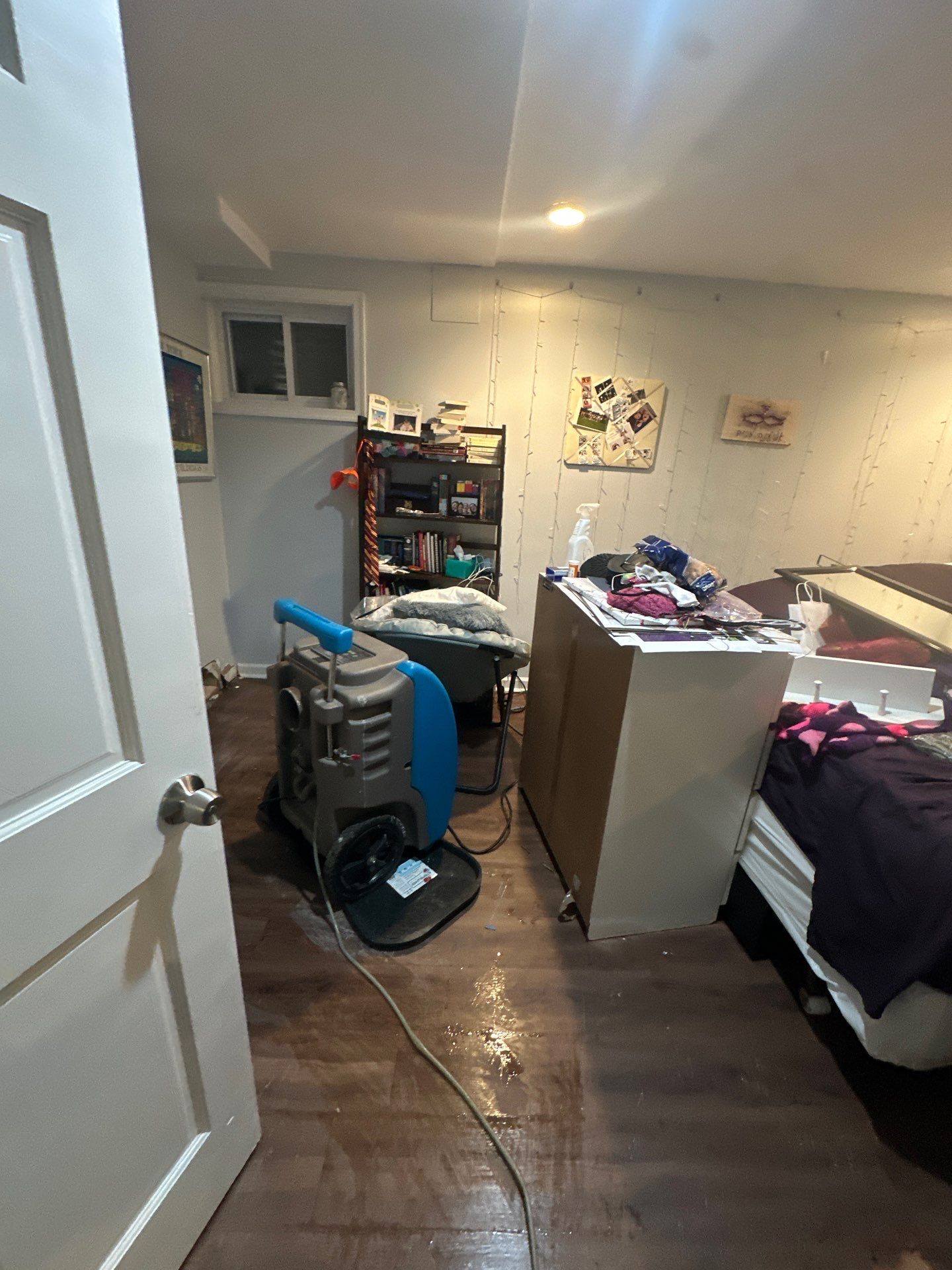
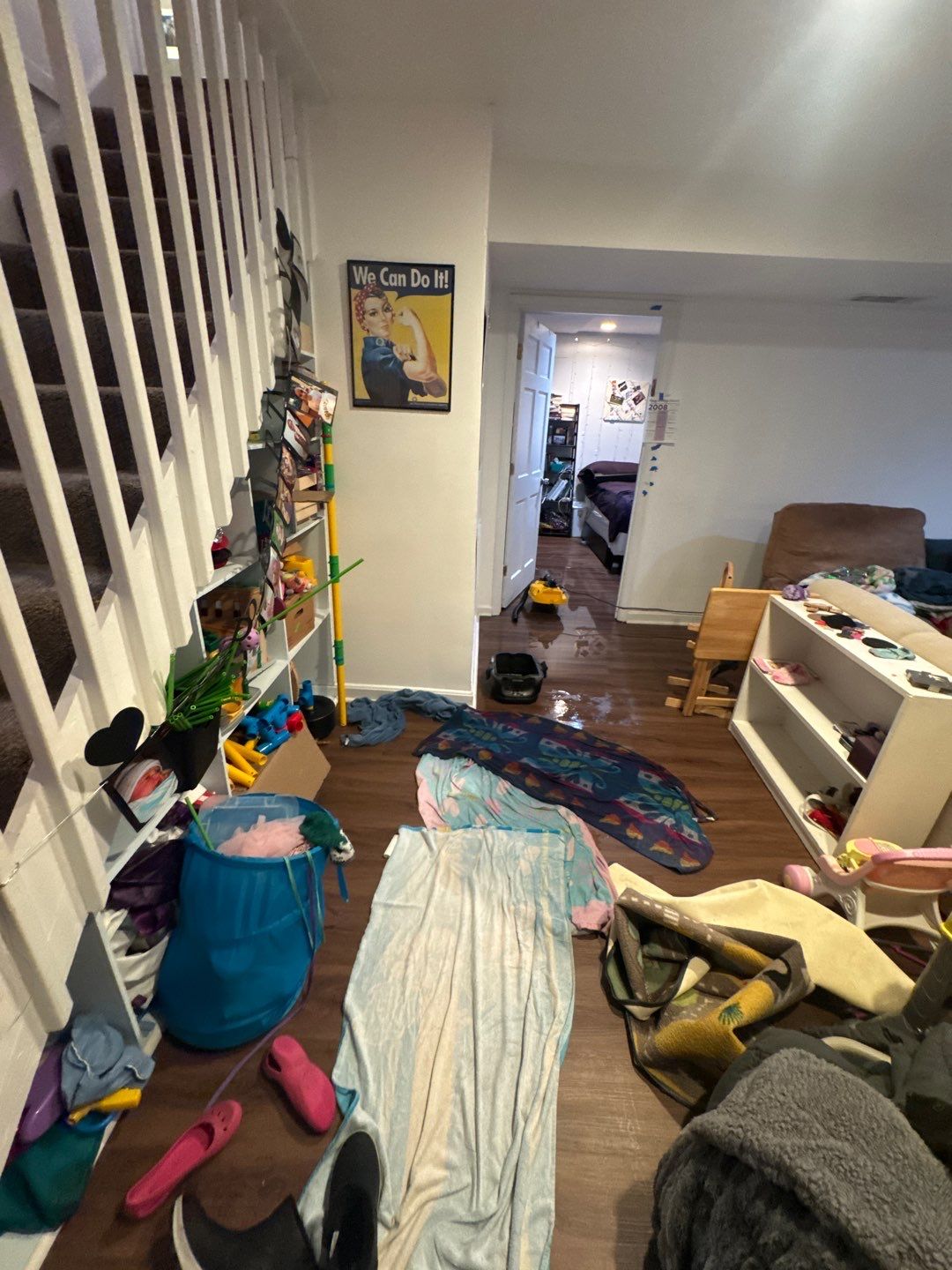
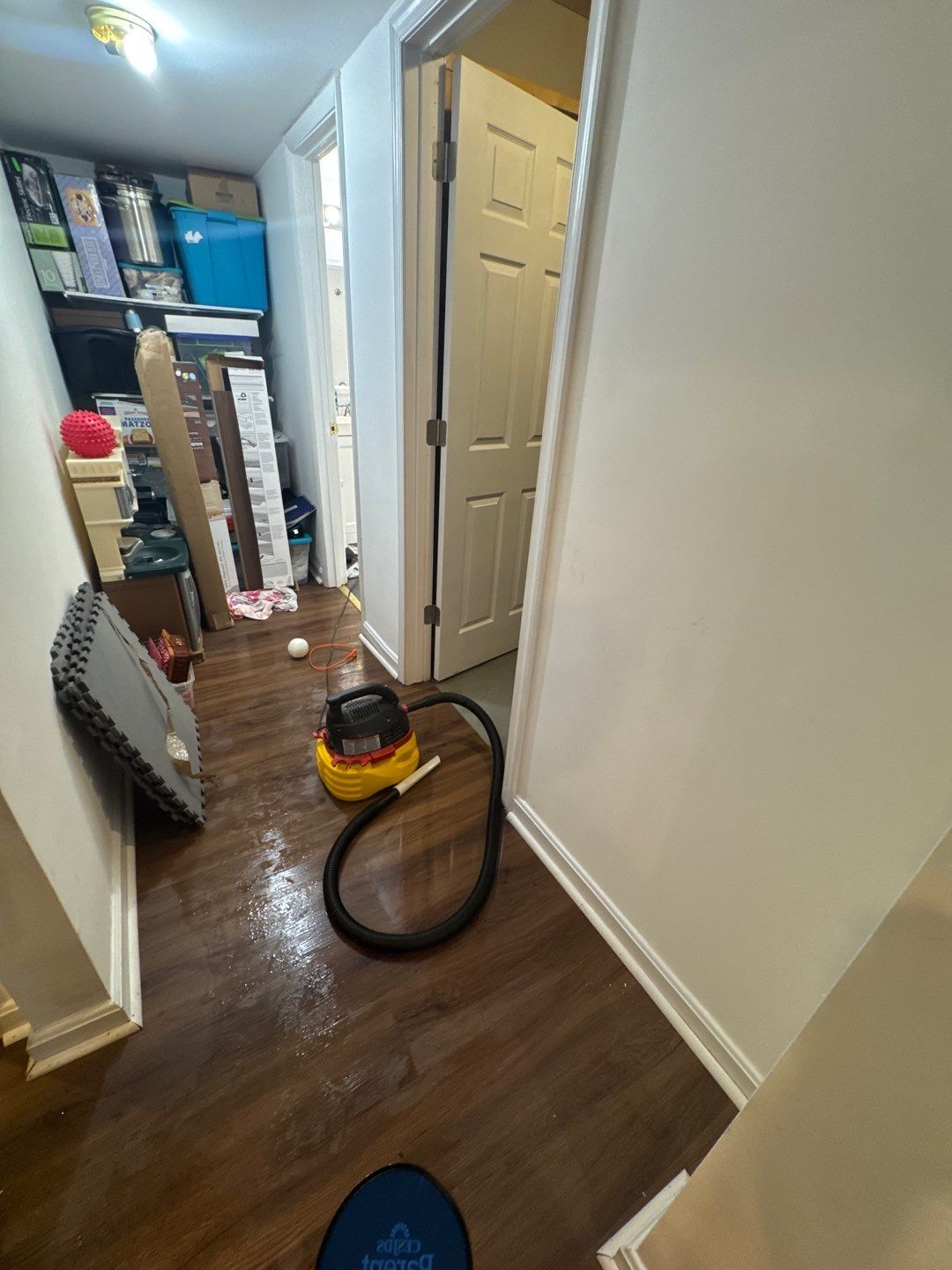
We deployed a FLIR thermal imaging camera to locate moisture pockets invisible to the eye, identifying saturated zones that guided our equipment placement. Air movers and dehumidifiers were positioned strategically throughout the affected areas to create controlled airflow and reduce ambient humidity. Extractors removed standing water from floors and subflooring, while client belongings were relocated to unaffected rooms to prevent secondary damage during the drying cycle.
Continuous monitoring of moisture levels ensured the environment stabilized within IICRC S500 parameters. The thermal camera allowed us to verify that concealed moisture behind wall cavities and beneath flooring materials had been addressed, not just surface dampness. By the end of the drying process, readings confirmed the structure had returned to its pre-loss condition.
The homeowner's review reflected satisfaction with both the thoroughness of our diagnostic approach and the care taken to protect their belongings throughout the restoration. Thermal imaging transformed what could have been guesswork into measurable, verifiable results.
Reviews from Restoration Doctor customers
After I suffered damage from a water leak at my residence. Restoration Doctor provided services that remedied the situation in a professional manner. I was very satisfied with the outcome.
Frequently asked questions
How does Restoration Doctor use thermal imaging to find hidden moisture after a water loss in Potomac?
Restoration Doctor deploys FLIR thermal-imaging cameras to detect temperature differentials that reveal trapped moisture beneath flooring and inside wall cavities—critical in Potomac's larger-lot homes where water can migrate unseen across expansive floor plans. The camera maps cold spots where evaporation is pulling heat from saturated materials, guiding targeted extraction and drying equipment placement. This non-invasive scan prevents tearing into dry areas and ensures no pockets are left to foster microbial growth in Montgomery County's humid summers.
What happens to carpets and flooring during standing-water extraction in a Montgomery County home?
Restoration Doctor extracts standing water using truck-mount or portable extractors, then assesses whether carpet and pad are salvageable or require removal based on contamination category and saturation depth. In this Potomac job, affected flooring was remediated through controlled drying with air movers and dehumidifiers, while unsalvageable materials were documented and removed to prevent odor and microbial colonization. Hardwood and subfloor moisture levels are monitored daily until readings return to the IICRC S500 drying standard for the region.
How long does it typically take to dry out a water-damaged home in Potomac, MD?
Drying timelines in Potomac depend on the volume of water, affected materials, and ambient humidity—Montgomery County's hot, humid summers can slow evaporation if outdoor air isn't conditioned. Restoration Doctor runs commercial dehumidifiers and air movers continuously, taking daily moisture readings in structural elements; most residential losses stabilize within three to five days, though dense materials like hardwood or plaster may require a week or more. Each job is monitored until psychrometric conditions confirm the structure has returned to a dry standard.
Why did the restoration crew relocate belongings during the drying process?
Restoration Doctor moves furniture, stored items, and other contents out of the affected zone to prevent secondary damage from high-velocity airflow, elevated humidity, and potential contact with contaminated water. In this Potomac property, client belongings were carefully inventoried and relocated to a dry area of the home, allowing unobstructed air movement across wet floors and baseboards and protecting valuables from mold transfer during the multi-day drying cycle. Contents are returned only after moisture readings confirm the space is stable.
What equipment does Restoration Doctor deploy for structural drying after water extraction?
Following extraction, Restoration Doctor positions axial and centrifugal air movers to create laminar airflow over wet surfaces, paired with low-grain refrigerant or desiccant dehumidifiers that pull moisture from the air and prevent it from re-adsorbing into building materials. In Montgomery County's humid climate, dehumidification capacity is matched to the volume of the affected space and the psychrometric load; moisture meters and thermo-hygrometers track progress daily until the structure meets the IICRC S500 drying goal for the material class involved.
Explore more restoration work
All projects in Potomac · Water Damage Restoration in Potomac
Water, fire, or mold damage in Potomac?
Restoration Doctor responds 24/7 across Potomac and Northern Virginia. Free assessment and transparent, insurance-friendly estimates — no obligation.
See our Water Damage Restoration services at restorationdoctors.com →