Water Damage Restoration
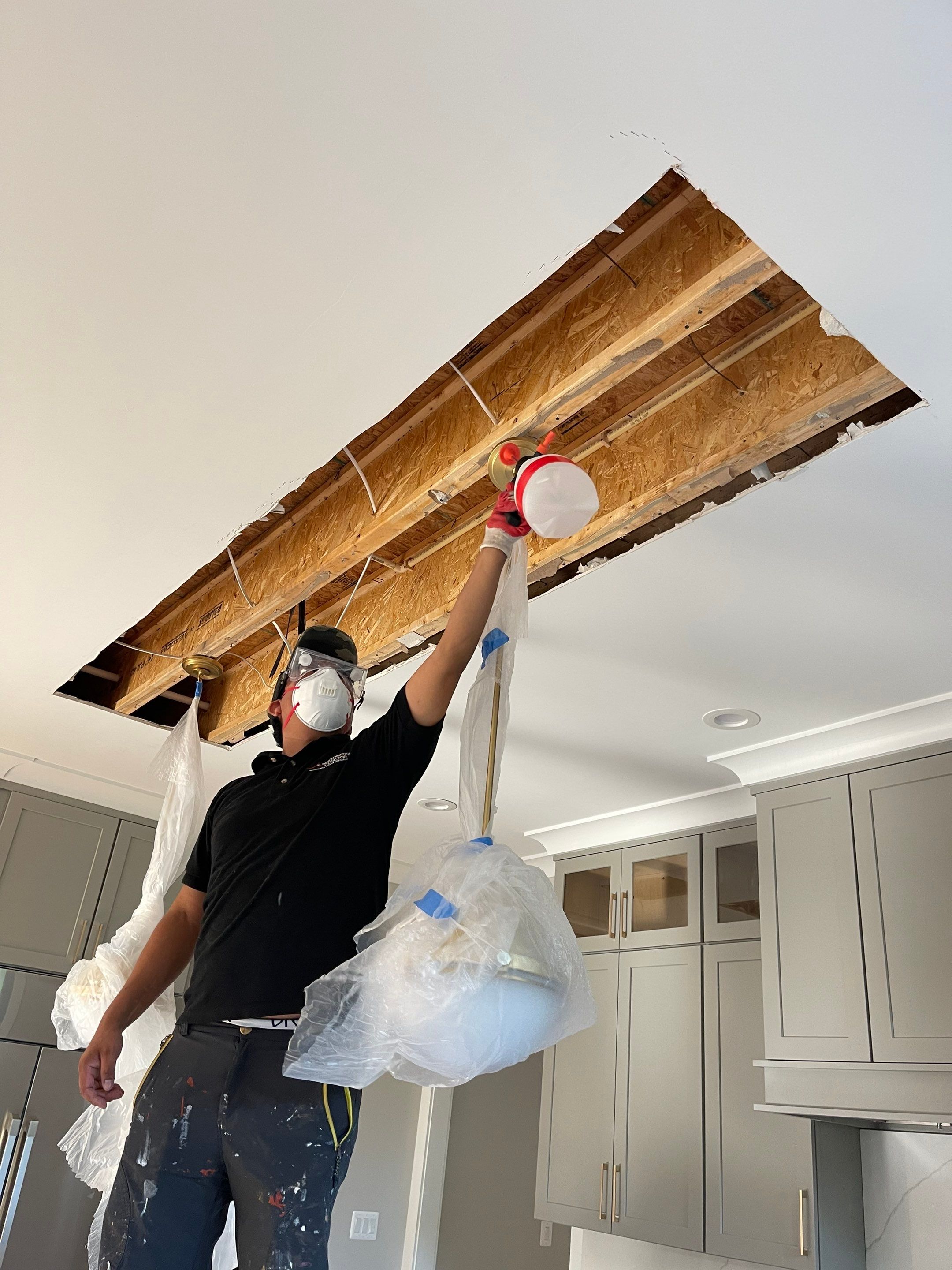
About this water damage restoration project
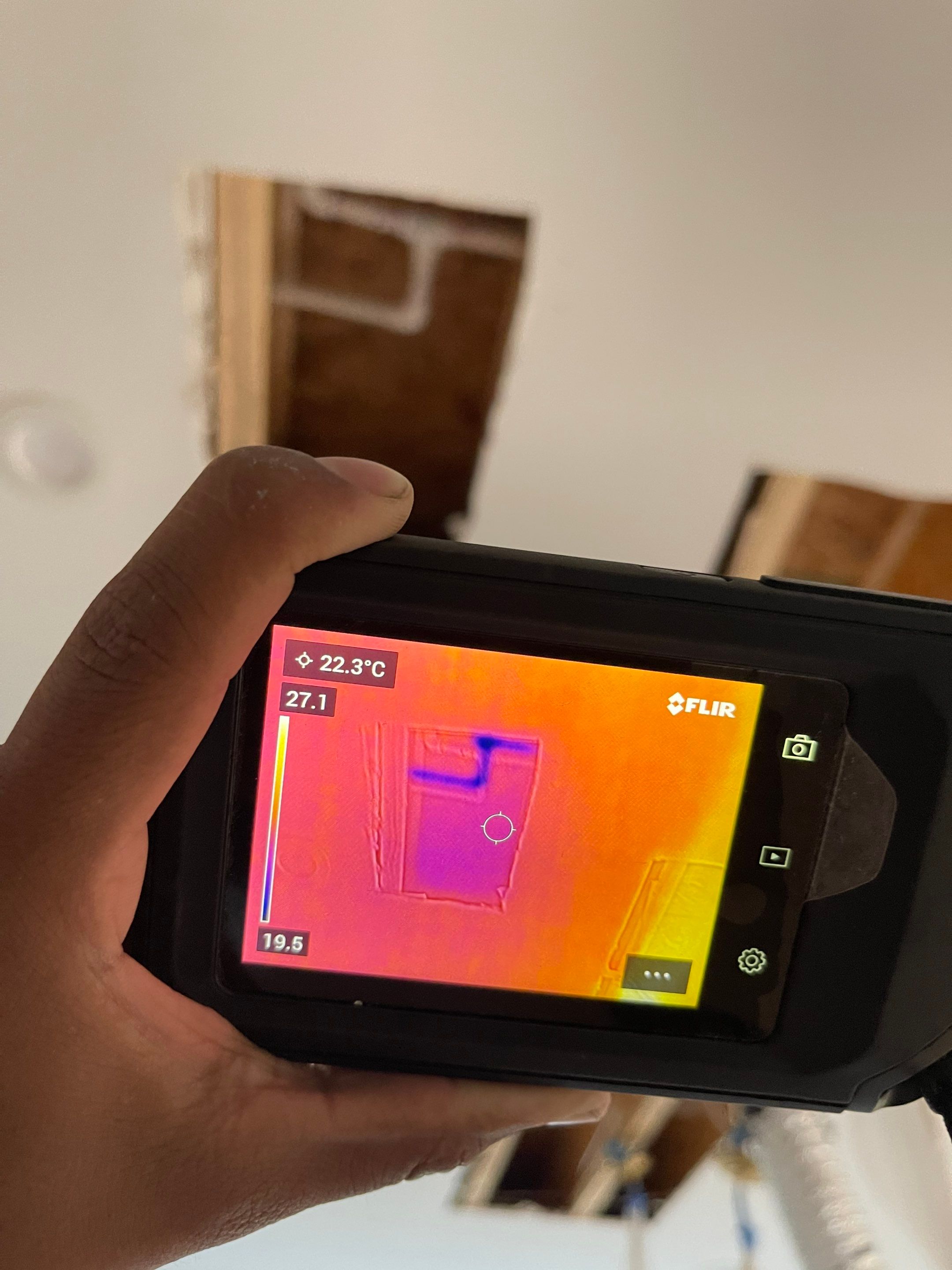
A thermal imaging scan revealed hidden moisture trapped behind an upper-level ceiling—the signature pattern of mold growth following a slow leak in one of Fairfax County's established McLean homes, where aging supply lines often succumb to the region's freeze-thaw cycles. The infrared signature confirmed water had migrated into ceiling cavities, creating the dark, humid conditions mold requires.
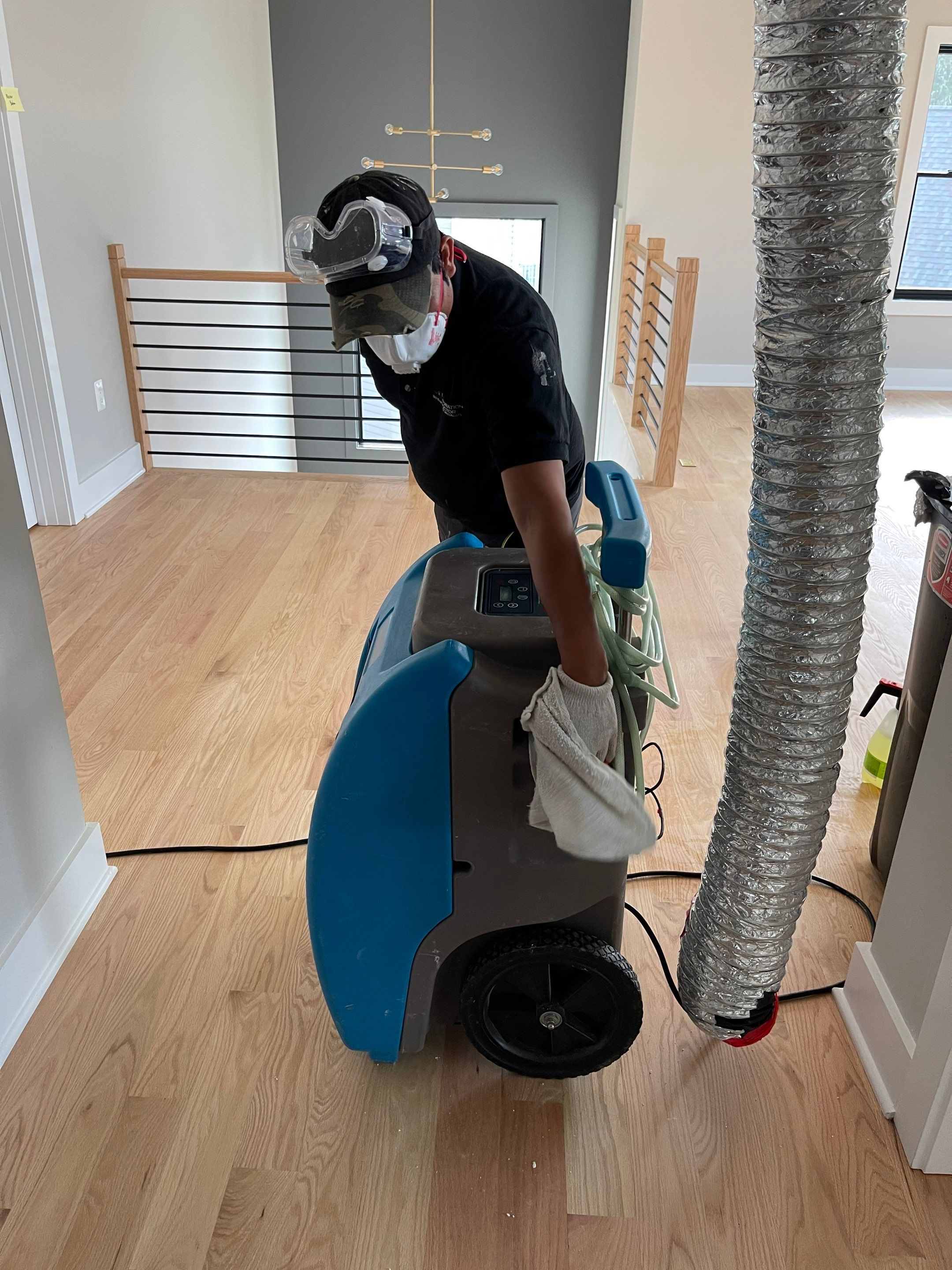
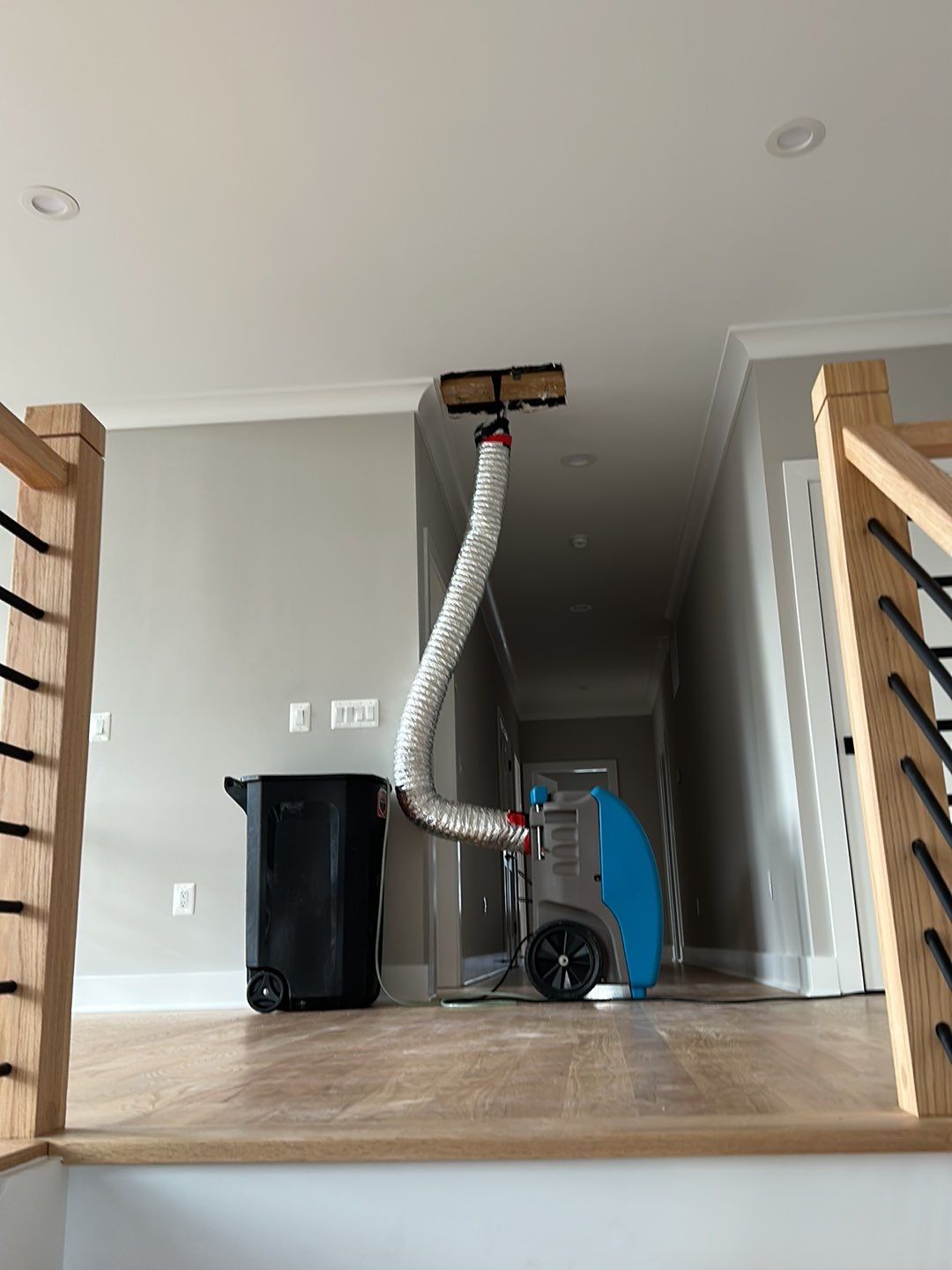
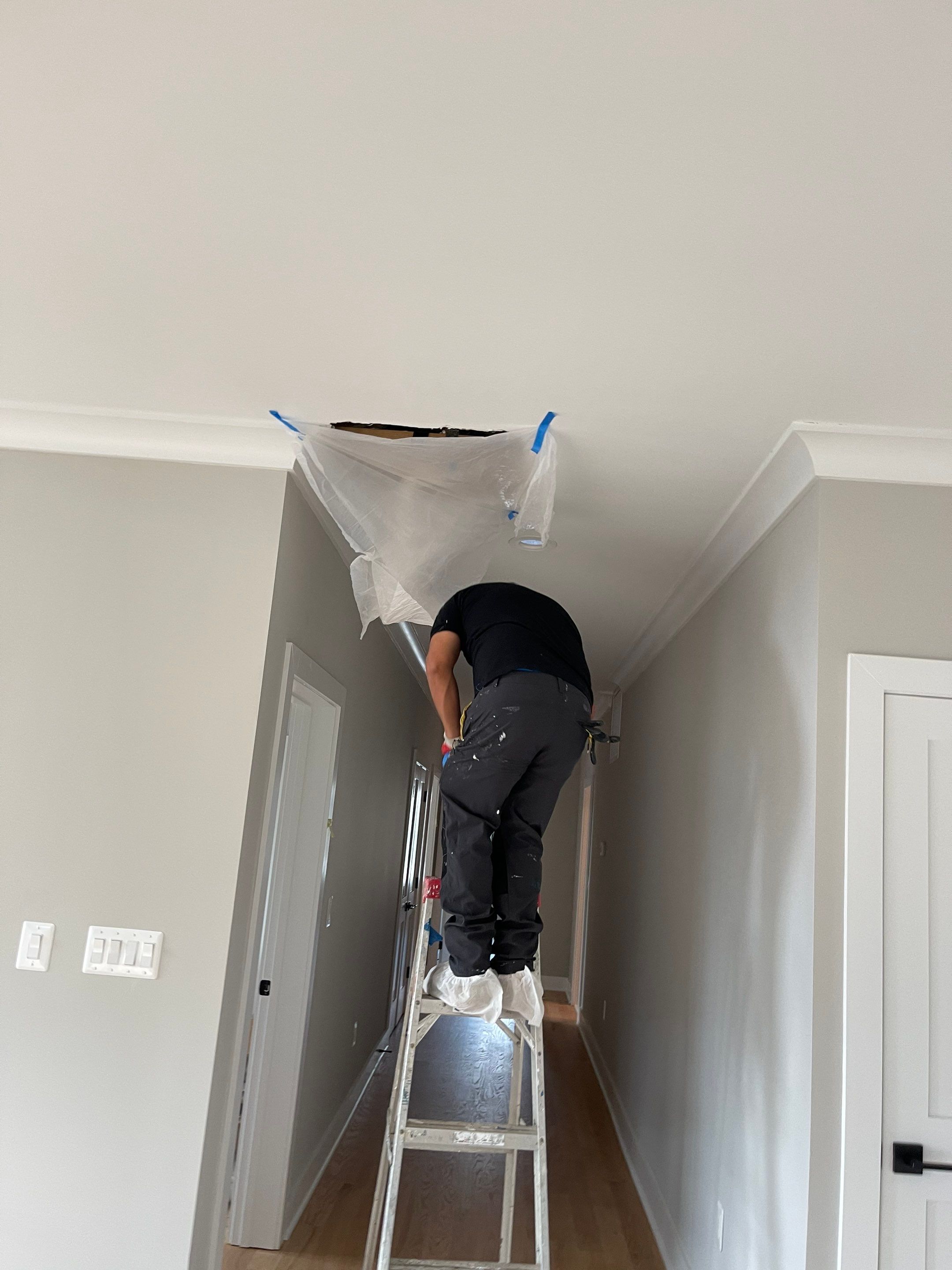
We established containment with plastic sheeting to isolate affected areas, then deployed dehumidifiers and air movers in a configuration guided by IICRC S500 water damage protocols. The equipment ran continuously to pull moisture from both exposed surfaces and the concealed cavities above, preventing secondary colonization while the structure dried to stable readings.
Once drying was verified complete, the plan called for antimicrobial treatment of all affected surfaces, followed by reconstruction to return the upper level to its pre-loss condition. The homeowner noted their satisfaction with the methodical approach and clear communication throughout the process.
Reviews from Restoration Doctor customers
Absolutely thrilled with their service! The team was prompt, efficient and made our home mold-free. Highly recommend Restoration Doctor!
Frequently asked questions
How does thermal imaging help locate hidden moisture after an upper-level water leak in a McLean home?
Thermal imaging allows Restoration Doctor technicians to detect temperature differentials behind ceilings and walls without invasive demolition, which is especially valuable in larger established Fairfax County homes where leak paths can travel through multiple cavities. After a ceiling leak, moisture often migrates laterally into insulation and framing that appears dry from the outside; infrared scanning maps those hidden wet zones so dehumidification and structural drying can target every affected area. This non-destructive assessment step ensures no pockets of moisture are left to fuel secondary mold growth.
Why is dehumidification critical after water intrusion in McLean's humid summer climate?
Hot, humid Mid-Atlantic summers mean ambient indoor humidity can easily climb above 60 percent after a water event, slowing evaporation and creating conditions where mold can colonize damp building materials within days. Restoration Doctor's water damage restoration protocol in McLean uses commercial dehumidifiers to pull moisture from the air while air movers accelerate surface evaporation, driving the drying process even when outdoor humidity is high. This controlled environment prevents the stalled drying that often leads to mold remediation becoming necessary weeks after the initial leak.
What does sanitizing involve after drying a ceiling affected by water and mold in Fairfax County?
Once structural drying confirms moisture levels have returned to normal, Restoration Doctor applies an antimicrobial treatment to affected ceiling surfaces and framing to address any mold spores introduced during the water intrusion. Sanitizing does not replace full mold remediation if colonization is extensive, but it prevents residual contamination on surfaces that were wet but not visibly moldy. This step is standard after any water loss where mold was detected, ensuring the repaired ceiling cavity does not become a reservoir for future growth.
How long does structural drying typically take for an upper-level water loss in McLean?
Drying timelines for water damage restoration in McLean depend on the materials affected, the extent of saturation, and ambient conditions, but most upper-level ceiling and wall assemblies reach dry standard within three to five days under controlled dehumidification. Restoration Doctor monitors progress with moisture meters rather than relying on fixed schedules, adjusting equipment placement and runtime as readings drop. Older homes with plaster or dense insulation may require longer drying than newer construction with engineered lumber and fiberglass batts.
Does homeowners insurance in Virginia typically cover water damage from a supply line leak that led to mold?
Most Virginia homeowners policies cover sudden and accidental water discharge—such as a supply line failure—including the cost of water extraction, structural drying, and repairs to damaged ceilings and framing. Mold remediation is often covered if it results directly from a covered peril and the homeowner mitigated promptly, though policies vary in their mold sub-limits. Restoration Doctor works directly with insurers during the water damage restoration process in McLean to document scope, moisture readings, and timelines that support the claim.
Explore more restoration work
All projects in McLean · Water Damage Restoration in McLean
Water, fire, or mold damage in McLean?
Restoration Doctor responds 24/7 across McLean and Northern Virginia. Free assessment and transparent, insurance-friendly estimates — no obligation.
See our Water Damage Restoration services at restorationdoctors.com →