Moisture Removal and Mold Prevention
About this water damage restoration project
When water intrusion led to mold concerns in this McLean home—a common sequence in Fairfax County's established housing stock, where hot, humid Mid-Atlantic summers create ideal conditions for microbial growth following moisture events—the restoration required both extraction and thorough prevention measures. The homeowner contacted us after discovering the damage, and we moved quickly to contain the scope before secondary growth could establish.
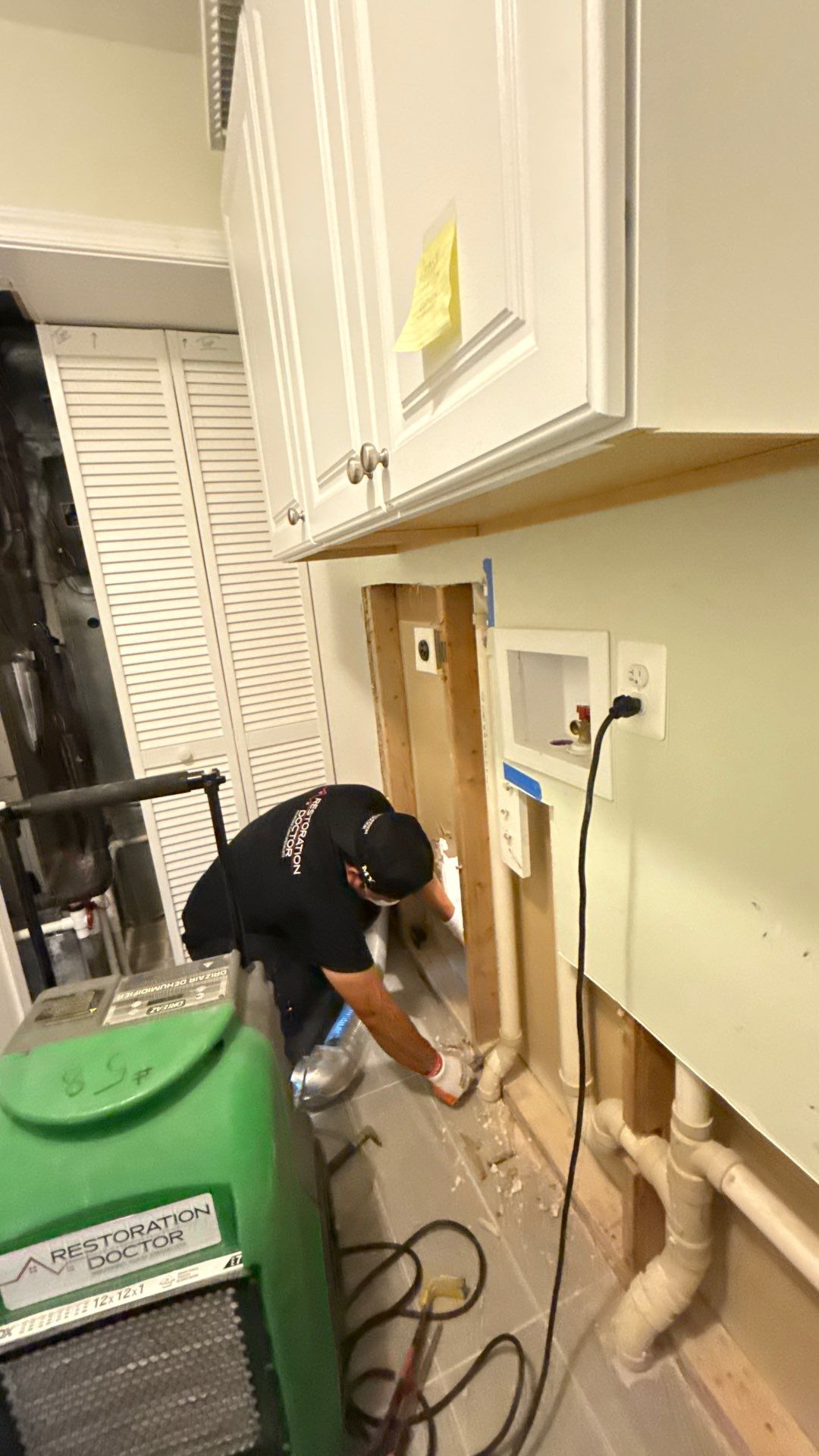
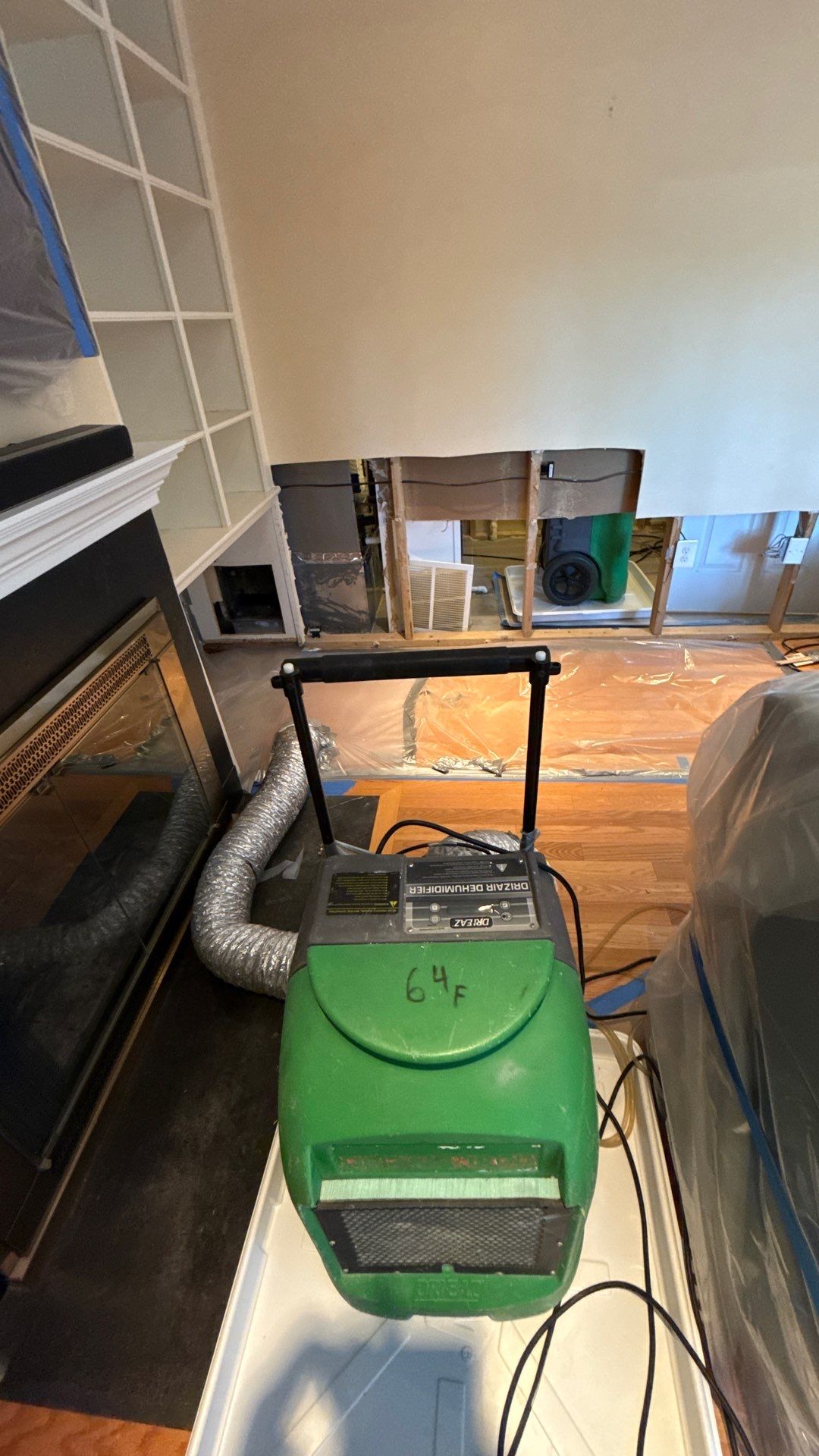
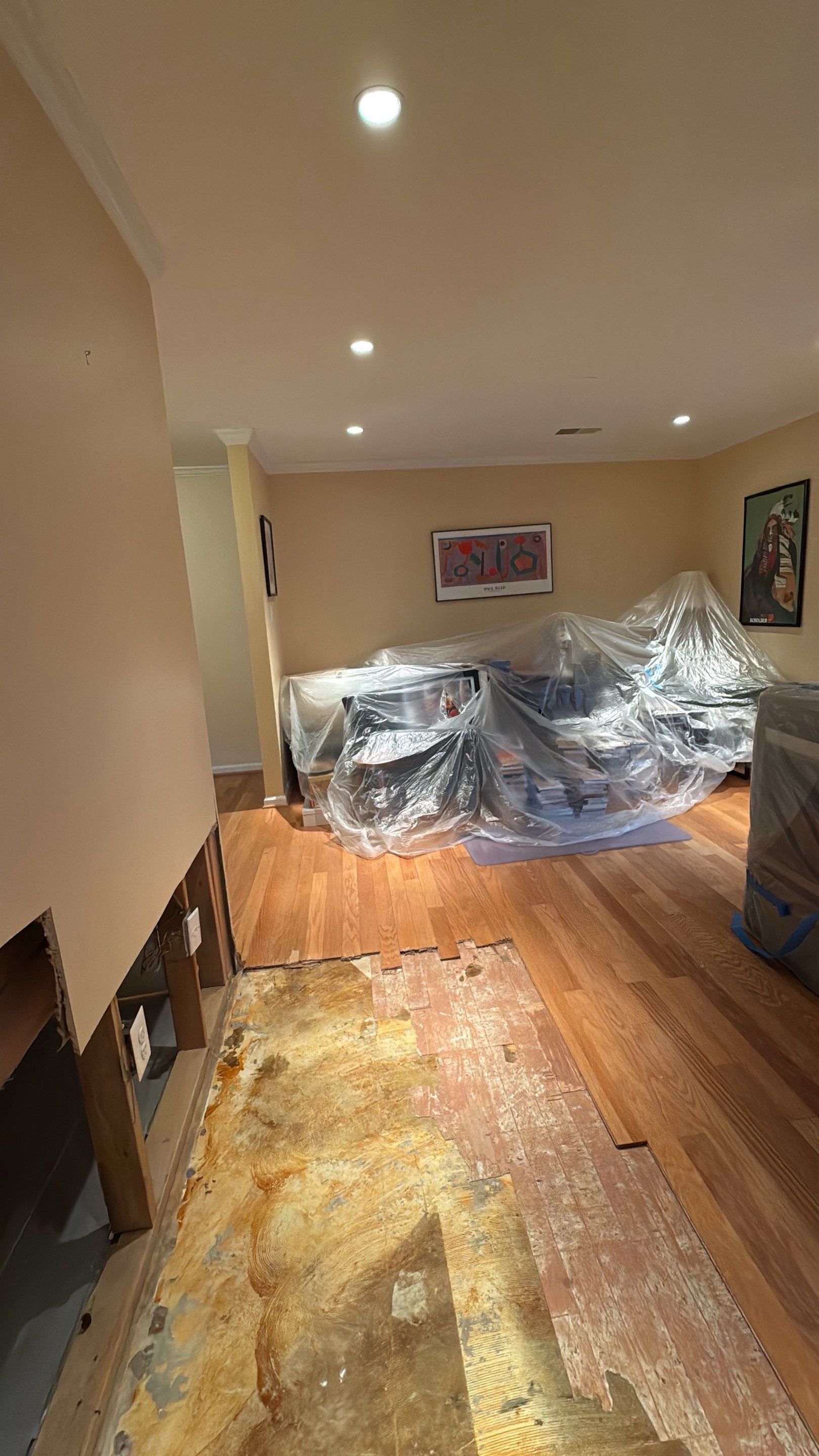
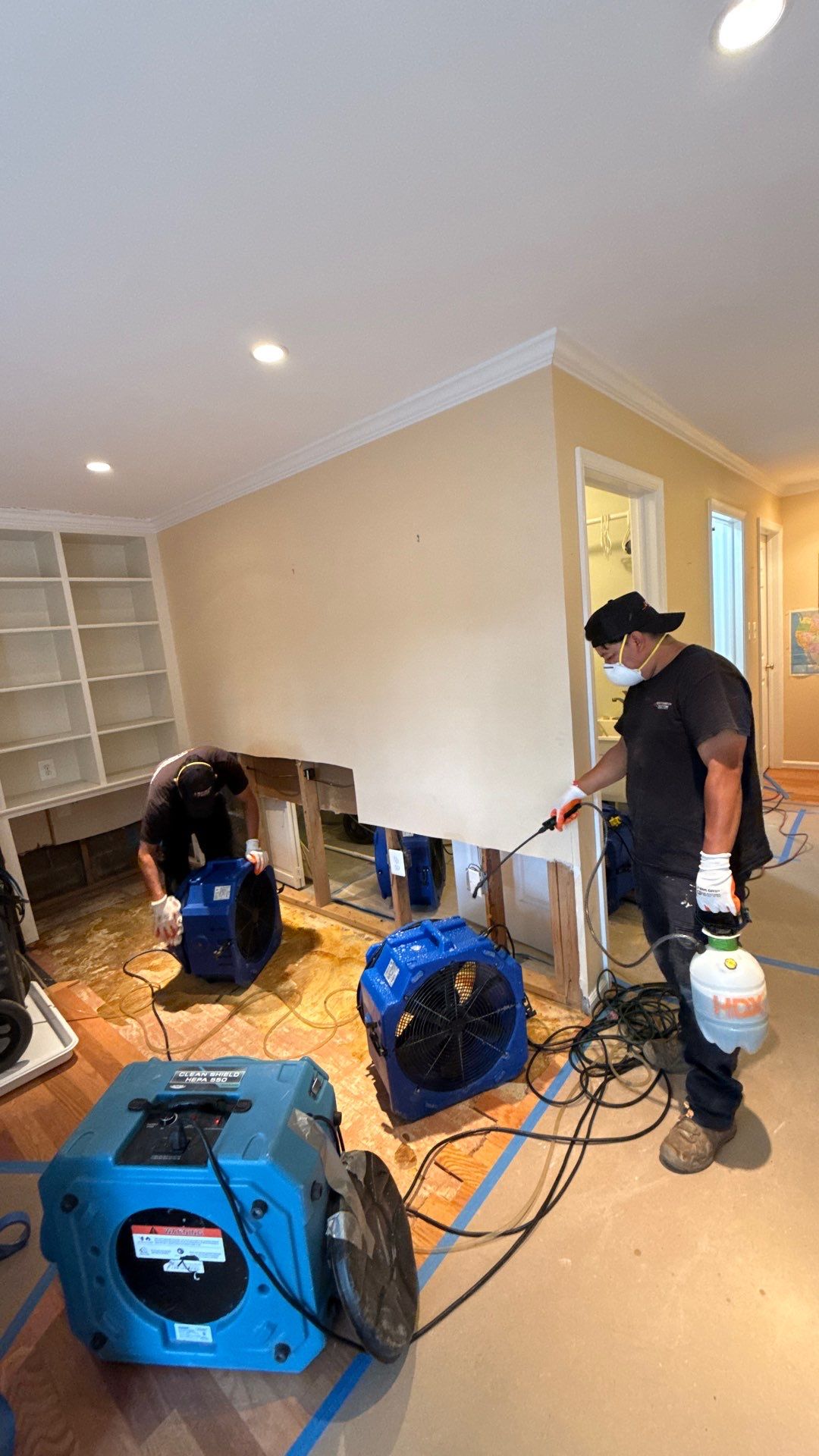
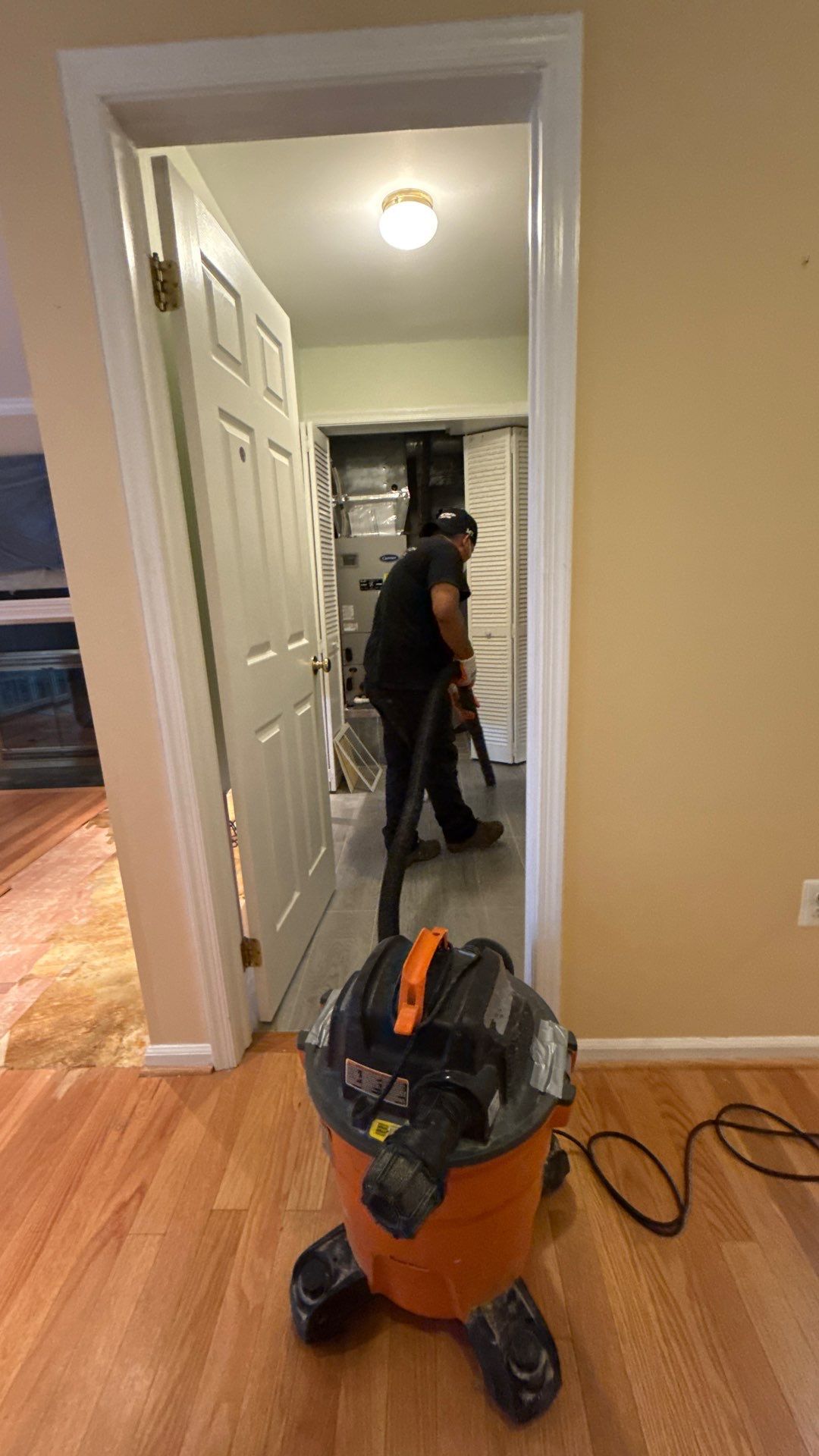
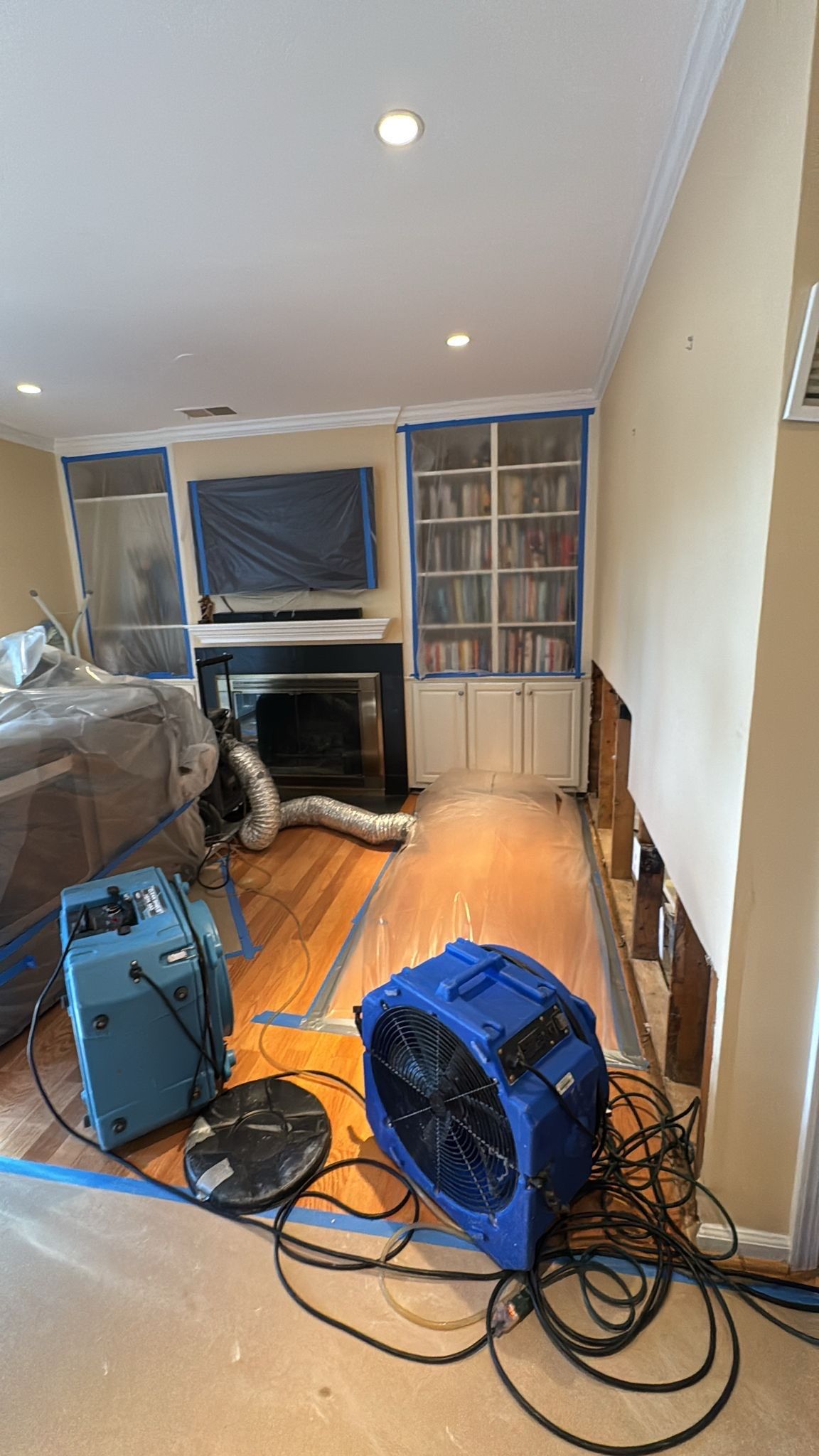
We began by protecting furnishings with plastic sheeting, then extracted standing water from the affected area using commercial vacuum equipment. Once moisture was removed, we opened sections of damaged wall assembly to assess hidden saturation and replaced compromised materials that could not be dried in place. Air movers and dehumidifiers ran continuously to bring structural moisture levels down to safe thresholds before any rebuild could begin.
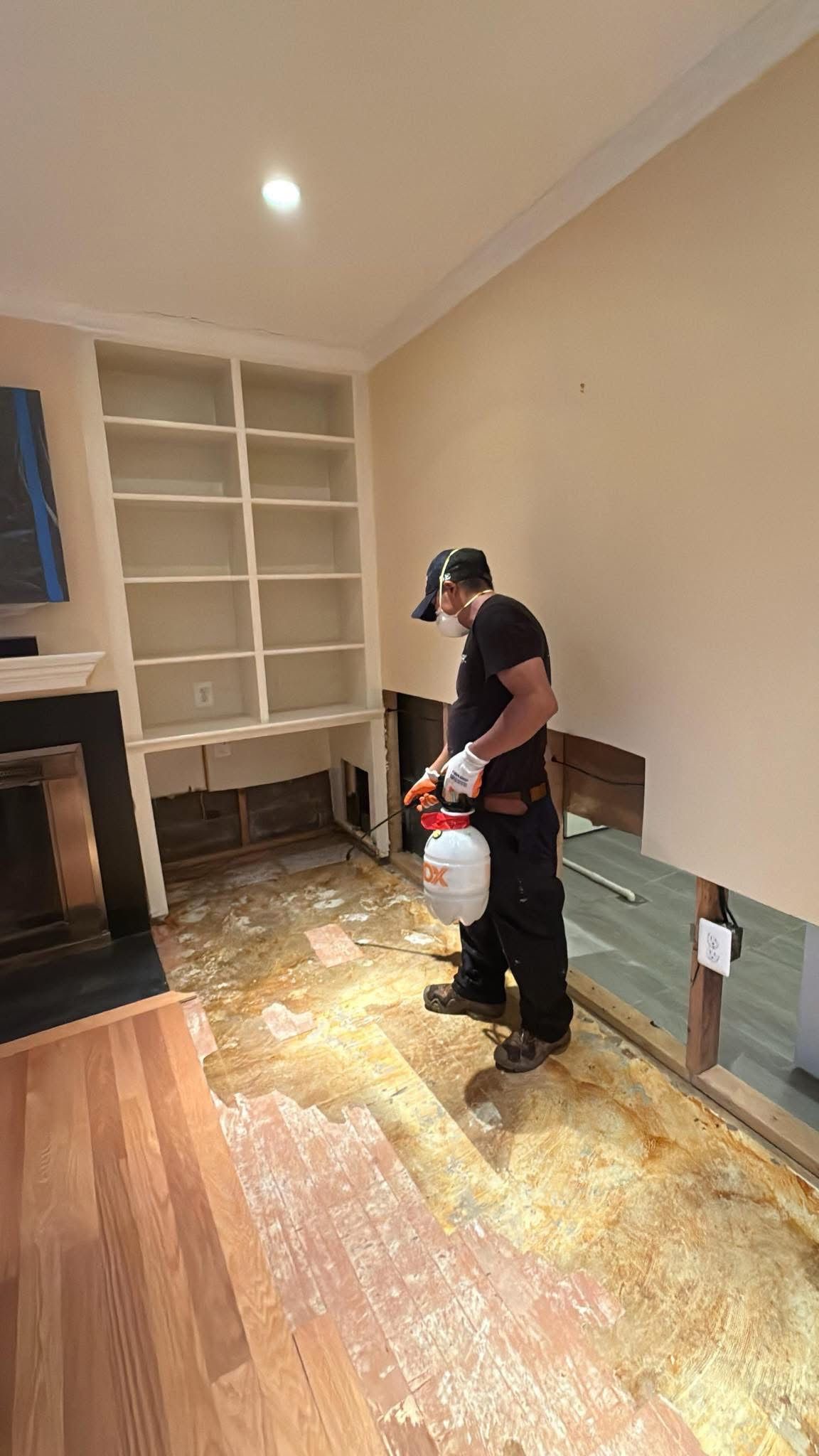
Following IICRC S520 guidance on mold prevention, we applied antimicrobial treatment to all exposed surfaces in the drying zone, addressing both visible contamination and potential spore reservoirs. Baseboards were repaired and reinstalled after the envelope had fully stabilized. The homeowner expressed relief that the work progressed methodically and that the space was returned to a safe, dry condition without lingering concerns about hidden moisture or future growth.
Frequently asked questions
Why does standing water on subflooring in McLean homes require baseboard replacement after extraction?
When standing water saturates subflooring and wall cavities, baseboards act as wicking pathways that draw moisture into the drywall and framing. Restoration Doctor's McLean water damage team removes and replaces compromised baseboards after extraction and structural drying to eliminate hidden moisture reservoirs and prevent secondary mold growth behind the wall plane—a common issue in Fairfax County's humid summers when materials don't fully dry.
What sanitizing steps follow water intrusion and mold remediation in a McLean restoration like this one?
After extracting standing water and remediating visible mold, Restoration Doctor applies EPA-registered antimicrobial treatments to all affected surfaces—subflooring, wall cavities, and replaced drywall sections. This sanitizing protocol, standard in our McLean mold remediation work, addresses both active colonies and residual spores left after the physical removal, ensuring the space meets IICRC S520 post-remediation criteria before reconstruction begins.
How does plastic sheeting protect belongings during standing-water extraction and structural drying in place?
Restoration Doctor covers furniture and stored items with 6-mil polyethylene sheeting before deploying extractors and air movers, creating a moisture barrier that prevents cross-contamination from airborne particulates and overspray during the sanitizing phase. This containment step is especially important in McLean's larger established homes where homeowners often shelter in place during multi-day drying cycles rather than relocating.
Can mold colonize between the time water intrusion occurs and professional extraction begins in Fairfax County homes?
Yes—mold spores present in all indoor air can begin colonizing wet building materials within 24 to 48 hours of water intrusion, particularly in Fairfax County's hot, humid summer months when relative humidity accelerates growth. Restoration Doctor's McLean team prioritizes immediate extraction and dehumidification to arrest that timeline, then follows with targeted mold remediation and sanitizing if early growth is detected during the drying phase.
What drying equipment is typically deployed after standing-water extraction in a McLean water damage job of this scope?
For standing-water losses affecting subflooring and wall cavities, Restoration Doctor deploys a combination of low-grain refrigerant dehumidifiers and focused air movers to drive evaporation and pull moisture from structural cavities. In McLean's mixed housing stock—where older homes may have less vapor-permeable finishes—we monitor daily with moisture meters to confirm materials return to dry standard before sealing and replacing baseboards.
Explore more restoration work
All projects in McLean · Water Damage Restoration in McLean
Water, fire, or mold damage in McLean?
Restoration Doctor responds 24/7 across McLean and Northern Virginia. Free assessment and transparent, insurance-friendly estimates — no obligation.
See our Water Damage Restoration services at restorationdoctors.com →