Restoring Homes After Significant Water Damage
About this mold remediation project
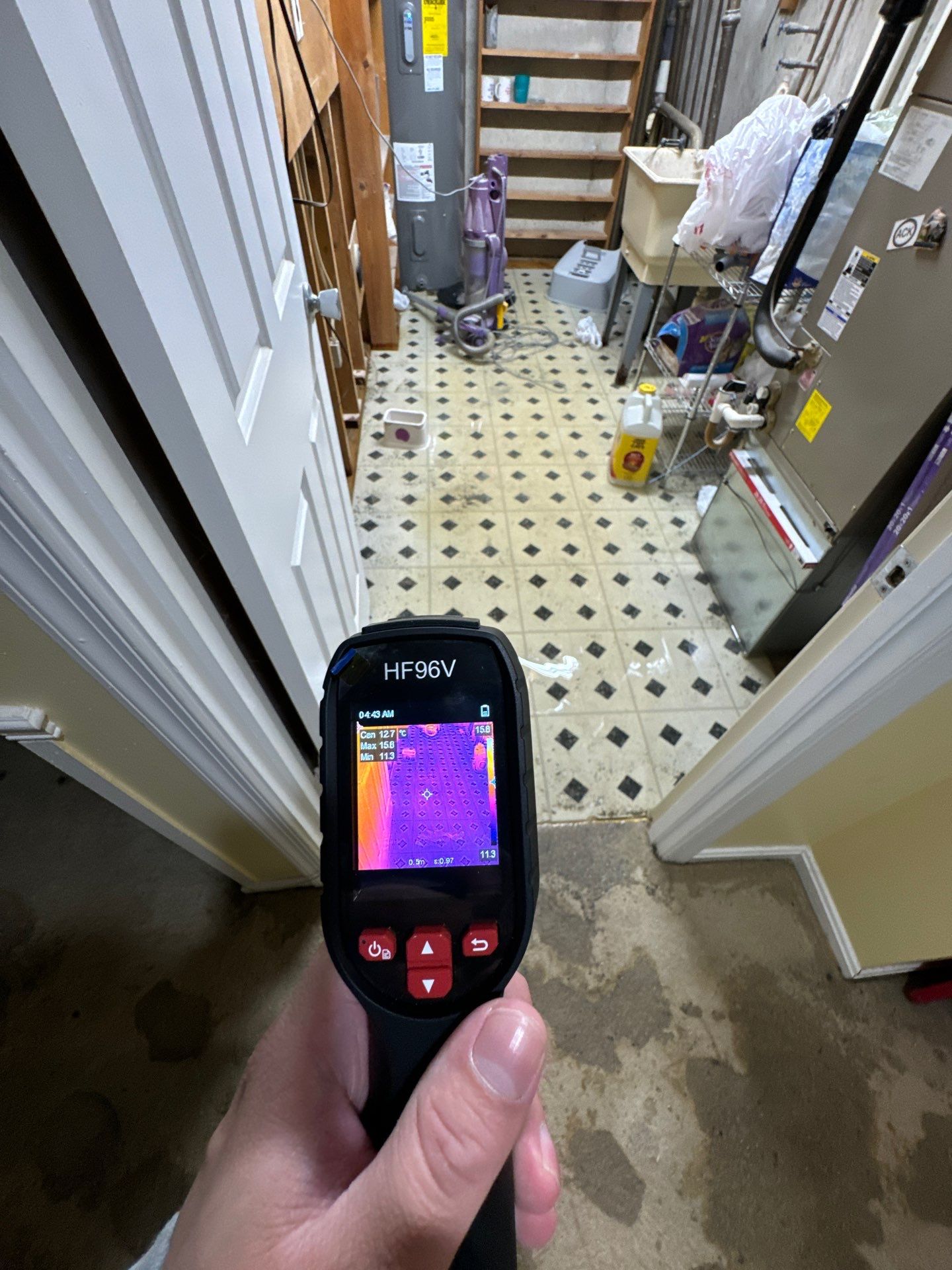
A ceiling leak in an established Gaithersburg home created the conditions Mid-Atlantic humidity amplifies most—persistent moisture that allowed mold to take hold across multiple rooms. The homeowner contacted us after discovering the extent of water intrusion beyond the initial visible damage.
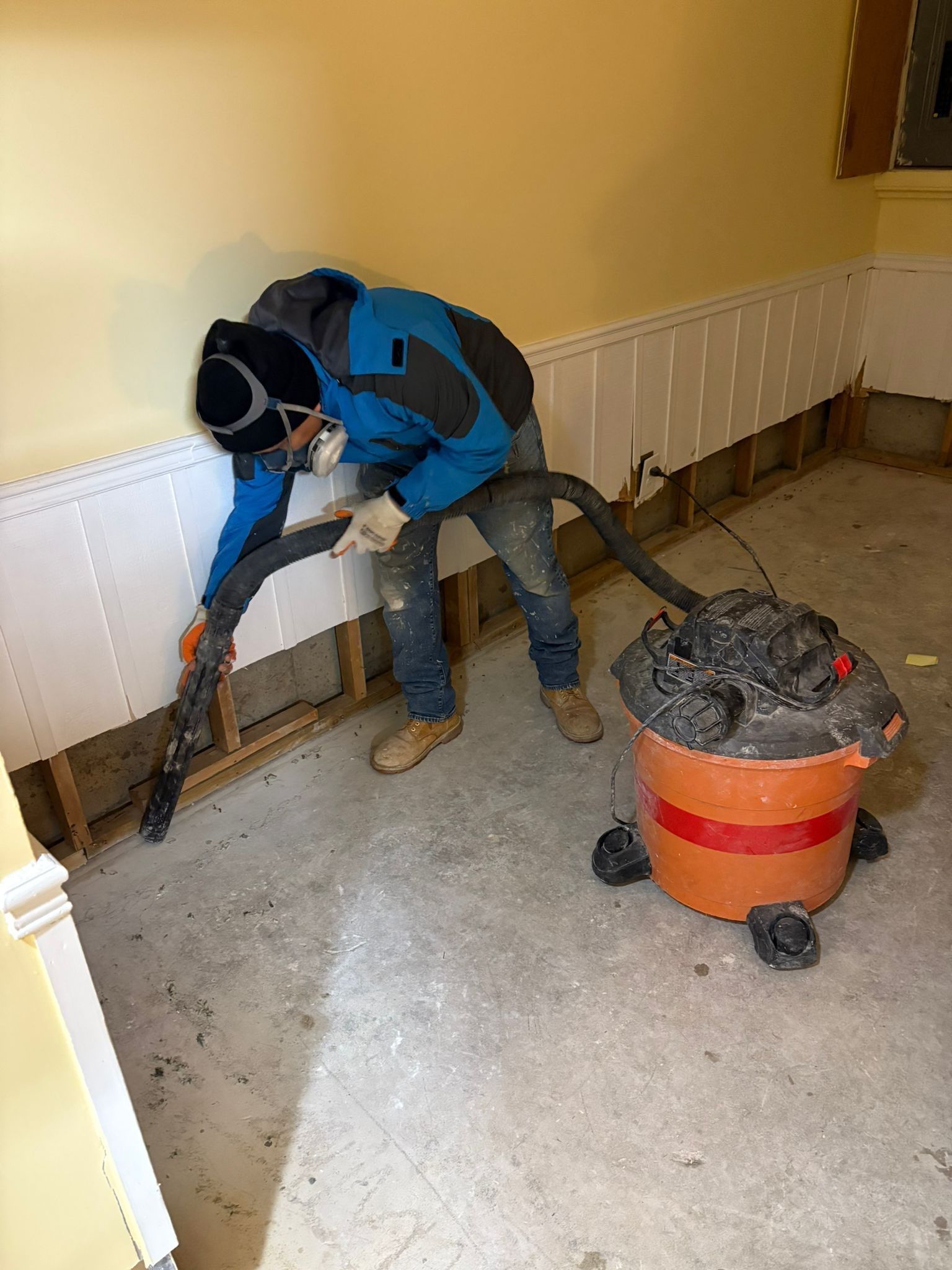
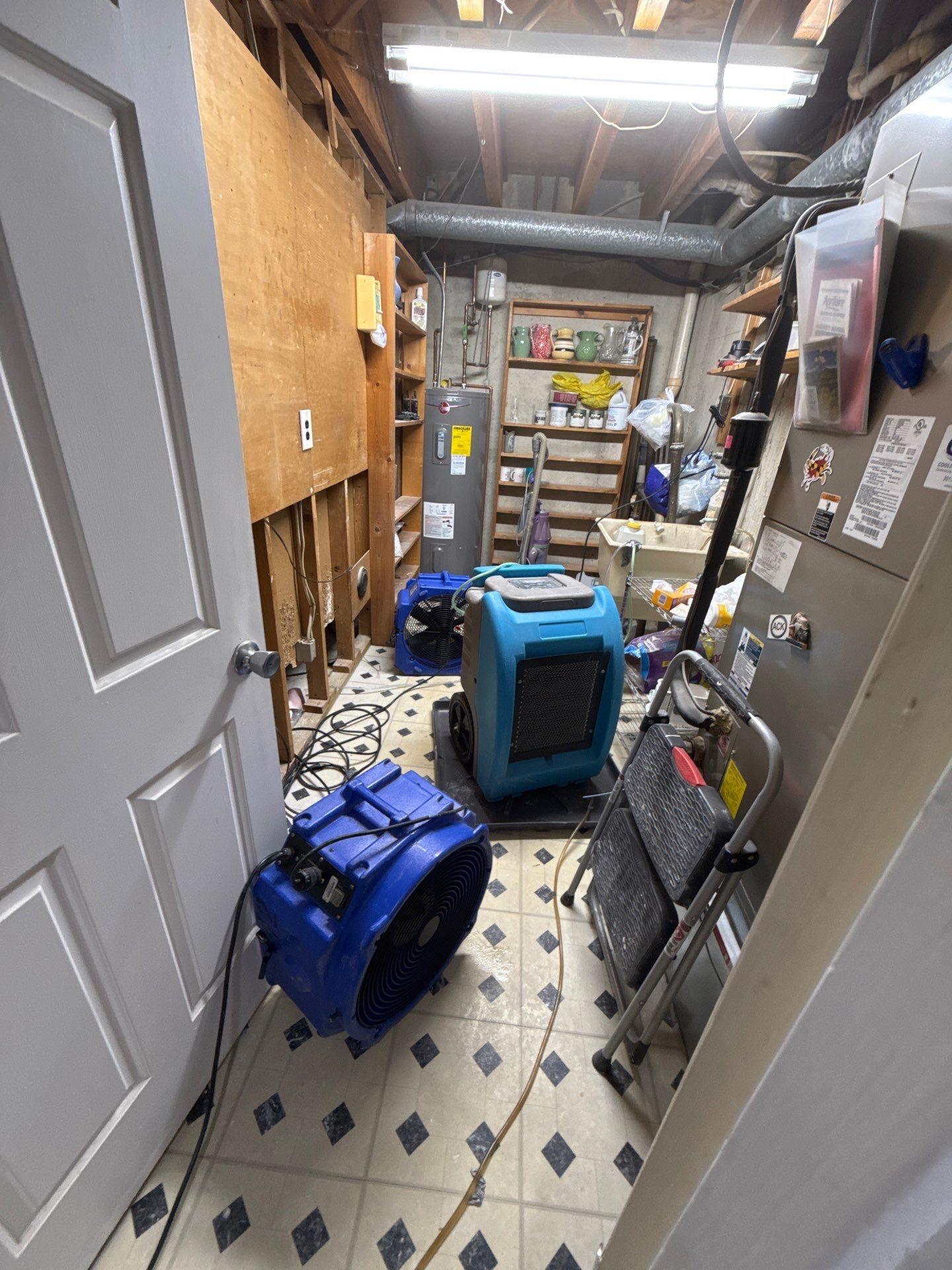
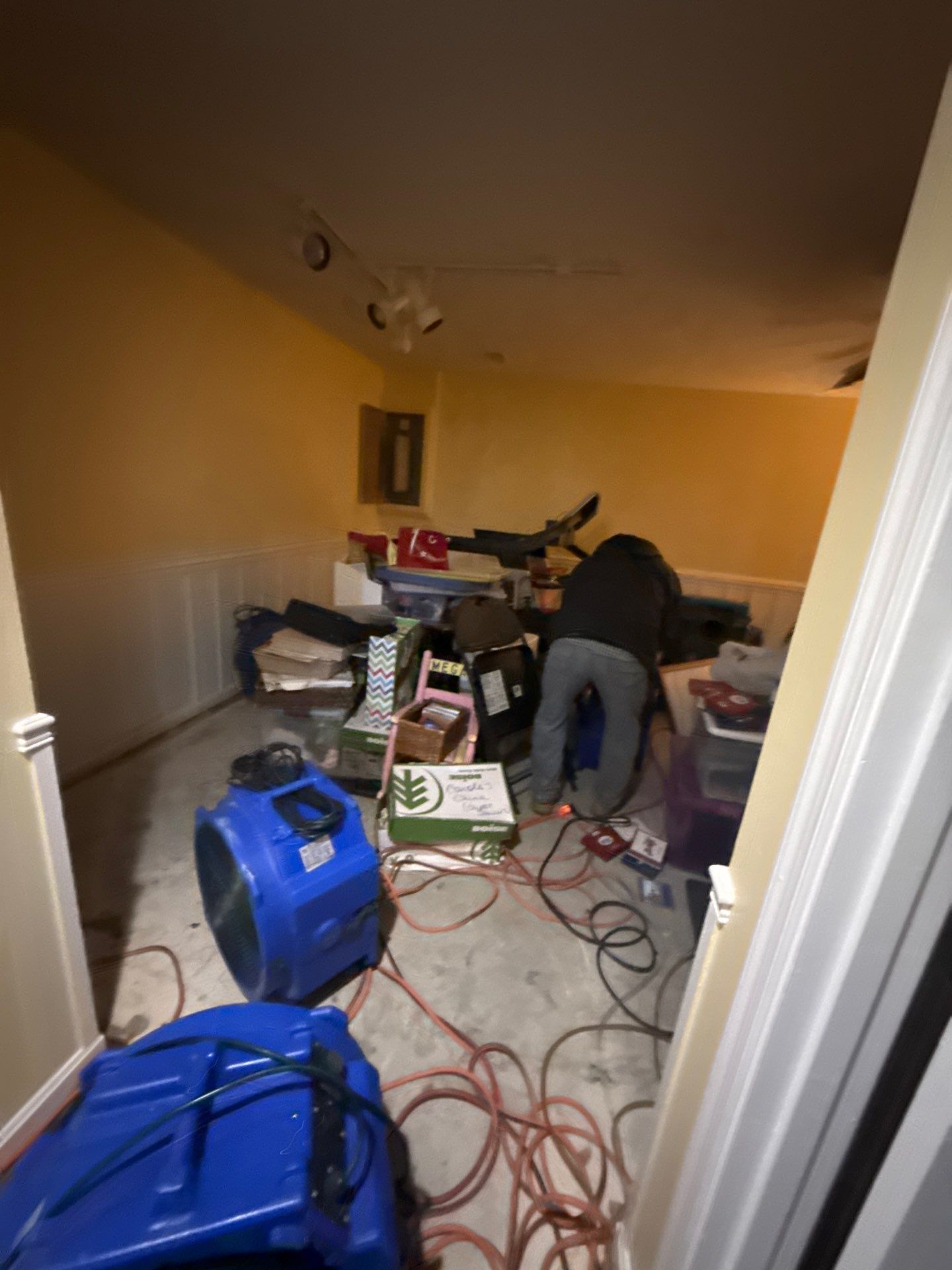
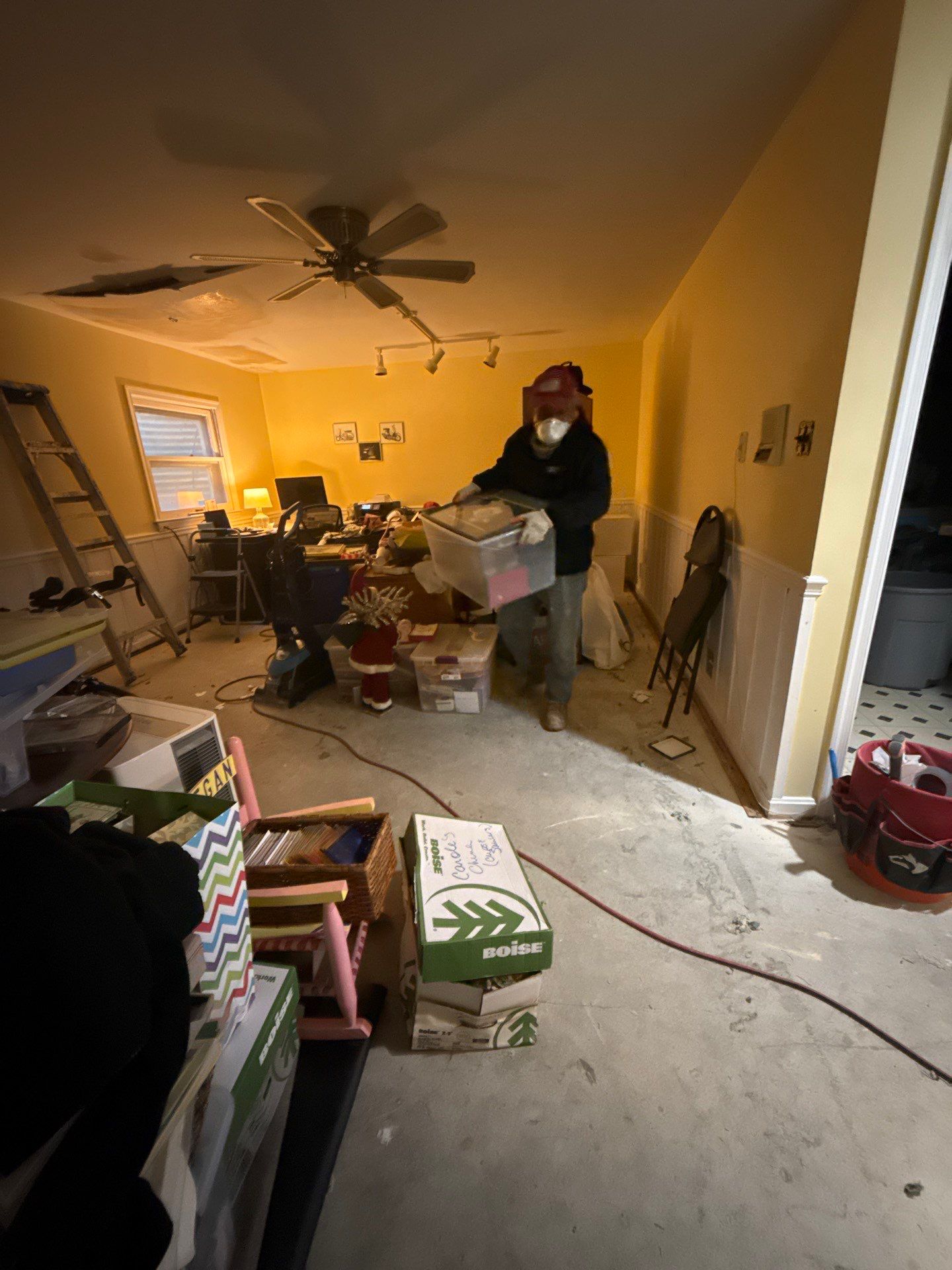
Our crew began by removing all compromised ceiling materials and baseboards throughout the affected areas, ensuring no hidden moisture or contaminated material remained. Because mold remediation under the IICRC S520 standard requires complete source removal, we worked methodically through each space, clearing damaged components down to structural substrates. Once removal was complete, we placed a combination of dehumidifiers and air movers to drive moisture levels down and prevent further microbial growth during the drying phase.
The equipment ran continuously while we monitored conditions, allowing the framing and surrounding materials to return to a stable state. With the structure dried and the affected zones cleared, the home was ready for reconstruction. The homeowner expressed satisfaction with both the thoroughness of the work and the care taken to protect unaffected areas during the process.
Frequently asked questions
How does a ceiling leak in Gaithersburg lead to mold growth?
In the Mid-Atlantic's humid summers, water intrusion from a ceiling leak creates ideal conditions for mold colonization, often within 24 to 48 hours if materials remain wet. Restoration Doctor responded to this Gaithersburg home by removing damaged ceiling and baseboard materials where moisture had penetrated, then deployed dehumidifiers and air movers to bring structural components back to dry standard. Addressing both the visible damage and hidden moisture prevents mold from establishing in wall cavities or subfloor areas common in the region's housing stock.
What materials did Restoration Doctor remove during this mold remediation project?
For this Gaithersburg job, Restoration Doctor removed water-damaged ceiling sections and baseboards where the leak had compromised structural integrity and created conditions conducive to mold. Removal extended to all visibly affected areas to ensure no residual moisture remained trapped behind finishes. The scope focused on controlled material removal followed by thorough structural drying rather than full reconstruction, keeping the project targeted to the loss footprint.
How long does structural drying take after water damage in a Maryland home?
Drying timelines depend on the extent of saturation, airflow, and ambient humidity—hot, humid Mid-Atlantic conditions can slow evaporation if not actively managed. Restoration Doctor used commercial dehumidifiers and high-velocity fans at this Gaithersburg property to accelerate moisture removal from framing and substrates after the ceiling repair. While each loss differs, controlled drying with monitoring typically brings structural components to acceptable levels within several days when equipment is properly staged.
Does mold remediation in Gaithersburg require full demolition of affected rooms?
Not necessarily—remediation scope depends on how far water traveled and which materials stayed wet long enough for mold to colonize. At this Gaithersburg home, Restoration Doctor's approach was selective: remove the damaged ceiling and baseboard sections where intrusion occurred, then dry the structure aggressively to prevent further spread. Full-room demolition is reserved for cases where mold has infiltrated extensively behind walls or into HVAC systems, which was not required here.
What role does humidity control play in preventing mold after a water loss?
Controlling indoor humidity is essential to stop mold spores—always present in the air—from colonizing damp building materials. Restoration Doctor deployed dehumidification equipment at this Gaithersburg site to pull moisture from the air and accelerate evaporation from structural cavities exposed during ceiling and baseboard removal. In the Mid-Atlantic's naturally humid climate, mechanical dehumidification is often the only reliable way to reach dry standard quickly enough to prevent secondary mold growth.
Explore more restoration work
All projects in Gaithersburg · Mold Remediation in Gaithersburg
Water, fire, or mold damage in Gaithersburg?
Restoration Doctor responds 24/7 across Gaithersburg and Northern Virginia. Free assessment and transparent, insurance-friendly estimates — no obligation.
See our Mold Remediation services at restorationdoctors.com →