Water damage restoration project
About this water damage restoration project
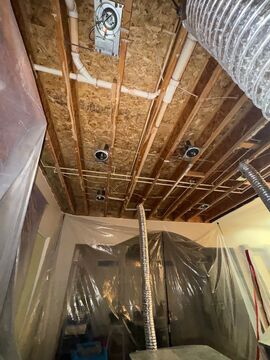
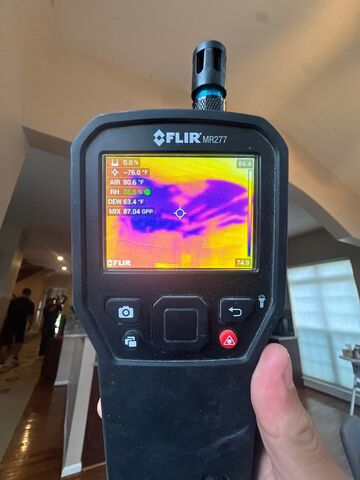
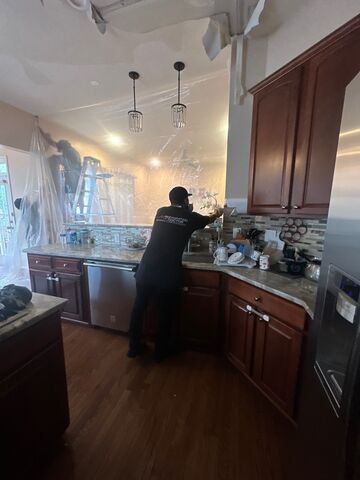
Hidden moisture behind walls and ceilings can quietly compromise a home for weeks before becoming visible—a scenario we encountered following water intrusion and subsequent mold growth at a residence in Ashburn, Loudoun County, where the region's humid Mid-Atlantic summers accelerate microbial activity in the newer-built structures common throughout this area. Using thermal imaging, we mapped the full extent of concealed saturation that standard visual inspection would have missed, then removed compromised ceiling materials to expose and address the affected framing.
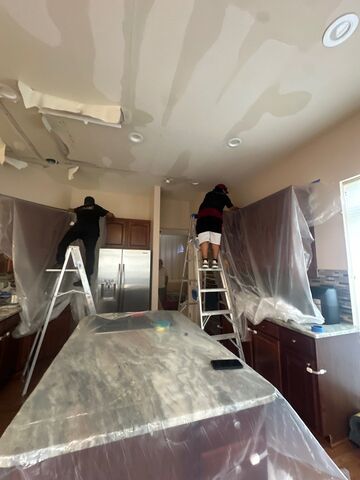
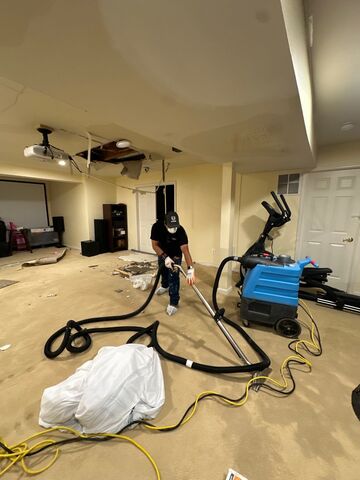
Protective containment barriers went up immediately to prevent demolition dust and disturbed spores from migrating into occupied living spaces—a protocol aligned with IICRC S520 mold remediation standards. We positioned dehumidifiers and air movers to drive moisture levels down in the affected zones, treated water-compromised kitchen surfaces with antimicrobial agents, and extracted standing water from the basement to eliminate any remaining source of elevated humidity.
The homeowner noted their satisfaction with the thoroughness of the process, and the documented progression from moisture discovery through controlled drying confirms the scope of the intervention. Addressing hidden moisture early prevents the compounding costs and health concerns that follow when mold becomes established in building cavities.
Frequently asked questions
Why is thermal imaging important for water damage in Ashburn homes?
Thermal imaging allows Restoration Doctor to detect hidden moisture trapped behind walls and ceilings in Ashburn's newer-built homes, where water often migrates through modern construction cavities before visible signs appear. This non-invasive technology maps temperature differentials that indicate wet building materials, ensuring we identify the full extent of water intrusion before beginning structural drying. In Loudoun County's humid climate, catching concealed moisture early prevents secondary mold growth in wall assemblies.
What does containment barrier setup involve during water damage restoration?
Restoration Doctor establishes physical containment barriers using polyethylene sheeting and zipper doors to isolate work areas from occupied spaces during demolition and drying. This containment minimizes dust and airborne particulate spread when removing water-damaged ceiling materials, protecting unaffected rooms and maintaining indoor air quality. The barrier also allows us to control humidity and airflow within the drying zone, accelerating moisture removal from structural components.
How does dehumidification work after water extraction in a basement?
After extracting standing water from the basement, Restoration Doctor deploys commercial dehumidifiers that pull moisture from the air and building materials, lowering relative humidity to levels that halt microbial growth. These units work in tandem with air movers to create controlled airflow across wet surfaces, driving trapped moisture out of concrete, framing, and subfloor assemblies. In Ashburn's hot, humid summers, aggressive dehumidification is essential to counteract the Mid-Atlantic's naturally high ambient moisture levels during the drying process.
Can mold develop after water damage even if surfaces look dry?
Mold colonization can begin within 24 to 48 hours on water-affected materials that retain elevated moisture content below the surface, even when visibly dry to the touch. Restoration Doctor uses moisture meters and thermal imaging to verify that structural drying has reduced materials to industry-standard moisture levels, not just surface dryness. Treating water-affected kitchen surfaces with antimicrobial agents after confirmed drying helps prevent future mold establishment in porous materials that absorbed water during the intrusion event.
What happens to ceiling materials damaged by water intrusion?
Water-damaged ceiling materials such as drywall and insulation typically require removal when they have absorbed significant moisture or show staining, sagging, or microbial growth. Restoration Doctor removes compromised ceiling sections to expose the structure above for thorough drying and inspection, then rebuilds with new materials once moisture readings confirm the framing and adjacent assemblies have returned to dry standard. Removal also eliminates porous materials that may harbor mold spores or retain odor even after drying.
Explore more restoration work
All projects in Ashburn · Water Damage Restoration in Ashburn
Water, fire, or mold damage in Ashburn?
Restoration Doctor responds 24/7 across Ashburn and Northern Virginia. Free assessment and transparent, insurance-friendly estimates — no obligation.
See our Water Damage Restoration services at restorationdoctors.com →