Mold and Moisture Remediation
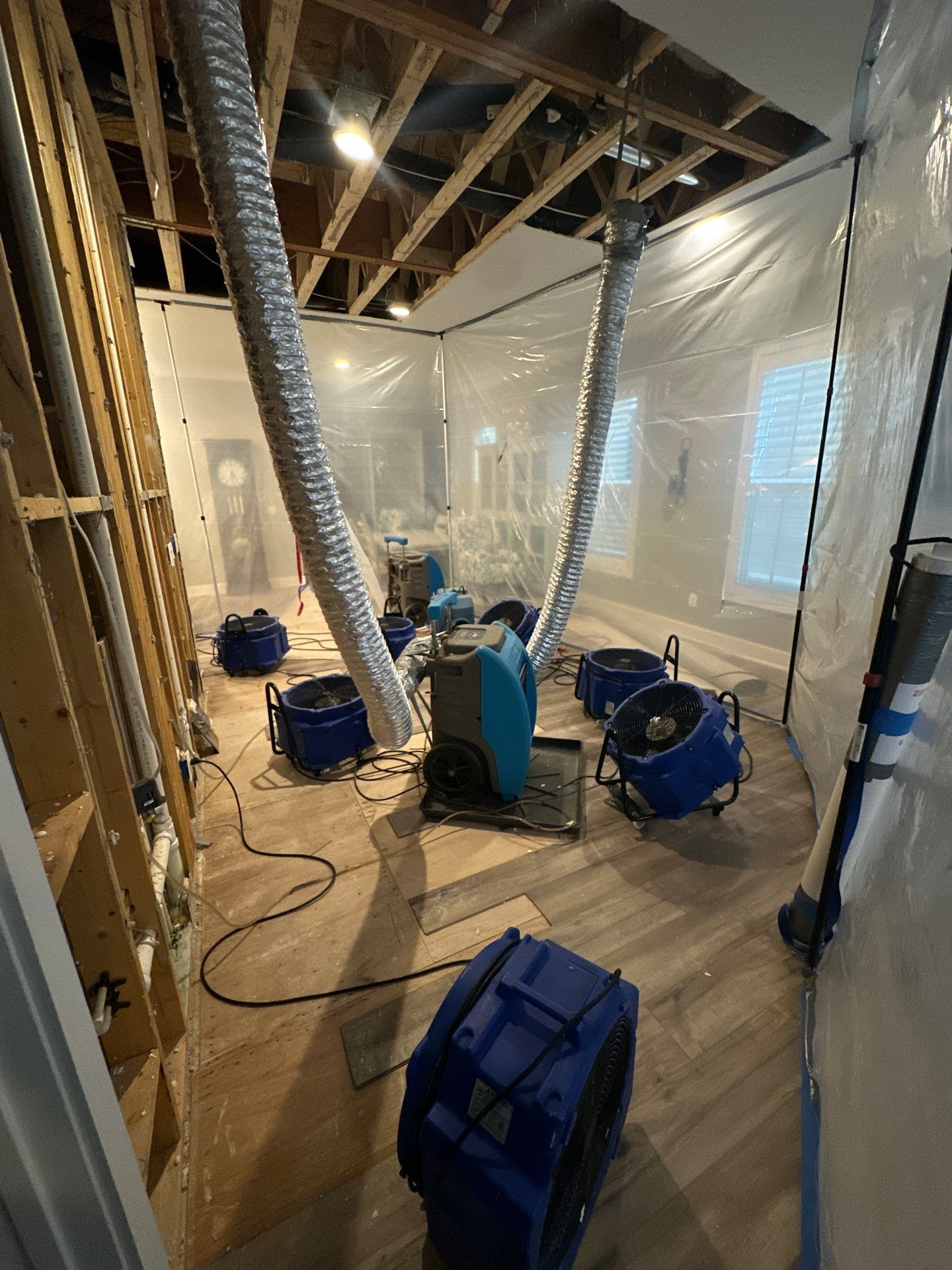
About this mold remediation project
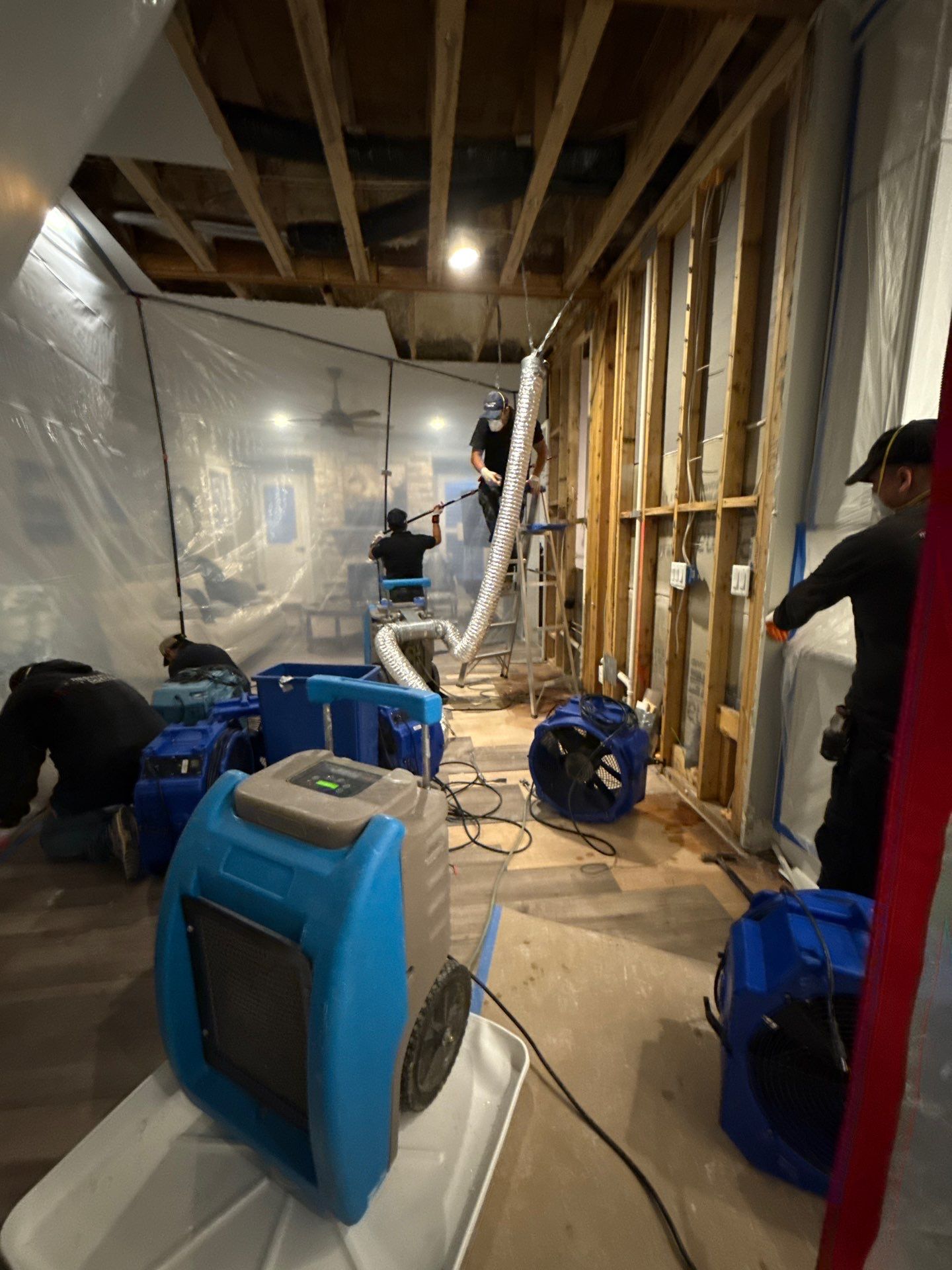
When mold growth follows water intrusion in Loudoun County's newer-construction homes, the combination of Mid-Atlantic humidity and modern building materials can accelerate colonization in concealed cavities. This Ashburn property exhibited extensive growth behind finished surfaces after undetected moisture had persisted long enough to compromise both the ceiling plane and the air quality of occupied spaces.
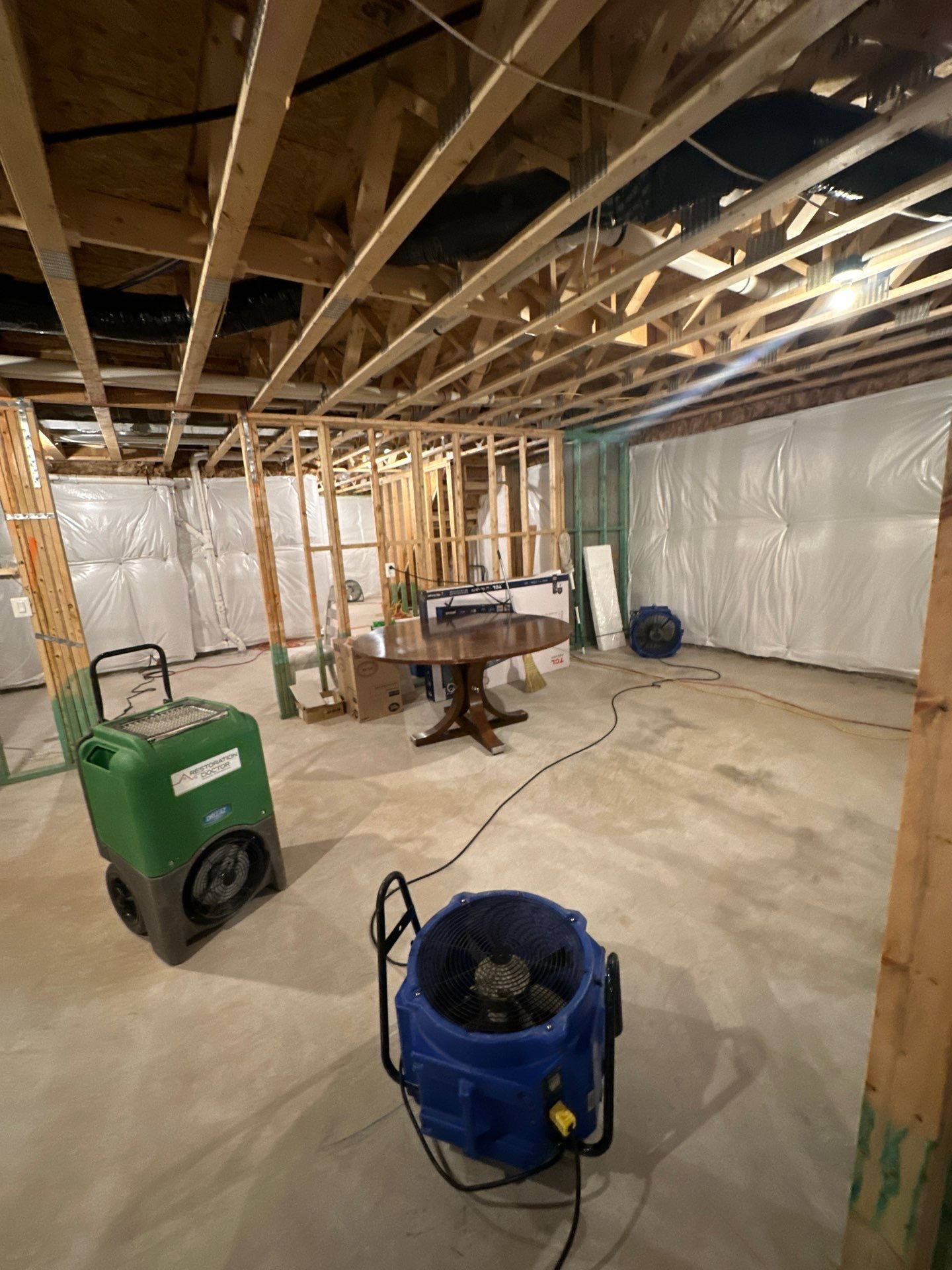
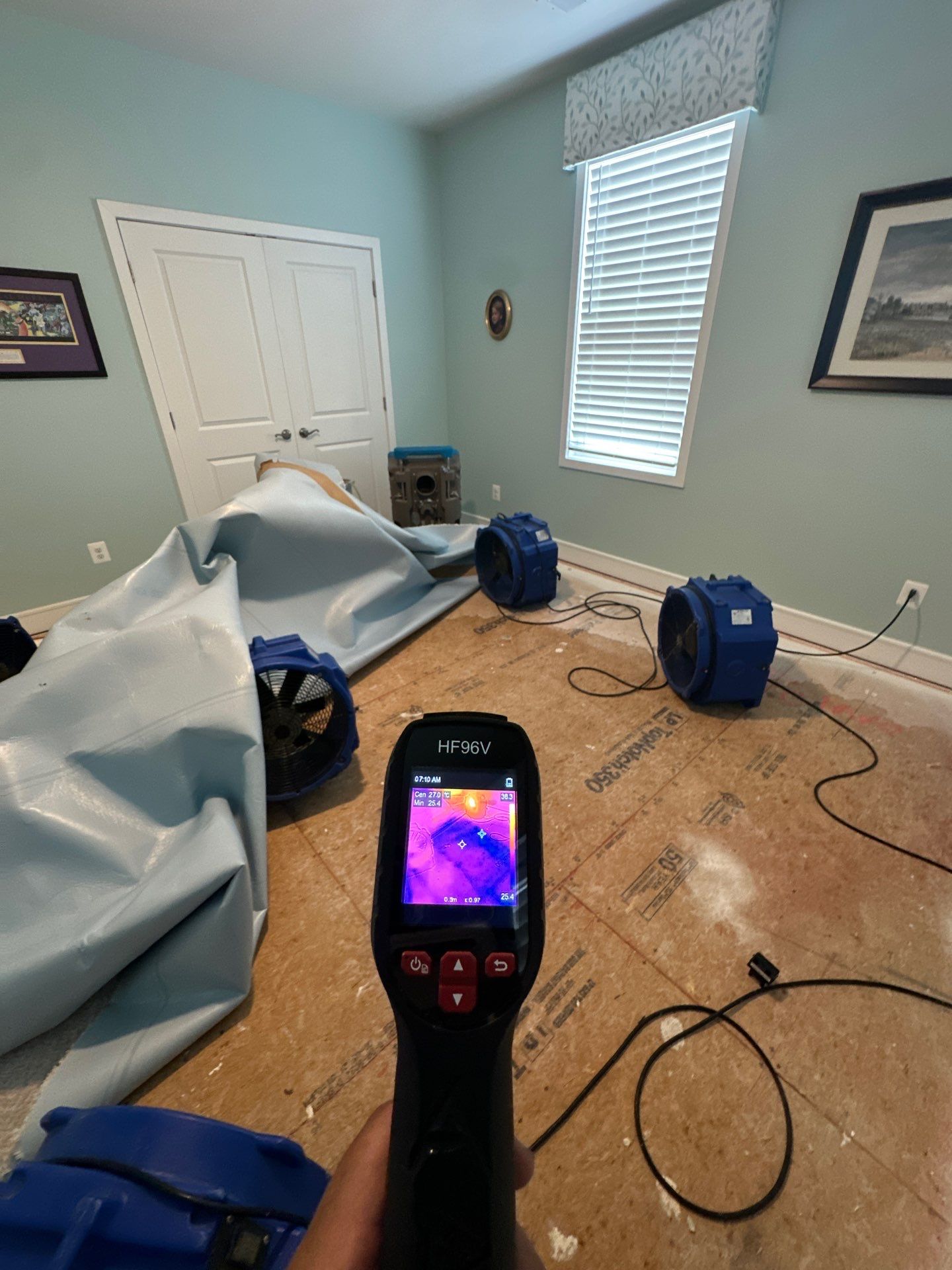
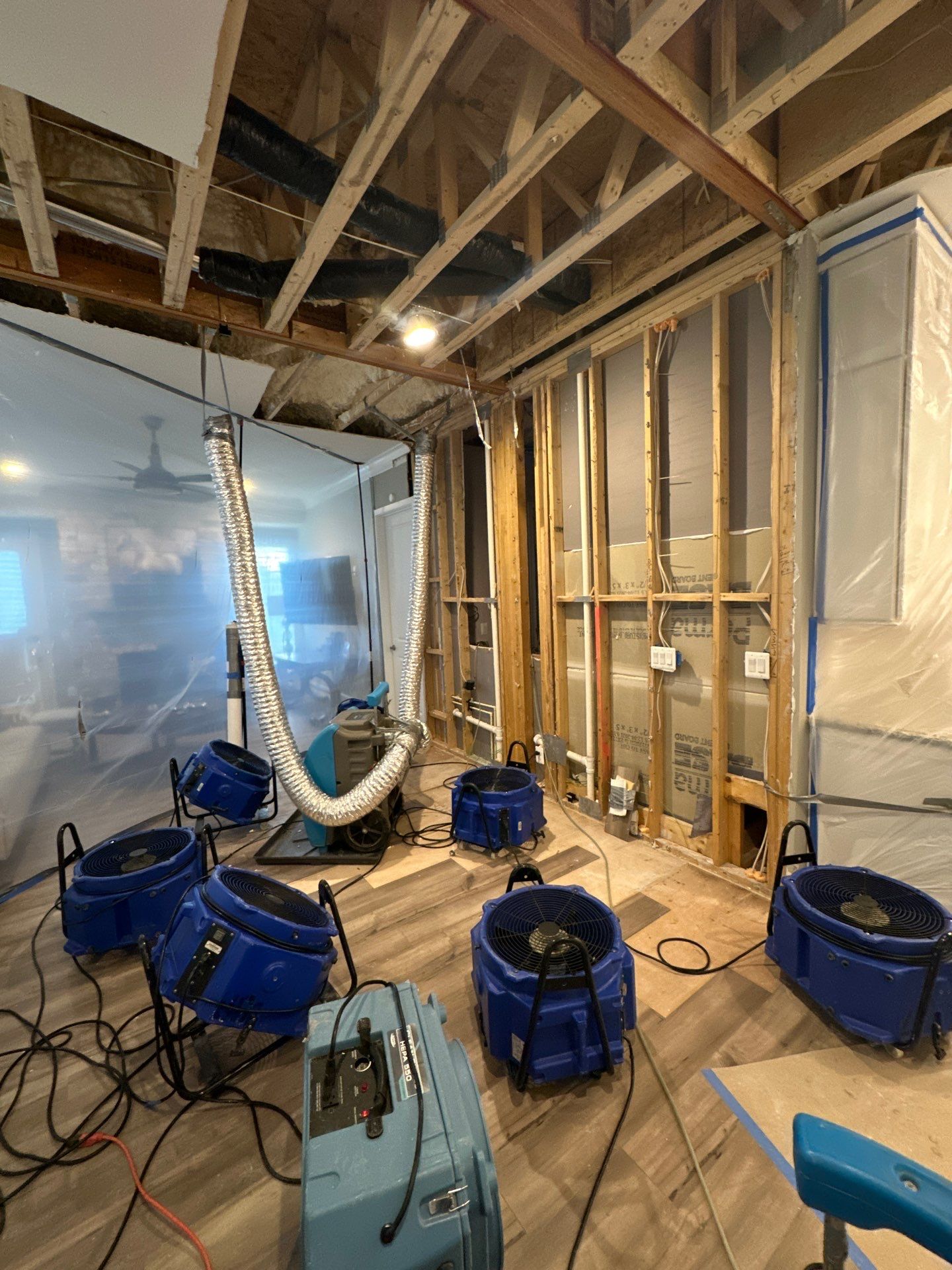
We began with thermal imaging to map the full extent of moisture migration through the ceiling assembly and adjoining framing, identifying all affected zones before containment. The damaged ceiling material was carefully removed to expose the colonized substrate, then high-powered drying equipment was deployed to bring structural moisture levels back to baseline. Throughout extraction and drying, we monitored readings to confirm the environment would no longer support regrowth, following IICRC S520 protocols for remediation in residential occupancies.
After drying was complete, we sanitized all exposed and adjacent surfaces to address residual spore load and restore indoor air quality. The homeowner's review reflected relief that the hidden problem had been fully addressed, not simply covered over—a distinction that matters in homes where finished spaces conceal the framing and sheathing where mold actually takes hold.
Reviews from Restoration Doctor customers
Restoration Doctor is exceptional! Their rapid response team quickly addressed my water damage issue, providing thorough and professional service. They were knowledgeable, reliable, and made the entire process stress-free. Highly recommend for anyone in need of water damage restoration!
Frequently asked questions
How does thermal imaging help locate hidden moisture after water intrusion leads to mold in Ashburn homes?
Restoration Doctor uses thermal-imaging cameras during mold remediation in Ashburn to identify temperature differentials that reveal trapped moisture behind walls and above ceilings—critical in newer-built homes where water can migrate through cavities before surfacing. This non-invasive technology guides targeted drying and ensures we address all affected structural areas, not just visible damage. In Loudoun County's humid summers, any missed moisture pocket can restart mold colonization within days.
What does ceiling repair involve when mold remediation requires removal of water-damaged drywall?
When Restoration Doctor removes mold-compromised ceiling material in Ashburn, we first contain the work area to prevent cross-contamination, then cut out and dispose of affected drywall following IICRC S520 mold-remediation protocols. After structural drying confirms the framing has returned to normal moisture content, we sanitize all exposed surfaces and coordinate reconstruction—either in-house or with a licensed contractor—to restore the ceiling to pre-loss condition. The timeline depends on drying requirements and the extent of framing involvement.
Why is structural drying necessary even after visible water is gone following an intrusion event?
Restoration Doctor deploys high-powered dehumidifiers and air movers in Ashburn because porous building materials—especially the wood framing common in Loudoun County's 1990s-and-newer construction—retain moisture well beyond what you can see or feel. Elevated moisture content inside studs, joists, and subfloor promotes ongoing mold growth and can compromise structural integrity. We monitor with moisture meters until readings return to the dry standard, a process that can take several days depending on materials and environmental conditions.
Does sanitizing after mold remediation eliminate spores that thermal imaging and drying cannot address?
Yes—Restoration Doctor applies EPA-registered antimicrobial treatments to all remediated surfaces in Ashburn to neutralize residual mold spores and inhibit regrowth after the source moisture has been eliminated. Sanitizing is the final step following containment, material removal, and verified structural drying. It ensures the indoor environment meets clearance standards, particularly important in Loudoun County's hot, humid summers when airborne spore counts naturally run higher.
Explore more restoration work
Water, fire, or mold damage in Ashburn?
Restoration Doctor responds 24/7 across Ashburn and Northern Virginia. Free assessment and transparent, insurance-friendly estimates — no obligation.
See our Mold Remediation services at restorationdoctors.com →