Effective Moisture Control and Restoration
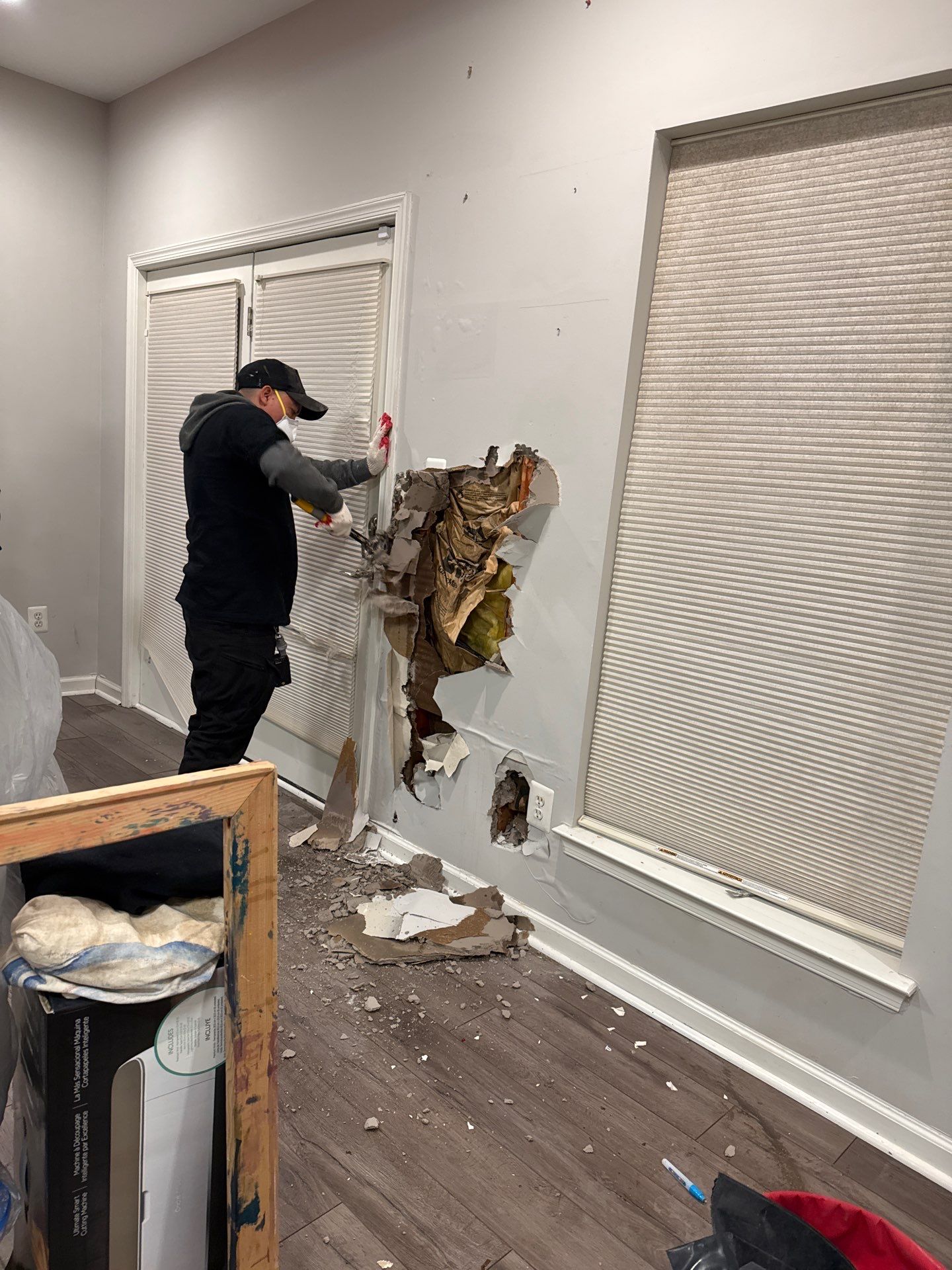
About this mold remediation project
When severe flooding struck this Ashburn home—a risk in Loudoun County's newer subdivisions during the region's periodic heavy-rain events—water intrusion compromised both flooring and wall assemblies, creating conditions for secondary mold growth. The homeowner contacted us immediately after discovering the extent of the damage.
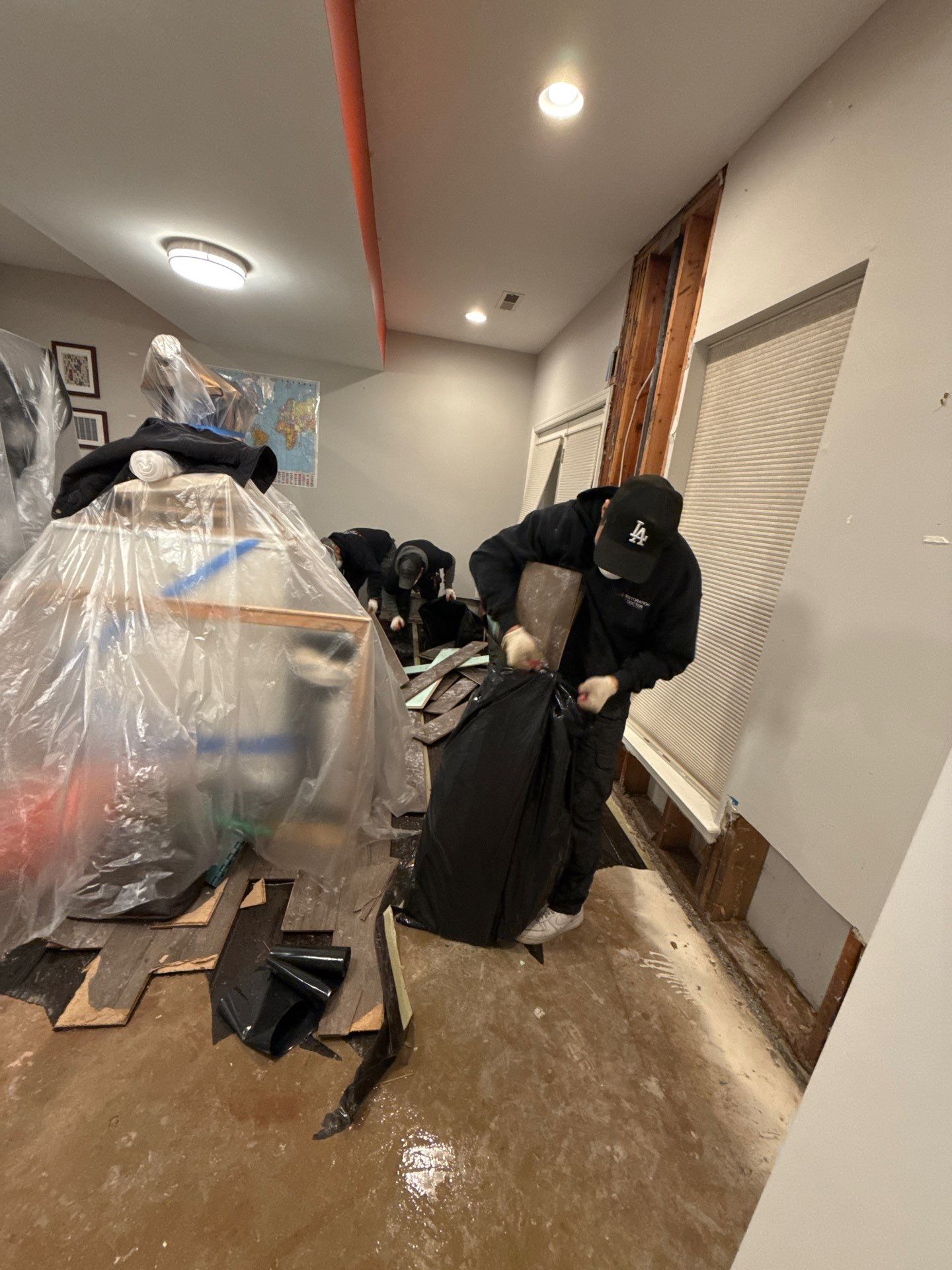
We began with thermal imaging to map moisture penetration beyond what was visible at the surface, identifying affected cavities and structural bays that required intervention. Damaged flooring and wall materials were removed to eliminate both the saturated substrates and any early mold colonization. With the compromised materials out, we sanitized all affected surfaces using antimicrobial treatments appropriate for post-flood remediation, following IICRC S520 protocols to address the mold risk inherent in water-saturated building assemblies.
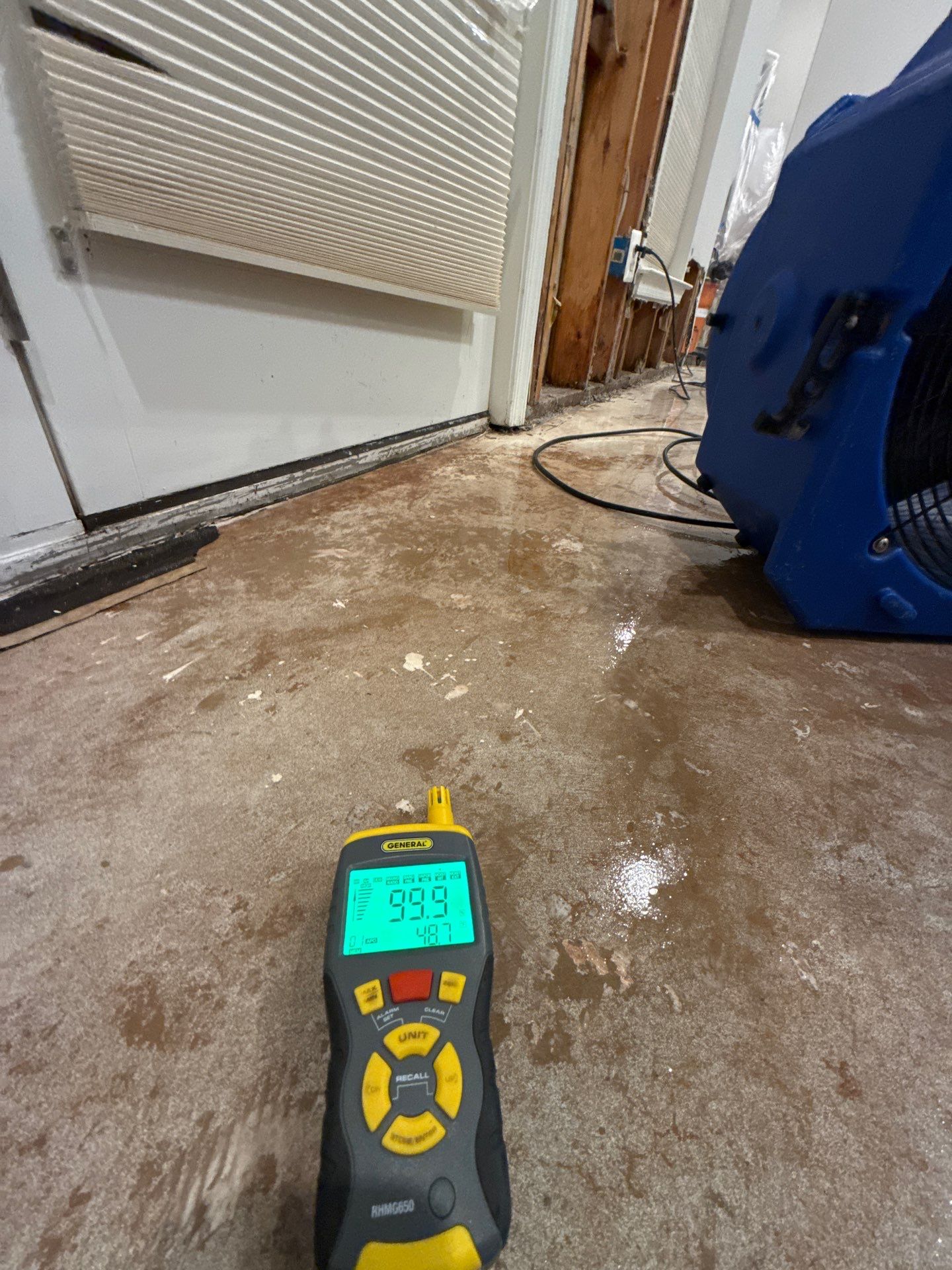
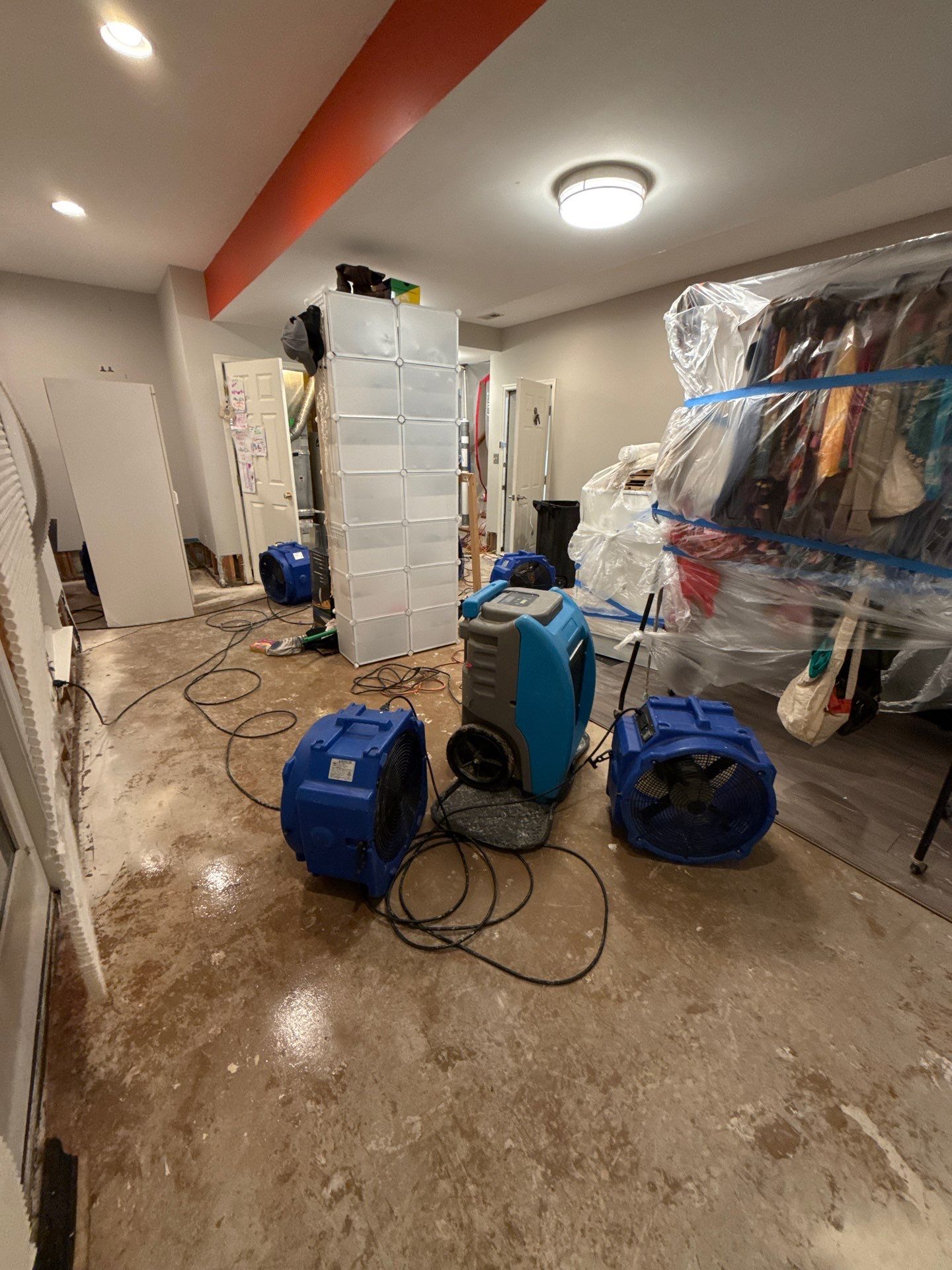
Commercial drying equipment—air movers and dehumidifiers—ran continuously to pull residual moisture from framing, subfloors, and adjacent cavities, ensuring thorough drydown before any reconstruction could begin. The systematic moisture removal prevented the humid Mid-Atlantic summer conditions from sustaining further microbial activity.
The homeowner's review reflects their satisfaction with both the thoroughness of the work and the outcome, and the space was returned to safe, dry conditions ready for rebuild.
Reviews from Restoration Doctor customers
They were very speedy about the service. They came out quickly after a flood we had at our house and after a few hours it was like there was never a flood. Everything was clean and organized and back to normal. They were very respectful and professional. I would highly recommend them.
Frequently asked questions
Why is thermal imaging important after flood damage in Ashburn homes?
Restoration Doctor uses thermal imaging to detect hidden moisture that has migrated behind walls, under flooring, and into structural cavities—especially critical in Loudoun County's newer-built homes where modern construction materials can trap water in concealed spaces. After the severe flood at this Ashburn property, thermal scanning revealed the full extent of saturation beyond what was visible, allowing our technicians to target drying equipment precisely and prevent secondary mold growth in areas that would otherwise go undetected until damage became severe.
How does Restoration Doctor prevent mold after removing flood-damaged flooring?
Following the removal of water-damaged carpet and flooring at this Ashburn job, Restoration Doctor deployed structural drying equipment to bring all affected materials to dry standard, then sanitized all exposed surfaces to eliminate organic residue that feeds mold colonization. Hot, humid Mid-Atlantic summers create ideal conditions for rapid microbial growth, so thorough moisture removal and antimicrobial treatment of the subfloor and wall cavities are essential steps before any reconstruction begins.
What does mold remediation involve after water intrusion in a Loudoun County home?
Mold remediation by Restoration Doctor in Loudoun County typically includes containment of the affected area, removal of mold-colonized materials, HEPA air filtration, and antimicrobial application to treated surfaces. At this Ashburn property, remediation followed the structural drying and flooring removal, addressing both visible growth and conditions conducive to future colonization in the humid regional climate.
Can I stay in my Ashburn home during mold remediation and structural drying?
Occupancy during remediation depends on the extent of containment and the areas affected. For this Ashburn job, Restoration Doctor established work zones to isolate the flood-damaged spaces, allowing unaffected portions of the home to remain accessible while drying equipment and remediation proceeded. Our project manager coordinates access and safety protocols specific to each loss.
How long does it take to dry out a home after severe flooding?
Drying timelines vary with the volume of water, affected materials, and ambient conditions; Restoration Doctor monitors moisture levels daily with meters and adjusts equipment until all materials reach dry standard. In Loudoun County's humid summer climate, thorough drying of structural cavities and subfloors—like those addressed at this Ashburn property—can take several days to over a week, depending on saturation depth and airflow access.
Explore more restoration work
Water, fire, or mold damage in Ashburn?
Restoration Doctor responds 24/7 across Ashburn and Northern Virginia. Free assessment and transparent, insurance-friendly estimates — no obligation.
See our Mold Remediation services at restorationdoctors.com →